
The Structures of Wisdom: How Dr. Ibrahim El‑Ghanam Builds Resilient Institutional Knowledge Across Egypt
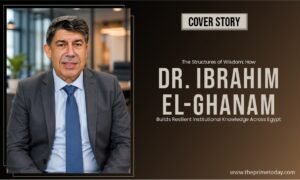
The economic landscape of modern Egypt shifts rapidly as global financial institutions pivot toward knowledge-driven growth and enterprise development. True economic resilience emerges when senior advisors translate complex structural policies into practical business success across emerging national markets. Dr. Ibrahim El‑Ghanam executes this advanced methodology perfectly as an Associate Professor at Al Ahram Canadian University and a Senior Instructor and Consultant for the Egyptian Banking Institute and the Central Bank of Egypt, earning widespread recognition as The Most Innovative Inspirational Icon to Look for in 2026.
His professional life traces a powerful line through structural design and institutional capacity building, demonstrating a deep dedication to solid foundational development. He is a specialist, academic, consultant, and lifelong builder of capacity and institutions. Born in Cairo in 1962, his journey began in physical construction, where he learned that no structure stands without deep foundations and sound design. Over four decades, he has expanded that principle to build people, enterprises, and knowledge systems across Egypt and beyond.
By bringing this structural discipline into the financial sector, he helps shape the regulatory frameworks and training programs that secure national banking networks. He holds international master‑trainer certifications from the World Bank, the International Labour Organization, and the Foundation for International Training (Canada).
His ability to scale local commercial networks became clear during a massive period of geographic economic development, transforming the lives of regional business owners. Since 2000, he has led enterprise development initiatives nationwide — most notably the landmark Small and Medium Enterprise Development Program in Upper Egypt, which created thousands of sustainable businesses.
His current work highlights a significant transition from traditional corporate training into building open-access global knowledge hubs for the next generation of business founders. Today, he leads Reyada Academy and devotes his full energy to creating The Entrepreneurial Encyclopedia — the first comprehensive, open‑access knowledge base of its kind. As thousands of young business leaders across the country search for reliable operational tools, his digital research groups continue to compile next-generation training resources.
The Shift to Constructive Wisdom
Dr. Ibrahim transitioned his career focus away from brick-and-mortar installations toward structural engineering for human intellect after spotting a recurring vulnerability in regional business startups. Early in his engineering career, he repeatedly observed a striking pattern: capable people with viable ideas failed not from lack of effort, but because they lacked the right structure, context‑appropriate knowledge, and grounded guidance. He watched promising ventures collapse for the same preventable reasons, generation after generation. By analyzing these organizational vulnerabilities, he created a new approach to enterprise training that emphasizes early corporate protection.
He builds strong systems that allow entry-level business managers to run projects safely without wasting initial capital. He realized then that the most powerful structures we build are not made of concrete — they are made of wisdom. He shifted from designing buildings to designing systems that help people build sustainable livelihoods. “My core inspiration remains simple: no one should have to pay the same price in failure that earlier generations did.”
Democratizing Strategic Knowledge
He guides Reyada Academy by removing financial and geographic barriers so that local business founders can study high-level financial governance tools. His vision is to democratize rigorous, practical entrepreneurship and leadership knowledge — making it accessible to every founder, regardless of background, funding, or geography. “Through Reyada Academy, we develop context‑tailored frameworks and training that fit our regional reality, rather than importing models that do not work here,” shares Dr. Ibrahim. For example, their programs account for local market dynamics that global approaches often overlook. This contextual focus ensures that training campaigns yield immediate operational results in municipal economies.
He uses his extensive academic experience to build massive open-access learning databases that catalog real-world industrial risks. Through The Entrepreneurial Encyclopedia, he aims to create a permanent, evolving public resource that captures what actually works — and what destroys businesses — covering overlooked areas such as early failure signs, entrepreneurial psychology, founder health, and future‑ready models. He wants to replace guesswork with clarity and isolation with shared wisdom.
Innovative Infrastructure for Growth
Dr. Ibrahim shapes the national micro-economic landscape by introducing practical, culturally aligned operating frameworks to government financial institutions. Three contributions stand out: First, the El‑Mobadara Model — a four‑phase framework for SME support that adapts global best practices to local culture and economics. It has been adopted by government agencies, banks, and NGOs across Egypt, and has helped thousands of businesses take root. This highly flexible methodology allows rural enterprises to maintain a steady cash flow during shifting market conditions.
He challenges standard business schools by introducing training courses that address the personal stress and psychological hurdles of running a company. Second, the first structured curriculum for entrepreneurial health and behavioral risk — a field almost entirely ignored in mainstream education, yet one of the leading causes of silent business collapse. Third, the Entrepreneurial Encyclopedia itself — a not‑for‑profit initiative built on nearly zero budget, compiling 40 years of frontline experience into a structured library that will serve generations long after his active work ends. As thousands of young leaders across the region utilize these open education libraries, his digital publishing teams continue to add fresh analytical data across national boundaries.
The Rule of Local Relevance
He modifies his advisory methodology by discovering that international corporate frameworks must match the everyday reality of local marketplaces to succeed. The hardest challenge was realizing that success depends more on relevance than on excellence. Early on, he tried applying world‑class international frameworks directly to Egyptian enterprises — and they failed repeatedly, because they did not account for our market dynamics, cultural norms, or resource constraints. By discarding generic foreign playbooks, he helped local firms build resilient structures that withstand localized economic shifts.
He reshapes his financial training programs for the central bank by focusing entirely on regional cash cycles and commercial practices. He overcame this by stepping back, listening deeply to entrepreneurs on the ground, and rebuilding everything from the foundation up. For instance, he learned that payment terms in our markets require different cash‑flow planning than in Western economies. He stopped asking “what works elsewhere?” and started asking “what works here, and why?” That shift turned frustration into impact.
Restoring Regional Dignity
Dr. Ibrahim evaluates his lifelong work by measuring the visible economic stability of underserved municipalities rather than counting standard academic publications. Leading the Small and Medium Enterprise Development Program in Upper Egypt remains the most significant. “We operated across Beni Swef, Sohag, and Qena — regions long underserved — creating more than 2 000 sustainable enterprises and over 8 000 jobs.” This massive regional program gave thousands of families the financial foundation needed to build lasting community wealth.
He uses these micro-economic victories to demonstrate how practical education works as an active vehicle for social balance. More than numbers, what moved him was seeing people stay in their communities rather than migrate, families gain dignity, and local economies strengthen from within. One tailor he worked with went from a small home workshop to building a regional brand that employs 15 people. That program proved that knowledge is not just information — it is a tool for equity.
A Sanctuary for Open Thought
He establishes an open corporate atmosphere inside his research teams by removing rigid hierarchies and encouraging analytical debate. He believes innovation grows where dissent is safe and failure is studied. He does not ask for agreement — he asks for better reasoning. “We constantly question assumptions, especially our own.” By mixing different fields of science together, he helps his development groups discover novel answers to old supply chain vulnerabilities.
He protects the mental well-being and creative focus of his research staff by intentionally scheduling open periods for quiet thought. He encourages cross‑pollination: bringing architectural thinking into business design — for example, using load‑bearing structure principles to build resilient supply chains — behavioral science into strategy, and future technology into present practice. “We also protect ‘unproductive’ time — reflection, reading, and experimentation — because new ideas rarely emerge from constant busyness. Most importantly, we measure innovation not by novelty, but by how many people it helps.” As corporate training centers across the country implement these multi-disciplinary methods, his field workers continue to gather fresh operational feedback from local market managers.
Core Values for Sustainable Practice
Dr. Ibrahim manages his academic courses and banking consultancy groups by following a clear set of human principles that protect corporate transparency. Four principles shape everything he does: Integrity: Truth is your only permanent asset; shortcuts always cost more later. Practicality: What works matters more than what sounds impressive. Inclusivity: Excellence should not be exclusive. Legacy: Build what outlasts you. By refusing to accept temporary corporate fixes, he teaches his corporate training groups to prioritize structural safety over short-term market gains. These are not professional rules — they are how he lives. You cannot teach integrity if you do not live it.
Finding Fuel in Local Resilience
He overcomes bureaucratic delays and low institutional budgets by focusing his attention on the tangible progress of regional business owners. he reminds himself that every obstacle is teaching something that will protect others later. When resources run low, or progress slows, he returns to the faces of the entrepreneurs he has worked with — the tailor who built a brand, the graduate who stayed home to grow their business, the founder who kept going when all advice said stop. This direct human connection allows him to lead large-scale economic programs without losing his personal dedication. Their resilience fuels his. he also remembers that building something new always feels lonely before it becomes necessary. The work is worth the wait.
Essential Rules for New Founders
Dr. Ibrahim outlines a clear operational pathway for young corporate leaders who want to establish long-lasting enterprises in shifting national markets. First: solve a real pain, then build your business around that solution — not the other way around. Too many start with a product and then hunt for a problem. Second: study failure as carefully as you study success. Most valuable lessons are hidden in what went wrong. By guiding new managers to protect their personal well-being alongside their corporate assets, he changes how modern businesses approach employee care. Third: invest in yourself before you invest in your business. Your health, clarity, and character are your most critical infrastructure. And finally: stay rooted in your reality, but keep your eyes on the horizon. As regional banking networks update their small business lending policies, his university research teams continue to gather fresh operational case studies from rural enterprise zones.
The Shift to Operational Resilience
He looks toward upcoming industrial shifts and helps central banking networks adjust their corporate training schedules to emphasize human durability over simple numerical growth. “We are moving from scaling activity to scaling resilience.” Technology will remove many barriers — but it will also amplify human weaknesses. The businesses that survive will be those that combine efficiency with empathy, and speed with purpose. By advising regional corporate leaders to focus on employee well-being, he limits the hidden losses caused by management burnout. “We will see far more attention to behavioral dynamics, mental sustainability, and regenerative models.” Knowledge will become the scarcest and most valuable resource — making open, reliable education essential for equitable growth.
Target Launch 2026
Dr. Ibrahim focuses his current academic schedule on building a massive, free library that gives young corporate founders immediate access to decades of practical market data. His immediate priority is completing The Entrepreneurial Encyclopedia, with a target launch in mid‑2026. “We are finalizing its structured sections on early warning signs, psychology, health, and future‑ready enterprise.” After launch, he plans to develop open‑source teaching tools and localizations so they can be adapted across the Arab world and beyond. This public platform provides small business managers with concrete ways to identify early financial hazards before they threaten corporate liquidity. Long‑term, he aims to establish a global network of practitioners who contribute to and maintain this living resource — ensuring it remains current, grounded, and freely available to all who need it.
The True Measure of Impact
He urges senior banking executives and university researchers to view professional achievement through the lens of community growth rather than corporate rank. Impact is not about how many people know your name — it is about how many lives you make stronger, more capable, and more free. By demonstrating how a clear corporate mission can overcome low initial funding, he inspires young business development groups to focus on real-world problem-solving. You do not need great resources to start — you only need great clarity of purpose. Build foundations that serve people, create knowledge that outlasts you, and remember: the most powerful legacy is what you enable others to build. As emerging commercial hubs across the region scale their operations, his curriculum design groups continue to deploy fresh learning tools across international borders.