
Ashish Kumar Singh: Transforming Technology into Growth at Adani Airport Holdings
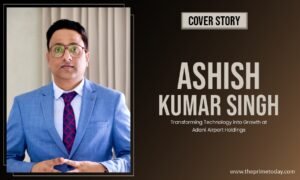
How much can a business afford to lose when its technology fails? In aviation, even a small disruption can ripple through operations. In retail, a delay can affect a customer standing at a counter. In a large organisation, an inefficient system can consume time, money and trust every single day. For Ashish Kumar Singh, these realities have determined a career spent understanding technology from the ground level and finding ways to make it work harder for the business.
Ashish began his career as a network, security and end-user management engineer, working hands-on with infrastructure, networks and enterprise systems. It was a practical beginning, close to the systems that keep organisations running, and it taught him a lesson that has remained central to his leadership philosophy: technology is only valuable when it works reliably for the people and business that depend on it.
Over two decades, his career has taken him through technology services, aviation, retail and quick-service restaurants, each bringing a different set of demands. These are environments where downtime, inefficiency or a poor customer experience can have an immediate business impact, giving Ashish a close understanding of what technology means when it moves from a technical function into everyday operations.
At IndiGo, where he spent nearly seven years, he built and managed large-scale infrastructure and operations while supporting the airline’s rapid international expansion. The experience brought together scale, operational discipline and the need for systems that could keep pace with a growing international business.
At Jubilant FoodWorks, his role moved deeper into digital, AI and enterprise transformation across a large multi-brand retail ecosystem. This gave him another perspective on how technology can change the way an organisation operates, serves customers and makes decisions.
Today, as CIO of Adani Airport Holdings Ltd., Ashish brings those experiences together. Engineering discipline, operational resilience, digital innovation and business strategy now sit alongside one another in his approach to technology leadership. His journey demonstrates a steady progression: from managing technology, to transforming technology, to using technology as a business growth engine. At the heart of it remains the same practical idea that formed his early career: technology is most important when people can depend on it.
Below are the interview highlights:
What inspired you to pursue a career in information technology and eventually take on the role of CIO?
What attracted me to technology initially was its ability to solve complex problems. But what kept me engaged was its ability to create scale.
Early in my career, I could see the direct relationship between a well-designed network, a resilient infrastructure platform and a business that could operate more efficiently. As my responsibilities grew, I became increasingly interested in the larger question: How can technology fundamentally change the way an organisation operates?
That question eventually took me from infrastructure to enterprise architecture, transformation, digital platforms, AI and business strategy.
Becoming a CIO was therefore not a destination I planned from day one. It was a natural evolution.
I believe a CIO today must understand three languages simultaneously: technology, business and people. The ability to connect those three is what makes technology leadership truly strategic.
How would you describe your leadership philosophy, and how has it evolved over the years?
My leadership philosophy can be summed up in three words: grounded, outcome-driven and empowering.
Earlier in my career, leadership was largely about solving problems myself. With experience, I learned that leadership is not about being the person with all the answers; it is about building an organisation capable of finding better answers continuously.
I therefore believe strongly in servant leadership, accountability, and empowerment.
My role as a leader is to create clarity- clarity of purpose, priorities, and outcomes- and then give talented people the space to execute.
I also believe that technology leaders should remain connected to the ground. The further you move into senior leadership, the more important it becomes to understand what is actually happening in the server room, the airport terminal, the store, the operations center, or with the customer.
Boardroom strategy becomes stronger when it is informed by ground reality.
What does digital transformation mean to you, and what role does it play in your organisation’s growth?
I do not define digital transformation as implementing more technology.
Digital transformation is the redesign of how an organisation creates value, makes decisions and serves its customers using digital capabilities.
For an asset-intensive and operationally complex business such as airports, this becomes particularly important. An airport is effectively a living ecosystem involving passengers, airlines, employees, security, assets, retail, cargo, infrastructure and multiple technology platforms.
The opportunity is to connect these ecosystems and move from fragmented visibility to real-time intelligence and eventually intelligent decision-making.
My objective is therefore to build digital capabilities that make the organisation more connected, predictable, resilient and customer-centric.
The real measure of transformation is not the number of applications deployed. It is whether we can make better decisions, faster; operate more reliably; improve customer experience; and create measurable business value.
What are some of the most significant digital transformation initiatives you have led, and what impact have they created?
Across my career, I have led transformations at very different scales.
At IndiGo, one of the most significant challenges was creating a technology operating model capable of supporting rapid domestic and international expansion. This involved infrastructure resilience, data centers, command centers, virtualization, disaster recovery, airport technology readiness, and global service operations.
At Jubilant FoodWorks, the transformation challenge was different. We were dealing with a large, distributed retail ecosystem with thousands of stores and multiple brands. We modernized legacy platforms, migrated SAP ECC toward S/4HANA, introduced cloud-ready architecture, next-generation POS, low-code applications, AI, computer vision, IoT, automation, and data-led operations.
One initiative I am particularly proud of was the creation of an Intelligent Retail Operations Center, bringing data and operational intelligence together to enable real-time visibility and predictive decision-making.
At Adani Airports, my focus is on taking that thinking further, connecting physical infrastructure with digital intelligence through initiatives around Enterprise Asset Management, IoT, SCADA, BIM, digital twins, data and AI.
The common thread across all these transformations is simple: technology must ultimately translate into operational excellence and business outcomes.
How are you using emerging technologies such as AI, automation, cloud computing, or data analytics to drive innovation?
I see AI as a major shift from systems that record what happened to systems that help us understand what is happening, predict what may happen, and recommend what should happen next.
Our technology landscape increasingly combines cloud, data platforms, AI, machine learning, automation, computer vision, IoT and analytics.
For example, computer vision can help improve operational awareness, AI can identify patterns within large datasets, predictive analytics can support better planning, and automation can eliminate repetitive manual interventions.
I am particularly interested in the convergence of AI + Data + Automation + Domain Knowledge.
AI without quality data is limited. Data without context is difficult to monetize. Automation without intelligence simply makes existing processes faster.
The real opportunity is to combine all four and create intelligent enterprise processes.
What are the biggest challenges organizations face when implementing digital transformation, and how do you overcome them?
The biggest challenge is rarely technology. It is change.
Organizations often attempt to digitize existing processes without questioning whether those processes should exist in their current form.
I follow three principles.
First, start with the business problem, not the technology.
Second, design for adoption from day one. A technically brilliant platform that nobody uses is not transformation.
Third, build transformation incrementally. Large organizations cannot always replace everything overnight. We need to modernize while continuing to operate.
I also believe transformation requires strong governance. Clear ownership, measurable outcomes, architecture discipline, cybersecurity, and executive sponsorship are critical.
The goal should be “transform while you operate,” rather than waiting for a perfect future state.
How do you ensure that your technology strategy remains aligned with the organization’s overall business goals?
I start with the business strategy and work backwards.
Every major technology initiative should answer four questions: What business problem are we solving? What value will it create? How will we measure that value? And why is technology the right enabler?
I believe the CIO must move beyond the traditional IT metrics of uptime, tickets, and project completion.
We should also talk about revenue enablement, EBITDA impact, productivity, risk reduction, customer experience, resilience and speed to market.
That changes the conversation from, “How much are we spending on technology?” to “What business value are we creating through technology?”
That is the conversation I believe belongs in the boardroom.
Cybersecurity and data protection are becoming increasingly important. How do you build a secure and resilient digital environment?
In a highly connected enterprise, cybersecurity cannot be an IT department’s responsibility alone. It is an enterprise responsibility.
My approach is based on security by design, resilience by design, and governance by design.
As organizations adopt cloud, IoT, AI and connected operational technologies, the attack surface becomes larger. Therefore, identity, access management, data protection, network segmentation, monitoring, threat detection, incident response and business continuity must be built into the architecture.
But resilience goes beyond cybersecurity.
For critical infrastructure, we must ask: If a system becomes unavailable, can the business continue?
That mindset drives investments in redundancy, disaster recovery, operational resilience and recovery planning.
How do you encourage your team to embrace innovation, continuous learning, and new technologies?
I encourage my teams to remain curious.
Technology changes too quickly for anyone to believe that what they know today will be enough tomorrow.
I try to create an environment where experimentation is encouraged, failure is treated as a learning mechanism and people are given opportunities to work beyond their traditional roles.
I also believe leaders must demonstrate continuous learning themselves. My own journey reflects that philosophy. Alongside executive education and professional certifications,
I often tell my teams: “Your current capability is your foundation, not your destination.”
Can you share a technology project or achievement that you are particularly proud of?
One of the initiatives particularly close to me is the evolution of Enterprise Asset Management and Digital Twin capabilities in the airport environment.
In an airport, assets are everywhere: terminal infrastructure, electrical systems, HVAC, baggage systems, security systems and numerous other critical assets.
Our objective is to establish a digital backbone where assets can be digitally registered, monitored and managed throughout their lifecycle.
By connecting Enterprise Asset Management with systems such as SAP, IoT, SCADA and BIM, we can progressively move from reactive maintenance toward predictive and eventually prescriptive operations.
What makes this exciting is that it is not simply an IT project. It brings together engineering, operations, data and technology to improve the reliability of physical infrastructure.
That is exactly the kind of transformation I believe technology should enable.
What technology trends do you believe will have the greatest impact on businesses over the next few years?
I believe five shifts will fundamentally reshape enterprises.
First, Agentic AI will move organizations beyond AI that answers questions toward AI that can execute workflows and coordinate actions.
Second, AI-native enterprises will emerge, where intelligence is embedded into processes rather than existing as standalone applications.
Third, the convergence of physical and digital infrastructure will accelerate through IoT, computer vision, robotics and digital twins.
Fourth, data sovereignty, cybersecurity and digital resilience will become strategic board-level priorities.
And finally, technology architecture will increasingly move toward composable, API-driven and cloud-enabled ecosystems, allowing organizations to innovate faster without repeatedly rebuilding their foundations.
The winners will not necessarily be organizations with the most technology. They will be organizations that can turn technology into organizational intelligence faster than their competitors.
Finally, what is your vision for the future, and what advice would you give to aspiring CIOs and technology leaders?
My vision is to build organizations where technology becomes almost invisible, but its impact becomes impossible to ignore.
I want technology to make businesses more intelligent, resilient, sustainable and human-centric.
For aspiring CIOs, my advice is simple: do not rush to become a CIO. First become someone the business cannot do without.
Technology changes fast. People don’t.
Keep learning, stay grounded, listen to the business, build technical depth. Understand finance. Learn operations. Spend time with customers. Understand risk. Learn how the business makes money. Develop the ability to communicate with the board, never lose your curiosity and use technology to make a real difference.
The best technology leaders do not simply digitize the present. They create the capabilities that make the future possible.
Ultimately, leadership is not about how much technology you control. It is about how much positive change you enable.