
Dhananjaya Abesinghe and the Changing Workplace
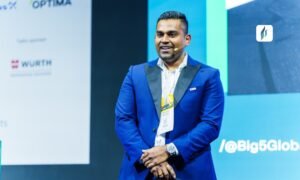
A workplace is easy to measure in square feet, operating costs and equipment. Its real value is harder to capture. It can influence how people work, how resources are used and how an organization prepares for the future. For Dhananjaya Abesinghe’s, that broader view has become the foundation of more than 14 years of experience at Lenovo, where workplace management has developed into a career focused on sustainability, operational excellence and meaningful business impact.
What makes his journey notable is the way these areas have gradually come together. His work is not limited to maintaining workplace operations. It extends to finding ways to reduce costs, rethink existing practices, encourage employee engagement and make sustainability part of everyday decisions.
That perspective has grown through experience, professional education and a willingness to look beyond the immediate task. It has also led to recognition on both the international and regional stage.
Looking Beyond The Building
For Dhananjaya, workplace management begins with understanding how different parts of an organization connect. His experience at Lenovo has developed around systems thinking, analytical decision-making, cost optimization and workplace transformation, supported by formal learning in sustainability and operational excellence.
A workplace decision, from this perspective, is rarely just a workplace decision. Changes to operations can influence spending, employee experience, resource consumption and wider business objectives. That makes the role less about managing a physical environment and more about understanding what that environment enables.
His professional qualifications have reinforced this approach. He has pursued advanced certifications in project management, retrofitting and sustainable practices and is a Certified Facility Manager accredited by IFMA. The technical foundation complements the practical experience he has built at Lenovo.
It was that combination of experience and impact that eventually brought one of the defining moments of his career.
When Recognition Follows Impact
In 2025, Dhananjaya received the IFMA George Graves Award for Facility Management Achievement. IFMA’s official announcement lists him as the winner of the award, recognizing his contribution to the facility management profession.
For him, however, the significance of the recognition goes beyond the award itself. In his own reflection on the achievement, he described it as the most remarkable professional achievement of his career and highlighted the role of his Lenovo META region team in making it possible.
That emphasis on collective effort is important to understanding his approach. He has repeatedly connected his recognition with the work taking place behind it: reducing operational costs, introducing workplace innovations, reducing plastics, advancing sustainability, supporting Lenovo’s ESG strategy, strengthening DEI and improving organizational performance.
The following year brought another significant milestone. He was named Middle East Sustainability Champion of the Year 2026. Rather than standing apart from his earlier work, the recognition strengthened the same thread running through his career—the idea that sustainability can be connected directly to how an organization operates.
Turning Sustainability Into Action
Sustainability can sound abstract until it changes something in the way a workplace functions. That is where Dhananjaya’s work takes a more practical direction.
His focus includes energy-efficient workplace solutions, retrofitting, waste reduction and more responsible use of resources. In discussing his work publicly, he has also highlighted the potential of retrofitting existing workplaces rather than relying only on new construction. His stated focus includes extending asset life, reducing waste and energy consumption, lowering carbon emissions and improving employee experience.
The Lenovo Lock Screen Campaign offers another example of this practical thinking. The initiative used a digital workplace channel to share stories and recognize achievements while strengthening employee connection. It also reduced the reliance on physical communication materials, bringing employee engagement and sustainability into the same initiative.
The example is relatively simple, but that is part of its relevance. Workplace transformation does not always require a dramatic change to a building. Sometimes it comes from reconsidering how an existing system can serve more than one purpose.
That way of thinking has also shaped the conversations he has taken beyond Lenovo.
Taking Workplace Ideas Further
His experience has increasingly moved into industry discussions. He has spoken and participated in panels on sustainability, workplace strategy and the future of facility management, including at Big 5 Global and IFMA Middle East.
His role as a Board Director of the IFMA UAE Chapter has added another layer to that involvement. It gives him a platform to contribute to a professional community while remaining closely connected to the practical realities of workplace management.
There is a natural connection between the two roles. The challenges encountered in a workplace can become subjects for wider industry discussion, while conversations with other professionals can introduce new ways of looking at familiar problems.
For Dhananjaya, that exchange has become part of a broader professional journey—one that combines experience with continuous learning.
Bringing Learning Into Leadership
His MBA journey at the Postgraduate Institute of Management added another dimension to that development. The programme strengthened his understanding of leadership, finance, economics, strategy, sustainability, negotiation and organizational performance.
The timing was significant. He was not studying workplace management in isolation; he was bringing an established professional perspective into an academic environment while continuing a demanding regional career.
His own reflections on the experience emphasize how the MBA changed the way he thinks, leads, communicates, makes decisions and approaches problems. The programme also coincided with several of his major professional milestones, including the George Graves Award, his sustainability recognition, speaking engagements and his appointment to the IFMA UAE Chapter board.
That combination of study and practice has helped broaden the way he approaches workplace decisions. Operational knowledge remains important, but so do strategy, financial thinking, leadership and the ability to understand how individual decisions affect an organization as a whole.
The People Behind The Workplace
Perhaps the clearest thread through his work is that workplace transformation is ultimately about people.
His record at Lenovo includes several internal recognitions, including Individual Excellence, WOW, Team Excellence, Spot Awards and Cultural Win awards. But his public reflections often move beyond personal achievement.
When he received the Middle East Sustainability Champion recognition, he dedicated the award to the people who keep workplaces and communities functioning every day, including facility managers, security professionals, housekeeping teams, HVAC technicians, engineers and maintenance teams. He described sustainability as a responsibility and a culture rather than simply an initiative.
That perspective adds a human dimension to a field that can easily become dominated by systems, buildings and performance figures. Behind every workplace strategy are people who use, maintain and depend on those environments.
It also explains why employee experience continues to sit alongside sustainability and operational efficiency in his work.
A Broader View Of What Comes Next
In 2026, Dhananjaya was shortlisted as Sustainability & Workplace Transformation Leader in the Middle East at the Global Icons of Excellence Awards. The recognition brings together many of the themes that have shaped his career: sustainability, innovation, operational excellence, cost optimization and people-focused workplace solutions.
But the more interesting story lies beyond the list of recognitions.
Over more than a decade at Lenovo, his work has moved from workplace operations towards a broader understanding of what workplace management can contribute to a business. His professional education has added strategic depth. His industry involvement has expanded the conversation. His sustainability initiatives have given those ideas a practical setting.
Most importantly, his own reflections suggest that he does not see awards as the final measure of the work. After receiving the George Graves Award, he wrote that the recognition represented the impact created through teamwork, innovation and a commitment to meaningful value. More recently, he described the awards as milestones while pointing to the impact created along the way as the real achievement.
That distinction gives his professional story its clearest direction. The workplace is no longer simply a space to be managed. It can be a place where sustainability becomes practical, where employees feel connected, where resources are used more thoughtfully and where operational decisions contribute to business performance.
For Dhananjaya, that is where the future of workplace management appears to be heading and where his work continues to evolve.