
Sanjay Pandit: Driving Global Growth Through Business Transformation and Venture Building
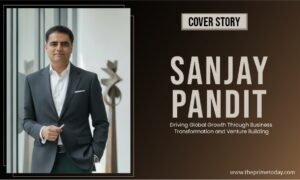
With a focus on India, Japan, Singapore and the wider Asian economy, the entrepreneur and business leader is connecting markets, talent, technology and capital to drive the next wave of growth.
Business transformation often begins with a difficult question: how can organisations grow, adapt and remain efficient while the world around them keeps changing? Sanjay Pandit, Group CEO of Nirji Ventures, has spent his career exploring that question through business turnarounds, operational excellence and large-scale transformation.
With experience across international markets and a record that includes more than $100 million in operating efficiencies, significant profitability growth and complex M&A activity, his work demonstrates a clear understanding of what makes change deliver results. Yet, his approach reaches further than numbers. He sees sustainable progress as a combination of sound processes, emerging technology, strong execution and people who are empowered to move with purpose.
That perspective now determines his work in venture building, cross-border growth and the opportunities created by AI, offering a closer look at how experienced leadership can turn complexity into meaningful business value.
Professional Journey & Leadership Purpose
Could you take us through your professional journey, highlighting the key experiences, turning points, and leadership lessons that have shaped you into the leader you are today?
My professional journey has been shaped less by titles and more by transformation. Over several decades, I have had the opportunity to build and lead businesses across Asia-Pacific, the Middle East and other international markets, including many years in senior leadership with ManpowerGroup.
During my tenure with ManpowerGroup India, I developed and executed business transformation and growth strategies that resulted in 126% revenue growth and 634% profit growth over two years. Those experiences taught me that leadership is ultimately about creating outcomes through people. Strategies change, technologies change and markets change, but the ability to mobilize people around a meaningful objective remains fundamental.
Today, through Nirji Ventures and NirjiX, I am applying those lessons to a different chapter – building ventures, helping businesses expand internationally, supporting cross-border value creation and exploring how AI is changing the way companies operate.
One lesson has remained constant throughout my career: a leader’s job is not simply to manage what exists, but to create what should exist next.
The Meaning of Inspiring Leadership
What does being an inspiring leader mean to you, and what qualities distinguish a leader whom people genuinely look up to?
Inspiring leadership is not about being the most charismatic person in the room. It is about enabling other people to see possibilities they may not yet see in themselves or their organization.
People look up to leaders who combine ambition with authenticity. They set high standards, make difficult decisions when necessary, but also create an environment where people can challenge ideas, experiment and grow.
I believe the best measure of leadership is not how dependent an organization becomes on its leader. It is how many capable leaders that person creates around them.
Building Businesses Across Markets
What have you learned about building and scaling businesses across different cultures and economic environments?
One of the biggest mistakes companies make in international expansion is assuming that a successful model can simply be exported.
My experience with ManpowerGroup’s expansion of its IT professional resourcing capabilities in India offered a practical lesson in this. In 2011, ManpowerGroup acquired a 74% stake in Web Development Company Limited (WDC), an Indian IT services and professional resourcing company with operations serving clients across India and the Asia-Pacific region. As Managing Director of ManpowerGroup India, I saw how combining a global organization’s capabilities with an established local business could strengthen market reach, specialized expertise and client value. The remaining 26% stake was acquired in 2012, making WDC a wholly owned subsidiary of ManpowerGroup’s Experis brand.
Japan is different from India. Singapore is different from the Middle East. Even within Asia, decision-making, trust, risk tolerance, customer expectations and business relationships vary enormously.
The winning formula is global ambition with local intelligence.
You need to understand how decisions are made, who influences them, how trust is established and what customers genuinely value. Localization is therefore much more than translating a website – it means adapting your operating model while protecting the fundamental strengths of your business.
Visionary Leadership & Transformation
How do you translate a long-term vision into practical business strategies, and help organizations navigate transformation while maintaining momentum?
I work backwards from the outcome.
A ten-year vision can be inspirational, but organizations operate today. I therefore translate vision into a series of measurable milestones: what must be true in three years, twelve months, ninety days and this week?
Transformation also cannot become an endless corporate program. People need to see progress.
My philosophy is: think long term, execute in short cycles. Create a clear destination, establish measurable priorities, empower accountable leaders and keep learning from what the market tells you.
AI, Technology & the Future of Business
How do you see artificial intelligence and emerging technologies reshaping leadership, workforce strategy and business growth?
AI is not simply another technology implementation. I believe it will fundamentally redesign organizations.
For decades, companies organized work around human capacity. Increasingly, work will be organized around a combination of human judgment, AI intelligence, automation and digital agents.
That changes leadership. The question will no longer be merely, “How many people do we need?” It will become, “What is the best combination of human capability and machine intelligence to produce this outcome?”
The biggest opportunity is not simply reducing cost. It is creating entirely new levels of productivity, personalization, speed and innovation.
Leaders should therefore be asking now: If we were designing our company today with AI already available, would we build the same organization? For many businesses, the answer will be no.
Cross-Border Growth & Venture Building
As a venture builder and advisor, what are the most important factors for identifying opportunities, building sustainable ventures and driving growth across borders?
I look for three things: a meaningful problem, structural change and execution capability.
A large market alone does not make a good opportunity. There must be a genuine problem worth solving and some structural reason – technology, demographics, regulation, changing consumer behavior or globalization – that makes now the right time.
Then comes execution. Ideas are increasingly abundant. Execution remains scarce.
That is why my current philosophy around venture building is increasingly operator-led rather than advisory-led. Businesses often don’t need another presentation telling them what to do. They need people capable of helping make it happen.
People, Culture & Empowerment
How have your leadership experiences influenced your approach to developing people, building high-performing teams and creating an empowering culture?
My years in the human-capital industry reinforced something I strongly believe: people frequently have far more capability than their organizations allow them to demonstrate.
High-performing cultures combine empowerment with accountability.
Give talented people meaningful problems. Make expectations clear. Give them room to make decisions. Allow intelligent failure. And recognize outcomes rather than activity.
One of leadership’s greatest responsibilities is creating an environment where people become more capable because they worked with you.
Lessons from Challenges & Setbacks
Could you share a significant challenge or turning point that changed your perspective on leadership?
One of the most important transitions in my career was moving from the relative certainty of established corporate leadership into entrepreneurship and venture building.
In a large organization, you have infrastructure, systems, teams and an established brand. Entrepreneurship strips much of that away. Suddenly, credibility must be earned again. Resources are finite. Decisions become personal. And assumptions are tested by the market very quickly.
It reinforced an important lesson for me: experience gives you pattern recognition, but it does not give you immunity from being wrong.
Earlier in my career, I worked on ManpowerGroup’s Australian Defence Force recruiting project, contributing to business-case planning, IT systems procurement and negotiations. The initiative reportedly helped reduce costs by approximately 40%. That experience reinforced for me that meaningful transformation often depends on getting the operational details right, particularly when the stakes are high and multiple stakeholders are involved.
Resilience therefore isn’t stubbornly pursuing the original plan. Sometimes resilience means having the courage to change it.
Leadership in Times of Uncertainty
When markets, technologies or business conditions change rapidly, how do you make confident decisions while managing uncertainty?
I don’t believe leaders need certainty before making decisions. In many important situations, certainty simply doesn’t exist.
Instead, I separate decisions into two categories: reversible and irreversible. Reversible decisions should generally be made quickly. Test, learn and adjust. Irreversible decisions deserve deeper analysis.
The second principle is transparency. Teams handle uncertainty much better when leaders explain what they know, what they don’t know and why a particular direction has been chosen.
Confidence does not mean pretending to know everything. It means being prepared to act responsibly despite incomplete information.
The Role of Purpose & Values
How do personal values and purpose influence your leadership decisions, partnerships and approach to long-term impact?
Values become meaningful when they cost you something.
Integrity is easy when there is no conflict between principle and opportunity. The real test comes when an attractive opportunity requires compromising something important.
I increasingly ask myself three questions: Is this commercially meaningful? Is it sustainable? And will I be proud of having been associated with it ten years from now?
Purpose, for me, is not separate from business. It is about building organizations that create enduring value for customers, employees, partners and society.
Mentorship & Developing Future Leaders
What principles or advice would you share with emerging leaders who want to build credibility, lead with confidence and create meaningful impact?
Don’t build your career around titles. Build it around capability.
Take assignments that make you uncomfortable. Work across functions and cultures. Learn finance even if you work in HR. Understand technology even if you aren’t an engineer. Learn how customers buy. Learn how businesses actually make money.
And protect your credibility relentlessly.
In an increasingly AI-enabled world, knowledge itself will become easier to access. Judgment, credibility, curiosity and the ability to mobilize people will become more valuable.
Advice for Entrepreneurs & Business Leaders
Based on your experience as a senior executive, venture builder and board advisor, what three lessons would you recommend to leaders scaling organizations?
First, stay close to customers. Organizations become vulnerable when internal assumptions replace external reality.
Second, don’t confuse growth with scale. Growth can be achieved by adding resources. Scale means creating systems that allow outcomes to grow faster than complexity and cost.
Third, build before you need it – but not too far before you need it. Whether it is leadership talent, technology or operating infrastructure, timing matters enormously.
And perhaps one overarching principle: execution beats PowerPoint.
Your Vision for Leadership in 2026 and Beyond
What changes do you expect to see in leadership, talent, technology and business growth over the next few years?
I believe we are entering one of the most consequential periods for business leadership in decades.
AI will change organizational structures, jobs and productivity. Demographic changes will reshape talent markets. Global supply chains will continue evolving. India and Asia will play increasingly important roles in global growth, manufacturing and innovation.
Tomorrow’s successful leader will therefore need to be simultaneously a technologist, people leader, capital allocator and global thinker.
The old model of periodically developing a five-year strategy and then executing it is becoming obsolete. The future belongs to organizations that can continuously sense change, make decisions and reconfigure themselves.
Adaptability is becoming an organizational capability, not merely a leadership trait.
Legacy & Lasting Impact
What kind of legacy do you hope to create through your leadership, ventures and advisory work?
I would like my legacy to be measured less by the positions I held and more by what existed because I was there.
Businesses that grew. Ventures that became meaningful. Markets that were connected. People who became leaders. Entrepreneurs who gained confidence. Organizations that transformed rather than becoming obsolete.
I am increasingly interested in connecting ecosystems – particularly across India, Japan, Singapore and the broader Asian economy – and helping businesses convert opportunities in AI, global capability, manufacturing and cross-border expansion into actual outcomes.
If, years from now, people say, “He saw possibilities early, brought the right people together, and helped turn those possibilities into something real,” I would consider that a meaningful legacy.