
SpaceX Starship Spacecraft Catch Succeeds at Starbase
Overview
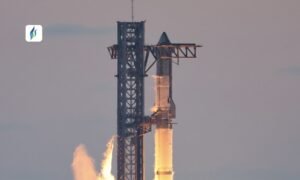
SpaceX completed the first Starship spacecraft catch on Saturday, 14 November 2026, when mechanical arms at Starbase, Texas, grabbed the returning vehicle above Launch Pad 2. The 15th Starship test flight lasted 22 hours, and the result is a step toward reusable rockets that could lower space launch costs.
Key Highlights
- Tower arms caught the returning spacecraft at Starbase on Saturday.
- The vehicle stands 171 feet (52 metres) tall.
- The 22-hour flight completed 14 orbits and released 26 Starlink satellites, according to the report.
- Spectators on the Gulf of Mexico coast cheered the catch.
What Happened?
The Starship spacecraft emerged from thick clouds after surviving re-entry heat, Reuters reported. It relit its engines to turn upright and descended slowly toward the launch tower. Two huge structures nicknamed “chopstick arms” secured it above Launch Pad 2. The engines then shut down, and the visibly charred vehicle hung several hundred feet above the ground. SpaceX’s livestream played the 1977 song “Baby Come Back” during the final descent.
SpaceX spokesperson Dan Huot called it “the Holy Grail of spaceflight.”
Why Is It Important?
AFP reported that the Starship spacecraft catch is a major advance toward fully reusable rockets. A vehicle that returns intact to its launch site can fly again instead of being discarded. That could cut mission costs and allow more frequent launches.
Impact and Implications
For SpaceX, a repeatable catch could support its Starlink plans, since this single flight already carried 26 of the company’s internet satellites. For the wider industry, it sets a new benchmark for recovering the upper stage of a heavy rocket, the part usually lost after use. Cost savings remain a prospect, not a proven result.
What Happens Next?
The reports do not say when the next Starship test flight will take place. Watch for SpaceX’s inspection of the caught vehicle and any decision on reflying it.