
Dr. Mousumi Saha: Connecting Scientific Discoveries with Real-World Solutions
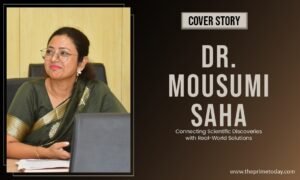
Advancing Research, Entrepreneurship and Innovation to Address Emerging Societal Needs!
A scientific discovery can take years of research, experimentation and careful observation. Yet the journey from a laboratory to a solution that benefits society brings its own difficulties. Researchers need funding, industry connections, technology validation, intellectual property support and an understanding of the market before their work can reach the people who need it. This remains a major challenge in biotechnology, where promising discoveries often require guidance to progress into practical applications.
Dr. Mousumi Saha has experienced this journey from both sides. Beginning with academic research in biotechnology, she gradually moved into innovation, entrepreneurship and incubation, carrying her scientific understanding into the work of supporting emerging innovators.
Today, as CEO of AIIMS Patna Incubation and Innovation Council (APIIC) and Adviser to the AIIMS Patna–BFI Incubation Centre, she works towards creating opportunities for researchers, students, clinicians and entrepreneurs to turn their ideas into practical solutions.
A Curiosity About the Biological World
Dr. Saha’s journey began with a deep curiosity about the biological world and its potential to solve real-life problems. During her academic years in Biotechnology, she became particularly interested in microbiology, molecular biology and environmental biotechnology. Winning the Gold Medal in her M.Sc. in Biotechnology and subsequently pursuing a Ph.D. strengthened her belief that science can create meaningful change when research is connected to societal needs.
As her academic journey progressed, she gradually realised that scientific discoveries should reach people, industries and communities rather than remain confined to laboratories or publications. This understanding encouraged her to move beyond conventional research and become actively involved in innovation, entrepreneurship and technology development.
Research with a Responsibility Towards Society
Dr. Saha research journey taught Dr. Saha that scientific excellence must be accompanied by responsibility, patience and a commitment to public welfare.
She has worked in areas including environmental microbiology, antimicrobial resistance, bioremediation, aquaculture and molecular biology. During her DST-National Postdoctoral Fellowship, she worked on the molecular and functional characterisation of polymer-degrading bacteria and microbial tools for the remediation of plastics such as polyurethane and low-density polyethylene. Her work involved the identification and characterisation of PURase from Pseudomonas sp., including purification and immobilisation studies.
Earlier, as a DBT Research Associate at CSIR-Indian Institute of Chemical Biology, she worked on antimicrobial resistance-related research. These experiences helped her understand the importance of scientific integrity, reproducibility and the potential impact of research on public health and environmental sustainability.
Her research also led her to reflect on the responsibility scientists carry. She believes researchers have a responsibility to ask whether a discovery can address a genuine problem and benefit society, alongside considering whether it is scientifically interesting.
Recognising the Gap Between Research and Commercialisation
One of the biggest challenges Dr. Saha identifies is the gap between laboratory research and market requirements. A promising research outcome may not automatically become a commercially viable product. It needs technology validation, prototype development, intellectual property protection, regulatory understanding, market assessment, business planning and access to funding.
In many academic institutions, researchers have strong scientific capabilities but limited exposure to entrepreneurship, industry expectations and investment processes. Another challenge is the absence of sustained mentoring and institutional support beyond the initial research stage.
Incubation centres can play a transformative role by providing structured support, connecting innovators with industry, facilitating IP protection, identifying funding opportunities and supporting technology transfer.
From Biotechnology Research to Entrepreneurship Leadership
The transition from biotechnology research to entrepreneurship development brought a new perspective to Dr. Saha’s professional life. Research taught her analytical thinking, discipline and evidence-based decision-making. Entrepreneurship development taught her adaptability, collaboration, resource mobilisation and the importance of understanding different perspectives.
As Centre Coordinator of the BIRAC-supported E-YUVA Centre at Adamas University, she worked in grant management, mentoring, funding facilitation, IP management, technology transfer and industry exposure. She also supported students, innovators and startups in preparing proposals, business plans and pitches.
Later, at IKN Innovation Foundation, IMI Kolkata, she gained further experience in local business acceleration and new venture development.
Her experience at the BIRAC-supported E-YUVA Centre at Adamas University and subsequently at APIIC has reinforced her belief that incubation must be a continuous process, from idea identification and proof-of-concept to prototyping, validation, commercialisation and scaling.
Building and Strengthening an Incubation Ecosystem
One of the most significant learning experiences in Dr. Saha’s professional journey has been building and strengthening incubation initiatives with limited resources, multiple responsibilities and ambitious institutional expectations.
Working at the E-YUVA Centre taught her how to coordinate with researchers, fellows, funding agencies and industry stakeholders while managing grants, mentoring and institutional requirements.
At AIIMS Patna, her responsibility as CEO of APIIC has further strengthened her understanding of institution-building. Developing an incubation ecosystem requires much more than infrastructure. It requires governance systems, financial discipline, partnerships, mentoring networks, compliance, funding strategies and a committed team.
She has learned that progress is not always immediate. There are administrative challenges, resource constraints and uncertainties. However, persistence, teamwork and a clear vision can gradually turn an institutional ambition into a functioning ecosystem.
She considers every challenge an opportunity to improve systems, learn new approaches and build stronger collaborations.
Today, as CEO of APIIC, she sees leadership as creating an enabling environment where people can perform, experiment and grow. An incubation leader must understand the priorities of researchers, entrepreneurs, investors, funding agencies and institutions and bring them together around a shared objective.
Her approach is collaborative, transparent and outcome-oriented. She believes in building systems and teams rather than depending only on individual efforts.
Identifying the Potential of a Scientific Idea
For Dr. Saha, recognising whether a scientific idea has the potential to become a sustainable business involves five important aspects: the problem being addressed, the uniqueness of the proposed solution, technical feasibility, market demand and the potential for sustainable revenue generation.
An innovation must solve a clearly identified problem. It should offer measurable advantages over existing alternatives and have a realistic pathway for development, validation and adoption.
She also encourages innovators to evaluate their intellectual property position, regulatory requirements, manufacturing possibilities, customer expectations and the financial resources required for development.
A prototype alone does not establish commercial viability. It is important to understand who will use the product, who will pay for it and how the business will sustain itself.
Her role as an incubation professional is to help innovators ask these questions early, reduce avoidable risks and develop a realistic roadmap.
Guiding Young Innovators
Dr. Saha believes scientific integrity and commercial thinking must complement each other. Commercialisation should never mean compromising the quality, safety or credibility of a scientific innovation.
While mentoring innovators, she encourages them to understand the complete journey of their technology: research validation, prototype development, IP protection, market assessment, regulatory compliance, business planning and customer feedback.
At the E-YUVA Centre, she mentored BIRAC-supported fellows and supported innovation teams in areas such as product development, funding proposals, IP and industry exposure. Her CV records mentoring support to more than 60 students and innovators, including 10 E-YUVA teams comprising 50 fellows and three BIRAC Innovation Fellows.
She encourages young innovators to remain open to criticism, validate their assumptions and understand that a successful entrepreneur must be both scientifically responsible and commercially aware.
Biotechnology Areas Which Deserve Greater Entrepreneurial Attention
Dr. Saha sees significant opportunities in environmental sustainability, healthcare, antimicrobial resistance, diagnostics, aquaculture, agriculture and bio-based products.
Environmental biotechnology deserves particular attention. Plastic degradation, wastewater treatment, microbial remediation and sustainable resource management are areas where scientific innovation can create considerable societal value. Her own research in polymer-degrading microorganisms and bioremediation has strengthened her interest in developing environmentally responsible technologies.
Antimicrobial resistance is another critical area. There is a need for better diagnostics, surveillance tools, innovative therapeutic approaches and solutions that support responsible antimicrobial use.
She also sees considerable potential in healthcare innovation, especially where clinicians, engineers, scientists and entrepreneurs work together to address unmet clinical needs.
India has a strong scientific talent base. The challenge is to create better pathways for translating that talent into affordable, scalable and impactful solutions.
Bringing Academia, Government, Industry and Funding Institutions Together
Dr. Saha sees a need for stronger, more structured and outcome-oriented collaborations between academia, government, industry and funding institutions.
Academic institutions generate knowledge, government and funding agencies provide enabling support, industries understand market requirements, and incubators connect these different stakeholders. However, these partnerships must go beyond occasional meetings and events.
There should be clear mechanisms for joint research, technology assessment, IP management, licensing, pilot projects, industry validation and startup development.
Technology Transfer Offices and incubation centres should work closely with organisations such as IKP Knowledge Park, FITT–IIT Delhi and NRDC to strengthen IP strategy, industry linkages and technology transfer.
It is equally important to decentralise innovation opportunities. Researchers and entrepreneurs outside established startup hubs should have access to mentoring, funding information, technical facilities and industry networks.
She believes regional institutions can become powerful innovation centres when they are supported by strong partnerships and professional incubation systems.
The Role of a Transformative Mentor
For Dr. Saha, a good mentor does more than provide advice. A transformative mentor helps an individual recognise opportunities, build confidence, understand challenges and make informed decisions.
She believes mentoring requires patience, accessibility and the willingness to share practical experiences. Young innovators often have ideas and enthusiasm but may lack exposure to funding, IP, regulatory pathways, industry networks and business development.
Her mentoring approach focuses on helping innovators understand the complete journey rather than simply preparing them for a particular competition or funding call.
She has also benefited from guidance and encouragement from several professionals throughout her career. These experiences have reinforced her belief that mentorship is a two-way learning process.
Her objective is to help young researchers become independent thinkers and confident entrepreneurs who can take responsibility for their innovations.
A Woman’s Journey in Science and Leadership
Dr. Saha’s experience as a woman in science and institutional leadership has taught her the importance of confidence, resilience, consistency and self-belief.
There are times when women have to work harder to establish their professional identity and demonstrate their leadership capabilities. She has learned that challenges or stereotypes should never be allowed to define a person’s potential.
Her journey from academic research to leading incubation initiatives has involved continuous learning, professional responsibilities and the courage to take on unfamiliar roles.
She strongly believes women should actively participate in research leadership, entrepreneurship, technology development and institutional decision-making. The next generation should expand its ambitions beyond traditional career paths. Women scientists can become researchers, founders, technology leaders, investors and ecosystem builders.
She encourages young women to develop their expertise, build professional networks, seek mentorship and take calculated risks. Most importantly, they should recognise their own capabilities and never stop learning.
The Innovation Ecosystem She Hopes to Build
Looking towards the next decade, Dr. Saha wants to contribute to an innovation ecosystem where research, entrepreneurship and industry work together to address national and global challenges.
Her vision is to see more academic and medical institutions become active centres of innovation, where students, researchers, clinicians and entrepreneurs receive the support required to develop technologies and build sustainable enterprises.
She wants to see stronger technology-transfer systems, professional incubation management, accessible seed funding, industry-linked research and greater participation of women entrepreneurs.
For India, she believes the next decade will be particularly important for healthcare technologies, biotechnology, artificial intelligence, sustainable technologies and deep-tech innovation.
She hopes young researchers remember that a research paper can create knowledge, but a successfully translated technology can change lives. Both are important, and the journey from one to the other requires courage, collaboration and commitment.
Her professional goal is to continue building institutions and opportunities that allow promising ideas to become meaningful innovations.
A Personal Note of Gratitude
No professional journey is ever built alone. Behind every achievement are the people who believe in us, encourage us and stand beside us through difficult times.
Dr. Saha dedicates her heartfelt gratitude to her parents, Late Sailen Saha and Smt. Namita Saha, whose values, blessings and encouragement have shaped the person she is today. Their contribution to her life and journey, she expresses, is beyond words.
Her deepest appreciation goes to her husband, Dr. Agniswar Sarkar, who has been her constant support, strength and backbone. His encouragement, understanding and belief in her have helped her pursue her aspirations with confidence.
She also expresses her special thanks to Dr. Kranti Bhavana, Dr. Anil Kumar, Dr. Sudeep Kumar and Mr. Somesh Chandra for their guidance, cooperation and support in helping her find her path and strengthen her professional journey at AIIMS Patna.
Finally, she is grateful to all her mentors, colleagues, team members, collaborators, friends and well-wishers who have contributed in different ways. Every interaction, encouragement and opportunity has added something valuable to her journey.
Dr. Saha believes success is not merely about reaching a position; it is about the people one learns from, the institutions one helps build and the positive impact one creates along the way.