
Shiv Jayanti 2026: Remembering the Legacy of Chhatrapati Shivaji Maharaj
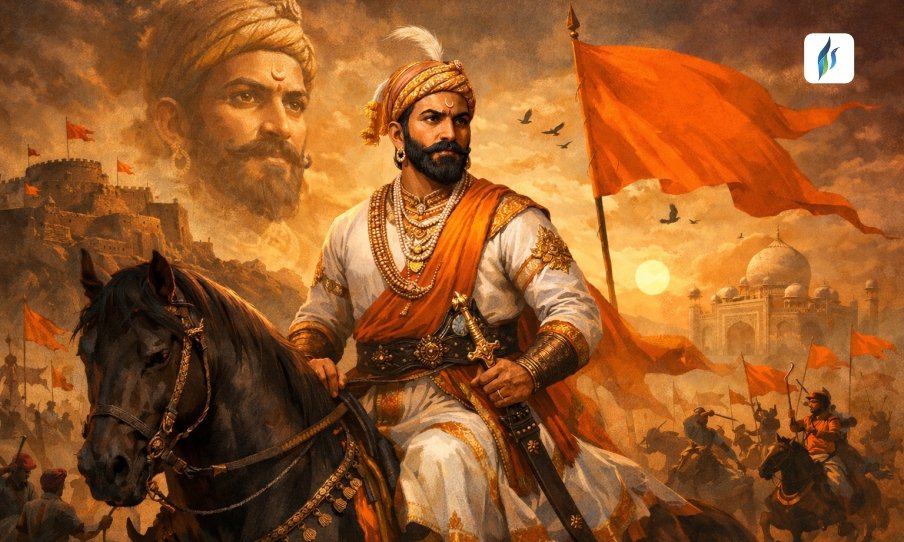
Before the idea of a nation had a name, there was a man who understood its soul. Before leadership was measured in power, he measured it in responsibility. On Shiv Jayanti 2026, the Legacy of Chhatrapati Shivaji Maharaj does not emerge from history; it rises from conscience. It rises from forts that still stand vigilant, from soil that remembers sacrifice, and from a vision that refused to separate courage from ethics.
Chhatrapati Shivaji Maharaj did not lead to be remembered; he led because the land demanded guardianship and the people deserved dignity.
From the Birthplace of Chhatrapati Shivaji Maharaj, where resolve was created long before authority was granted, to the living idea of the Maratha Empire, his life was not a pursuit of dominance; it was a vow. A vow that power must serve, that leadership must protect, and that the future must be earned through values, not force. That vow defines the Legacy of Chhatrapati Shivaji Maharaj—and it still waits to be lived.
The Birthplace of Chhatrapati Shivaji Maharaj, Shivneri Fort, was not merely the site of a royal birth. It was the birthplace of intent. Within its walls, leadership appeared not as privilege, but as duty. Young Chhatrapati Shivaji Raje learned early that land is not something to be conquered; it is something to be protected.
He absorbed discipline before authority and responsibility before command. As we reflect on Shiv Jayanti 2026, the Birthplace of Shivaji Maharaj reminds us that enduring leadership is forged quietly, long before it is tested publicly. These early values later became the moral foundation upon which the Maratha Empire was built, an empire shaped by responsibility rather than entitlement, and by service rather than fear.
The Legacy of Chhatrapati Shivaji Maharaj: A King Who Belonged to His People
The true strength of the Legacy of Chhatrapati Shivaji Maharaj lies in his relationship with his people. Chhatrapati Shivaji Maharaj did not govern from a distance or detachment. He understood the lives of farmers dependent on seasons, traders dependent on stability, and soldiers dependent on trust. He ruled with awareness, empathy, and accountability.
His governance never relied on pressure; it functioned as a system of protection. Fair taxation, respect for local communities, and strict administrative accountability allowed the Maratha Empire to grow through belief rather than forced compliance. The Legacy of Chhatrapati Shivaji Maharaj proves a timeless truth: when leadership protects dignity, loyalty becomes its strongest foundation.
Ethics as the Backbone of the Maratha Empire
What distinguished Chhatrapati Shivaji Maharaj from many rulers of his era was his uncompromising ethical vision. The Maratha Empire operated on a strict moral code—discipline among forces, respect for women, protection of civilians, and tolerance across faiths. These values were not symbolic declarations; they were enforced principles.
Chhatrapati Shivaji Raje believed that success without ethics was failure in disguise. By embedding morality into governance, he ensured that the Legacy of Chhatrapati Shivaji Maharaj would survive political change, territorial shifts, and the passage of centuries. Ethics did not limit his leadership; they strengthened it.
Leadership Lessons That Still Matter
In an era defined by speed, scale, and short-term outcomes, Shiv Jayanti 2026 offers a necessary pause. Chhatrapati Shivaji Maharaj practiced leadership principles that modern institutions still strive to master: decentralized authority, merit-based trust, and accountability at every level.
The Legacy of Chhatrapati Shivaji Maharaj reminds today’s leaders that power is temporary, but systems endure. Chhatrapati Shivaji Raje focused on building capable leadership around him rather than dependence on himself. This foresight transformed the Maratha Empire into a resilient institution rather than a personality-driven rule.
From the Maratha Empire to Modern Leadership
The success of the Maratha Empire was not accidental. Chhatrapati Shivaji Maharaj anticipated uncertainty and designed governance to withstand it. Strategic fort networks, intelligence systems, and administrative reforms emerged not for domination, but for continuity and protection.
For modern leaders across business, governance, and social institutions, the Legacy of Chhatrapati Shivaji Maharaj delivers a critical lesson: growth without ethics is fragile. Chhatrapati Shivaji Raje demonstrates that ambition must be anchored in responsibility if leadership is to shape a stable and meaningful future.
Living the Legacy of Chhatrapati Shivaji Maharaj
Honoring the Legacy of Chhatrapati Shivaji Maharaj goes beyond ceremonies and commemorations. It lives in everyday leadership choices—placing people before convenience, values before short-term gain, and long-term impact before recognition.
From birth to the far-reaching influence of the Maratha Empire, his life was defined by service. Shiv Jayanti 2026 reminds us that legacy is not inherited by title; it is practiced through conduct.
When Leadership Serves, History Endures
The Legacy of Chhatrapati Shivaji Maharaj endures because it redefined leadership itself. Through courage guided by ethics, governance rooted in empathy, and unwavering devotion to the motherland, Chhatrapati Shivaji Maharaj created a leadership philosophy that transcends centuries.
As Shiv Jayanti 2026 is celebrated, the message remains unmistakable:
True leaders do not seek to rule time; they seek to be worthy of it.
Read Also : Corporate Leadership Development: Cultivating the Entrepreneur Mindset in Modern Executives