
The Global Guide of Knowledge – Dr. Mariam Shaikh’s Three Decades of Opening Doors in the Middle East
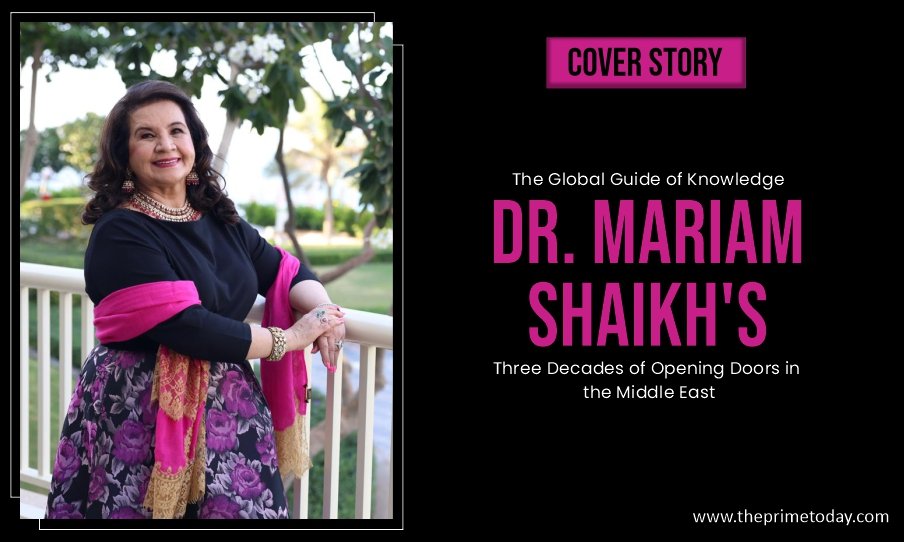
A quiet force has been redefining the meaning of opportunity for over three decades in the vibrant heart of the United Arab Emirates (UAE), where the desert sands meet the glass horizons of tomorrow. A name that resonates through the hallways of the most prestigious academic institutions in the region is Dr. Mariam Shaikh. As the Founder and CEO of MS Education Consultants, she has spent more than thirty-five years ensuring that the bridge between a student’s dream and their future remains strong and accessible. Recognized as one of the global women leaders shaping innovation and legacy in 2026, her journey is a masterclass in how a single person’s vision can change the educational landscape of an entire country.
A Legacy of Empowerment and Early Seeds
The journey for Dr. Mariam Shaikh began with a personal conviction that education is the ultimate tool for transformation. This belief was passed down to her by her mother, a woman who held a firm commitment to women’s empowerment and the necessity of learning. Those early lessons in supporting young girls and opening doors to knowledge became the compass for Mariam Shaikh’s entire career.
In the early 1980s, when the education sector in the UAE was still in its infancy, she took her first professional step by establishing a small nursery in Ras Al Khaimah. What began as a humble venture eventually blossomed into Sunflower Nursery. This initial chapter taught her invaluable lessons about community engagement and the delicate art of nurturing young minds within a multicultural environment. It was here that she first witnessed how education could act as a unifying force, bringing together children from vastly different nationalities and backgrounds.
Building Global Gateways in Higher Education
As the landscape of the UAE evolved, so did Mariam Shaikh’s role within it. She transitioned into higher education, becoming a key player for international universities looking to plant roots in the region. One of her major milestones was assisting in the establishment of the University of New Brunswick’s campus in Dubai, a move that brought Canadian academic standards to the Middle East.
Her expertise soon led her to senior leadership positions at renowned institutions such as Heriot-Watt University Dubai, Canadian University Dubai, and Amity University Dubai. In these roles, she managed everything from student recruitment to international partnerships. Each experience deepened her understanding of global systems and the vital importance of creating strong links between academic institutions and the students they serve. She saw firsthand how international collaboration could enrich a classroom and broaden a student’s horizon far beyond their local borders.
The True Measure of Success: Student Impact
Despite the titles and institutional growth, the most defining moments of her career have always centered on the students themselves. Mariam Shaikh has spent decades guiding individuals through the complexities of their educational journeys. Many of these students were the first in their families to ever step onto a university campus, while others fought against significant financial or social barriers to reach their goals.
For Mariam Shaikh, the most meaningful victories are found in helping a student secure a life-changing scholarship or assisting a refugee in gaining access to higher learning. Watching these individuals go on to build successful careers across the globe serves as a constant reminder that education is not merely about programs or buildings. It is about the power of empowering an individual to realize their full potential.
Looking back, her path was not marked by a single event, but by a consistent series of experiences that proved a simple truth: when education is made accessible, inclusive, and globally connected, it has the power to transform entire communities.
Beyond the Metrics: Redefining Educational Success
In the world of academia, success is often reduced to enrollment rates, recruitment targets, and data points. While Mariam Shaikh acknowledges these metrics are necessary for institutional growth, she believes they fail to capture the true essence of education. To her, the real measure of success is found in the lives students build long after the graduation ceremony is over. She looks for the quiet confidence in a graduate’s abilities, their active contribution to their industries, and the sense of fulfillment they find in their chosen careers.
Another powerful indicator of a job well done is the strength of alumni relationships. Mariam Shaikh finds deep meaning when former students remain connected to their roots, mentoring those who come after them and contributing back to the academic community. The most rewarding moments of her professional life occur years later, when she receives messages from past students sharing how their education opened doors they once thought were permanently locked. These stories reinforce her belief that education is not simply about earning a degree; it is about shaping individuals who can make a meaningful contribution to the world.
Navigating the Cultural Compass of Education
Working across diverse regions has taught Mariam Shaikh that education is never a one-size-fits-all model; it is deeply woven into the fabric of culture, values, and societal expectations. She has observed that strategies successful in one part of the world cannot always be transplanted directly into another without careful adaptation. In the Middle East, for instance, she notes that education is intimately tied to family aspirations and the pursuit of long-term career stability.
In this region, students rarely make academic decisions in isolation; they move in consultation with their families. Mariam Shaikh believes that understanding this collective dynamic is essential when designing programs or advising students on their futures. While global institutions bring innovation and research excellence, she maintains that they must respect local priorities to truly succeed. Programs that emphasize employability, entrepreneurship, and community contribution are the ones that resonate most strongly with students and their families alike.
Acting as a Global Bridge
Throughout her career, Mariam Shaikh has frequently served as a vital link between international institutions and regional communities. Her role involves helping each side understand the other’s expectations and unique perspectives. She finds that when this balance is achieved, the results are immense: students gain access to prestigious global opportunities while remaining firmly connected to their own cultural identity. This harmony ensures that international education enriches a student’s life without distancing them from their roots.
Strategic Priorities for a Transformative Era
As the world moves through 2026, Mariam Shaikh recognizes that we are witnessing one of the most transformative periods in global education history. She identifies several key trends that are currently redefining the landscape. First is the continued expansion of hybrid and flexible learning models. Having seen how the pandemic accelerated digital transformation, she observes that institutions are now finding sophisticated ways to blend physical mobility with digital experiences, making international education more affordable and accessible than ever before.
Second is the rising importance of skills-based education. Mariam Shaikh notes that modern employers are looking far beyond traditional degrees, focusing instead on practical skills, innovation, and adaptability. Consequently, she advocates for universities to integrate experiential learning, internships, and interdisciplinary programs into their core offerings to ensure graduates are truly workforce-ready.
A Future of Collaboration and Wellbeing
The third major trend Mariam Shaikh highlights is the growth of global collaboration. She sees a future defined by dual degrees, transnational campuses, and international partnerships that allow students to move seamlessly between different education systems. This interconnectedness is creating a more dynamic and inclusive global academic environment.
Finally, she believes that student wellbeing and mental health support must become central priorities. As students navigate the pressures of global mobility and cultural transitions, institutions have a responsibility to build stronger support systems. To Mariam Shaikh, nurturing personal development is just as important as fostering academic growth. Together, these shifts are building a global education landscape that is more resilient, inclusive, and prepared for the challenges of tomorrow.
The Blueprint for Trust and Relevance
As higher education becomes more competitive and globalized, Mariam Shaikh offers clear advice to institutions striving to maintain their relevance. She believes that universities must shift their focus from simple expansion to authenticity and purpose. In an age where families conduct exhaustive research before choosing a path, they are looking for more than just academic excellence—they are seeking genuine support systems and clear career pathways.
Mariam Shaikh advocates for placing the student experience at the very center of institutional strategy. This includes providing robust academic advising, industry partnerships, and essential wellbeing support. Transparency is equally critical; institutions that communicate honestly about outcomes and expectations are the ones that build long-term trust. In her view, the universities that remain adaptable and collaborative are the only ones that will thrive in an increasingly crowded global landscape.
A Legacy of Empowerment and Female Leadership
If there is one legacy Mariam Shaikh hopes to leave behind, it is the unshakable belief that education must always remain a force for empowerment. Throughout her career, she has been inspired by those who pursued their learning against great odds, and supporting those difficult journeys has been one of the greatest privileges of her life. She also hopes her path encourages more women to step into leadership roles within the educational sector. She believes women bring a necessary blend of empathy and resilience to leadership, which is essential for building forward-thinking institutions.
“To the next generation of women leaders: stay true to your values, embrace your vision, and never underestimate your ability to create change.”
Mariam Shaikh’s journey continues with the understanding that when we empower an individual through education, we are doing more than just shaping a career. We are shaping the fabric of society and building a future that is grounded in hope. Her work remains a testament to the idea that a single vision, when rooted in service, can create a ripple effect of transformation that lasts for generations.