
Ignacio Campoy: Shaping the Education Professionals of the Future
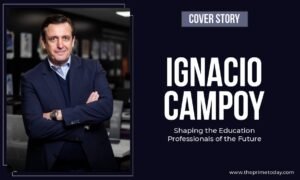
How Formación Universitaria Turned Digital Disruption into a Global Opportunity for Lifelong Learning
For decades, education followed a familiar structure: classrooms, schedules, geography, and rigid pathways that often-excluded people whose lives did not fit neatly into traditional systems. Yet as industries transformed, technology accelerated, and the global workforce evolved, the limitations of conventional education became impossible to ignore. Millions of talented individuals around the world were ready to learn, grow, and reinvent themselves professionally—but lacked access to flexible, career-oriented education.
Long before online learning became mainstream, Ignacio Campoy recognized that the future of education would not be defined by physical campuses alone. It would be shaped by accessibility, adaptability, and human-centered innovation.
As CEO of Formación Universitaria, Ignacio Campoy has spent nearly a quarter of a century reshaping vocational and professional education through a model built on employability, digital advancement, and lifelong learning. What began as a bold vision during the early rise of e-learning has evolved into an internationally recognized educational ecosystem that has impacted more than 300,000 students from over 90 nationalities.
At a time when the education sector is undergoing one of the most disruptive periods in its history, Ignacio Campoy’s leadership offers a compelling example of how organizations can navigate uncertainty, technological change, and shifting workforce demands while remaining deeply committed to human development.
A Vision Born Ahead of Its Time
Ignacio Campoy’s professional journey began in commercial management and marketing, but his perspective quickly evolved beyond business performance metrics. Early in his career, he observed a recurring pattern inside organizations: the true differentiator was not technology, infrastructure, or even strategy—it was people.
That realization led him toward leadership development, emotional intelligence, and executive education. More importantly, it inspired a broader mission: creating educational systems capable of unlocking human potential regardless of social, economic, or geographical limitations.
When Formación Universitaria was founded, online education was still met with skepticism. Digital learning platforms lacked credibility in many academic and corporate circles, and traditional institutions questioned whether remote education could truly deliver meaningful outcomes.
For Ignacio Campoy, however, the challenge represented an opportunity.
Instead of replicating traditional classroom structures in digital form, Formación Universitaria was designed around flexibility, accessibility, and real-world employability. The institution focused on helping students develop practical skills aligned with emerging labor market needs while removing barriers that prevented many individuals from continuing their education.
It was a visionary approach at a time when the world had not yet fully embraced digital evolution.
Today, as online and hybrid learning models dominate global education conversations, Formación Universitaria stands as proof that innovation rooted in purpose can create long-term impact.
Leading Through the Era of Educational Evolution
The education sector has experienced profound disruption over the last decade. Technological advancement, changing workforce expectations, automation, artificial intelligence, and the rise of the digital economy have fundamentally altered how knowledge is delivered and consumed.
Then came the pandemic.
What might have taken years of gradual evolution happened almost overnight. Institutions across the world were forced to digitize rapidly, redesign learning systems, and rethink student engagement. For many organizations, the sudden transition exposed deep structural weaknesses.
For Formación Universitaria, however, the moment became an opportunity to scale and strengthen its already established digital capabilities.
Ignacio Campoy understood that success during this period required more than technological readiness. It requires adaptability, emotional intelligence, and the ability to lead through uncertainty.
“The organizations that survive are not necessarily the largest,” he often emphasizes, “but those capable of adapting, innovating, and maintaining a strong culture built on shared values and purpose.”
Under his leadership, the institution accelerated investments in educational technology, multimedia learning systems, practical simulations, personalized support models, and AI-enhanced learning experiences.
Formación Universitaria was also among the early pioneers in Andalusia and Spain to embrace e-learning as a scalable educational model, long before digital education became globally accepted.
Yet despite the growing role of digital tools, Ignacio Campoy remained focused on a critical principle: technology should humanize education, not replace human connection.
This philosophy became one of Formación Universitaria’s defining strengths.
While many organizations concentrated solely on digital infrastructure, Ignacio Campoy focused equally on student experience, mentorship, emotional engagement, and the cultivation of soft skills such as resilience, adaptability, communication, and creativity.
In an increasingly automated world, he believed these human competencies would become true differentiators of future professionals.
Building an Employability-Driven Learning Ecosystem
One of the institution’s most significant competitive advantages lies in its ability to remain closely connected to evolving labor market demands.
As industries continue to evolve at unprecedented speed, traditional educational models often struggle to update curricula quickly enough to match real-world workforce requirements. Ignacio Campoy recognized early that employability—not simply academic certification—would define the future value of education.
Today, Formación Universitaria offers more than 6,000 educational programs designed to align with current and emerging market opportunities.
The institution functions as a forward-looking talent ecosystem aligned with the evolving needs of modern industries, continuously identifying high-growth sectors, professional trends, and future skill requirements.
This proactive approach has enabled Formación Universitaria to position itself at the intersection of education and industry.
Students are not only trained in technical competencies but are also encouraged to develop transversal skills essential for long-term career success. Critical thinking, emotional intelligence, leadership, collaboration, and continuous learning have become central pillars of the institution’s educational philosophy.
Ignacio Campoy believes that future professionals will need to reinvent themselves repeatedly throughout their career.
The traditional model of “study once and work forever” no longer exists.
Instead, lifelong learning has emerged as one of the defining realities of the modern economy.
Under Ignacio Campoy’s leadership, Formación Universitaria has embraced this shift by developing increasingly modular, flexible, and personalized educational pathways designed to support professionals at every stage of their career journey.
Human-Centered Leadership in a Digital World
Despite leading a technology-driven educational organization, Ignacio Campoy’s leadership philosophy remains deeply humanistic.
He is a strong advocate of MetaLeadership, a leadership model focused on understanding diverse personality behaviors while integrating multiple leadership approaches into a unified framework.
At its core, his philosophy is grounded in purpose, consistency, active listening, innovation, and human development.
Ignacio Campoy believes organizations achieve meaningful progress when people find purpose in what they do.
That belief extends internally throughout Formación Universitaria’s culture.
Recognizing that innovation cannot thrive in environments driven by fear or rigidity, he has prioritized collaboration, continuous improvement, employee well-being, and shared learning across the institution.
The organization’s “Wellbeing 5.0” initiative reflects this commitment to building emotionally healthy workplaces where people feel valued, heard, and empowered.
In a rapidly evolving educational landscape, maintaining a strong organizational culture has become one of the institution’s greatest assets.
Ignacio Campoy understands that sustainable growth depends not only on strategic planning but also on the ability to connect talent around a common mission.
“No high-performing organization is built from individual ego alone,” he explains. “Great results emerge when talent is connected, heard, and united around a shared vision.”
Expanding Global Impact Through Education
One of Formación Universitaria’s most remarkable achievements has been its international growth.
What began as an ambitious educational initiative in Spain has evolved into a global learning community serving students from more than 90 nationalities.
For Ignacio Campoy, internationalization represents far more than geographic expansion.
It reflects the emergence of borderless education.
In today’s interconnected world, students are no longer limited by location when pursuing professional growth opportunities. Cross-border learning experiences, international collaboration, and multicultural educational environments are reshaping how future professionals prepare for global careers.
Ignacio Campoy views this trend as one of the most transformative developments in modern education.
The ability to share knowledge, perspectives, and talent across cultures not only enriches learning outcomes but also prepares students to thrive in increasingly globalized industries.
At the same time, Formación Universitaria continues expanding its strategic focus on vocational education, technological innovation, academic partnerships, and employability-driven specialization.
The institution’s ongoing investments in AI integration, adaptive learning systems, and digital personalization reflect its commitment to remaining at the forefront of educational innovation.
Yet even as the organization grows, Ignacio Campoy remains firmly connected to its original purpose: transforming lives through education.
Education as a Force for Social Advancement
Beyond business success and institutional growth, Ignacio Campoy believes education carries a profound social responsibility.
For him, the true impact of education extends far beyond classrooms, certifications, or professional advancement.
Education has the power to restore confidence, create opportunities, strengthen communities, and drive social mobility.
That belief is deeply embedded in Formación Universitaria’s corporate responsibility initiatives, scholarship programs, and partnerships with social organizations supporting vulnerable groups.
Through scholarship initiatives and collaborations with social institutions supporting vulnerable communities, Formación Universitaria continues working toward a more inclusive and accessible educational ecosystem.
Ignacio Campoy understands that when individuals gain access to meaningful education, the benefits ripple outward—improving employability, increasing self-esteem, and positively influencing families, communities, and future generations.
This multiplier effect, he believes, is one of the greatest contributions any educational institution can make to society.
Even after years of leadership and international recognition, what continues to motivate him most is the personal stories behind the statistics.
Stories of students who reinvented themselves professionally.
Stories of individuals who regained confidence through learning.
Stories of people who discovered new opportunities and transformed their future through education.
Those moments continue to reinforce his belief that education remains one of the most powerful tools for human progress.
Defining the Future of Lifelong Learning
As artificial intelligence, automation, and digital transformation continue reshaping industries worldwide, Ignacio Campoy believes the future of education will become increasingly adaptive, personalized, and continuous.
Emerging trends such as AI-driven learning, educational hyper-personalization, competency-based models, and modular education systems are already redefining how institutions deliver value.
But amid all this technological advancement, he believes one truth remains unchanged: the future belongs to those who continue learning, adapting, and evolving in an ever-changing world.
“Lifelong learning is no longer an option—it is a necessity,” he says.
For Ignacio Campoy, the next generation of leaders will require more than technical expertise. They will need emotional intelligence, adaptability, strategic vision, and above all, humanity.
Because in a world increasingly shaped by automation, authentic leadership will still depend on empathy, trust, and purpose.
That philosophy continues to guide both his personal leadership journey and the evolution of Formación Universitaria.
By combining innovation with human connection, digital advancement with emotional intelligence, and employability with social impact, Ignacio Campoy has positioned the institution as more than an educational organization.
He has helped shape a model for what the future of learning can become.
And in an era defined by constant change, that vision may prove more important than ever before.