
AI Revolutionizing Global Manufacturing
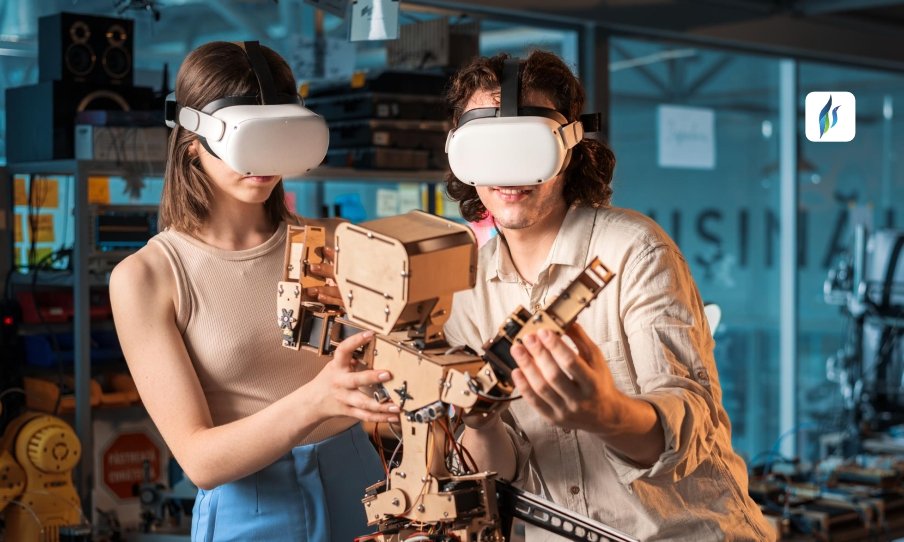
Artificial intelligence is revolutionizing manufacturing industries globally through production line optimization and predictive maintenance. Major automakers such as Tesla and Toyota have by early 2026, integrated AI, driven robotics that have shortened assembly times by 30%, thus increasing output significantly during the supply chain recovery after the 2025 disruptions. Automakers adopting AI robot, assisted production have basically doubled their output post, 2025 supply chain disruption recovery. Likewise, labor shortages in Europe and Asia are being resolved by AI where factories in Germany and China respectively, have gained a 25% efficiency increase from AI analytics in predicting and thereby preventing equipment breakdowns.
Besides that, companies are getting green with the help of AI. Siemens released carbon, tracking algorithms that help cut down emissions in steel production by making minute adjustments in real, time. Tata Steel in India, through the use of such technology, has been able to reduce its energy consumption by 15% which is in line with the worldwide net, zero targets established at COP30. In the U.S., AI investments in manufacturing are expected to reach half a trillion dollars by 2027; this is a consequence of President Trump’s reelection policy incentives referring to AI investments.
There are still some issues such as data privacy under the new EU AI Act amendments and the need for reskilling of the workforce. However, the transformation ensures robust supply chains as 40% of companies worldwide are experimenting with AI twinsdigital counterparts of factoriesfor testing different scenarios. Consequently, manufacturing is at the forefront of Industry 5.0 where the blend of human creativity and machine accuracy is achieved.