
Dr. Kenneth Romer: Connecting Nations Through Visionary Leadership
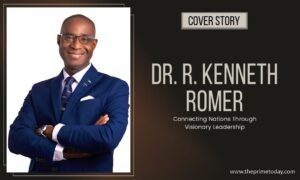
Tourism and aviation are far more than economic sectors for island nations. They shape connectivity, create opportunities, strengthen communities, and define how a country is experienced by the world. Leading these industries demands strategic thinking, operational excellence, and the ability to balance long-term national priorities with changing global expectations. It also requires leaders who understand that sustainable growth is built not only through infrastructure and policy but through people, partnerships, and purpose.
Dr. R. Kenneth Romer has built his career around that philosophy. With executive leadership experience spanning The Bahamas, the United Kingdom, Europe, the United States, and the wider Caribbean, he has earned recognition across a diverse range of sectors, including academia, aviation, leadership development, airlines and airport management, luxury hospitality, tourism, investment, project management, human resources, and the non-profit sector.
His broad perspective allows him to connect strategy with execution while driving initiatives that create lasting national impact. Complementing his professional experience is an exceptional academic foundation.
He holds a doctorate specialising in Leadership and Organizational Management, along with academic and professional credentials from globally respected institutions, including Harvard University, Cornell University, the University of The Bahamas, the University of the West Indies, James Madison University, the University of Maryland, the University of Queensland, Australia, and New Covenant University.
His expertise is further strengthened by certifications in contract law, aviation law, FAA private pilot training, and innovative business model development, reflecting a lifelong commitment to learning and leadership.
The Origins of a Leadership Mindset
Dr. Romer’s leadership philosophy has been shaped as much by his beginnings as by the positions he has held over the past two decades. Growing up in modest circumstances in one of the remote settlements of The Bahamas, raised by a single mother, he learned lessons that continue to guide his decisions today. Faith, resilience, and a natural sense of leadership became the foundation on which he built his career.
Those early experiences taught him that leadership is never defined by present circumstances but by the ability to see beyond them. In his view, every leader needs a clear vision for life and the courage to pursue it. He believes that while leaders operate in the present, they must constantly look toward the future, inspiring others to dream bigger, remain hopeful, and strive for the possibilities that lie ahead.
Dr. Romer attributes the strength of The Bahamas’ tourism sector to a disciplined leadership approach guided by what he calls “The six P’s.” These principles include strategic planning, strong public-private partnerships, product diversification, decentralization, people-focused development, policy alignment, and protecting the nation’s tourism brand.
Together, these priorities create a balanced framework that supports sustainable growth while ensuring The Bahamas remains competitive in the global tourism market.
Expanding Air Connectivity Through Strategy and Partnerships
According to Dr. Romer, sustained growth in aviation begins with a clear strategy. Since assuming technical leadership in aviation four years ago, he has overseen the largest and most comprehensive airport infrastructure development programme in the country’s history, with more than 20 airports currently in the development pipeline to support a diversified air service network.
Route development has also been approached strategically by strengthening existing airlift while pursuing new nonstop services from emerging international markets where visitors typically stay longer and contribute greater economic value. Data-driven decision-making, supported by predictive analytics and forward booking trends, plays an important role in managing risks while helping airline partners and tourism stakeholders make informed decisions.
Global partnerships remain another key pillar of this strategy. Bilateral air service agreements, memorandums of understanding, airline collaborations, and active participation in organisations such as ICAO, CARICOM, and the International Association of Airport Executives continue to strengthen The Bahamas’ regional presence and international competitiveness.
Turning National Strategy into Measurable Results
Serving simultaneously as Director of Aviation and Deputy Director General gives Dr. Romer a unique opportunity to contribute to two closely connected national priorities. He considers it a privilege made possible through the confidence and support of the country’s Prime Minister and Ministers.
Balancing these responsibilities requires moving between high-level policymaking and day-to-day operational execution. He describes the role as translating ideas into action, taking national aspirations from planning to practical implementation. One of the defining achievements under his leadership has been the development of The Bahamas’ first National Aviation Strategy Plan, bringing policy, technical operations, and implementation under a single national framework.
The strategy also created stronger collaboration between aviation and tourism by bringing traditionally separate sectors together to pursue shared goals and participate collectively in major decisions. Accountability remains central to his leadership approach, with stakeholders empowered to deliver results while remaining responsible for agreed outcomes. At the heart of it all is his belief that people remain every organisation’s greatest competitive advantage.
Preparing Caribbean Tourism and Aviation for the Next Decade
Looking ahead, Dr. Romer believes the future of Caribbean tourism and aviation will be shaped less by traditional destination appeal and more by the ability to deliver faster, greener, and highly personalised travel experiences.
He believes success will depend on shifting the industry’s focus from visitor numbers to delivering greater value and memorable experiences. Expanding direct air connectivity beyond major hubs to secondary cities and the Family Islands, while strengthening inter-Caribbean travel and regional destination marketing, will become increasingly important.
He also sees significant opportunities in diversifying airlift through private aviation, vertical lift, and amphibious aircraft capable of serving remote destinations. Alongside these developments, advancing aviation decarbonisation, investing in climate-resilient airport infrastructure, accelerating digital transformation to create seamless travel journeys, and strengthening workforce development through international training and knowledge exchange will all play a defining role in keeping The Bahamas and the wider Caribbean globally competitive.
Preserving Identity, Expanding Opportunity
Dr. Romer believes sustainability goes beyond environmental protection. In his view, it is equally about preserving the cultural identity and heritage that make The Bahamas unique while ensuring local communities benefit from tourism’s success. Lasting progress, he says, comes when economic opportunities are created for residents alongside responsible destination management. As he often puts it, “cannot truly be ‘Better in The Bahamas’ until it is first ‘Better for Bahamians’.”
Showing Resilience During Times of Uncertainty
Dr. Romer believes resilience is not about avoiding uncertainty but preparing for it and responding with confidence when challenges arise. That philosophy became especially important during the COVID-19 pandemic, when he served in a leadership role on The Bahamas’ Tourism Readiness and Recovery Committee.
With tourism and aviation contributing nearly half of the country’s GDP and supporting around 70 percent of direct and indirect employment, the response demanded collaboration across the entire industry. The inclusive and proactive recovery strategy developed during that period went on to become a respected regional model for resilience and destination recovery.
Technology as the Next Competitive Advantage
Dr. Romer views innovation as the new currency of global tourism. He believes the destinations that succeed over the next decade will not simply offer greater connectivity but deliver faster, smarter, and more personalised experiences throughout the traveller’s journey.
Among the technologies he sees shaping the future are AI-driven personalisation that anticipates visitor preferences before arrival, biometric systems using facial recognition and digital identity for seamless travel, advances in air mobility and digital airspace, and immersive marketing through virtual and augmented reality to create stronger destination engagement.
Why Great Leaders Never Stop Learning
Continuous learning has remained a defining part of Dr. Romer’s leadership journey. Supported by extensive academic achievements and professional training, he firmly believes that effective leaders never stop learning.
He describes himself as a lifelong learner who believes valuable lessons can come from any experience and any individual. In his view, growth, movement, and learning are inseparable. The moment a leader stops developing is the moment progress comes to a halt, making continuous learning essential for leading complex organisations in an ever-changing world.
Partnerships on Shared Purpose
Dr. Romer believes successful partnerships begin with reciprocity. Every stakeholder should come to the table as an equal, contributing from a position of strength while working toward a common objective.
He often compares partnerships to people travelling on the same ship. Each participant has a different responsibility, but everyone shares the same destination. Strong collaboration, he believes, depends on understanding one’s role, mastering it, and remaining committed to collective success.
Choosing Growth Over Comfort
One of the most difficult decisions in Dr. Romer’s career was choosing to leave a position where he had already reached the highest levels of organisational success. The decision challenged him personally but reinforced an important lesson about leadership.
He believes leadership is not measured by reaching the top but by fulfilling one’s potential while preparing others to lead. Creating capable successors is, in his view, one of a leader’s greatest responsibilities. Sometimes, moving forward requires the willingness to move on, opening the door to new opportunities and greater impact.
People as the Foundation of Industry Success
When discussing the future of Caribbean tourism, Dr. Romer places people above every other investment. He often refers to the “three P’s” of investment as simply people, people, and people.
Infrastructure, policies, and projects all have value, but they achieve little without capable individuals to bring them to life. Sustainable growth, he believes, depends on developing talent, nurturing leadership, and investing in the people who ultimately drive organisational and national success.
Developing Leaders Who Will Lead Beyond You
Mentoring emerging leaders has strengthened Dr. Romer’s own understanding of leadership. He believes the true measure of a leader lies in the ability to develop others who are prepared to build on what has already been achieved.
His philosophy centres on creating a lasting legacy rather than protecting a position. Leadership should equip future generations with the knowledge and confidence to surpass those who came before them. In his view, leaders who hesitate to mentor others ultimately limit both their organisations and their own legacy.
A Vision of Lasting Impact for The Bahamas
Dr. Romer’s long-term vision is to position The Bahamas as the world’s most economically vibrant, well-connected, resilient, and experience-rich island destination. Every initiative in aviation and tourism is directed toward strengthening that future while creating lasting value for the nation.
The legacy he hopes to leave extends beyond projects or policies. He believes every individual has the opportunity to shape their own contribution through purposeful action, unwavering faith, and a commitment to excellence, leaving behind a standard that future generations can proudly build upon.