
Faranak Farahmand Pour: Powering Progress Through Strategic Partnerships
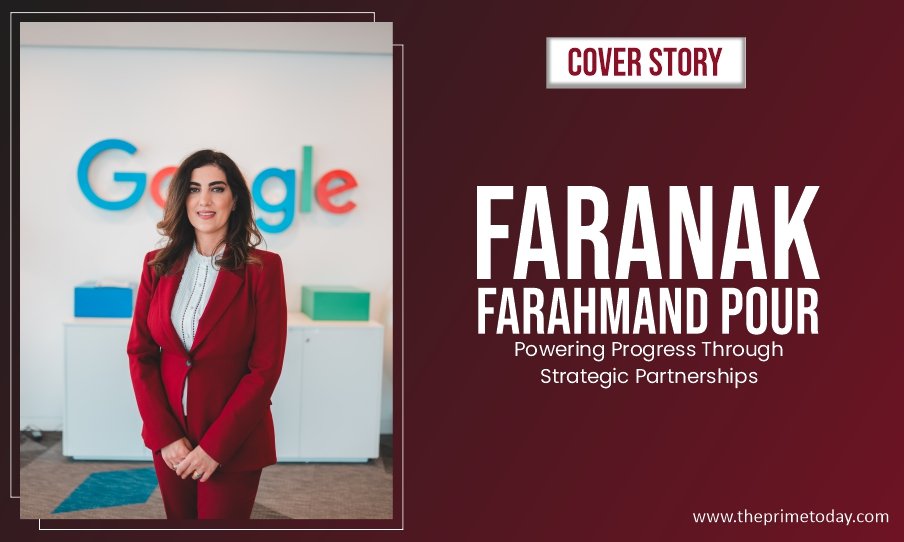
A lifelong pursuit of using technology and collaboration to form a more connected and impactful future!
Technology continually reforms the way the world connects, learns, and evolves. Behind every major shift lies collaboration, the kind that turns complex ideas into practical change. This belief defines the work of Faranak Farahmand Pour, whose career portrays how strong partnerships can accelerate innovation that benefits everyone.
Her professional path began in the legal corridors of Philips, where she first understood how structured thinking could form global impact. That foundation led her to SAP, where she managed large-scale partnerships that bridged the gap between technology and business goals. Today, as Director of Global Strategic Initiatives at Google Cloud, she leads collaborations that stimulate transformation across industries.
For Faranak, technology holds the potential to address pressing global challenges. What drives her is the intersection of innovation, human progress, and meaningful collaboration. She thrives in environments where ideas progress quickly, particularly in fields like artificial intelligence and cloud computing, where curiosity becomes a daily practice.
Each initiative she leads advances a deeper purpose: to bring people and organizations together, combining their strengths to create something valuable. Her leadership is guided by empathy and vision, making her approach both analytical and deeply human.
What defines her is the ability to link innovation with empathy. Her leadership thrives on understanding both business goals and human needs. Through her vision, Faranak shows that when collaboration is guided by purpose, it becomes a catalyst for change that directs industries, the community, and the future itself.
Let us walk through her journey:
Building a Unified Global Partnership through Collaboration and Shared Vision
Faranak plays a key role at Google in structuring and negotiating large-scale strategic partnerships. Among the many complex collaborations she has led, one stands out, a multi-layered deal with a major global corporation that spanned several countries and business units. The challenge lay in aligning diverse stakeholder interests, managing varied operational environments, and integrating a broad range of products and services into a single, cohesive solution.
Her strategy was anchored in the principle of a “One Google” approach, ensuring that the organization presented a unified front to the client. She initiated a series of workshops involving key stakeholders from both sides, designed to encourage transparent communication and create a shared understanding of goals and challenges.
During negotiations, Faranak emphasized value co-creation instead of relying on a traditional transactional model. She worked to identify synergies between both organizations’ roadmaps and guided the co-development of a joint innovation agenda. The resulting agreement reflected the strength of this collaborative process, leading to a long-term partnership that generated substantial value for both parties.
Adapting Partnership Strategies Across Regions
Having worked across Europe, Asia, the Middle East, and Africa, Faranak believes that every region demands its own thoughtful approach. She emphasizes that success depends on cultural intelligence and a deep respect for local nuances.
In Europe, she observes a strong focus on data privacy and regulatory compliance, which calls for precision and transparency in every interaction. In contrast, many parts of Asia place a high value on relationship-building and trust before any meaningful business discussions begin.
In the Middle East, personal connections and hierarchical structures shape business practices, while in Africa, an understanding of each nation’s economic and political environment plays a vital role. Faranak invests time in learning about local cultures, nurturing relationships with key decision-makers, and refining her communication and negotiation styles to align with regional expectations.
She also depends greatly on local teams and partners, whose insight and expertise provide essential guidance and help strengthen long-term partnerships.
Leveraging the Alphabet Ecosystem to Drive Client Innovation
Faranak’s work centers on harnessing the vast innovation potential of Alphabet to deliver meaningful value to clients. She focuses on identifying opportunities that bring the best of Google to businesses, whether by integrating advanced AI and machine learning capabilities from Google AI, utilizing Google’s expansive global infrastructure, or collaborating with other entities within the Alphabet network.
In one example, her team partners with a retail client to implement Google Cloud’s AI-powered retail solutions while also drawing on Google’s advertising and marketing platforms to ensure a unified customer experience. This comprehensive approach enables Google Cloud to move past conventional cloud offerings and deliver transformative solutions that address intricate business challenges with clarity and impact.
Evaluating the True Measure of Strategic Success
The success of a strategic initiative is assessed through a combination of quantitative and qualitative metrics. From a quantitative viewpoint, Faranak considers indicators such as revenue growth, market share expansion, and customer acquisition. Yet, she believes that the true impact of a partnership extends further than numerical outcomes.
On the qualitative side, she evaluates the strength of relationships, the level of executive alignment, and the degree of co-innovation that creates new value for joint customers. She also examines whether the partnership enables entry into new markets, supports the development of new capabilities, and strengthens brand reputation.
In her view, a successful partnership is one grounded in trust, transparency, and a shared dedication to long-term success.
Developing Consensus in High-Stakes Negotiations
For an opportunity, Faranak was tasked with leading a high-stakes negotiation with a strategic partner. The deal involved multiple business units on both sides, each with its own set of priorities and concerns. She invested significant time in building personal relationships with the key executives on both sides, which helped to foster trust and create a more collaborative atmosphere.
By focusing on shared interests and demonstrating a willingness to compromise, she and the teams were able to overcome differences and reach a mutually beneficial agreement that was supported by all stakeholders. However, she believes it is key to know the walk-away scenario and to understand when to say no and turn no’s into yes.
Cultivating Inclusive Leadership in a Dynamic Technology Landscape
Inclusive leadership forms an essential part of Faranak’s leadership philosophy. She believes that diverse teams bring greater innovation, resilience, and the ability to address complex challenges with creativity and balance.
Faranak fosters inclusivity by seeking varied perspectives, encouraging open and honest dialogue, and ensuring that every team member feels empowered to contribute to their highest potential. She creates an environment where collaboration thrives and every individual feels valued for their unique insights and abilities.
Within the wider organization, Faranak consistently supports diversity and inclusion initiatives. She remains a strong advocate for women in technology and actively participates in mentorship programs and initiatives designed to nurture the next generation of female leaders.
Empowering Women Through Personalized Mentorship
Faranak is deeply committed to mentoring and sponsoring high-potential female talent. Her approach is highly personalized and tailored to the specific needs and aspirations of each individual. She focuses on helping her mentees identify their strengths, develop their leadership skills, and navigate the challenges of a male-dominated industry.
She measures the effectiveness of her mentorship through the career progression of her mentees, as well as their growth in confidence, self-awareness, and overall well-being. It is incredibly rewarding for her to see her mentees achieve their goals and become role models for other women in the industry.
Balancing AI Innovation with Human-Centered Leadership
Faranak believes that technology and humanity complement each other. She views them as two parts of the same whole. With a strong background in the technology industry, she holds a deep passion for how innovations like artificial intelligence can positively transform the world. At the same time, she acknowledges that technology carries real value only through the people who create and apply it.
This understanding shapes her leadership philosophy, which emphasizes empathy, resilience, and emotional intelligence. She strives to build a culture where individuals feel valued, supported, and confident to bring their authentic selves to work. By maintaining harmony between technological progress and human-centered leadership, Faranak envisions a future that is both sustainable and equitable for everyone.
A Can-Do Spirit that Revived a Stalled Deal
Throughout her career, Faranak has encountered several moments where a determined and optimistic approach played a key role in overcoming challenges. One particular instance stands out during a complex negotiation that had reached a stalemate. The opposing party was prepared to withdraw from the discussion, yet Faranak remained steadfast. She returned to her team and encouraged a brainstorming session to find a fresh and creative path forward.
Together, they developed a solution that addressed the other party’s concerns while fulfilling their own objectives. Through persistence and inventive thinking, she succeeded in bringing the deal back on course and securing a successful closure.
Techniques to Foster Collaboration Across Multiple Stakeholders
Fostering collaboration among varied stakeholders such as cloud sales teams, Alphabet units, and major global companies requires a thoughtful and layered approach. The process begins with establishing a shared vision and a unified set of goals. Faranak ensures that every participant understands the purpose behind the partnership and remains aligned with the intended outcomes.
She creates structured communication channels and governance systems that encourage consistent interaction and effective decision-making. Personal connection also plays a vital role in her approach. Faranak invests time in building relationships across all levels of an organization, from senior executives to operational teams, which strengthens trust and promotes a sense of collective responsibility.
She also believes in recognizing achievements and appreciating contributions, reinforcing a culture rooted in collaboration and teamwork.
Integrating the Principles of Diversity, Inclusion, and Innovation into Strategic Decision-Making
For Faranak, diversity, inclusion, and innovation are integral to her strategic decision-making process. When evaluating new partnership opportunities, she considers not only the financial and strategic benefits but also the potential to advance the organization’s diversity and inclusion goals. She also looks for partners who share the same commitment to innovation and are willing to co-invest in developing new solutions that address the needs of a diverse range of customers.
She believes that by integrating these principles into the core business strategy, a virtuous cycle can be created where diversity fuels innovation, and innovation drives business growth.
Lessons in Leading Transformative Initiatives Globally
The most important lesson Faranak has learned is that leading transformative initiatives is a marathon, not a sprint. It requires patience, persistence, and a deep understanding of the cultural and organizational dynamics at play. She believes it is also crucial to build a strong coalition of support and to empower local teams to take ownership of the change.
Another key lesson she emphasizes is the importance of staying curious and being a lifelong learner. The world is constantly changing, and what worked yesterday may not work tomorrow. She feels aspiring leaders need to be adaptable, resilient, and willing to embrace new ideas and perspectives. Finally, she says that it is essential to stay grounded and to never lose sight of the human element. At the end of the day, it is all about people, and the most successful leaders are those who are able to inspire and empower others to achieve their full potential.
Read the full magazine edition: Click Here