
Jenny White: Rising from Recovery to Reinvention
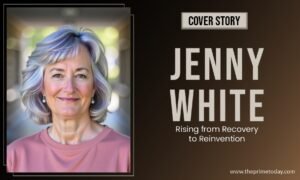
The Nurse’s Compassion, The Survivor’s Courage, and a Writer’s Mission to Challenge Healthcare!
Medical thriller author Jenny White writes about the fragile line between life and death, the difficult choices made in hospitals and the people whose lives can change in a moment. Her understanding of these worlds comes from years spent caring for patients, where she witnessed the weight of medical decisions and the uncertainty that families face during a crisis.
Yet, nothing could have prepared her for the moment when her own life took an unexpected turn, leaving her to confront questions she had once helped others navigate. That experience later challenged her sense of identity and forced her to reconsider what the future might hold.
Somewhere in that unfamiliar territory, an unexpected possibility began to emerge, leading her towards a form of storytelling she had never imagined pursuing. Today, through Jenny White Books Inc., she is building a new professional life, but the path that brought her here began with a question far more personal than any story she would eventually write: Who could she become when the life she once knew was no longer within reach?
A Childhood Promise to Help Others
Long before Jenny knew anything about hospital management, nursing qualifications or the pressures facing healthcare systems, she had already encountered a moment that would influence the direction of her life.
As a child, she witnessed a serious car crash. Several people were injured, calling out in pain and fear. She pleaded with her father to stop so they could help, but he continued driving. Jenny watched through the back window, feeling helpless as the scene disappeared from view.
That feeling stayed with her. She decided she would become either a doctor or a nurse, choosing nursing because she felt drawn to people and the opportunity to care for them directly. During the 1980s, she became a registered nurse, beginning a professional journey that would take her through hospital wards, intensive care units, public health and healthcare administration.
Her early years brought practical difficulties. When she graduated with her nursing degree, hospitals were experiencing budget cuts, layoffs and limited employment opportunities. Full-time positions were difficult for new graduates to secure, particularly those who lacked experience. Jenny began working part-time at local hospitals, using each opportunity to develop the practical knowledge employers wanted.
She soon discovered that nursing offered a wide range of specialities, each bringing fresh responsibilities and opportunities to learn. She returned to school for the additional training required to work in intensive care and trauma, an area that quickly became her favourite. The work demanded concentration, sound judgement and the ability to respond when patients were at their most vulnerable.
Jenny later completed a Bachelor of Science in Nursing as the qualification became the entry-to-practice standard. Her education continued throughout her career, driven by the understanding that professional growth required curiosity and a willingness to keep learning.
Learning to Lead Through People
As Jenny gained experience across different healthcare settings, her ambitions gradually moved towards leadership. She had seen how decisions made by managers could influence the working environment, the confidence of staff and the quality of patient care. She wanted to understand how healthcare teams could function more effectively, particularly under pressure.
To prepare herself, she pursued a master’s degree in healthcare administration. The programme introduced her to leadership theory and gave her opportunities to connect with other healthcare leaders, discuss shared difficulties and exchange strategies for improvement. She also learnt to use quality performance indicators to assess whether changes were improving outcomes within a facility.
Her experience as a Director of Nursing and Director of Clinical Services in long-term care homes gave those lessons practical meaning. She quickly recognised that staff were among the most important resources in any healthcare organisation. Their knowledge, experience and daily contact with patients made them essential to identifying problems and developing workable solutions.
Jenny learnt that listening to staff was more effective than simply handing down instructions. When employees were invited to contribute ideas and participate in decisions, they developed a greater sense of responsibility for the changes being introduced.
She also observed the consequences of different leadership styles. Some administrators created supportive environments where staff could raise concerns and work together, while others allowed hostile workplace cultures to develop. Jenny watched the leaders around her, chose her mentors carefully and learnt from both effective and poor management practices.
When workplace cultures became toxic, she chose to leave in order to protect her mental health and professional satisfaction. Those experiences reinforced her view that leadership required consistency, resilience, strategic thinking and a willingness to challenge familiar practices when better solutions were available.
For her, a good manager had to remain visible. Walking through a department, speaking directly with employees, understanding the pressures they faced and addressing emerging concerns were essential parts of the job. Regular communication, delegation, continued staff education and clear priorities helped create a workplace where people could deliver better care.
The values she developed during those years remain central to her work: honesty, integrity, truth and keeping her word.
Healthcare Questions Which Stayed with Her
Jenny’s years in nursing also gave her a close understanding of the pressures that can affect healthcare delivery. She saw how financial decisions, staffing shortages, workplace conditions and administrative priorities could influence the experiences of both patients and professionals.
She became concerned about a business-first approach in which budgets, supply chains, contracts and executive rewards could take precedence over the needs of patients. She questioned the use of unregulated workers in roles requiring qualified nurses, alongside poor pay, mandatory overtime and staffing models that placed additional pressure on already stretched teams.
For her, these were practical concerns with human consequences. Qualified professionals need the resources, time and support required to provide safe care, while patients deserve access to appropriate treatment regardless of their financial circumstances.
She also recognised the importance of communication and trust. Patients entering hospitals, particularly emergency departments, are often frightened and uncertain about what will happen next. They need clear explanations, honest discussions about treatment choices, suitable referrals and proper follow-up.
Her experience in administration taught her that problems often remain unresolved when the people making decisions are disconnected from the people experiencing them. Listening to staff, observing everyday conditions and responding to concerns can reveal weaknesses that reports alone may fail to capture.
Although Jenny eventually retired from nursing, these questions remained important to her. At that stage, however, she had little reason to imagine that she would one day explore them through fiction, public speaking and television.
Her life was about to take a direction she could never have planned.
January 2024: The Life She Knew Changes
In January 2024, Jenny underwent surgery to remove a brain tumour. one large tumour that required a delicate and challenging operation. Surgery was her only option for survival, and the risks were serious.
When she emerged from a coma, she faced a reality that was difficult to reconcile with the life she had lived before. She could no longer walk or speak as she once had, and much of her memory was missing. She struggled to recognise familiar people, including her husband of 20 years, and at times she could not remember her own name.
For someone who had spent decades caring for patients, the change was profound. She had moved from being the professional helping others navigate illness to becoming a patient dependent on support, therapy and time.
Relearning basic abilities required patience and determination. Walking and speaking, activities she had previously performed without thought, became difficult tasks that demanded sustained effort. Progress came gradually, often at a slower pace than she wanted.
The experience also affected her sense of identity. Jenny was accustomed to being capable, independent and responsible for others. Now she had to learn how to live with missing memories, reduced abilities and uncertainty about what recovery would bring.
Her nursing background gave her some understanding of rehabilitation, but experiencing it herself was different. She began to appreciate the emotional weight carried by patients who must rebuild their confidence while adjusting to changes they never expected.
Jenny drew strength from memories of the people she had cared for during her career. She had witnessed patients face serious illness with determination, taking each day as it came and working towards recovery even when the outcome remained uncertain.
She decided to approach her own rehabilitation in much the same way, focusing on the next achievable step rather than the distance between her present circumstances and her former life.
Yet one of the most important developments in her recovery came through an activity she had never imagined pursuing professionally.
The Unexpected Discovery That Led to Writing
Jenny’s speech therapy was progressing more slowly than she and her therapist had hoped. Searching for another way to help her communicate, her speech therapist suggested that she try writing simple words and thoughts on paper.
The suggestion produced an unexpected result. Although speaking remained difficult, Jenny discovered that she could still write.
At first, writing gave her a practical way to communicate with the people around her. She could express thoughts, emotions and frustrations that were difficult to convey verbally. Gradually, however, it became something more meaningful.
Putting words on paper gave her a sense of independence and helped restore some of the self-esteem she had lost during recovery. It also encouraged her to exercise her mind, explore her imagination and discover what she might still be capable of achieving.
Jenny had never considered herself a writer before the surgery. Now, she found herself drawn towards an activity that brought her a sense of purpose and enjoyment.
She began with children’s stories because they were short, simple and built around clear messages. Working on them allowed her to explore creativity without taking on the immediate demands of a full-length novel. She could fit the writing around therapy appointments, fatigue and the need to rest.
To develop her skills, she enrolled in online writing courses that she could complete independently. The lessons introduced her to the structure of fiction, helping her understand how stories are organised, how characters develop and how a narrative can hold a reader’s attention.
One of the first principles she learnt was to begin with something familiar.
Jenny had more than 33 years of nursing experience, along with a deeply personal understanding of life after brain surgery. She began to recognise that these two experiences could provide the foundation for stories that were both emotionally honest and grounded in real healthcare settings.
Writing also became part of her recovery. As she created stories, memories sometimes returned, and she found opportunities to reconsider her experiences from a different perspective. The process encouraged her to learn, stretch her abilities and discover interests she had never previously explored.
Molson and Jenny: Bringing Childhood Adventures to Life
Jenny’s first stories grew from childhood imagination and familiar relationships. She created two central characters: Molson, her real white Maltese dog, and Jenny, a curious little girl based on Jenny herself as a child.
Molson brought a sense of companionship and bravery to their adventures, while Jenny explored the world by asking questions and learning through experience. Their stories gave Jenny a way to revisit the curiosity of childhood and create adventures that young readers could enjoy.
The characters soon became the foundation of the Molson and Jenny Adventure series. She found the children’s books particularly enjoyable because they allowed her to experiment with ideas, develop her imagination and create stories with simple messages.
She wanted the books to do more than entertain. Early literacy, curiosity and the bond between children and caregivers mattered to her, particularly the connection created when parents read with their children at bedtime.
Jenny began sharing her books with local day-care centres through community service clubs and funding groups. She hoped that introducing children to stories would encourage a love of reading and give them opportunities to explore their imaginations.
Her collection grew to include 12 children’s books and five colouring books connected with the series. She also created 10 adult colouring books, which became another way to enjoy creative work while managing the effects of her recovery.
Colouring offered Jenny a quieter activity when writing became tiring or emotionally demanding. She found that moving between different forms of creativity helped her relax and return to her projects with renewed interest.
Illustrations presented another learning opportunity. Jenny used AI-generated images to bring her children’s stories to life, developing a new understanding of how visual elements could support storytelling and how the publishing process worked.
As the collection expanded, the children’s books became an important part of her emerging business. They also provided the confidence to attempt something more demanding: writing a medical thriller.
From Children’s Stories to Abbey Roberts
Jenny’s move into medical thrillers began with a character who carried many of her own experiences.
She created Abbey Roberts, a registered nurse working in an intensive care unit who develops a brain tumour and must rebuild her life after surgery. Abbey faces many of the challenges Jenny encountered during recovery, including fatigue, memory loss, changes in executive function and uncertainty about returning to a demanding professional environment.
Writing through Abbey gave her a way to examine the emotional consequences of illness. She could explore the fear of losing familiar abilities, the frustration of slow progress and the challenge of rebuilding confidence through a fictional character whose circumstances reflected her own.
The character also gave Jenny a means of revisiting the healthcare environment she knew so well. After more than three decades in nursing, she had witnessed situations that raised difficult questions about patient safety, staff welfare and the pressures within healthcare organisations.
She wanted her stories to expose those concerns while remaining engaging as fiction. Her aim was to entertain readers and encourage them to think more carefully about the people and systems responsible for their care.
Jenny had long enjoyed medical thrillers, particularly the novels of Robin Cook, and found the genre a natural fit for her professional knowledge. Her experience across medical wards, intensive care, trauma, public health and administration provided a wealth of possible storylines.
She also understood that readers were already familiar with many medical settings through television dramas such as ER, The Pitt and Grey’s Anatomy. That familiarity allowed her to focus on the characters, conflicts and ethical questions rather than overloading the narrative with technical explanations.
As she learnt more about fiction writing, she found it easier to organise plots and develop characters. The stories still required multiple revisions, but the process gave her a new outlet for her knowledge and imagination.
Her retirement from nursing also gave her greater freedom to discuss troubling issues. She wanted to advocate for the profession, share concerns openly and encourage meaningful discussion about the realities healthcare workers face.
The Triggering Scent: A Story Rooted in Recovery
Jenny’s debut medical thriller, The Triggering Scent, was published by Friesen Press on 27 March 2026. It introduces Abbey Roberts in a story about recovery, professional responsibility and the dangers that can remain hidden within a healthcare setting.
The title came from a change she experienced after surgery: her sense of smell became heightened, and certain scents began triggering memories. She used that experience as an important element of Abbey’s story, giving the fictional nurse a similar connection between scent and memory.
The novel begins with Abbey attempting to return to work after brain surgery. Alongside the fatigue and memory difficulties that accompany her recovery, she discovers that the neurosurgeon who botched her operation is now working in her city and within her ICU.
The surgeon is addicted to methamphetamine, and Abbey realises that his presence could place other patients at risk. She must decide whether to act against him, even if doing so threatens her own career.
The premise grew from a question Jenny considered while recovering. She had survived a dangerous operation and was rebuilding her life, but she wondered how much harder the experience would have been if she had been required to return to the same professional environment.
By placing Abbey in that situation, she could explore a version of recovery in which personal vulnerability collides with professional responsibility. The story also raises questions about accountability, workplace safety and the systems that allow risks to continue.
Jenny wants readers to finish the novel thinking about whether similar situations could happen in real life, how they would respond and what dangers may exist within healthcare settings without the public’s knowledge.
Her stories also address the human pressures experienced by nurses and other healthcare workers. Staff members have personal struggles, difficult days and competing responsibilities, all of which can affect their work. Recognising those realities is essential to understanding why adequate staffing, proper support and safe working conditions matter.
The book has received positive reviews, with readers responding to the emotional connections, ethical dilemmas and Abbey’s journey. For her, the response has reinforced the value of writing stories that entertain while creating opportunities for discussion.
Continuing the Abbey Roberts Series
Jenny followed her debut with Terror at the Manor, a medical thriller that explores the realities of nursing homes. The novel continues her interest in settings where vulnerable people depend on healthcare professionals and where organisational decisions can have serious consequences.
She is now working on the third book in the Abbey Roberts RN series, The Final Consent. The story examines informed consent, body donation, the distribution of unregulated body parts and the experiences of families after death.
The subject reflects Jenny’s continuing interest in areas of healthcare that deserve closer examination. She wants readers to question whether healthcare workers are safe to practise, whether patients can trust the people caring for them and how financial pressures influence the quality of care.
Her stories also explore concerns about workplace violence, short staffing, superbugs, tight budgets and the ethical responsibilities of healthcare professionals. By bringing these issues into fiction, she hopes to make difficult subjects accessible to readers who might otherwise have little reason to consider them.
Jenny wants the books to encourage conversations among readers, healthcare workers and the wider public. She hopes book clubs and discussion groups will use the stories as starting points for asking questions about patient safety and possible improvements.
For her, the central purpose of the series remains a combination of suspense, human emotion and public awareness. The stories need to work as thrillers, with characters and plots that keep readers engaged, while also inviting them to look more closely at the healthcare systems they depend on.
Choosing Independence Through Self-Publishing
As Jenny’s writing developed, she faced a new challenge: learning how the publishing industry worked.
Traditional publishing generally involves securing a literary agent, who then pitches a manuscript to publishing houses. After spending time pursuing that route, Jenny decided she wanted greater control over her work and the time required to bring her stories to readers.
She chose self-publishing so she could manage her own schedule, budget and creative decisions. The choice came with financial costs and the responsibility of understanding more of the publishing process herself, but it offered the independence she wanted.
Her experience with children’s books had already introduced her to illustration and the production of finished books. Moving into medical thrillers required further learning, from developing a novel’s structure to navigating the steps involved in publication.
She approached these challenges in the same way she had approached rehabilitation: by learning what was required, seeking help when needed and taking manageable steps towards a clear goal.
Self-publishing allowed her to retain control over her stories while continuing to experiment with different genres. She recognises that it will not suit every writer, but it has provided a workable route for her own creative ambitions.
Jenny White Books Inc.: Bringing the Work Together
Founded in 2024 and based in Wheatley, Ontario, Canada, Jenny White Books Inc. brings together Jenny’s work as an author, speaker and developing television host. Its activities include children’s books, adult medical thrillers, speaking engagements and television projects.
The Molson and Jenny Adventure series serves young readers, while the Abbey Roberts books focus on adult audiences interested in medical and psychological suspense. Her speaking work centres on reinvention, resilience and the lessons she learnt while rebuilding her life.
The company has grown alongside her willingness to take on unfamiliar tasks. She has learnt about writing, publishing, illustrations and audience development, often while adjusting her working schedule around the effects of brain surgery.
Her work has also received wider recognition. Jenny has received a Rotary Literary Award and has appeared on approximately 75 podcasts, alongside 15 magazine covers and articles. These opportunities have allowed her to share her experiences with audiences interested in writing, healthcare and personal transformation.
Her books, including audiobook and e-book information, are available through www.jennywhite.ca. Further information about her speaking work is available at www.speakerjennywhite.ca. Her social media accounts include facebook.com/authorjennywhite, instagram.com/author.jennywhite and x.com/authorjennywhite, while the children’s series has its own website at molsonjennyadventures.ca.
For Jenny, the business brings together several interests that emerged during recovery. Each activity provides another way to communicate, create and connect with people, while allowing her to continue exploring what she can accomplish in this new stage of life.
Turning Recovery into a Message of Hope
As Jenny began sharing her story through interviews and podcasts, she realised that people connected with the experience of having to start again. Her journey offered a perspective that could help others facing illness, loss, career changes or uncertainty about their future.
She began developing her work as a keynote speaker, focusing on hope, strategy and persistence. Her message encourages people to identify what matters to them, imagine the future they want and begin moving towards it through small, achievable steps.
She has also created a self-help workbook called THRIVE, available through Amazon and as an affordable digital file on her website. The self-directed workbook helps readers consider how they want their future to unfold and identify steps towards their goals.
Her advice to aspiring writers follows the same practical approach. She encourages people to learn the craft, understand the publishing process and begin with a clear concept. Writing about familiar subjects, she says, can bring credibility and depth to a story, helping readers connect emotionally with its characters and experiences.
For anyone considering a major change later in life, Jenny recommends exploring new skills, seeking support and allowing curiosity to lead them towards unfamiliar opportunities. She also encourages people to create a vision board or another visual reminder of their ambitions, keeping their goals visible as they work towards them.
Her own vision board sits on her desk, where it reminds her of the future she wants to build. The practice helps her maintain direction while accepting that progress may require patience and adjustments along the way.
Jenny’s approach is grounded in the understanding that meaningful change rarely happens all at once. Small steps can build confidence, encourage learning and create momentum towards something that once seemed impossible.
Inside the Story: Confidential
Jenny’s growing presence in podcasts and interviews eventually led to an opportunity that added another direction to her career. After hearing her story and seeing how strongly people responded to it, an interviewer encouraged her to consider hosting a television programme.
She was invited to host Inside the Story: Confidential, a talk show developed in partnership with the McCord List Network and planned for autumn 2026. The programme is intended to reach audiences across a network estimated to cover 117 million homes.
The show will focus on extraordinary people whose experiences can entertain, teach and inspire others. Jenny wants the conversations to reveal what lies behind people’s achievements, the difficulties they have faced and the choices that helped them move forward.
The project reflects her interest in storytelling as a way of connecting people. Hearing about someone else’s experience can challenge assumptions, offer a different perspective and help audiences reconsider what might be possible in their own lives.
A healthcare-focused podcast is also in development. She intends to examine healthcare systems around the world, with particular attention to nursing, access to quality care, financial constraints and the effects of artificial intelligence on services.
She wants to highlight the knowledge and judgement nurses bring to healthcare, as well as the pressures they face and the tendency for their contributions to be taken for granted. She also hopes to encourage wider discussion about how healthcare systems can improve the experiences of patients and professionals alike.
Together, the television programme and planned podcast will extend her work into new formats, giving her further opportunities to ask questions, share stories and encourage discussion about subjects that matter to her.
Rethinking Midlife, Purpose and Success
Jenny’s experience has also changed her understanding of midlife. She sees it as an opportunity to reconsider priorities, explore unfamiliar interests and make room for a different direction, rather than simply a period defined by uncertainty or dissatisfaction.
For her, the turning point was the surgery that required her to rebuild her life. The experience brought substantial losses, but it also led her towards work she had never previously imagined doing.
She encourages people to pay attention when they begin questioning their purpose or feeling dissatisfied with the lives they have built. Such feelings can prompt them to explore new interests, reconsider familiar beliefs and identify what brings genuine joy.
She also questions society’s tendency to measure success through possessions, status and accumulation. People can reach midlife and judge themselves against expectations about what they should have achieved, sometimes overlooking their contributions, relationships and personal growth.
Instead, she encourages people to accumulate experiences, learn new skills, travel, give back to their communities and spend time with people who inspire them. As a Rotarian, she values service and the opportunities it creates to contribute to the lives of others.
She also places importance on self-compassion. Looking after one’s health, managing stress, finding enjoyable activities and seeking support are all part of building a life that can be sustained through difficult periods.
Jenny continues to manage the effects of brain surgery, including fatigue, exhaustion, migraines, depressive symptoms and occasional difficulty finding words. Some memories remain missing, and her recovery continues to require adjustments. Although she may appear well, these challenges can affect her daily life and the amount of work she can manage.
She has had to learn to give herself time to rest while maintaining her ambitions. That balance remains part of her ongoing reinvention, reminding her that determination can coexist with the need for patience.
Her experiences have also strengthened her desire to challenge assumptions about ageing. She wants people to recognise that later life can hold opportunities for learning, creativity and professional reinvention, rather than following a fixed set of social expectations.
The Work Still Ahead
Jenny intends to continue writing medical thrillers, developing her media projects and looking for opportunities to contribute to better healthcare. She remains interested in research, reading and conversations with people working in nursing, publishing and business, using those connections to keep learning about changing practices and ideas.
Her long-term ambition is to become widely recognised as a nurse survivor, healthcare advocate and bestselling medical thriller author whose work encourages people to question established systems and consider how they can improve.
She also wants to challenge the assumption that older people should limit their ambitions. Through her writing, speaking and future programmes, she hopes to demonstrate that a major change in circumstances can lead to a new chapter filled with learning, creativity and service.
Jenny recognises that one person cannot transform an entire healthcare system alone. Yet she argues that individuals can contribute by raising concerns, sharing experiences, asking difficult questions and using their voices constructively. Improvements begin when people acknowledge problems and work towards solutions.
Her own path has required determination, perseverance and a willingness to learn unfamiliar skills. She has moved from nursing to children’s writing, medical thrillers, speaking and television, each step opening opportunities she could not have anticipated before surgery.
The journey remains challenging, and the future continues to unfold. Yet Jenny has found a way to carry forward the purpose that first drew her towards nursing: helping others, sharing knowledge and making a contribution through the experiences she has gained.
Writing has become a way to entertain readers while bringing attention to healthcare concerns. Speaking offers an opportunity to encourage people facing their own difficult transitions, while her planned television programme and podcast will give her further ways to connect with audiences.
The life Jenny is building differs greatly from the one she knew before January 2024, but it continues to reflect her commitment to service. Through the stories she writes and the conversations she hopes to lead, she is creating a new professional identity while holding on to the values that guided her first career.
Her journey conveys a simple message: a new beginning can emerge from circumstances that once seemed to close every door, and sometimes the next chapter begins with something as small as putting a few words on paper.