
Katja Lührs: Save the Earth
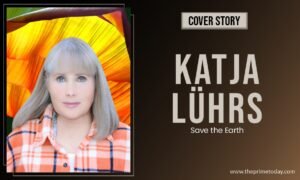
Katja gave up a successful career as a fashion and jewelry designer, realizing that her work was taking a toll on the environment, to transform her lifelong love of nature into art with a deeper message.
For years, Katja Lührs worked in the fashion and jewelry industry, creating pieces that reflected her keen eye for beauty and detail. Even then, she often incorporated animal motifs into her designs. However, as she learned more about the production processes behind the materials she used, her joy in the creative process began to fade. Could she continue to craft the things she loved while feeling increasingly uneasy about their impact on the world? This question eventually led her to step away from a successful design career and turn toward an art form she had cherished since childhood.
Today, her paintings draw inspiration from the very nature that fascinated her as a young girl, while conveying a message that extends far beyond the canvas: the Earth deserves our care, our respect, and our protection.
A Childhood Filled with Colour and Curiosity
Born in Rochlitz, Katja developed an early interest in art, movement, and the natural world. Creativity was deeply rooted in her family; her paternal grandmother, Mary Lührs, played a particularly significant role in shaping Katja’s understanding of painting. A gifted artist in her own right, her grandmother created oil paintings—even using her art to support the family during the war. She also taught Katja to recognize the beauty of nature, to treat it with care, and to truly value the world around her. Some of her grandmother’s paintings still hang in Katja’s home today.
Even as a child, Katja loved drawing, painting, singing, dancing, and gymnastics. She could become so absorbed in these activities that she would completely lose track of time. Her teachers recognized her artistic aptitude—particularly her talent for painting—and brought it to her parents’ attention. Nevertheless, her early training initially followed a rather conventional path. She was placed in an apprenticeship with a lawyer and tax consultant—an experience that provided her with useful knowledge, yet left her with the feeling that a different life might offer her greater fulfillment.
Her love for nature also grew out of everyday experiences during her childhood. Her daily walk to school took about an hour; her dog, Blacky, would accompany her through the woods and along a railway line. He was her closest companion and would even meet her to walk back home, always right on time. These walks instilled in her a lasting sensitivity to the changing seasons, the subtleties of the natural world, and the loyalty of animals.
An Early Start in Fashion and the World of Media
At the age of 18, Katja was discovered by New York fashion photographer Mike Reinhardt and began her career as a fashion model. Her photographs appeared in publications in Germany and abroad, including Vogue, Elle, Harper’s Bazaar, Marie Claire, Petra, Stern, Madame and Twen. Through this work, she encountered various countries, cultures and visual influences, which instilled in her an early sense of colour, form and design.
Her modelling career also drew the attention of television and film director Dr Dieter Pröttel. His interest paved the way for her entry into acting and television presenting, providing Katja with the opportunity to work across various sectors of the entertainment industry.
As an actress, she appeared in films such as The Woman Without a Body and Robin Hood, as well as in television series including Die Schwarzwaldklinik, Marienhof and Dr Stefan Frank. Furthermore, she completed training as a writer and journalist at the publishing house Burda, adding writing and editorial expertise to her professional repertoire.
Her television career took her to major German and Austrian broadcasters, including ZDF, ARD, RTL, SAT.1 and ORF. She hosted a wide variety of programmes, ranging from entertainment and game shows to news and discussion formats. These included a weekly talk show on SAT.1, Fun in the Snow, broadcast on both SAT.1 and ORF, and Bellezze Sulla Neve, which was also aired in Italy and Spain.
For Bayerisches Fernsehen (Bavarian Television), she hosted The Beautiful Weekend, the Saturday Club and the daily programme Abendschau. She also worked on the daily Abendschau programme on Bremen television, the weekly Enzymforum on RTL, and the ZDF shows Ehen vor Gericht, which she hosted for nine years, and the quarterly broadcast Musikwerkstatt.
Her work as a presenter provided her with a platform to connect with audiences and explore topics that would remain significant throughout her subsequent professional career.
Katja also pursued training in fields that reflected her diverse interests. These included studies in art, fashion and jewelry design with ArtTabea Caren; training in conversational therapy and hypnotherapy at the Erhard Freitag Hypnosis Center in Munich; and a medically certified yoga instructor training programme at the Scharnagl Institute in Munich. Additionally, she completed parachute training through a programme organised by the Swiss Confederation and earned a diving certification from SSI (Scuba Schools International) in Israel.
Alongside her work as a model, actress and presenter, Katja built a career in fashion and jewelry design. She completed a three-year training programme in art, fashion and jewelry design and created jewelry collections under the labels Katja Lührs Design and Katja Lührs Classic for the RTL Group and HSE24.
When Design Began to Raise Difficult Questions
However, her relationship with the industry became increasingly complicated over time. As she grew more aware of the ecological consequences of certain materials and production methods, and their impact on nature and wildlife, her work began to conflict with her personal values.
In traditional silk production, for instance, silkworms are killed inside their cocoons to extract the long silk threads, preventing them from completing their natural metamorphosis into butterflies. Jewelry making also raised concerns, particularly regarding the environmental damage caused by the mining of gold and gemstones. Furthermore, the use of synthetic materials, along with the conditions under which some of these substances are produced, posed additional questions about ecological and social responsibility. From the outset, Lührs ruled out manufacturing in China or India due to the environmental pollution associated with production there.
While Katja had enjoyed the creative freedom of design and the challenge of developing new ideas, her growing awareness made it difficult for her to continue on this path. Ultimately, she decided to leave the profession.
This decision reflected a fundamental shift in her vision of life. By the age of thirty, she had become an environmentalist and animal rights activist. The protection of children, animals and the environment thereafter occupied a central place in her value system.
She also adopted a vegetarian lifestyle after being confronted with the reality of factory farming while working on an ARD television programme on the subject. This experience affected her deeply and strengthened her commitment to animal welfare.
She later explained that, while her work as a designer had offered her the opportunity for creative expression, her conscience led her down a different path. By bringing this professional chapter to a close, she created space for a new phase of life in which her long-standing interest in painting, dating back to her childhood, took centre stage.
Writing About Nutrition, Health and Conscious Choices
Katja’s interest in a conscious lifestyle also found expression through her writing. Having travelled extensively during her time as a model, she became increasingly aware of the ecological impact of everyday choices. Furthermore, she was deeply concerned about issues such as factory farming and the treatment of animals, particularly in Germany.
Approaching her work with care and thoroughness, she collaborated with nutrition experts on two books focused on vegetarian and vegan diets. Viva Veggie, published by Hans-Nietsch-Verlag, is a nutritional guide designed to help readers optimise their personal diet. The book includes a CD-ROM as well as favourite recipes from well-known figures such as Kim Basinger, Paul McCartney and Martina Navratilova.
Returning to Painting with a Clearer Purpose
Painting had remained part of Katja’s life even while her professional attention was directed towards other fields. She continued to work with different techniques and often painted small pictures of nature during her spare time, finding in the activity a welcome balance to the demands of design and television.
Her interest in flowers, leaves, trees and the changing effects of sunlight had been present since childhood. The colours and forms found in nature, along with the movement between light and shadow, continued to offer her subjects to explore. Over time, these interests became closely connected with her commitment to environmental and animal protection.
The turning point came when she began to see painting as a way to bring these concerns together. Rather than treating art and activism as separate interests, she could use one to give a voice to the other. Her central theme became “Save the Earth,” a message that connects the beauty she observes with the responsibility she feels towards the natural world.
Her artistic practice developed gradually. For many years, she worked mainly on smaller drawings and paintings on paper. She began creating large oil paintings of nature only around 2022, according to an interview published in 2025. A gallery owner who had exhibited her work encouraged her to attempt larger canvases. Katja initially doubted her ability to do so, but she remembered a lesson from childhood: “The better way to try is to learn.” She also drew strength from the familiar saying, “He who dares wins.”
That encouragement helped her take a step into a new scale of painting. Today, she works with both oil painting and digital art, allowing her imagery to reach audiences through different formats.
Her process begins with a smaller painting, usually in oils. She revisits it repeatedly until it matches the idea she has in mind, and only then begins the larger version. The title often emerges while she is working. Since oil paint needs time to dry, she usually works on three or four paintings at once. Once a painting is complete, she photographs it to create a high-quality digital image.
Her artistic influences include Georgia O’Keeffe, Claude Monet and Henri Rousseau, whose approaches to colour, form and composition have informed her artistic perspective.
Giving Nature a Voice Through Art
Katja describes her artistic world through three words: “Wonder World Nature.” Her paintings draw attention to the qualities she associates with the natural world, including grace, love, joy, confidence, peace and serenity. Rather than treating nature as a distant subject, she wants viewers to feel a connection with it and recognise its value.
Her work also carries a clear ethical message. She sees the Earth as humanity’s only home and regards people as temporary guests who have a responsibility to care for it. Her paintings invite viewers to consider how everyday decisions affect the planet, its wildlife and the lives of future generations.
She has often spoken about the role art can play in public life. In her view, art can attract attention, communicate positive ideas and encourage responsible behaviour. It can also help people see things they may have overlooked and open a path towards a more thoughtful relationship with the world.
Her earlier work as a television presenter had already given her opportunities to discuss animal welfare and environmental protection. Through ITSLIQUID Group, she found another way to reach an international audience, this time through the art community. She has expressed gratitude for the platform because it allows her to share the message behind her paintings with people across the world.
Her commitment also extends to the way she uses the income from her work. Having earned well through several professions, she has said that she donates the money she earns from painting. Her personal motto, alongside “Save the Earth”, is “Live and Let Live!”
An International Journey Through Exhibitions
As her practice developed, Katja began exhibiting her work through galleries, art houses and international art events. Her paintings have appeared at ARTHOUSE Munich, ARTBOX World, The Hub Munich, ARTBOX Barcelona, Galerie Azur in Brussels, ART MUC in Munich, Discovery Art Fair in Frankfurt, ARTe Wiesbaden and ARTBOX Zurich.
Her international presence has extended to Miami Art Weeks, Lelie Galerij in Amsterdam, Casa Del Arte in Palma, Thomson Gallery in Zug, Los Angeles ART LAB, Johnathan Schultz Gallery in Miami, PAVOT Gallery in Bucharest, the Venice Biennale, New York Art Weeks and Tokyo Tower Art Fair. Her exhibition history also includes events and venues in Madrid, Basel, London, Hong Kong and Las Vegas.
Alongside these exhibitions, Katja has received recognition through several awards and competitions. She was an ARTBOX World winner in 2020, 2021 and 2022, with paintings including Color Sound, Summerdreams, Save the Earth, Blue Night Fog, Rainbow and Moments. She was named ITSLIQUID Group ‘Artist of the Year,’ in 2022 and 2024 and received the Collectors Art Prize Planet Future in 2023. Her other distinctions include the Harmony for Humanity Global Consciousness Art Prize and recognition from Circle Arts, both in 2023.
Her achievements continued in 2024 with the Museum of the Americas award in the United States, the Global Art Virtuoso Elite Artistic Award and The Premier Artist Prize. She also received the Global Future of Art award. In 2025, she was included in the Art Legends of Our Time Collectors Art Prize, adding another distinction to her growing list of international honours.
Katja’s work has also featured on the covers of several art publications, reflecting its visibility within the contemporary art community. These include ARTPROFIL, with covers in November 2020 and August 2023; Hidden Talents Art Magazine in 2024 and 2025; Curator Art Magazine and Spotlight Circle Art Magazine in 2025; and Artist Journey Magazine, which featured three covers that year.
Together, these exhibitions, awards and publications have introduced her work to wider audiences. They have also created opportunities for Katja to share the environmental concerns that remain central to her artistic practice.
The Responsibility Behind the Canvas
For Katja, the value of art lies partly in its ability to create an emotional connection. A painting can offer a moment of happiness, draw attention to a detail in nature or encourage someone to reconsider an everyday habit. She sees the artist as someone who can help open that conversation, although the responsibility for change belongs to everyone.
Her message is rooted in the idea that people have choices. A lion must follow its nature to survive, while human beings have the ability to reconsider their habits and make different decisions. She encourages people to use that freedom with greater care, whether through food choices, the treatment of animals or the way they respond to environmental concerns.
She also hopes her paintings communicate health, love, joy, happiness, confidence, peace and contentment. These qualities are closely connected to the natural world she has observed since childhood and to the way she wants people to experience her work.
When asked about the meaning of life, she returns to a simple personal answer: “To become a better person every day with love.” It is an idea that connects her creative work with her choices outside the studio.
A Continuing Commitment to the Earth
Katja continues to explore the possibilities of painting and digital art, while remaining open to the direction her work may take in the years ahead. She has considered including animals as figurative subjects in future paintings, extending the connection between her artistic interests and her long-standing concern for animal welfare.
One of her personal ambitions is to exhibit a painting in an art museum during her lifetime, with the exhibition serving a good cause. The goal brings together two parts of her journey: the desire to develop as an artist and the wish to use that development in service of something meaningful.
Her career has taken her through fashion photography, acting, television, design, writing and painting, each field offering a different way to communicate with people. Yet the thread running through these experiences is her growing commitment to nature and the protection of living things.
For Katja, painting is now a way to share what she has come to value most. The colours and forms may first draw the viewer in, but the message remains clear: the world we admire is also the world we are responsible for preserving
Editorial Authentication: The above article is completely human-written and has been editorially drafted using the information available on the internet.