
Kaushik Das: The Business Thinking Behind Intelligent Mobility
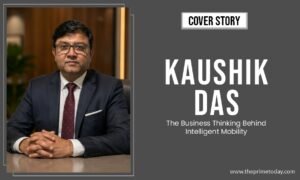
The automotive industry is entering a new chapter in which software, AI, connectivity, and data are becoming as important as the vehicle’s mechanics. As cars evolve into intelligent, connected platforms, technology leadership is no longer limited to building better systems. It is increasingly about understanding people, business needs, customer expectations, and the value technology can create.
Kaushik Das has built his career at the centre of this transformation, moving from embedded automotive engineering into technical leadership, global business strategy, and AI-driven transformation. His journey began with a deep interest in embedded systems, software, and architecture, including the early challenge of converting Assembly Language to C programming. He enjoyed understanding how systems worked and solving problems at their source.
As his responsibilities grew, so did his perspective. Working across global automotive programmes, customers, and business teams taught him that even an excellent technical solution can fall short when people are not aligned, or the real business problem has not been understood. Leading a technical centre broadened that view further, bringing people, capabilities, investments, customers, and strategy into the picture.
That experience shaped a belief that continues to guide him: technology leadership is not about having every answer, but about asking the right questions and bringing the right people together. His move into AI and digital transformation reflects the same philosophy. He sees emerging technology as an extension of his engineering journey, with the focus remaining on one fundamental question: what problem are we trying to solve, and how can technology create meaningful value?
Today, Kaushik’s perspective reaches beyond what can be built. He looks at why it should be built, who it will serve, and whether it can create a lasting impact. In an industry moving rapidly toward software-defined and intelligent mobility, that wider view has become an important part of his leadership.
When Innovation Became More Than Engineering
Kaushik’s understanding of innovation has changed significantly over the course of his career. In the early years, it was closely tied to engineering excellence: making systems safer, faster, more reliable, and more efficient. His work across digital cockpits, functional safety, cybersecurity, and electrification reinforced the importance of technical precision when safety and customer experience are at stake.
The rise of software-defined vehicles, connectivity, and AI broadened that view. Innovation, he believes, is no longer simply about developing better technology. It is about creating better experiences and addressing problems that genuinely matter to customers and businesses.
He has also learned that meaningful innovation rarely comes from one perspective. Engineers, business teams, customers, and partners all bring something different to the table. Creating space for those perspectives often leads to better answers.
Today, he looks beyond what is new and asks what is useful, scalable, and capable of creating lasting impact. Technology can change quickly, but the human need behind it remains the starting point.
From Software-Defined Vehicles to Intelligence-Defined Mobility
Kaushik sees the convergence of AI and software-defined vehicles as one of the most important shifts ahead for the automotive industry. Vehicles are moving beyond being finished products toward becoming intelligent platforms that can improve and adapt throughout their lifecycle.
One of the most significant changes will be the move from reactive to anticipatory mobility. Vehicles could increasingly recognise patterns, predict potential issues, personalise experiences, and respond to drivers in more useful ways.
Yet Kaushik believes success will not come simply from putting more AI into vehicles. Automotive technology must meet demanding expectations around safety, reliability, cybersecurity, functional safety, privacy, and trust.
His experience has shown him that technology alone does not create lasting transformation. Strong architecture, disciplined engineering, capable teams, and a clear understanding of the customer problem are equally important.
He sees the next phase of mobility as a move toward intelligence-defined vehicles, where the car becomes a continuously evolving platform rather than a finished product. The real opportunity, in his view, is to make mobility safer, more intuitive, more personal, and ultimately more human.
Making Safety Part of Innovation
Kaushik believes safety and security cannot be treated as final checks after innovation has taken place. They need to be part of the engineering process from the beginning.
In connected mobility, moving quickly and maintaining high safety standards do not have to be opposing goals. Bringing functional safety and cybersecurity teams into projects early, supported by simulation, automation, and continuous risk assessment, can help organisations innovate without compromising trust.
His experience has reinforced the importance of strong architecture, disciplined execution, and clear governance. Technology can accelerate development, but the culture and processes surrounding it determine whether innovation is responsible.
Ultimately, every journey begins with a basic level of trust between the customer and the vehicle. Protecting that trust, he believes, should shape innovation rather than slow it down.
Where Engineering Meets Business
Kaushik sees his move from engineering leadership into global business development as a natural progression rather than a change in direction. Two decades in automotive technology taught him that technology creates real value only when it addresses a clear business need.
His technical background helps him ask better questions, but he prefers to begin with the problem rather than the technology. Whether a customer is dealing with legacy systems, engineering complexity, operational challenges, customer experience, or pressure to make AI investments deliver results, understanding the problem comes first.
That perspective also helps him look at transformation from both sides. A technically strong solution still needs to scale, integrate with the business, gain adoption, and produce meaningful outcomes.
AI and cloud have made this connection even more important as organisations move from experimentation toward enterprise-scale transformation. Kaushik believes there is no universal blueprint. Each organisation has a different level of readiness, shaped by its data, systems, people, and priorities.
His role, therefore, is to connect engineering with business and innovation with execution. The objective is not to choose the most advanced technology, but the technology that solves the right problem.
Turning AI into Enterprise Advantage
Kaushik believes AI’s greatest value in automotive will come from connecting the entire value chain rather than applying it to isolated functions. Engineering, manufacturing, quality, supply chains, vehicles, and customer experience can all contribute data and insights that become more valuable when they work together.
The automotive industry now generates enormous amounts of information, but collecting data is only the beginning. The real challenge is making it trusted, connected, and useful.
He sees AI-driven decision-making as a major opportunity for early movers. Organisations that can shift from reactive decisions to predictive and eventually anticipatory ones could identify quality problems earlier, prepare for supply disruptions, and better understand changing customer needs.
Yet Kaushik does not see AI adoption as a race to deploy the most models. The technology must solve genuine problems and earn the trust of the people using it. The strongest organisations, he believes, will combine AI with human expertise, sound engineering, and reliable data.
That also means preparing employees, suppliers, dealers, and customers for change. Training and confidence will be as important as the technology itself.
The bigger shift is therefore not simply asking where AI can be used, but what an organisation could do differently if intelligence were built into every part of its business.
Leadership That Travels Across Borders
Kaushik has found that while technology, organisations, and cultures change, the fundamentals of leadership remain remarkably consistent. At the centre of his approach is trust. Whether working with teams in India, colleagues across countries, or global customers, he believes people perform better when they feel respected and trusted. That also means being honest when things do not go as planned and having the confidence to admit when an answer is not yet clear.
Listening comes next. Leading multicultural teams requires an understanding of how people think, what motivates them, and what they may not always say openly. Good ideas can come from anywhere, so leaders need to create room for them.
He also believes in giving people ownership. A leader cannot make every decision. The role is to provide clarity, remove obstacles, develop people, and give them the confidence to take responsibility.
Customer empathy is equally important. Behind every engagement is a customer trying to solve a real problem. Understanding what success means from the customer’s perspective can change the entire conversation.
Eventually, Kaushik measures leadership by the people it leaves behind. Results matter, but lasting success comes from building people who are more capable, confident, and ready to take on greater challenges.
Digital Transformation Starts Beyond Technology
One of the biggest misconceptions Kaushik sees is the belief that digital transformation is primarily about adopting new technology. Software-defined vehicles, AI, cloud, digital twins, and connected ecosystems can enable change, but they cannot fix fragmented architecture, unreliable data, organisational silos, or unclear business goals.
He also cautions against trying to transform everything at once. A clearer approach is to establish a direction, identify the most critical problems, demonstrate value in focused areas, and then scale what works.
The human element is equally important. People often resist uncertainty more than technology itself. When established processes change, employees need to understand why the change matters and how it will improve their work and the final outcome.
Kaushik sees successful transformation resting on strong foundations, disciplined execution, and measurable business value. The real advantage comes when technology, people, data, and business strategy work as one system.
Mobility Through Stronger Partnerships
Kaushik believes partnerships will become increasingly important as automotive innovation grows more interconnected. OEMs understand vehicles and customers; suppliers bring domain expertise; cloud providers offer infrastructure and scale; while software and AI companies can move quickly. Combining these strengths can achieve more than any one organisation working alone.
Yet successful collaboration requires more than adding vendors. Partnerships work best when everyone is aligned around a shared outcome, understands their role, and agrees on how success will be measured.
Trust is particularly important in automotive. Software integrated into vehicles brings questions around safety, cybersecurity, data, intellectual property, architecture, maintenance, and accountability. These issues need to be addressed openly from the beginning.
Kaushik also values partnerships where organisations learn from one another. An automotive company does not need to become a cloud company, nor does a technology company need to become an OEM. Both need enough understanding of each other’s world to build something that works.
He sees the future of mobility as an ecosystem rather than a collection of individual companies. The strongest organisations will know what to build themselves, where to collaborate, and how to build trust across the wider ecosystem.
Learning to Make Better Decisions
One of the experiences that shaped Kaushik’s leadership philosophy involved a transformation where technology was not the most difficult part. Bringing people, processes, and different perspectives together around a common direction proved far more challenging.
Earlier in his career, he was more focused on finding the right answer quickly. Experience taught him that complex decisions rarely offer a perfect answer. Leadership, he came to understand, is less about eliminating risk and more about understanding it well enough to make a considered decision.
He now distinguishes between reversible decisions and those with lasting consequences. Decisions that can be tested and changed can move quickly. Those affecting customers, architecture, people, or the wider business deserve deeper discussion and broader perspectives.
Listening has become an important part of that process. The person closest to a problem may see something that is not visible in a leadership meeting. Creating room for people to challenge an idea can make innovation stronger rather than slower.
When facing a difficult decision, Kaushik focuses on a few questions: What are we really trying to solve? What do we know and what are we assuming? What happens if we are wrong? Can we test the idea first? And who will be affected?
He is comfortable making decisions without having all the answers. What matters is staying close to the facts, listening carefully, and being willing to change direction when evidence demands it.
A More Human Vision of Intelligent Mobility
Looking toward 2030, Kaushik sees intelligent mobility moving beyond the vehicle itself toward the wider experience and ecosystem surrounding it.
Vehicles will become increasingly connected, personalised, and capable of learning through software, data, AI, and connected services. Yet he believes the real measure of progress will not be how much technology a vehicle contains, but how naturally that technology improves everyday life.
A good mobility experience should make journeys safer, simpler, more accessible, and less stressful rather than making people feel as though they are operating a complex machine.
He also expects automotive, cloud, AI, infrastructure, and mobility services to become increasingly interconnected. That shift will require collaboration and strong engineering while maintaining safety, security, reliability, and trust.
Kaushik hopes to contribute by connecting automotive engineering with emerging technologies and helping turn promising ideas into solutions that can work at real-world scale.
He also sees responsibility as part of that future. Privacy, cybersecurity, accessibility, and trust must remain central as mobility becomes more intelligent.
The vehicles of the future, he believes, should not necessarily feel highly technological. They should feel intuitive, understanding context and anticipating needs quietly in the background.
Stay Curious, Keep Learning
Kaushik’s message to the next generation of engineers and technology leaders is simple: stay curious, remain humble, and be willing to take on difficult problems.
The mobility industry is rapidly moving toward connected, software-defined, and intelligent platforms, with AI, data, electrification, cloud, and automation reshaping what vehicles can do. Yet the purpose remains straightforward: creating safer, smarter, more sustainable, and more meaningful mobility.
His own experience has taught him that technology alone does not create impact. Strong engineering needs to be matched by empathy, collaboration, execution, and a clear understanding of the problem being solved.
He encourages young professionals not to chase titles too early. Building technical depth, learning continuously, understanding business realities, and learning from people with different expertise can create a stronger foundation for leadership.
He also believes engineers should look beyond their immediate responsibilities and ask what problems they can solve that genuinely matter.
The future of mobility will need people who can connect technology with human needs and responsible innovation. Kaushik still considers himself a learner, shaped by every new technology, challenging program, and team he works with. That willingness to keep learning, he believes, matters more than any single technology or title.