
Muhammad Imran: Strengthening Procurement Through Finance, Strategy & Technology
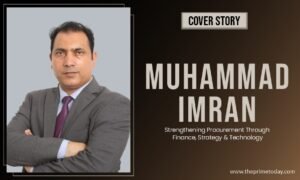
How a career formed by banking, finance and strategic procurement turned the buying function into a discipline of value, risk, governance and smarter business decisions.
How much can an organisation lose by choosing the wrong supplier, even when the price looks right? In banking, a procurement decision can shape costs, expose risks, affect service continuity and influence how smoothly an entire business operates.
Yet the real difficulty often begins before a quotation reaches the table, with understanding what the business truly needs, what risks sit behind a supplier’s promise and where lasting value can be created.
Muhammad Imran has built his career around answering those questions. Across more than 15 years in procurement within the banking sector, he has seen the function evolve from purchasing and negotiation towards a role that connects finance, technology, risk, governance and business strategy. His journey demonstrates that evolution, determined by complex projects, transformation, supplier management and a belief that better procurement decisions can strengthen an organisation from within.
Today, as a Manager Procurement – Finance at United Arab Bank, he persists to bring that perspective to the decisions that keep businesses moving.
Professional Journey
Imran’s professional journey has been formed by a strong interest in how procurement, finance, technology and business strategy come together to create sustainable organisational value. Over the course of more than 15 years in procurement, particularly within the banking sector, he has had the opportunity to work with leading financial institutions in the UAE, including Mashreq Bank, Dubai Islamic Bank and United Arab Bank.
One of the most important turning points in his career was moving into procurement after gaining exposure to banking operations. That experience helped him understand procurement as a function that directly influences business performance, risk, governance, cost and stakeholder satisfaction.
At Mashreq Bank, Imran developed a strong foundation in strategic sourcing, demand management, negotiations and stakeholder management. His experience at Dubai Islamic Bank further expanded his understanding of complex procurement environments and large-scale projects, including head-office requirements, fit-outs, facilities, security, safety systems and other critical business services.
Joining United Arab Bank was another significant milestone. He had the opportunity to contribute to the development and centralisation of procurement practices and to strengthen governance, policies, processes, technology, supplier management and strategic sourcing.
A key lesson throughout his career has been that procurement professionals must understand the business before they can effectively manage suppliers. Today, Imran sees his role as much broader than obtaining competitive prices. It is about creating transparency, managing risk, enabling informed decisions and ensuring that procurement supports the organisation’s strategic objectives.
Strategic Procurement & Business Value
Procurement has evolved significantly from a transactional function focused primarily on purchasing and price negotiation into a strategic business partner.
Modern procurement sits at the intersection of finance, technology, operations, risk, legal, compliance and business strategy. Its responsibility is to ensure that the organisation receives the right value at the right level of risk and within the required timeframe.
Strategic procurement creates long-term value by understanding organisational demand, consolidating spend, developing competitive sourcing strategies, managing supplier performance, negotiating sustainable commercial arrangements and introducing appropriate governance.
In banking, this becomes even more important because procurement decisions can involve technology platforms, cybersecurity, regulatory requirements, professional services, infrastructure, facilities and critical third-party suppliers.
Imran believes the real measure of procurement success is therefore the combination of cost optimisation, risk mitigation, quality, service continuity, governance, innovation and stakeholder value.
Procurement & Financial Management
Balancing cost, quality, timelines, supplier relationships and financial objectives requires a structured decision-making approach.
Imran does not believe that the lowest price should automatically win a procurement exercise. A low-cost supplier may create significant operational, implementation, service or risk issues later. Similarly, selecting the most expensive option simply because it appears to offer premium quality may not represent good financial management.
His approach is to evaluate the total value proposition.
This includes commercial competitiveness, technical capability, implementation timelines, supplier experience, financial strength, references, risk exposure, contractual protections, service levels and the long-term cost of ownership.
He also believes Procurement must work closely with Finance and business stakeholders to understand the organisation’s budgetary position and strategic priorities.
The objective is to achieve the optimum balance between price, quality, risk and business requirements, while ensuring that decisions are properly documented and can withstand management, audit and regulatory scrutiny.
Cost Optimisation & Efficiency
Effective cost optimisation begins before the negotiation table. It starts with understanding the requirement and challenging demand where appropriate.
Some of the most effective strategies Imran has used include competitive sourcing, supplier benchmarking, demand management, specification optimisation, contract negotiations, spend analysis, supplier consolidation where appropriate and structured evaluation methodologies.
Negotiation is also important, but successful negotiation is not simply asking a supplier for a discount. It requires understanding the supplier’s commercial model, market conditions, competitive alternatives, volume commitments, contract duration, implementation requirements and potential areas of value creation.
For example, during one negotiation, Imran was able to achieve a significant reduction in the commercial proposal while maintaining the required scope and service expectations. The lesson for him was that preparation, market knowledge, competitive tension and stakeholder alignment are often more powerful than negotiation alone.
He also believes sustainable savings should never damage supplier relationships. Procurement should create a situation where the organisation receives better value while the supplier remains commercially motivated to deliver quality service.
Supplier & Stakeholder Management
Supplier management begins with selecting the right supplier and continues throughout the entire relationship.
Imran believes supplier evaluation should be objective, transparent and aligned with the organisation’s risk appetite. Depending on the requirement, he considers technical capability, commercial competitiveness, relevant industry experience, banking references, financial strength, certifications, service capability and other mandatory requirements.
One approach he has implemented is a structured technical and commercial evaluation methodology. This helps ensure that suppliers are selected based on a comprehensive assessment and that technically unsuitable suppliers do not progress simply because of an attractive commercial offer.
Negotiation should also be based on facts and market intelligence.
At the same time, Imran places significant importance on engaging business teams early, understanding their requirements, explaining procurement considerations and maintaining transparency throughout the sourcing process.
His philosophy is simple: Procurement owns the process, but the business owns the requirement. Success comes when both work together.
Technology & Procurement Transformation
Technology is fundamentally changing procurement. Digital procurement platforms, e-sourcing, contract management, spend analytics, automation, artificial intelligence and data-driven decision-making are moving procurement away from manual processes and towards a more intelligent operating model.
During his career, Imran has been involved in procurement technology transformation, including ERP-related supplier registration and contract-management processes, e-sourcing platforms, structured tendering, digital documentation and procurement tracking.
The next stage will be even more significant. AI can potentially support spend classification, supplier risk monitoring, contract analysis, market intelligence, demand forecasting and the identification of savings opportunities.
However, technology should not replace professional judgement. The greatest value comes when technology provides better information and procurement professionals use that information to make better decisions.
Imran believes the future procurement leader will need to combine commercial expertise with data literacy, technology awareness, risk management and strong business understanding.
Risk Management & Decision-Making
Procurement risk has become much broader than price and supplier performance. Organisations today face cybersecurity risks, geopolitical disruption, financial instability, concentration risk, fourth-party risk, regulatory requirements, data protection concerns, business continuity challenges and supply-chain disruption.
Imran’s approach is to identify risk early in the procurement lifecycle rather than waiting until a problem occurs.
This means assessing suppliers before award, understanding their financial and operational capability, involving relevant stakeholders such as Risk, Compliance and Legal, establishing appropriate contractual protections, monitoring supplier performance and maintaining proper governance.
He also believes that procurement professionals must be comfortable making decisions with incomplete information. Market conditions can change rapidly, and waiting for perfect information is not always practical.
The answer, in his view, is disciplined decision-making: identify what is known, identify what is uncertain, quantify the risk where possible, establish appropriate controls and make a decision that is aligned with the organisation’s risk appetite.
Leadership & Team Development
Imran’s leadership philosophy is based on three principles: clarity, accountability and development.
People perform better when they understand what is expected of them and why their work matters. He therefore encourages his team to take ownership of their responsibilities while maintaining appropriate governance and controls.
He also believes that procurement teams should continuously improve their processes. At United Arab Bank, for example, he has focused on improving tracking mechanisms, evaluation methodologies, sourcing templates, policies, SOPs, supplier management, reporting and stakeholder engagement.
Recognition is another important part of his leadership approach. Procurement can be a high-pressure environment, particularly when teams are managing multiple projects and urgent business requirements. Good leaders should recognise contribution while also challenging their teams to improve.
The qualities he values most in high-performing teams are integrity, ownership, collaboration, commercial thinking, curiosity, adaptability and the courage to challenge constructively.
Challenges & Professional Learnings
One of the biggest challenges Imran has encountered throughout his career has been driving procurement transformation while balancing different stakeholder expectations.
Business teams naturally want speed. Finance wants financial discipline. Risk and Compliance want appropriate controls. Legal focuses on contractual protection. Suppliers want commercial certainty. Procurement must bring all these perspectives together without becoming a bottleneck.
This has taught him that transformation cannot be achieved through policies alone. People need to understand the reason behind the process.
Another important lesson has been resilience. Procurement professionals often operate under significant pressure, particularly when managing critical projects, technology implementations, urgent requirements and complex negotiations.
His career has taught him to remain calm, analytical and solution-oriented.
Imran has also learned that professional growth comes from being willing to learn from every assignment, every negotiation, every difficult stakeholder conversation and even from mistakes.
For him, leadership is about creating the environment in which the right answers can be found.
Industry Outlook, Vision & Legacy
Imran believes procurement is entering one of the most exciting periods in its history. The future will be shaped by AI, automation, advanced analytics, digital procurement ecosystems, real-time supplier risk monitoring, sustainability, supply-chain resilience and increasingly sophisticated third-party risk management.
Procurement will also become more deeply integrated with Finance, Risk, Technology and business strategy. The traditional boundaries between these functions will continue to become less distinct.
In the banking sector, Imran expects procurement leaders to play an increasingly important role in managing technology ecosystems, cybersecurity-related suppliers, cloud services, fintech partnerships, outsourcing arrangements and other strategic third-party relationships.
His personal vision is to continue contributing to the transformation of procurement from a transactional function into a strategic value-creation and risk-management function.
Ultimately, the legacy he hopes to create is not simply a record of savings achieved or contracts negotiated. He wants to be remembered for building strong procurement foundations, developing people, introducing better governance and technology, creating transparency and helping organisations make better commercial decisions.
If there is one principle that has guided Imran’s career, it is this: Procurement is not about buying cheaper. It is about creating better value, managing risk intelligently and enabling the business to succeed.
That is the contribution he hopes to continue making throughout his professional journey.