
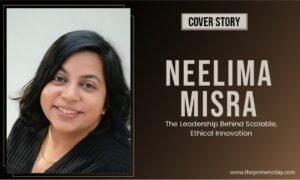
Neelima Misra: The Leadership Behind Scalable, Ethical Innovation
Technology has become one of the most powerful forces shaping modern business, but its real value lies in the difference it makes for people. As organizations race to adopt artificial intelligence, cloud platforms, and data-driven strategies, success is no longer measured by technical capability alone. It depends on leaders who can connect innovation with business purpose, build trust alongside transformation, and ensure technology creates meaningful outcomes for the people who use it. Those who combine technical depth with strategic thinking are helping redefine how organizations grow in an increasingly digital world.
Among those leaders is Neelima Misra, CEO & Co-founder of DaasTek AB, a technology leader, entrepreneur, and transformation advisor with more than 26 years of experience across software engineering, enterprise architecture, cloud, and data strategy. Beginning her career as a developer in 2000, she went on to shape technology strategies for global organizations including Microsoft, Accenture, Cognizant, and Pitney Bowes. While advising Fortune 500 leaders across more than 50 countries, she identified a recurring challenge: many mid-sized enterprises lacked access to the specialized architectural expertise needed to adopt advanced technologies securely and effectively. That insight led her to co-found DaasTek in 2020.
Driven by the belief that technology should solve real human problems, Neelima has dedicated her career to narrowing the gap between innovation and practical business needs. Through DaasTek, she helps organizations build trusted, secure, and scalable data ecosystems while guiding them beyond isolated AI experimentation toward responsible enterprise adoption. Her approach is grounded in balancing intelligence with empathy, innovation with trust, and ambition with accountability. With a clear focus on making complex technologies accessible, ethical, and impactful, she continues to help organizations unlock the full potential of digital transformation.
From Code to Cloud
Neelima’s career reflects a consistent drive to learn, adapt, and ensure technology delivers meaningful business and societal value. Beginning her journey as a developer gave her a strong engineering foundation and an appreciation for understanding systems at their core.
Her transition into architecture and technology leadership at Microsoft and Cognizant expanded that perspective, connecting technical expertise with strategic business outcomes. Working with global enterprises exposed her to complex transformation initiatives across different cultures and regulatory landscapes. Those experiences taught her that successful transformation depends as much on people, governance, and aligned processes as it does on technology.
A defining turning point came when she recognized data as far more than an operational asset. She saw it as the foundation for future intelligence, shaping her work in cloud data platforms, AI strategies, and federated data ecosystems.
Co-founding DaasTek brought together decades of technical expertise, advisory experience, and business strategy. Today, alongside her role as a Forbes Business Council member, she helps organizations adopt AI responsibly while delivering measurable business value. Looking back, she believes the strongest transformation leaders are those who create trust between technology, business, and people.
Where Data Becomes Enterprise Intelligence
Neelima was drawn to technology because it combines logical thinking, creativity, structured problem solving, and the ability to create meaningful change. As her career evolved, so did her perspective. What began with building individual systems gradually shifted toward understanding how data could transform entire organizations.
She came to view data as the collective intelligence of an enterprise rather than a collection of information. Early on, she realized lasting value comes from trusted, relevant, and actionable insights instead of simply accumulating large volumes of data. Her work naturally expanded into AI governance, knowledge engineering, and designing responsible intelligence systems.
Today, she believes AI’s future depends on combining advanced technologies with human understanding. AI must remain transparent, secure, explainable, and aligned with societal values. Through her involvement with global communities such as DAMA Sweden and AI collectives, she works with enterprises to build environments where innovation and ethical responsibility grow together. The rise of generative and agentic AI has reinforced her belief that strong data foundations and governance remain essential to creating smarter, more inclusive, and sustainable outcomes.
Turned a High-Stakes Transformation into Team Growth
Among the many transformation programs she has led, one of the most demanding involved modernizing fragmented legacy data platforms within a high-pressure enterprise environment facing strict timelines and widespread skepticism. The objective was to replace isolated systems with a modern cloud-based data ecosystem while ensuring business operations continued without disruption.
What made the project especially meaningful was the composition of her execution team, which included many young professionals and recent graduates still developing their technical confidence. Rather than relying on a command-and-control approach, she stepped into multiple roles as enterprise architect, transformation leader, coach, and mentor.
She focused not only on delivering the platform but also on creating psychological safety and strengthening technical capability across the team. By introducing structured guardrails, breaking large objectives into manageable milestones, and encouraging open discussions, the team steadily gained confidence. They successfully delivered the platform on schedule, while many of the young engineers developed into capable professionals. The experience reinforced her belief that leadership is measured by how well people grow while navigating uncertainty.
Designing Digital Strategies That Deliver Lasting Value
Neelima believes lasting transformation happens when ambitious architecture is firmly connected to business needs and measurable human outcomes. In her view, innovation without execution produces ideas that never materialize, while execution without innovation limits long-term growth.
At DaasTek, she focuses on building human-centered data ecosystems that support clear business objectives. Her approach begins with understanding business challenges, user needs, and regulatory frameworks such as the EU AI Act and Data Act before selecting technology solutions.
She believes enterprise architecture should incorporate governance, security, operational resilience, and sustainability from the very beginning. Over the years, she has learned that the strongest architectures are not necessarily the most complex but those that are composable, adaptable, and capable of evolving with the business. Her role is to unite strategy, architecture, engineering, and executive leadership around a practical vision that creates value today while preparing organizations for the future.
Choosing Trust Over Speed in Responsible AI
Neelima believes responsible AI often requires leaders to make difficult decisions when rapid deployment conflicts with long-term trust. Throughout her work with enterprise AI and data platforms, she has consistently maintained that governance must come before scaling intelligence.
One recent project brought that belief into focus. There was significant pressure to accelerate an AI deployment to achieve immediate operational gains. However, an early assessment revealed concerns around data quality, lineage, and oversight. Rather than proceeding, she decided to pause the rollout until data governance, privacy safeguards, and clear human oversight mechanisms were fully established.
The decision protected more than the technology itself. It safeguarded organizational trust, regulatory compliance, and brand reputation. She advised leadership that implementing AI simply because the technology exists is a risky approach. Every deployment must be evaluated through the lens of fairness, transparency, privacy, and long-term societal impact. The experience strengthened her belief that responsible AI is ultimately a leadership responsibility, and trust remains the foundation that allows organizations to innovate with confidence.
The Human Qualities That Define Great Transformation Leaders
Neelima believes the difference between a good transformation leader and a great one lies far beyond technical expertise or project management skills. While strong leaders understand technology, exceptional leaders understand people, purpose, and business impact. In her view, digital transformation is ultimately a human journey rather than a software implementation.
She sees the strongest leaders as trusted connectors who translate complex engineering concepts into business opportunities that resonate with executives, legal teams, and end users alike. They listen before designing solutions, respect operational realities, and balance innovation with empathy and discipline.
Throughout her career, she has followed what she calls the CELL philosophy: Courage, Empathy, and Lifelong Learning. Courage enables leaders to make difficult decisions, empathy brings diverse teams together, and lifelong learning keeps them adaptable in a rapidly changing world. She believes people do not expect leaders to have every answer. They look for clarity during uncertainty and confidence during change. Bringing together strategy, technology, and people with humility is what creates lasting transformation.
A Global Perspective on Responsible Innovation
Working across more than 50 countries has shaped Neelima’s understanding that while technology may be universal, successful execution is always influenced by people, culture, and context. Every organization presents its own business priorities, regulatory requirements, and operational realities, making adaptability an essential leadership skill.
Her experience across global enterprises and emerging ventures has strengthened her belief that innovation should always reflect local needs rather than follow a one-size-fits-all approach. Large-scale transformation succeeds when organizations respect cultural differences, business models, and customer expectations.
Global exposure also reinforced the value of diversity in building better technology. She believes teams with varied cultural, gender, and academic backgrounds identify ethical concerns, operational risks, and creative opportunities that homogeneous groups often overlook. At DaasTek, this perspective guides the development of secure data and AI ecosystems where innovation moves forward alongside governance, responsibility, and trust. While generative AI offers enormous potential, she believes its success depends on inclusive leadership that keeps ethics and human values at the center.
Mentorship as the Making of a Leader
Mentorship has been one of the defining influences throughout Neelima’s professional journey. Over the past 25 years, she has benefited from leaders and peers who challenged her thinking, trusted her capabilities, and encouraged her to step beyond moments of self-doubt. Their confidence helped her develop into a leader capable of managing complex global transformation initiatives.
Those experiences shaped her belief that great mentors do more than provide answers. They help individuals discover their own strengths, resilience, and confidence.
Today, that philosophy guides her leadership approach. Whether supporting academic incubation initiatives such as Rama Devi Women’s University or contributing to communities like the Nordic Women in Tech, she remains committed to developing future technology leaders. At DaasTek, she promotes continuous learning, knowledge sharing, and psychological safety. She believes leadership is ultimately measured not by individual achievements but by the success and growth of the people a leader helps develop.
The Next Frontier of AI and Data
Neelima is especially excited by the convergence of generative AI, agentic systems, predictive analytics, and federated data ecosystems. She believes these technologies will reshape how organizations operate, collaborate, and make decisions, provided they are built on trusted data foundations.
In her view, reliable and explainable AI cannot exist without strong governance and high-quality data. That is why she is particularly passionate about responsible intelligence, where privacy, security, transparency, and human oversight are designed into systems from the outset rather than added later as compliance requirements.
She believes the future of AI is not defined by larger models or faster computing but by the ability to produce trustworthy business outcomes. Agentic AI, in particular, has the potential to strengthen human creativity, critical thinking, and decision making. Through DaasTek, she is helping organizations move beyond AI hype toward scalable and compliant adoption that addresses both business priorities and broader societal challenges.
Lifelong Learning as a Leadership Advantage
Remaining relevant in deep technology requires more than keeping pace with innovation. Neelima believes it demands humility, curiosity, and an ongoing commitment to learning. She makes it a priority to stay informed about emerging research, regulatory developments, and evolving technical frameworks while engaging with global communities such as the Forbes Business Council, Hyperight Nordic 100, and AI research networks.
Writing, speaking at industry forums, and advising startups through incubation programs continually challenge her to refine her thinking and stay connected with emerging ideas.
At the same time, she believes practical business challenges provide the most valuable learning opportunities because technology only creates lasting value when it solves real problems. She encourages her teams to experiment responsibly, exchange knowledge openly, and treat setbacks as opportunities to learn. Above all, she credits her ability to stay ahead to one simple habit: remaining endlessly curious and listening before acting.
A Lesson Shaped by Twenty-Six Years
If Neelima could offer one piece of advice to her younger self, it would be to trust the journey with patience, courage, and confidence. Early in a technology career, it is easy to become consumed by technical complexity, new frameworks, and the pressure to deliver quickly. Looking back, she believes the most important lessons came not from technology itself but from understanding people and purpose.
She has learned that lasting impact requires emotional intelligence, resilience, and the willingness to listen as much as technical expertise. Moments of uncertainty often become the greatest opportunities for growth, both personally and professionally.
She would encourage her younger self to take calculated risks, trust personal instincts, and remember that successful careers rarely follow a straight path. Co-founding DaasTek at the age of 42 reinforced her belief that experience and clarity of vision are powerful advantages. In the end, she believes transformation is about helping people and organizations grow by leading with curiosity, integrity, and genuine human empathy.