
Nila Malik: Transforming Aviation Through Technology, Leadership and Human Experience
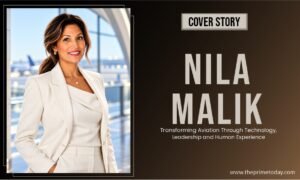
Nila’s approach to strengthening mission-critical aviation systems through governance, collaboration, emerging technologies, and passenger-focused transformation.
A missed connection can turn an ordinary flight into a long day of uncertainty, while behind the scenes, real-time decisions, changing conditions, technology, and multiple teams work together to keep one journey moving. For the passenger, it may come down to a delayed aircraft or a gate that closes too soon; for aviation professionals, it is a complex operational challenge unfolding in real time. This extraordinary complexity is what has always fascinated Nila Malik — the ability to bring countless moving parts together every day to create what passengers expect to feel like a simple journey.
Her career began to take shape at the intersection of technology, operations, strategy, and human experience, where she found herself drawn to the questions that arise when systems and people must work together under pressure. Over time, her work gave her the opportunity to understand aviation from both sides, through the airline and airport perspectives.
At United Airlines, Nila helped lead the development and deployment of ConnectionSaver, using real-time operational data to improve the passenger connection experience. The work brought together her interest in technology and her understanding of a very human concern: helping people reach where they need to be with less uncertainty.
Today, at Los Angeles World Airports, she works on complex digital transformation initiatives involving technology, infrastructure, operations, airlines, passenger experience, and numerous organisational partners. Each initiative brings its own challenges, yet her approach has become clearer with experience. She believes her greatest strength lies in bringing structure to complexity, connecting people who may see the same problem differently, and helping organisations move from an ambitious idea to something that works in the real world.
Alongside this journey, Nila is a mother and a lifelong learner. She believes that ambition and humanity can coexist, and that meaningful leadership also means helping others find opportunities to succeed.
Finding Meaning in the Machinery of Aviation
Some industries reveal their complexity only when something goes wrong. Aviation is different because its success depends on making an extraordinarily complicated chain of activity feel almost ordinary to the person moving through it. That contrast creates a demanding space for professionals who want to improve the experience without disturbing the precision that keeps it functioning.
What drew Nila to aviation was the complexity behind something passengers experience as remarkably simple.
A traveller sees a flight, a gate, a connection, a sign, or a boarding pass. Behind that experience are thousands of decisions, systems, people, and operational dependencies working in real time.
She became fascinated by the opportunity to use technology to remove friction from that journey. The question was never simply, “What technology can we introduce?” It was, “What problem can we make disappear for the passenger?”
That distinction has stayed with her throughout her career.
Aviation also taught her that innovation has to work under real operational pressure. Transformation cannot be designed in isolation with the expectation that the operation will adapt around it. Technology has to respect the environment in which it operates. That was where she realised she could make the greatest contribution, not simply by implementing technology, but by connecting technology to operations and ultimately to the human experience.
The principle became particularly significant when she began working on initiatives where even a small technological decision could influence the movement, timing, and experience of thousands of passengers.
When Technology Measured Its Value in People
In an industry built around schedules and tightly connected movements, a delay rarely remains confined to a single aircraft or airport. One missed moment can create consequences across an entire journey, making the real test of an innovation its ability to protect continuity while responding intelligently to changing circumstances.
ConnectionSaver remains one of the experiences Nila is most proud of because its value was so tangible.
She helped lead the development and deployment of the technology at United Airlines. Using real-time operational data, the system identified opportunities to help connecting passengers make their flights without creating unacceptable disruption elsewhere in the operation. During its first year, it helped save approximately 100,000 connections.
Behind that number were people. Someone made it home that night. Someone reached an important meeting. A family continued its holiday instead of spending hours trying to recover from a missed connection.
The experience taught her that innovation in aviation cannot simply be technically impressive. It has to understand the operation.
There will always be trade-offs. The responsibility of a transformation leader is to understand them, use data intelligently, establish appropriate guardrails, and create solutions that improve one part of the experience without destabilising another.
That principle continues to influence how she leads today: innovation should advance the operation, rather than compete with it.
Working at that intersection also made one reality increasingly clear: progress in aviation must earn the confidence of the people who depend on the system, especially when the technology supporting it is changing underneath them.
Modernisation Without Sacrificing Reliability
For passengers, technological change matters only when it improves their journey without disrupting the reliability they depend upon. Nila believes that aviation transformation must therefore be grounded in operational reality from the beginning, with phased implementation, realistic testing, clear ownership, operational readiness, failure planning, and defined recovery strategies.
Just as importantly, operational stakeholders need to be involved throughout the transformation rather than brought in when the technology is ready. For Nila, trust comes from making people understand what is changing, why it is changing, and how the organisation will respond if something goes wrong. The goal is to build stronger capability while preserving the reliability that keeps aviation moving.
Turning Uncertainty into a Shared Direction
When a large programme begins to lose momentum, the visible symptoms are often familiar: more meetings, longer discussions, competing updates, and growing pressure from different sides. Yet activity alone rarely resolves uncertainty when the people involved are working towards different interpretations of the same destination.
Some of the most difficult programmes Nila has worked on were not struggling because people lacked expertise. They were struggling because different teams had different definitions of what success looked like.
She experienced this on a complex aviation transformation initiative involving technology teams, operations, infrastructure partners, vendors, and business stakeholders. Everyone was working hard, but readiness meant something different to each group.
Rather than adding more meetings or activity, she helped establish a common readiness framework: what had to be true before the programme moved forward, which decisions were still open, who owned them, what dependencies could affect the operation, and what the recovery path would be if something failed.
Once those questions became visible and ownership became clear, the conversation shifted from “Are we busy?” to “Are we actually ready?” That shift created alignment and allowed the programme to move forward with greater confidence.
The experience reinforced something she now believes strongly: when a programme feels chaotic, adding more activity is rarely the answer. The first step is creating clarity.
One lesson she would share with women navigating similar environments is to avoid waiting for perfect clarity before stepping forward. Sometimes leadership means being the person willing to create that clarity.
Collaboration does not require making oneself smaller. It requires listening carefully, respecting expertise, and remaining open to changing one’s position. But when the situation requires a decision or a point of view, confidence is essential.
The ability to establish clarity within a troubled programme is valuable. The larger leadership challenge, however, is ensuring that clarity travels across organisational boundaries where each group sees the same transformation through a different lens.
Leading Across Organizational Boundaries
Enterprise transformation brings together professionals whose responsibilities, vocabulary, incentives, and measures of success can vary considerably. The work becomes effective only when those differences are connected into one coherent direction rather than allowed to become separate interpretations of the programme.
Transformation leaders have to be translators as much as technologists.
Executives may be thinking about strategy, investment, risk, and organisational outcomes. Engineers are thinking about architecture, security, integration, and reliability. Operational teams care about what happens at 2 a.m. when something fails. Vendors have contractual commitments and technical boundaries.
All of those perspectives are legitimate.
Nila’s responsibility is to understand enough of each perspective to connect them around a common outcome.
She often finds that problems do not originate within individual teams. They emerge in the spaces between them, the handovers, assumptions, dependencies, and decisions that nobody fully owns.
That is why she often says that enterprise transformation owns the space between the boxes.
When people understand not only their responsibility but also how it connects to everyone else’s, alignment becomes much easier.
This broader view of leadership gradually challenged an earlier assumption she had carried into her career: that authority and credibility depended on always being the person who knew the answer first.
Relearning What Leadership Requires
As responsibilities grow, leadership becomes less about personal command and more about how decisions are shaped. Complex programmes rarely offer complete information, and insisting on certainty too early can prevent the right questions from being asked.
Earlier in her career, Nila believed strong leaders were expected to have the answers. She thought credibility came from walking into a room already knowing what to do.
Experience taught her almost the opposite.
There have been moments in complex programmes when she realised that trying to answer too quickly could actually narrow the conversation. The better response was to say, “I do not know yet,” bring the right expertise into the room, ask better questions, and make sure the operational consequences were understood before deciding.
The larger and more complex the responsibility becomes, the less likely any one person is to possess all the expertise required to solve it. Leadership is knowing which questions to ask, creating an environment where experts can challenge assumptions, listening to what the operation is communicating, and then being willing to make decisions even when every variable cannot be known.
She has learned that “I do not know yet” can be a sign of strength when it is followed by curiosity, accountability, and action. That shift made her a better leader because she stopped measuring leadership by how much she personally knew and began measuring it by the quality of the environment she created for good decisions to happen.
That willingness to question assumptions becomes especially important when organisations begin considering emerging technologies whose capabilities can move faster than their internal confidence, controls, and decision-making structures.
Closing the Distance Between AI Potential and Trust
Aviation has always depended on advanced technology, yet the introduction of artificial intelligence raises a different kind of question. The issue is no longer simply whether a system can perform a task, but whether an organisation can establish the conditions under which its output deserves to influence a consequential decision.
The biggest gap, according to Nila, is often between what AI can technically do and what an organisation is actually prepared to trust it to do.
Aviation generates enormous amounts of operational information, creating tremendous possibilities for AI, from predictive operations and disruption management to maintenance, passenger communications, resource optimisation, and decision support.
But leaders should start with the problem, rather than the technology.
Before asking where AI can be deployed, organisations need to understand data quality, governance, cybersecurity, explainability, accountability, and human oversight.
Nila also believes leaders need to distinguish between augmentation and automation. Some of the greatest near-term opportunities may come from helping people make faster, better-informed decisions rather than immediately removing people from the decision altogether.
Responsible adoption will come from combining innovation with disciplined governance. Governance should not be viewed as the enemy of innovation. Done well, it is what allows innovation to scale responsibly.
Her perspective on preparation and responsible action also informs the advice she gives women navigating demanding professional environments, particularly those who may feel pressure to wait until every qualification, relationship, or answer is firmly in place.
Words of Wisdom
Career progression often appears orderly when viewed from the outside, although many of the experiences that shape a professional are rarely part of the original plan. For women working in highly visible, stakeholder-intensive fields, the desire to prove readiness can sometimes become a barrier to taking the next meaningful step.
Nila’s advice is simple: do not wait until you feel completely ready.
She spent parts of her earlier career believing that preparation had to precede confidence. Eventually, she learned that some of the experiences that develop a person most require stepping forward while still figuring things out.
Her guidance is to learn the substance, understand the technology, know the operation, build relationships before they are needed, and find mentors and sponsors. At the same time, women must develop their own point of view.
They should also avoid defining themselves solely by their current title.
Careers are built across experiences. An assignment that appears lateral may teach something that becomes essential five years later. A difficult programme may develop leadership more deeply than an easy promotion.
Her advice is to remain open to where one’s capabilities can lead, rather than limiting the future to the next obvious step.
That outlook naturally extends from individual ambition to the wider professional landscape, particularly the kind of industry younger women should encounter as they begin building their own careers.
Creating a Wider Definition of Possibility
The future of aviation will depend on who is given the opportunity to shape its systems, infrastructure, operations, and strategic direction. Representation within those spaces influences more than organisational composition; it also affects what younger professionals believe they can realistically pursue.
Nila hopes the industry reaches a point where seeing women leading technology, infrastructure, operations, airports, airlines, and enterprise transformation is no longer noteworthy. It should simply be normal.
Representation matters, she believes, because people imagine possibilities partly through what they can see.
She wants the next generation to enter an industry where women are not only invited into the rooms where decisions are made, but are helping design the future from the beginning. She also hopes they inherit a broader definition of leadership, one where technical fluency, strategic thinking, empathy, resilience, and the ability to bring people together are all recognised as strengths.
Her responsibility is to help build that environment through mentoring, opening doors where she can, sharing what she has learned, and being visible enough that another woman can look at her journey and see possibilities for her own.
She wants to use the opportunities she receives not simply to advance her own career, but to widen the path for the women coming behind her.
Leadership becomes more meaningful when the opportunities one receives create opportunities for others.
That belief leads to a final question about what should remain after individual programmes have ended, technologies have evolved, and the person leading the work has moved on.
Leaving Organisations Stronger Than Before
Professional legacy is often associated with visible achievements, yet the most durable contribution may be found in what continues functioning after the original initiative, team, or leader has disappeared from view. For someone working across transformation and governance, the question becomes how to create value that remains useful long after a project reaches completion.
Nila would want her legacy to be less about one system or one programme and more about a way of approaching transformation.
Complex organisations do not have to accept complexity as an excuse for poor experiences. With the right leadership, governance, technology, and collaboration, complexity can be made manageable.
She wants organisations to think about digital transformation as something larger than technology implementation. It is about creating capability, strengthening resilience, improving experiences for people, and leaving the organisation better equipped for whatever comes next.
She also wants governance and innovation to stop being treated as opposing forces. Strong governance creates the trust and accountability that allow responsible innovation to move further and faster.
Personally, that matters because she wants her work to have a life beyond the project itself. Systems eventually change. Technologies evolve. Titles come and go. What lasts is the capability created, the people developed, and the experiences made better.
“Technology is the enabler. What becomes possible because of it is the real measure,” she concludes.