
Prof. Dr. Chaitanya Niphadkar: Education that lifts Human Potential
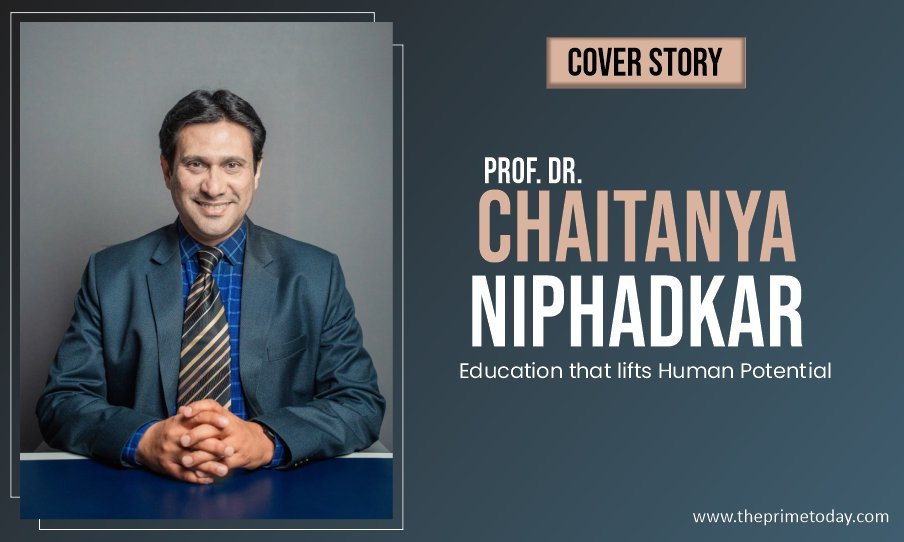
A purposeful journey centred on people, learning, and meaningful growth!
Many people remember the teacher who listened, encouraged, and believed in them. That memory stays like an anchor. It guides choices, fuels effort, and reminds a person that learning can feel safe. This is the experience many learners share when they speak about Prof. Dr. Chaitanya Niphadkar
Professor Niphadkar hears carefully, responds with patience, and helps people recognise their own capacity to rise.
Across more than two decades, he has grown as an academic leader, educator, author, and edupreneur with wide international experience. His work brings together leadership, human resources, organisational development, change management, learning and development, and sustainable education.
Over the years, he has held senior academic leadership roles and performed for several reputed organisations across different parts of the globe, always seeking practical progress for learners and institutions alike.
Prof. Dr. Chaitanya Niphadkar is an alumnus of Harvard Business School, Boston, USA and Lancaster University, UK. He also serves as a Verified Educator with Harvard Business Impact (formerly called Harvard Business Publishing Education). These credentials reflect deep respect for rigorous thinking paired with clear application in real environments.
His motivation flows from a lifelong commitment to enabling human potential through education and organisational transformation. Students value his clarity. Colleagues appreciate his steady guidance. Communities feel the influence of programmes that foster growth with care.
Through steady mentorship, thoughtful design, and sincere belief in people, Professor Chaitanya continues to build learning journeys that empower individuals and strengthen organisations, one meaningful experience at a time.
Let us learn more about his journey:
The Spark Behind His Path
Education first caught Prof. Chaitanya’s attention because he witnessed how deeply it can reform people and communities. That early insight cultivated everything that followed in his career.
His academic journey across continents exposed him to diverse learning ecosystems, revealing the deep impact educational leadership can have on individuals and communities. Over time, this motivated him to take on leadership roles not just to teach but to shape learning environments, drive institutional change and mentor future leaders.
Defining Leadership with Purpose
With that foundation, his thinking naturally moved toward what leadership in education should actually look like. The more he led, the clearer the definition became.
For him, effective educational leadership today means clear direction, inclusion, and the ability to respond wisely to change. It means building a climate where people keep learning, using research with care, and allowing technology to support better learning outcomes. It also means aligning strategies with the needs of a diverse student community, while staying aware of the wider global context they will grow into.
This leadership must also empower educators and students to innovate and thrive in an ever-changing world.
Navigating Resistance While Driving Change
Once leadership takes shape, the real test arrives: turning ideas into practice. Institutions hold tradition closely, and moving forward requires patience and structure.
One of the main challenges for Professor Chaitanya Niphadkar has been bridging traditional academic models with modern, technology-enabled learning paradigms.
Overcoming this requires persistent advocacy for innovation, investing in professional development, and building collaborative partnerships that blend pedagogical excellence with practical relevance. Encouraging change management principles and fostering stakeholder buy-in have been key to navigating resistance and driving sustainable innovation.
Making Inclusion a Daily Practice
Innovation only matters when everyone benefits from it. As his work expanded, inclusivity stopped being a concept and became part of everyday planning.
For Prof. Chaitanya, Inclusivity and equity are central to institutional purpose. He prioritizes accessible curricula, flexible learning pathways, and culturally responsive pedagogy.
Providing academic support services, encouraging diverse perspectives in curricula, and maintaining transparent feedback mechanisms help ensure that every learner has the opportunity to succeed irrespective of background.
Investing in Educators
To sustain that ecosystem, attention naturally shifts to the people delivering learning inside classrooms. Faculty development becomes the backbone.
He champions continuous professional development through workshops, research collaborations, international exchange programs, and mentoring.
Encouraging faculty to engage with global academic networks and research communities fosters an environment where educators continually refine their approaches, adopt best practices, and remain at the forefront of educational innovation.
Technology as a Strategic Partner
As institutions evolve, digital tools start forming how ideas translate into outcomes. Technology becomes less of an add-on and more of a partner in strategy.
For him, technology has been a catalyst for transformation from streamlining administrative workflows to enriching pedagogical delivery.
Digital platforms enable personalised learning, real-time analytics inform decision-making, and collaborative tools broaden engagement inside and outside the classroom. Integrating EdTech helps expand access, measure impact, and create more responsive learning environments.
Bridging Academia and The Real World
Once systems become responsive, the next priority is relevance. Education must mirror real industry needs and community challenges.
He and his teams regularly engage with industry partners, conduct needs assessments, and adapt programs to reflect evolving workforce demands. Curriculum frameworks incorporate industry insights, internships, and experiential learning. By aligning educational outcomes with real-world skills and community priorities, graduates are better equipped to contribute meaningfully post-graduation meaningfully.
When Learning Leads to Impact
That alignment often reveals itself through people and outcomes. One particular student journey captures the ethos of the institution.
A doctoral candidate who, under his supervision, integrated advanced leadership research with community-based practice, ultimately launching a social enterprise that empowers underserved youth. This demonstrates a commitment to scholarship that not only advances knowledge but also has tangible, positive community impact.
Caring for Minds and Well-being Together
Stories like that remind us of something simple. When people feel heard, they learn with more confidence. Performance rises, and so does well-being. Institutions thrive when students experience that sense of care and steady guidance.
Building on this belief, he treats academic excellence and well-being as partners. He encourages environments where social-emotional learning sits alongside strong academics. Access to counselling, peer support networks, flexible learning choices, and mindful practices creates space for students to succeed in study and in life. The aim is growth that feels sustainable, grounded, and humane.
Preparing Tomorrow’s Leaders
Professor Niphadkar talks about “Champ Performers” meaning ‘Champions’ at work that would lead to enhance performance. The same philosophy flows into those preparing to lead the system next. Education, work, and communities keep changing, so tomorrow’s leaders require a wider lens that holds people, purpose, and results together. They learn to read situations carefully, respond with maturity, and guide others with clarity.
They grow as visionary thinkers, culturally aware communicators, and decision-makers who work comfortably with evidence and insight. They act as agile guides through change, empathetic mentors committed to fairness, and confident users of technology who enhance learning while preserving a human-centred way of leading.
Forming What Comes Next
With all these threads coming together, Prof. Chaitanya looks ahead with a clear agenda for how education can continue evolving.
He is focused on expanding global collaboration networks, embedding sustainability and ethical leadership into curricula, scaling innovative learning models that emphasise experiential and lifelong learning, and leveraging AI and analytics to tailor educational pathways, all aimed at preparing learners for a future defined by complexity and opportunity.
Read the full magazine edition: Click Here