
Shri M. Nagarajan: Guarding the Digital Pulse of Governance
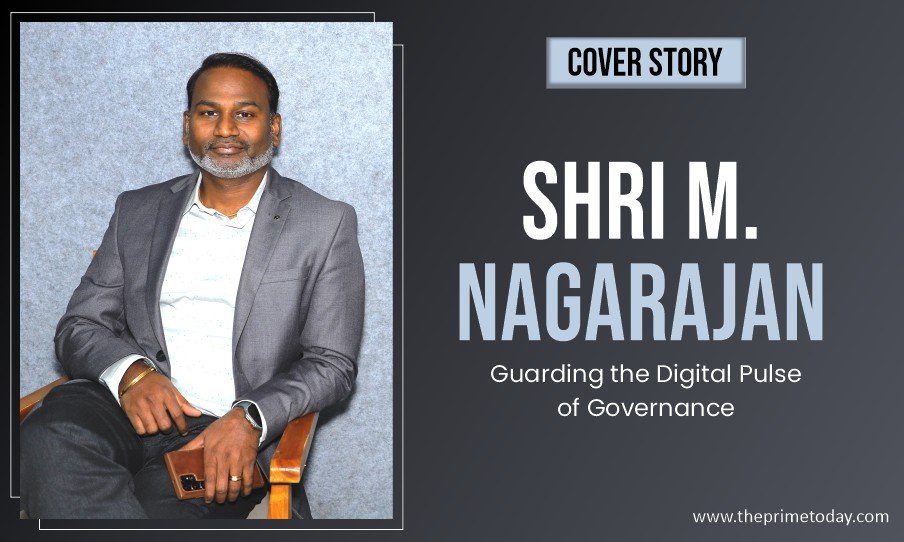
How a Public Servant Turned Cybersecurity Advocate is Forming the Future of Safe Governance!
Every bridge built, every road paved, and every public service delivered rests on a foundation of trust. In the past, that foundation was physical, roads, transport systems, sanitation networks. Today, an equally important foundation is digital. It is what keeps governance steady in a fast-changing world.
Shri M. Nagarajan understands this deeply. His career in administration has spanned public transport, sanitation, rural development, and large-scale state missions. These roles taught him that governance is not only about visible progress but also about securing the unseen systems that support it. Over time, he saw how technology could transform public service, but also how it introduced new vulnerabilities.
This awareness inspired Nagarajan’s focus on cybersecurity. For him, it is more than a technical task; it is a commitment to protecting trust. A breach in digital systems can disrupt lives as much as a collapse in infrastructure. That realization drives his work; ensuring that governance in the digital age remains resilient and reliable.
For him, safeguarding data and systems is safeguarding society itself. His vision blends decades of administrative experience with an urgent call to protect the digital foundations of governance. To him, the mission is clear: secure the future by strengthening both physical and digital trust.
Let us learn more about his journey:
Embracing Complex Challenges with Inclusive Innovation
Nagarajan’s personal journey has been shaped by constant engagement with complex challenges, whether managing large transport systems, improving sanitation at scale, or leading transformative government programs. These challenges required more than technical solutions; they demanded innovation, empathy, and collaboration.
When he considers cybersecurity, he views it as a similar challenge; complex, rapidly evolving, and requiring collective innovation. He approaches it with the belief that innovation must be inclusive, creating solutions that are technologically advanced while remaining accessible and adaptable for government systems, businesses, and citizens alike.
Commitment to Strengthening Cybersecurity Through Transformative Experiences
One of the earliest defining experiences in Nagarajan’s career was leading the implementation of Akodara, India’s first digital village, in Sabarkantha district. This initiative illustrated how digital tools, ranging from payments to e-education, could transform everyday life in rural communities. It also highlighted the extent to which communities depend on secure systems for their daily functioning.
Later, as CEO of Surat Smart City, Nagarajan guided major projects such as the Integrated Traffic Control System (ITCS), the Integrated Transit Management System (ITMS) for city buses and BRTS, and the City Command and Control Centre. These initiatives delivered smarter and more efficient services for citizens, while underlining the critical importance of cybersecurity. A single vulnerability in such interconnected systems could result in widespread disruption. These experiences cemented his belief that cybersecurity serves as a central pillar of governance rather than an optional safeguard.
Pivotal Decisions That Shaped a Cybersecurity Leadership Journey
Nagarajan took significant and bold decisions that shaped his growth as a leader in cybersecurity. Undertaking the Akodara Digital Village project was a pioneering step, as it was untested in India and required building trust among people to adopt digital tools in their daily lives.
Later, leading Surat Smart City’s integrated digital ecosystem marked another decisive move. The Command-and-Control Centre and ITMS/ITCS projects ranked among the first of their kind in India. Executing these initiatives demanded balancing innovation with risk, inspiring teams to move beyond conventional solutions, and ensuring resilience at every stage.
Choosing to champion cybersecurity as a personal mission, despite holding roles in varied administrative domains, became another defining choice. These decisions established Nagarajan as a leader who considers cybersecurity as a core foundation of modern governance rather than a peripheral concern.
Balancing Technical Complexity and Human Leadership in Cybersecurity
Cybersecurity extends beyond machines and codes to encompass people, trust, and culture. The balance of technical complexity comes from ensuring that teams feel empowered, informed, and aligned with the larger purpose. Leaders must translate the jargon of cybersecurity into a language that policymakers, staff, and citizens can understand.
Nagarajan emphasizes demystifying complexity, encouraging collaboration across domains, and reinforcing that the ultimate mission is to protect people and systems, not merely to build firewalls or protocols.
Essential Leadership Qualities in Cybersecurity Crises
Nagarajan asserts calmness under pressure, clarity in decision-making, and the ability to inspire trust remain crucial in navigating crises and high-pressure moments in cybersecurity. Crises in this field are inevitable, and panic offers no solution.
He emphasizes that effective leaders project stability and provide clear direction when uncertainty reaches its peak. Humility is equally important, the willingness to listen to experts, to admit what remains unknown, and to adapt swiftly. Resilience plays a vital role, as the battle against cyber threats is a long-term endeavour rather than a short race.
Staying Ahead in a Shifting Cybersecurity Landscape
Lifelong learning serves as the foundation for staying ahead of rapidly shifting threat landscapes. This is achieved through constant reading, engaging with cybersecurity experts, and tracking global developments. Equally important is building ecosystems of learning.
To this end, Nagarajan founded CyReC – the Cyber Resilience Collaborative. This initiative unites researchers, startups, corporates, and citizens to foster awareness, skills, and resilience for a cyber-safe society. Its focus includes children, youth, women, and elders, as cybersecurity extends beyond securing systems to empowering people. By creating such platforms, he sustains his own knowledge while enabling others to grow in the field.
Lesson of Human-Centered Leadership
In his early technology-driven projects, Nagarajan underestimated the human side of adoption. Despite having strong systems in place, his teams faced resistance from users. This experience taught him that no matter how robust the technology, success depends on securing people’s support.
The lesson of patience, persuasion, and empathy became a defining principle for him. Today, Nagarajan approaches cybersecurity with the understanding that people and culture carry equal importance to technical firewalls.
Building Trust Through Transparency and Empathy
Nagarajan encourages trust to be nurtured through deliberate actions rather than imposed. He fosters trust with his teams, partners, and clients through transparency, consistency, and empathy.
Within his teams, he encourages an environment of openness where mistakes are shared without fear, and integrity is treated as a principle that cannot be compromised. In the field of cybersecurity, where breaches remain inevitable, this culture of honesty and shared responsibility forms the foundation of enduring trust.
Integrating Core Values into Cybersecurity Strategy and Culture
Nagarajan’s core values are rooted in service, accountability, and inclusiveness. These values shape his approach to cybersecurity strategies. For him, cybersecurity is an inclusive domain that must protect the most vulnerable as well as the most powerful.
Accountability means strategies should deliver tangible, measurable security and perform effectively beyond conceptual design. Inclusiveness ensures the culture embraces diverse perspectives, recognising that threats are multifaceted and responses must reflect that complexity.
Sustaining Influence, Clarity, and Vision in a High-Stakes Industry
Following a disciplined learning and reflective thinking as core practices, each day, Nagarajan dedicates time to step back, assess, and recalibrate. He places strong emphasis on meaningful conversations with experts and peers, as such dialogue broadens vision.
Meditation and fitness form integral parts of his routine, supporting clarity and balance. These habits enable him to remain grounded while navigating the demanding and high-stakes environment of cybersecurity.
Vision of a Cybersecurity Leader as a Protector and Mentor
The role of a cybersecurity leader extends beyond safeguarding infrastructure to shaping the future of the field. Nagarajan sees his role as both a bridge and a catalyst. He has led large-scale deployments such as Surat’s Command and Control Centre, ITCS, and ITMS, which have become models for smart governance. Alongside these achievements, he dedicates himself to building future-ready citizens and leaders.
Through CyReC, he focuses on raising awareness and skills among children, youth, women, and elders, believing that resilience begins with the community. For him, mentorship means demonstrating that cybersecurity is not only a technical profession but also a societal mission. Inspiring young leaders to adopt this vision stands as his meaningful legacy.
The Future of Leadership in Cybersecurity
The essence of a meaningful leadership legacy lies in creating trust, resilience, and inclusiveness. Nagarajan envisions his contributions in cybersecurity, through projects like Akodara Digital Village, Surat Smart City, and CyReC, as a testament to the idea that digital transformation and cybersecurity must advance together. His aspiration is to be remembered for more than safeguarding systems; he seeks to be known for empowering individuals and building communities equipped to face the digital future with confidence.
Read the full magazine edition: Click Here