
SpaceX-Tesla Merger Talks: Musk Calls Deal a ‘Good Idea’ as Profit Surges
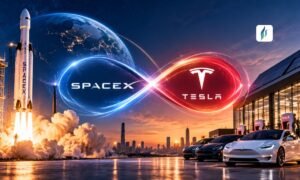
Elon Musk has confirmed SpaceX-Tesla merger talks. He said combining the companies “would be a good idea” but that the decision rests with special committees at both firms. Musk said he is a conflicted party and cannot join those discussions, and shareholders would have to approve any deal. He spoke on Tuesday’s investor call, which also covered SpaceX’s third-quarter results.
SpaceX posted net income of $4.4 billion, against a $1.1 billion loss a year earlier. That beat the $1.57 billion analyst average. Adjusted earnings were 45 cents a share versus 13 cents expected, per IBES.
Musk said SpaceX annual recurring revenue could reach $500 billion to $1 trillion by the end of 2027, a remark that seemed off-script. CFO Bret Johnson reiterated a target of about $100 billion by the end of 2026. SpaceX plans $35 billion to $40 billion in fourth-quarter capital spending. AI took $16.4 billion of the third quarter’s $19.6 billion.
Starlink subscribers reached 13.6 million, ahead of the 12.19 million expected. Average monthly revenue per subscriber fell from $99 in 2023 to $69 as cheaper plans spread to more markets.
Analysts see the SpaceX-Tesla merger talks as credible because AI is now SpaceX’s biggest business line. Will Rhind of GraniteShares said computer contracts are turning into revenue faster than expected. Daniel Newman of the Futurum Group said a merger now feels imminent. Musk, however, left the call to the special committees. Growth has trade-offs too. Starlink subscribers are rising, but revenue per user is falling, and SpaceX has warned that entering lower-income countries could push it down further.
Watch whether the special committees reach a deal, and whether the SpaceX-Tesla merger talks produce an announcement before Tesla’s December annual meeting, as Barclays suggested. Investors will test the SpaceX annual recurring revenue targets and see whether Starlink subscribers keep growing despite lower revenue per user. Starship has yet to enter commercial service, so it remains central to long-term plans. Its first orbital test flight deployed several Starlink satellites but ended hours early after an engine issue.