
Tatjana Kolenc: Making Mentoring a Culture of Shared Learning
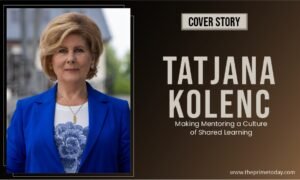
Building New Approaches to Knowledge Sharing, Lifelong Learning, and Development Across Generations.
How much of what people know at work is ever actually written down? Much of it lives in people instead. It sits in the experience someone has gathered over 20 years, in the judgement developed through difficult situations, and in the small lessons that rarely appear in a manual or training programme.
Then people move on.
They retire, change companies, step into new roles, and sometimes take years of valuable knowledge with them. At the same time, workplaces are bringing together several generations and people from different cultures, each carrying their own experiences, expectations, and ways of learning. The challenge is finding a way for all that knowledge to keep moving between people.
This is the space in which Tatjana Kolenc has chosen to build her work.
Her understanding of organisations began long before mentoring became her professional focus. She spent years building a business career through operational, professional, managerial, and executive positions in various companies and international banking groups. Those roles gave her experience across different levels of organisational life and a close view of how people, responsibilities, and knowledge shape a workplace.
In 2019, she turned that experience towards a completely new field: mentoring and lifelong learning.
Since then, Tatjana has focused on developing the mentoring profession, mentoring mindset, and mentoring programmes. As an EMCC Global EIA accredited Mentor Practitioner and an ambassador of lifelong learning, she develops approaches for transferring, exchanging, and circulating knowledge.
Her work has also taken a strong written form. She is an awarded innovator, the author of six business books, and has written more than 40 articles on mentoring, lifelong learning, and employee development in multigenerational and multicultural work environments.
In May 2026, she added another important chapter to that work when she launched Slovenia’s first professional journal dedicated to mentoring, serving as its publisher and editor-in-chief. She is also a member of the Slovenian Coaching Association and EMCC Global.
Across these roles and achievements, her mission remains consistent. Tatjana works to develop new approaches to mentoring and raise awareness of mentoring culture and a mentoring mindset as essential parts of a supportive environment for individuals and organisations. Perhaps the simplest way to understand her work is through what happens when knowledge is allowed to travel. Experience finds someone who needs it, questions find someone who can answer them, and learning becomes part of the relationship between people. For her, that exchange is where mentoring can become a lasting part of how organisations grow.
When the People Who Shape a Career Become Mentors
Leadership often looks like something people achieve on their own. A title changes, responsibilities grow, and suddenly a person is expected to lead others with confidence. Yet career development is rarely shaped by individual effort alone. Behind many capable leaders are people who once offered advice, shared their experience, opened a door, or simply made someone feel that they belonged.
Tatjana owes a large part of her career to people who believed in her, passed on their knowledge, experience and wisdom, and made her feel accepted and valued. Those people were her mentors, even though many of them did not know they were playing that role.
She wanted to give back by becoming a mentor herself and inspiring others to do the same. For her, knowledge becomes truly valuable when it is shared, while teaching others can also deepen our own learning.
For Tatjana, mentoring creates space where people learn and develop together, find purpose, are creative and innovative, learn from mistakes and shape their future, as well as the future of organisations, communities and society. Because when people develop, organisations develop. Communities develop. Society develops.
Innovation Begins with Curiosity
Innovation is often associated with new technology or a major idea that changes the way a business works. Yet many valuable innovations have much simpler beginnings – in the willingness to question what already exists and look for ways to make it better.
For Tatjana, innovation begins with curiosity: observing and listening carefully, understanding needs and challenges, and being open to possibilities that may not be immediately obvious. It also requires the courage to question established ways of thinking and working. It requires the courage to question established ways of thinking and working, and the ability to turn an idea into something useful and feasible.
At its core is a mindset of continuous improvement, where everyone feels empowered and invited to change the existing situation for the better. A culture of innovation strengthens satisfaction, commitment and meaning, and encourages creative thinking, risk-taking and learning from mistakes, helping people feel that their contributions genuinely form the organisation’s success.
Tatjana believes innovation rarely happens in isolation; she sees it as something that grows through cooperation between people with different knowledge, experiences, generations, cultural backgrounds and perspectives, which is why she considers mentoring, knowledge sharing and a strong learning culture essential to creating meaningful innovation. While technology can accelerate the process, she conveys that it is people who ultimately give innovation its direction, meaning and purpose.
Making Mentoring Accessible to More People
An idea gains greater meaning when it creates something people can actually use. For Tatjana, that has meant taking mentoring beyond the traditional understanding of a formal relationship between two people and creating a community around the wider idea of shared development.
She will stay in the field of mentoring, where one of her key innovations was founding the Heart Mentoring Community (Skupnost srčnega mentorstva – SSM), which received a bronze award for social innovation from the Chamber of Commerce and Industry of Slovenia.
Its mission is to make mentoring accessible both to people who need this support and to those who provide it. SSM members are united by responsibility for their own development, lifelong learning, sharing knowledge and experience, developing mentoring and leadership skills, and commitment to the SSM Code and principles of heartfelt mentoring.
Tatjana also promotes mentoring as a mindset that enables knowledge to be shared and circulated. In that understanding, mentoring becomes part of how people approach learning and working with others, rather than something that exists only within a formal programme.
Finding Value Where Others See an Opportunity
Business growth is often measured through familiar figures: revenue, expansion, new customers or larger markets. Tatjana looks at the question from a different angle, beginning with the value that an opportunity can create and the kind of development it can make possible.
She would speak less about business growth in the conventional sense and more about opportunities to create value and meaningful development. They begin with understanding the needs and challenges of individuals, organisations and society, and finding relevant solutions.
Such opportunities require cooperation across fields, strategic and critical thinking, open and equal dialogue, co-creation, and the ability to recognise the best solution regardless of who proposed it.
In simple words, she says, it is about being curious, watching, listening and learning from what is happening around you, emphasising the importance of mentors who can recognise potential, see where it could develop further, and open doors that people may not yet see, know how to approach, or dare to open themselves. And, she further adds, there must be people who can help turn an opportunity into action and give an idea the support it needs to come to life.
Values Which Make Growth Sustainable
Sustainable development can sound like a large organisational ambition until it is reduced to the habits that make it possible. For Tatjana, those habits are familiar and deeply practical: knowing where to go, continuing when progress takes time, keeping promises, building relationships and remaining willing to learn.
Her approach rests on clear goals, perseverance, patience, hard work, openness and collaboration based on clear expectations. It means keeping promises and taking responsibility, networking and building relationships, and respecting ethical principles, integrity and core values that cannot be negotiated. It also means constant learning.
For Tatjana, sustainable development is about building something meaningful that creates value for present and future generations and can be trusted over time.
Give People Room to Think
Creativity can easily disappear when people are given tasks, deadlines and instructions without enough room to think about how something could be done differently. Tatjana sees innovative thinking as something that needs the right conditions, particularly the freedom to ask questions and explore possibilities.
Innovation, understood as improving existing processes, services, products or ways of working, does not come with a command or by pressing a button. It comes from releasing people’s mental potential and their capacity to think.
People need an environment in which they can nurture curiosity, ask questions, think more broadly and boldly, experiment and make mistakes. Creative individuals need autonomy, psychological safety, open communication, access to information and support from management.
Leaders who want critical and creative thinking should do more than delegate tasks. They should offer challenges, give people room to find solutions and entrust them with responsibility. This encourages thinking and decision-making and creates the conditions in which inventiveness, the ability to create something truly new, useful and feasible, can emerge.
Let the Quality of the Work Speak
Leadership can sometimes become entangled with questions of visibility, recognition and who receives credit. Tatjana’s experience has led her to place her attention elsewhere, on the quality of the work and the responsibility that comes with it.
In fact, she has never felt that she faced any particular challenges simply because she was a woman. Perhaps this was because she always took responsibility, put expertise and substance before everything else, fulfilled her commitments, and was demanding of her colleagues but fair, and, above all, demanding of herself.
Her ideas were not always accepted, and there were times when someone else received credit for an idea that was hers, but she says what mattered most was seeing good ideas come to life. Rather than seeking recognition, she has always preferred to let the quality of her work, her knowledge and, ultimately, her results speak for themselves.
Where Technology Ends and People Begin
Technology can process enormous amounts of information in a very short time. But for Tatjana, the more important question is what happens next: who gives that information context, meaning and relevance?
This is where people remain essential. They bring critical thinking, values, wisdom, tacit and organisational knowledge. They put information and new knowledge into context and help others understand not only what works, but why.
AI already has a place in mentoring. It can help structure processes, connect mentors and mentees, support preparation and reflection, and provide access to knowledge. But it cannot replace a mentoring relationship built on empathy, responsiveness, communication, trust and respect.
Tatjana sees AI and mentors as complementary: AI is a supporting tool, while the mentor and mentee remain at the centre of the relationship.
Bringing Generations Together
A high-performing team rarely looks exactly the same from one person to the next. Different generations, cultures, experiences and ways of thinking can bring complexity to a workplace, yet they can also create an unusually rich pool of knowledge.
For Tatjana, high-performing teams are built on diversity, bringing together people from different generations, cultural backgrounds and life experiences. She conveys that having five or even more generations working side by side creates an enormous wealth of knowledge and fresh thinking, with each generation contributing something different, from expertise, experience and digital literacy to perspective, wisdom and energy.
She often says that experience without curiosity becomes routine. And curiosity without experience carries the risk of repeating the same mistakes. Both are needed.
People from all generations need to cooperate, learn from one another and work towards a common goal. Everyone should take responsibility for their role, be seen and heard, and communicate openly.
Clarity and psychological safety are essential: clarity provides structure, while safety gives people courage to ask questions, admit mistakes and contribute different views. Experienced professionals share expertise and wisdom, younger colleagues bring fresh perspectives and knowledge of new technologies, and everyone contributes to the common goal.
Start with Understanding the Real Need
The relationship between an organisation and its clients can easily become centred on what is being offered. Tatjana places the starting point somewhere earlier, with the question of whether the proposed solution genuinely responds to what the client needs.
She works with clients who share similar values, believing that this alignment forms the foundation of a strong relationship. She also emphasises the importance of aligning expectations from the very beginning and working together to find the solution that best responds to each client’s real needs.
Good advisory work, in her view, is about listening, understanding the context and co-creating an approach that is meaningful and useful. The same principle applies to mentoring, where a standard formula can never account for every person.
There is no universal approach to mentoring, as every relationship is formed by the individual’s needs, generation, culture and circumstances. The aim is to be the mentor Individuals or mentees need and want, rather than the mentor the mentor would like to be or would choose for themselves.
Words of Wisdom
Advice for young women entering leadership often centres on confidence, ambition and achievement, but Tatjana believes it begins somewhere more grounded: building substance, staying willing to learn and surrounding yourself with people who can support you along the way.
Young women aspiring to become successful leaders should build on their knowledge and expertise, trust their potential and abilities, and remember that they do not need to know everything at the beginning or have all the answers. They need to be prepared to learn along the way, all the time and from anyone.
If they do not know something, they should ask. For Tatjana, this is not a sign of weakness but of confidence and willingness to learn. She encourages them to build their own supportive environment, a network of mentors and people they can learn from, and to admit when they need help and find it.
She also believes leaders should be role models in lifelong learning and knowledge sharing. They should avoid micromanaging and trust their people. Rather than simply giving orders and tasks, they should give people challenges, responsibility and space to contribute.
And above all, she says, be yourself and be human. Lead with heart, not with force.
The Future Belongs to People Who Learn Together
The future of mentoring, as Tatjana sees it, begins with changing the idea of who mentoring is for. It does not belong to one generation, one profession, one career stage or one formal programme. It belongs wherever people have something to learn and something to share.
Her goal is to continue developing mentoring culture and a mentoring mindset, and to raise awareness that mentoring is not reserved for a particular generation, profession, career stage or formal programme.
No matter how much people know, how young or old they are, everyone has something to teach and something to learn. And everyone has something worth sharing.
Tatjana believes the future will belong not simply to those with the smartest people or the most advanced technology, but to those who know how to learn, share knowledge and work together. After all, no matter how talented we are, meaningful success is rarely achieved alone.
She wants to continue creating programmes, communities and approaches that make high-quality mentoring more accessible and help build environments in which knowledge is shared, exchanged and circulated.
It brings her work back to the question at the centre of her career: what happens when knowledge has somewhere to go? For Tatjana, the answer lies in people who are willing to teach, people who are willing to learn, and environments that give both the space to do so.