
The Institutional Transformation Leader: Dr. Sonia Toson’s Systems-Driven Blueprint for Higher Education Modernization, Emotionally Intelligent Evolution, and Sustainable Leadership
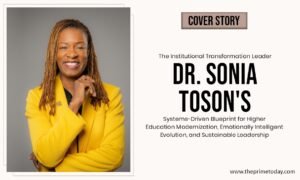
With the convergence of analytical rigor and inclusive governance, Toson transforms the structural landscape of higher education. In doing so, she merges the precise, analytical discipline of an attorney with a deeply collaborative leadership philosophy. As the Vice President of Organizational Effectiveness, Leadership and Institutional Development at Kennesaw State University, she guides the internal growth systems of a fast-growing institution. Toson treats institutional development not as a series of rigid administrative tasks, but as an active effort to cultivate professional potential across every college and division. She possesses a unique combination of legal knowledge and corporate strategy. It is her extensive background, beginning with undergraduate studies at the University of Illinois Urbana-Champaign, followed by earning her Juris Doctorate and an MBA from American University. All of this allows her to design operational frameworks that balance complex policy demands with real human connection.
Toson moves her division past traditional, top-down personnel oversight toward an agile model of institutional health by centering people within structural transitions. She has over a decade of campus experience. After a successful career in law, she transitioned to higher education as a Lecturer of Construction Management. Later, she advanced from an Assistant Professor of Business Law to an Associate Professor of Law. Eventually, she stepped into critical executive positions like Chief Diversity Officer. Her recent work as Interim Special Assistant to the Provost for College Transition further proved her ability to lead complex structural changes smoothly. She established open communication channels instead of enforcing compliance through detached administrative mandates. Her creating a unified campus culture helps faculty and staff to co-design operational workflows. It also nurtures an environment where institutional goals and personal development reinforce each other.
Modernizing Operational Infrastructure for Radical Reinvention
Toson guides the operational evolution of the university by establishing precise, data-driven frameworks that prepare the institution for upcoming regional and national shifts. In a fast-changing academic environment, she positions organizational development as a continuous, connected process of strategic modernization rather than a series of isolated administrative tasks. The future of the university must involve innovative models of education that speak to current and future trends reshaping higher education. “We are living in a moment of reinvention. Declining enrollment, advancing AI, funding pressures, and evolving workforce demands are all converging at once. Institutions that refuse to adapt will not survive. Those who embrace change with boldness and strategy will not only endure, they will thrive,” Toson notes.
To translate this competitive strategy into real-world institutional resilience, Toson connects her work with the mission of KSU, specifically maximizing student success. In her division at Kennesaw State University, they are implementing process improvement and project management models to modernize their operational infrastructure, while simultaneously developing their leaders using innovative, reflective, and evidence-based methods that equip them to lead in this moment and the next. These are not abstract initiatives. They produce tangible results in the form of greater student success and career outcomes for the nearly 52,000 students they have the privilege of educating. By removing bureaucratic silos and updating daily workflow processes, her team ensures that the university operates with a high level of efficiency, keeping the entire campus community focused on long-term educational impact.
The Practical Application of Emotionally Intelligent Systems Thinking
Toson resolves the natural friction that occurs during large-scale institutional change by combining analytical observation with a deep understanding of human behavior. By applying this balanced management perspective, she helps faculty and staff align their daily routines with the university’s overarching goals. She states, “Our motto is simple but powerful: We develop people and processes for institutional excellence.” They blend systems thinking and emotional intelligence together into a uniquely effective formula. In an era of complex organizational ecosystems involving global supply chains, hybrid workforces, and AI-enabled decision systems, executives increasingly rely on systems thinking. But many leaders struggle to translate that thinking into real organizational influence. The reason is simple: systems rely on people.
This holistic approach allows the division to build sustainable, trust-based working relationships that traditional, purely technical leadership models often overlook. Toson believes emotional intelligence is the missing capability that allows leaders to effectively operationalize systems thinking. Traditional systems tools help identify patterns, feedback loops, and structural dynamics. But they often overlook the human dynamics of trust, identity, motivation, power, and emotion that determine how systems actually behave. By studying these hidden relational forces, Toson ensures that structural adjustments remain practical, empathetic, and highly effective.
The result is what she calls emotionally intelligent systems thinking, a leadership lens built on three capabilities: perceptual awareness (reading the relational dynamics shaping a system), contextual empathy (understanding how different stakeholders experience change), and human-centered intervention (identifying the relational leverage points that unlock system-wide performance). Systems thinking explains how organizations function. Emotional intelligence explains why people behave the way they do within themselves. Together, they allow leaders to influence complex systems more effectively and build organizations that are both strategically coherent and humanly sustainable. Toson monitors these operational dynamics from her executive office, looking for new ways to refine campus leadership programs as the university faces the next wave of modern educational demands.
Cultivating Collective Capability Through Human-Centered Systems
Toson deliberately steers university operations away from the fragile reliance on solo achievers, choosing instead to design networks that distribute responsibility across cohesive teams. By creating an environment where responsibility is shared, she ensures that institutional progress remains steady during complex campus updates. “We do it through inclusive leadership, grounded in the belief that every person on our campus provides a unique and necessary value to our students’ success.” What makes this approach sustainable is anchoring it in a human-centered lens she calls Humanagement™. At its core, Humanagement™ is the practice of managing organizations by centering the humanity of the people within them, recognizing that performance, innovation, and sustainable results emerge when leaders understand and respond to human needs, relationships, and systems. It is the art and discipline of leading systems through people by understanding the human dynamics that drive organizational success.
This focus on structural cooperation helps the institution protect its staff from burnout while maintaining an efficient pace of work. When leaders adopt this lens, heroics become unnecessary because no single person carries the weight alone. Collective capability, built on trust and genuine investment in one another, becomes the engine of institutional excellence. By introducing this methodology across campus divisions, Toson helps individual team members feel valued and protected, which directly stabilizes project timelines and improves operational outcomes.
The Evolution of Authentic Servant Leadership
Toson filters her everyday organizational planning through a deep commitment to institutional service, utilizing her legal and business training to build a transparent workplace. Rather than treating ethical governance as an abstract policy requirement, she makes it the foundational metric for every executive decision she makes. Servant leadership has moved from the periphery of her thinking to the very center. Early in her career, serving others was a component of Dr. Toson’s decision-making, but not necessarily the driver of it. Today, it is front and center in how she analyzes every choice she makes. “Keeping our mission and our ‘why’ at the forefront, serving our students and helping them achieve genuine success, is what keeps me grounded and focused.” It is also simply who she is. “I have a heart of service. That orientation allows me to lead with true authenticity, not performance.”
This genuine dedication helps her department maintain a clear direction when managing complex budgets or balancing varied stakeholder expectations. Toson ensures that her administrative teams treat every internal service request with the same level of care that they give to high-profile academic programs. By practicing open communication regarding institutional adjustments, the division creates a highly accountable workspace where professionals collaborate with complete clarity.
Igniting Strategic Growth in Emerging Institutional Leaders
The organizational effectiveness unit actively prepares the upcoming generation of academic leaders by providing them with structured programming, resources, and clear career pathways. Toson encourages leaders to invest deeply in the professional advancement of themselves and their staff, ensuring that technical upskilling balances with emotional readiness. For her, it begins with willingness: being willing to listen and to share with humility and vulnerability. ‘You have to see emerging leaders as humans first, not resources who will execute your work product. Show genuine interest in where they want to go. Provide opportunities and pathways that develop them. Serve as an active catalyst to the next phase of their career journey, not a passive witness and certainly not a resistant roadblock. Invest in their growth. Show active appreciation when they are excelling. Give them stretch projects, and guide their improvement with kind, truthful feedback, and the resources to get better.’
Navigating Accelerated Academic Ecosystems for Strategic Longevity
Toson builds a forward-looking operational environment at the university by transforming unpredictable sector shifts into structured milestones for institutional growth. When managing fluctuating state budgets or tracking fast-moving technological trends, her leadership style avoids defensive, short-term reactions, choosing instead to implement adaptive, sustainable systems. Higher education is currently operating in a Nonlinear, Accelerated, Volatile, and Interconnected (NAVI) environment. On the question of her strategy for maintaining resilience while still pursuing bold growth and innovation, Toson calls it ‘leading for the now and the next.’ She says it frequently in her work because it is a conviction, not just a phrase. It is not enough for a leader to function in the current state. Innovation, strategy, and forward thinking must be core components of leadership practice. It is also not enough to simply accept change as it occurs. Leaders must expect change and prepare for it in ways that do not just survive the moment but help organizations thrive through it.
To translate these high-level competitive strategies into reliable everyday operations, Toson helps leadership teams view higher education challenges as valuable opportunities for system-wide optimization. To leverage NAVI environments for greater success, leaders must strengthen their ability to see and frame issues differently, through an asset-based lens. This requires courage and discernment: the ability to balance bold, new ideas with pragmatism and care. That balance is where real institutional resilience lives. By teaching leaders to maintain this practical and balanced approach, the division ensures that the university remains a step ahead of shifting demands, protecting the academic experience for thousands of enrolled students.
The Multilingual Art of Mission-Centered Storytelling
Toson establishes operational alignment across diverse campus networks by presenting complex operational shifts through clear, relatable narratives. Rather than relying on rigid, confusing administrative communications that cause unnecessary internal friction, she shapes her organizational voice to fit the specific professional values of each individual department. Her work requires constant alignment of diverse stakeholders from academics to administrative staff. When asked how she uses storytelling as a strategic tool to translate complex organizational changes into a narrative that inspires shared belief and ownership, Toson says she relies on their shared commitment to the mission of the institution as the anchor and the entry point for every conversation. But getting there requires what she calls being ‘multilingual.’
This personalized communication model allows her division to build stable, trust-based connections across both scientific faculty groups and business operations teams. She uses stories, examples, and analogies to translate the same messages to different audiences, because knowing your audience, their context, and their currency (what matters most to them) is not optional, she insists. It is the work. This requires genuineness, transparency, and real care for others. Storytelling done well is not a performance. It is a bridge. By treating strategic communication as an active relationship-building tool, she ensures that large-scale structural changes receive authentic, widespread support from the professionals responsible for carrying them out.
Sustainability as a Core Leadership Competency
Toson champions long-term workplace wellness by treating personal energy management as a critical professional metric rather than a secondary concern. Toson actively sets a healthy example for her department, proving that high-stakes productivity requires structured boundaries to protect personal well-being. The demands on executive leadership in 2026 are immense. When asked about the non-negotiable habits or mindsets she relies on to protect her energy and prevent burnout while leading through constant change, Toson replies, “I love this question, and I am passionate about sustainable leadership wellness, both personally and professionally. I spend a great deal of time talking with mentees and early-career professionals about it, because I believe individual sustainability is a leadership competency, not a luxury.”
This systematic approach to personal wellness keeps her team balanced and clear-headed during demanding institutional transitions. For her personally, it looks like regular exercise, a spiritual practice, therapy, deliberate reduction of unnecessary stress, and a great deal of love and laughter with friends and family. These are her non-negotiables. She does not take on any work that does not allow space for them. Beyond the practical, a positive mindset and an authentic belief that she is more than capable of conquering tough challenges keep her moving forward. And an undying belief in the ultimate goodness of humanity keeps her grounded and hopeful, even in the hardest seasons.
The Material Legacy of Lasting Human Connections
Looking forward to the continuous evolution of the university, Toson evaluates the true success of her administrative initiatives by looking at the long-term career growth of her staff. Her ultimate corporate goal centers on leaving behind an interconnected, highly skilled network of leaders who can manage future institutional transitions with complete confidence.
Looking back at her tenure at Kennesaw State University years from now, Toson hopes she has built something innovative, lasting, and meaningful that made her institution measurably better and genuinely improved individual lives. “I hope I leave behind a legacy of leaders who do more and achieve more than I did, leaders who have advanced and grown this institution in ways beyond what any of us could dream of right now.”
This personal focus turns the entire organizational effectiveness and leadership development division into a supportive learning ecosystem where professional excellence blends naturally with human care. “But if I am being truly honest, my deepest hope is that my permanent mark is in the lives I have touched, the relationships I built, and how someone felt when I left the room.” She hopes to be remembered as someone trusted, caring, hardworking, and always willing to help, who also remembered to wear a snappy outfit and great shoes! From her executive desk, Toson studies these evolving leadership milestones, checking how her modern organizational frameworks help new project teams collaborate effectively on upcoming institutional priorities.
This intentional approach to professional development gives emerging leaders the stability they need to guide their own departments through rapid technical transitions. The world they are entering is complex and fast-moving. “The greatest gift we can give them is not a job title. It is the confidence to lead through uncertainty with both head and heart.” This is the quiet engine behind everything Toson builds: not a title or a framework, but a belief that institutions are only as strong as the humans inside them, and that leadership’s truest measure is what it leaves behind in the people it touched.