
The Possessor of the Real Business Excellence – Steve Harden: Leadership on Purpose, for a Purpose
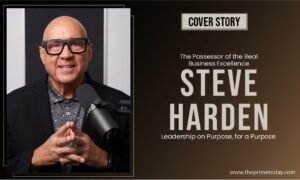
Leadership in 2026 is no longer about title, position, volume, or authority. It is about clarity, courage, adaptability, service, and the ability to help people move forward in a world that is moving faster than most organizations are prepared to handle, ardently believes Steve Harden, who is the Chief Operating Officer (COO) at RecorGroup. In his own words, a builder of purpose-driven brands and high-performance teams, known for turning complexity into clarity and unlocking potential where others see obstacles, he further believes that to him, leadership means creating the conditions where people can do meaningful work, grow in confidence, contribute their best thinking, and understand how their effort connects to a bigger mission.
In that respect, Steve is a leader for whom corporate growth and business success are both a precise science and a shared human effort. “And that’s the demand of today’s times when it comes to real business leadership excellence,” he adds. The best leaders today are not simply managing business plans. They are building people, brands, cultures, teams, trust, and resilience all at the same time. That takes a different kind of leadership. It takes IQ, EQ, SQ, and AQ — intelligence, emotional awareness, social intelligence, and adaptability. In 2026, leadership is not about having all the answers. It is about asking better questions, listening with intent, creating clarity, and helping people see what is possible before it is obvious.
Steve Harden has worn a lot of hats over the course of his career, but the common thread has always been the same: building brands, growing people, strengthening culture, and helping organizations move from where they are to where they are capable of going.
He has lived the highs, the lows, the uncertainty, the pressure, and the occasional chaos that come with building and scaling businesses. And through it all, one truth has remained clear: real growth is never a straight line. It is rarely perfect, never automatic, and almost always requires more than a great strategy on paper. It requires the right mindset, an open mind, disciplined action, and the ability to stay calm and clear when the room gets noisy.
That kind of mindset is contagious. For Steve, leadership has always been about being contagious for the right things: clarity, confidence, consistency, care, accountability, and forward motion. Organizations do not separate themselves from the pack by chasing growth for growth’s sake. They separate themselves by understanding why growth matters, who they are serving, what the consumer truly needs, and how every part of the enterprise must work together to deliver something better.
Throughout his career, Steve has seen the constant demand for growth come from every direction. Sometimes it comes from a boardroom. Sometimes it comes from ownership. Sometimes it comes from a leadership team applying pressure without fully understanding the customer, the market, or the internal capabilities required to win. Growth is always the desired outcome, but sustainable growth only happens when communication, alignment, and execution are working across the entire enterprise.
That is where Steve’s perspective becomes especially valuable. Having led across sales, marketing, product development, finance, operations, and the C-suite, he has developed the ability to see challenges from multiple angles at once. He understands that a sales problem is rarely just a sales problem. A product issue is rarely just a product issue. A culture challenge is rarely confined to one team. Everything is connected.
That enterprise-wide perspective allows Steve to bring calm to complexity. He can step into pressure, listen with intention, identify what is really happening beneath the surface, and help teams find a clearer path forward. Not with noise. Not with panic. Not with overcomplication. But with steady, thoughtful, growth-minded leadership that people can trust and respond to.
Steve often points to the wisdom of his friend Jocko Willink: “Slow is smooth, and smooth is fast.” In business, that does not mean moving slowly. It means moving with discipline.
It means taking the time to align the team, understand the customer, clarify the mission, and execute with precision. When organizations do that consistently, momentum builds. People speak up. Pressure becomes productive. Teams stop reacting and start creating.
And that is when the magic happens.
When growth is rooted in clarity, consumer focus, enterprise alignment, and genuine care for people, success becomes more than a benchmark. It becomes an expectation. It becomes part of the culture. It shows up in the way teams communicate, the way leaders make decisions, the way brands serve their customers, and the way organizations prepare for what comes next.
For Steve Harden, the future belongs to leaders and companies willing to grow on purpose, lead with intention, and build people as deliberately as they build brands. That is where real momentum lives. That is where sustainable success is created. And that is the kind of leadership Steve has spent his career delivering.
The Capital of Human Connection
For Steve, the most important quality of a successful leader today is trust. Without trust, strategy slows down, communication breaks down, and culture becomes transactional. He emphasizes this reality to his management boards, demonstrating how internal friction can drain a company’s financial momentum. With trust, people move faster, tell the truth sooner, solve problems more creatively, and stay aligned even when the path is uncertain. Trust is built through consistency. It is built when leaders do what they say they are going to do, when they communicate clearly, when they own mistakes, and when they treat people with dignity in both good seasons and difficult ones. He embeds this standard into the operational routine at RecorGroup, ensuring that corporate transparency serves as the foundation for all major performance goals.
The Speed of Transformation
He brings over 35 years of leadership experience directly into the modern corporate arena. His career stretches from Fortune 500 giants like Adidas, GSK, and Oakley to agile startups and high-stakes private equity ventures. Throughout this journey, he turned around underperforming operations and expanded small-to-medium businesses from initial six-figure baselines into thriving 50-million-dollar enterprises. He rejects passive management, choosing instead to guide companies with bold strategy and purposeful execution. Over his decades of global business leadership, he has had the privilege of helping build, scale, transform, launch, and exit brands across sport, outdoor, lifestyle, consumer products, and business services. This deep background gives him a broad view of market dynamics across multiple continents. He has led teams from 15 people to more than 500, managed businesses from $209 million to more than $2 billion in annual revenue, helped create growth inside iconic brands, and participated in successful private equity outcomes. Those experiences taught him that business is always about people first. Products matter. Strategy matters. Capital matters. Technology matters. But people make all of it work. He applies this simple truth to every investment and restructuring plan, keeping his teams focused on building strong bonds between departments to ensure long-term commercial vitality.
The Currency of Velocity
Steve’s professional track record demonstrates an ability to convert organizational confusion into clear capital value. During his tenure at Oakley Golf, he engineered a 700% revenue growth turnaround that lifted EBITDA by more than 10 percentage points. Later, he turned around the Supra brand from a state of losing $5.7 million annually into a profitable entity, positioning it perfectly for acquisition by a major global buyer backed by private equity and XTEP of China. Whether leading a $1.6-million capital raise that resulted in a successful private equity exit within 30 months or establishing Harden Strategic Solutions to help founders multiply their revenues, he proves that sustainable growth requires connecting top-tier financial strategy with daily operational execution.
The Language of Momentum
He motivates teams by connecting business goals to purpose, clarity, ownership, and momentum. People need to know where they are going, why it matters, what winning looks like, and how their role contributes to the outcome. He believes in the power of “X to Y by when.” It creates clarity. It removes fog. It gives teams a measurable target and a shared language. But motivation is not just about metrics. It is also about belief. People perform differently when they believe the mission matters, when they believe leadership sees them, and when they believe their contribution can make a real difference. He brings this disciplined approach to RecorGroup, turning abstract corporate targets into simple, actionable steps that everyone can track.
The Strategy of Human Value
Steve’s leadership approach has always been rooted in a simple idea: People First. Lead with love, hospitality, and care. That may sound soft to some, but in his experience, it is one of the most powerful business strategies available. People who feel valued are more engaged. People who feel trusted take more ownership. People who feel developed stay longer, perform better, and become ambassadors for the brand. A positive workplace culture is not created by slogans on a wall. It is created in daily decisions, leadership behaviors, meeting rhythms, hiring choices, accountability standards, and the way people are treated when pressure rises. He ensures that every executive meeting balances financial review with an honest check on team morale, keeping the organizational environment healthy under pressure.
The Balance of Tech and Care
The future leadership challenge he expects to face is helping organizations stay human while becoming more technologically advanced. Artificial intelligence, automation, data platforms, predictive analytics, digital commerce, and new operating systems are changing business quickly. The opportunity is enormous. The risk is that companies chase efficiency while losing connection. Leaders will need to use technology to increase clarity, speed, insight, and performance without allowing it to replace human judgment, human creativity, and human care. He continues to test new operational tools that automate repetitive tasks, freeing up his team to focus on creative problem-solving and real relationship-building across the global market.
The Synthesis of Data and Wisdom
Steve believes that technology is changing the way leaders manage businesses by giving them more visibility, faster information, and better tools to understand performance. Leaders can now see customer behavior, employee engagement, financial performance, supply chain movement, brand sentiment, and market opportunity in ways that were not possible a decade ago. AI is becoming a thought partner, research assistant, productivity engine, and strategic accelerator. But technology does not automatically create wisdom. It creates data. Leaders still need discernment. The best leaders of the future will know how to combine analytics with instinct, automation with empathy, and speed with thoughtful decision-making. He implements this balanced view within the corporate offices, teaching managers to use automated reports as a guide while relying on real conversation to make final, high-impact choices.
The Practice of Strategic Listening
According to him, innovation plays a central role in business excellence because the market does not stand still. Customers change. Employees change. Channels change. Expectations change. Competition changes. Innovation is not only about inventing something new. It is about improving what already exists, removing friction, finding better ways to serve, and staying close enough to the market to hear what is coming next. In his career, some of the biggest breakthroughs came from listening carefully to customers, retailers, partners, sales teams, students, and employees and then having the courage to act on what they heard. He maintains this open line of communication across all distribution networks, actively gathering field feedback to adjust operational steps before market shifts can disrupt progress.
The Integration of Everyday Insights
He believes excellence is created when innovation becomes part of the culture, not a department on the org chart. Every employee should be invited to think, question, improve, and contribute. The best idea does not always come from the most senior person in the room. Often, the person closest to the customer or closest to the problem has the most valuable insight. Leaders must create space for those voices to be heard. To support this philosophy, he shapes team meetings to ensure front-line staff can directly pitch simple improvements to senior executives. This steady collection of fresh viewpoints keeps the corporate framework flexible, leaving the door wide open for the organization to capture its next major growth opportunity.
The Clarity of Development
Improving employee performance starts with clarity, says Steve. People cannot consistently perform at a high level if they are unclear about expectations, priorities, decision rights, or success measures. He believes in coaching people with candor and care. That means giving real feedback, not vague encouragement. It means identifying the gap, creating the plan, building the skill, and following up. Development is not a once-a-year review. It is a leadership responsibility. Leaders should help people understand what they are doing well, where they need to grow, and how to take the next step. He practices this continuous coaching inside RecorGroup, ensuring that every supervisor establishes clear milestones so that team members always understand how to progress.
The Practical Advantage
At the same time, performance improves when people are given the tools, training, confidence, and context to succeed. One of the reasons Steve wrote Day One Advantage was to help close the gap between education and workplace readiness. Too many young professionals enter the workforce with talent and ambition, but without the practical skills employers wish they already knew. Communication, ownership, professional judgment, preparation, follow-through, confidence, and the ability to navigate ambiguity are all competitive advantages. These same principles apply inside companies. Leaders must develop people before they demand excellence from them. He incorporates these training principles into the onboarding programs of the enterprise, giving fresh talent the exact tools needed to turn raw ambition into measurable business success.
The Balance of High Performance
He further says that balancing profitability with employee well-being is one of the defining leadership responsibilities of this era. Profitability matters. Without financial health, companies cannot invest, hire, grow, serve customers, or create long-term opportunities. But profitability built on burnout is not sustainable. Leaders must reject the false choice between performance and well-being. Healthy cultures can still be high-performance cultures. In fact, the best cultures are both demanding and deeply human. He designs corporate frameworks to support this balance, monitoring production output alongside team health to prove that a business can remain highly profitable without sacrificing the welfare of its people.
The goal is not to remove pressure from business. Pressure is real. Competition is real. Deadlines are real. The goal is to create an environment where people can handle hard better. That means prioritizing, communicating, removing unnecessary chaos, building resilience, and making sure people know they are not simply being used to hit a number. Leaders must understand the difference between productive pressure and destructive pressure. He continues to refine his corporate systems to absorb market shocks, keeping the workspace stable and giving his teams the confidence to face unpredictable economic changes with collective strength.
The Discipline of Hearing Patterns
Future leaders, says Steve, need to develop several core skills to stay competitive. They need strategic thinking, financial literacy, communication, emotional intelligence, adaptability, technological fluency, and the ability to build trust across generations and cultures. They also need to become better listeners. Listening is one of the most underrated leadership disciplines in business. The leader who listens well sees patterns earlier, builds trust faster, and makes better decisions. He trains managers within his network to master this receptive style, showing them that observing field reality beats guessing from a corporate office every single time.
Future leaders must also learn how to sell, not in the narrow transactional sense, but in the broader human sense. Everything is sales. Leadership is selling vision. Culture is selling belief. Strategy is the selling direction. Recruiting is a selling opportunity. Change management is selling confidence in the future. The best leaders know how to frame ideas, create alignment, and help people move from uncertainty to action. He builds this inclusive commercial mindset directly into operational teams, proving that every department plays a part in presenting the company value to the world.
The Mechanics of Calm
When handling change and uncertainty, Steve begins with clarity and calm. Panic is contagious, but so is confidence. Leaders do not need to pretend everything is easy. They do need to help people understand what is known, what is unknown, what matters most, and what they are doing next. He often thinks in terms of the four P’s: pause, pivot, plan, and purge. Pause long enough to understand the situation. Pivot where the facts require adjustment. Plan the next best move. Purge the distractions, assumptions, or habits that no longer serve the mission. This mechanical response to crisis helps RecorGroup steer through volatile financial climates without losing operational focus.
The Formula for Bold Action
His advice to aspiring leaders and entrepreneurs is simple: Dream BIG, Take ACTION, Make-a-DIFFERENCE. Do not wait until you feel completely ready. You rarely will. Start where you are, with what you have, and take the next right step. Build your reputation before you need it. Do what you say you will do. Learn how to communicate clearly. Ask better questions. Find mentors. Stay curious. Be humble enough to learn and bold enough to act. He shares these exact takeaways during his professional coaching sessions, urging the next generation of business executives to trust practical effort over theoretical plans.
He would also tell aspiring leaders to understand that success is not only about ambition. It is about discipline, relationships, resilience, and service. Your network matters, but your character matters more. Your skills matter, but your follow-through matters more. Your ideas matter, but your ability to execute matters most. Great leaders are not built in perfect conditions. They are formed through pressure, responsibility, failure, faith, humility, and the willingness to keep growing. He keeps his organizational framework open to fresh talent who embody these exact traits, setting the stage for long-term industry progression.
The Blueprint for Multiplied Impact
By 2030, Steve’s vision is to help build organizations and leaders that are more prepared, more human, more innovative, and more purpose-driven. Through Harden Strategic Solutions, his work with Azusa Pacific University, his teaching, his writing, and his leadership roles with growth-minded organizations, he wants to help close the gap between potential and performance. He designs these academic and corporate alliances to create seamless pathways for emerging talent. He wants to help students become more career-ready, professionals become more confident, companies become more people-centered, and brands become more trusted.
The future of business will belong to leaders who can combine performance with purpose, technology with humanity, innovation with discipline, and ambition with service. He believes the organizations that win by 2030 will be the ones that build people as intentionally as they build profit. They will use AI and technology wisely, but they will not forget that trust, culture, creativity, and courage still come from people. He tests these long-range assumptions daily within RecorGroup, ensuring that corporate strategy directly supports the human networks behind the machinery.
The Legacy Beyond the Scoreboard
For him, leadership has always been about building something bigger than yourself. Build the brand. Build the team. Build the culture. Build the next leader. Build trust. Build momentum. Build with purpose. And when you do that well, business becomes more than a scoreboard. It becomes a platform to serve, grow, influence, and make a difference. He emphasizes this philosophy to his peers and retail partners, showing them that lasting corporate valuation rises from deep structural trust rather than short-term numerical spikes.
“That is the kind of leadership I believe in. Lead on purpose, for a purpose.”
By treating corporate management as a continuous opportunity to develop others, Steve positions his various ventures to remain adaptable amid changing global markets. He keeps refining his operating blueprints and sharing his insights across global platforms, maintaining an environment where business evolution remains tied to human capability.