
Trey Rutledge: Unlocking Quantum’s Potential in Healthcare
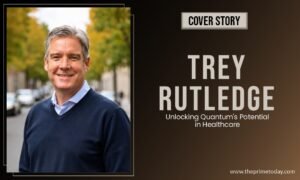
Healthcare is evolving rapidly as advanced technologies reshape how care is delivered, managed, and protected. Amid this transformation, Trey Rutledge, President of Brilliancy Quantum and Brilliancy Health, is helping healthcare organizations harness emerging technologies to solve real operational challenges. Based at KU Innovation Park in Lawrence, Kansas, he leads initiatives that combine quantum computing, artificial intelligence, blockchain, and complexity science to solve some of the most pressing operational challenges across healthcare and other critical industries, including aerospace, agriculture, and logistics. His work focuses on building intelligent, connected systems that help organizations modernize without disrupting the infrastructure they already rely on.
What shaped Trey’s approach was not the promise of emerging technology itself, but years spent working alongside community and rural hospitals facing fragmented systems, increasing claim denials, cybersecurity risks, and limited resources. Witnessing those realities convinced him that traditional technology alone could no longer keep pace with modern healthcare demands. Through Brilliancy Quantum and Brilliancy Health, he has helped develop an orchestration layer that combines quantum computing, agentic AI, and next-generation cybersecurity to strengthen hospital operations while preserving existing investments. At the heart of his work is a simple objective: giving clinicians more time with patients, protecting sensitive healthcare data, and helping critical access hospitals remain sustainable in an increasingly complex healthcare landscape.
Connecting Healthcare Through Intelligent Systems
Trey believes the biggest opportunity in healthcare lies in intelligent interoperability, where EMS, clinical, revenue cycle, and operational systems work together to turn data into real-time decisions. Better connectivity helps community and rural hospitals reduce denials, improve patient handoffs, strengthen operational visibility, and recover revenue more efficiently.
He also sees quantum-enhanced modeling and agentic AI accelerating predictive operations and more personalized care pathways. At the same time, healthcare organizations must address growing cybersecurity threats, technology fatigue from overly complex implementations, and the widening digital divide affecting smaller providers.
According to Trey, organizations that build modular intelligence on top of existing infrastructure will move faster than those pursuing disruptive system replacements or overlooking security foundations.
Making Innovation Practical for Every Hospital
Brilliancy Health is built on the belief that innovation should simplify healthcare rather than complicate it. Instead of replacing hospital systems, the company develops modular AI that connects revenue cycle operations, EMS, clinical workflows, medication intelligence, and operational visibility into a unified ecosystem.
Trey says this approach helps hospitals achieve faster authorizations, fewer denials, stronger EMS coordination, and less administrative burden. Clinicians regain valuable time with patients while healthcare leaders benefit from clearer operational insights and protected revenue.
As part of Brilliancy Quantum, the company also integrates advanced decision intelligence and future-ready security into every solution. Trey believes this allows community hospitals to access capabilities once associated primarily with large academic medical centers, creating more sustainable healthcare operations across the country.
Why Secure Data Sharing Will Define Better Care
Trey accepts as true that healthcare has always been continuous, but healthcare data has not. When information cannot move securely between EMS, hospitals, clinics, and revenue systems, patient care slows, clinicians lose valuable context, and operational inefficiencies increase.
He views seamless interoperability as essential to creating coordinated patient journeys rather than disconnected healthcare transactions. At the same time, future data sharing must remain privacy-focused and resilient against emerging cybersecurity threats, including those posed by quantum computing.
His approach combines secure architectures, consistent data models, intelligent orchestration, and trusted data exchange. Trey believes only by making healthcare information both secure and usable can artificial intelligence deliver meaningful value while ensuring rural and community providers remain fully connected within the broader healthcare ecosystem.
Advancing Healthcare Through Quantum Innovation
While quantum computing remains an emerging technology, Trey believes its healthcare impact will be significant. He sees opportunities in accelerating drug discovery through molecular simulation, improving personalized therapies, optimizing complex care pathways, and identifying patterns that enable earlier and more accurate diagnoses.
Quantum technologies can also improve operational decision-making by matching limited healthcare resources more effectively, particularly in rural environments where every resource matters.
Rather than waiting for fully mature quantum systems, the Quantum AI Innovation Lab focuses on hybrid computing approaches, quantum chemistry research, and decision intelligence platforms that can gradually incorporate quantum capabilities. Trey believes healthcare organizations investing in stronger data foundations and skilled talent today will be best positioned as quantum technologies continue to mature.
Innovation Must Never Outpace Security
Trey believes healthcare organizations should build security into every stage of digital transformation rather than treating it as an additional requirement after implementation. He encourages providers to adopt zero-trust principles while preparing existing cryptographic systems for a future that includes post-quantum security.
Continuous monitoring, strong identity management, secure data exchange, and resilient architectures all contribute to protecting sensitive patient information while reducing operational risk. He also believes realistic cybersecurity exercises and experienced technology partners are essential as healthcare threats continue to evolve.
At Brilliancy Quantum and Brilliancy Health, security and resilience are integrated into every modular solution. Trey sees strong cybersecurity not as a barrier to innovation but as the foundation that allows healthcare organizations to innovate with confidence.
Turning Ideas into Measurable Healthcare Progress
Trey believes innovation should always begin with a real hospital challenge and a measurable outcome. Every initiative at Brilliancy Health is linked to practical improvements such as recovered revenue, reduced documentation time, faster patient handoffs, or greater operational visibility.
The Quantum AI Innovation Lab provides space for bold experimentation, but every pilot is designed to generate rapid learning and demonstrate clear business value. Modular technology allows healthcare organizations to test new capabilities without major disruption.
He has built a culture where curiosity is matched with accountability and where teams are encouraged to refine or discontinue ideas that fail to produce meaningful results. Supported by complexity science and strong data foundations, Trey believes disciplined experimentation consistently produces stronger outcomes than innovation pursued for its own sake.
AI That Gives Healthcare Professionals More Time to Care
Trey believes the future of healthcare AI depends less on automation and more on intelligent decision-making. He sees agentic AI, built on clean and interoperable data, becoming one of the industry’s most valuable tools. Applications that reduce claim denials, speed up prior authorizations, improve EMS-to-hospital coordination, provide real-time operational insights, and ease documentation demands will allow clinicians to focus on patient care rather than administrative tasks.
He also believes decision-intelligence platforms will evolve beyond traditional dashboards by recommending actions and helping healthcare teams execute them. Patients will benefit through smoother care transitions, earlier interventions, and more personalized experiences. Community and rural hospitals, in particular, stand to gain from stronger financial sustainability, better resource utilization, and technology that integrates with existing systems. Trey believes trustworthy, explainable AI built on strong data foundations will create lasting value long after today’s industry hype fades.
Leadership Lessons That Continue to Shape Innovation
Throughout his career, Trey has learned that successful innovation begins by solving real human and operational challenges. Listening comes before inventing, and technology only succeeds when it improves the experiences of those delivering and receiving care.
He also believes lasting innovation grows through collaboration. Partnerships with universities, public institutions, and technology organizations create stronger ecosystems than any single company can build alone. Equally important is balancing long-term vision with practical execution. Preparing for advances in AI and quantum computing while delivering measurable value today requires patience, resilience, and disciplined leadership.
Trey has also found that a clear vision supported by measurable milestones helps transform skepticism into confidence. Looking back, he believes innovation is rarely driven by bold ideas alone. It depends on bringing together the right people, creating the right environment, and maintaining the consistency needed to turn promising ideas into meaningful healthcare outcomes.
Keeping People at the Center of Every Innovation
Trey believes healthcare innovation should always begin with the people using it. Every solution developed at Brilliancy Health starts with the needs of clinicians, EMS professionals, and patients, particularly those served by community and rural healthcare systems.
Any technology that increases administrative work, creates additional silos, or sacrifices usability in pursuit of novelty fails its intended purpose. Success is measured through practical outcomes such as giving clinicians more time for patient care, improving care transitions, protecting hospital revenue, and providing clearer operational visibility that reduces unnecessary complexity.
He also views strong cybersecurity as part of patient-centered care because protecting sensitive information preserves trust and dignity. Artificial intelligence should support clinical judgment rather than replace it. Continuous feedback from frontline healthcare professionals keeps every solution aligned with real-world needs, ensuring technology remains a tool for improving lives rather than an objective in itself.
Building Innovation That Leaves a Lasting Impact
Receiving recognition as one of healthcare’s most innovative business leaders reinforces the message Trey continues to share with future entrepreneurs and innovators. He encourages them to focus on the challenges that matter most to patients and frontline caregivers, particularly within underserved community and rural healthcare systems.
He believes technology should always be judged by the measurable improvements it creates in patient care, organizational sustainability, and public trust. Strong ecosystems built through collaboration will achieve more than individual products alone, while bold ideas must always be supported by disciplined execution and a strong security foundation.
Looking toward the future, Trey believes the greatest opportunities belong to those who can translate advanced technologies into practical, human-centered solutions. Curiosity, collaboration, and purpose, he says, remain essential for building stronger healthcare systems and creating progress that endures.
Preparing for Healthcare’s Next Technological Leap
Trey is particularly encouraged by the convergence of agentic AI, decision intelligence, practical quantum computing, and quantum-resilient cybersecurity. He believes these technologies will transform healthcare by helping organizations modernize intelligently while strengthening long-term security and operational performance, especially within community and rural hospitals.
Brilliancy Health is preparing for this shift through the Quantum AI Innovation Lab at KU Innovation Park, strategic partnerships spanning healthcare, technology, and public policy, and a modular product approach that enables hospitals to realize measurable value within weeks rather than years. The company also remains focused on addressing the financial and operational realities facing smaller healthcare providers, ensuring that advanced technologies remain both accessible and practical.
For Trey, meaningful innovation is inseparable from collaboration. That vision will take center stage on September 2, 2026, when Brilliancy Quantum and Brilliancy Health host the Brilliancy Health Summit at KU Innovation Park in Lawrence, Kansas. Centered on the theme “Deep Tech Meets Real-World Care: Intelligence with Control,” the day-long summit will bring together clinicians, policymakers, researchers, and technology leaders to explore how quantum computing, artificial intelligence, blockchain, and decision intelligence can be applied responsibly to strengthen hospital operations and improve patient outcomes.
The event will feature distinguished speakers, including U.S. Senator Roger Marshall, a physician serving on the Senate’s health-related committees; Katie Arrington, Chief Information Officer of IonQ; Phil Abraham, whose complexity-science methodologies have shaped much of Brilliancy’s platform; Chuck Brooks, Georgetown University cybersecurity professor and internationally recognized cybersecurity thought leader; and Dr. Keeper Layne Sharkey, a leading quantum chemist and quantum computing researcher. Together with a broader lineup of healthcare and technology experts, they will examine the practical pathways for bringing emerging technologies into real-world healthcare environments while maintaining security, trust, and operational resilience.