
The Talent Synchronizer: Srijit Nair’s Integrated Blueprint for Technical Depth, Human Capital Strategy, and Continuous Enterprise Transformation
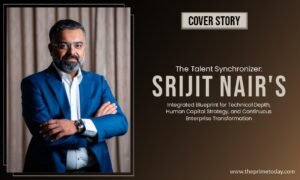
The need to bridge the divide between technology and human capital, in the techno-age of artificial intelligence, is really very much urgent. In this regard, Srijit Nair reshapes how modern enterprises navigate technical changes by placing human potential at the very center of digital transformation. He leads ITHR Technologies Consulting LLC, a fast-growing consulting practice that rejects the common industry habit of separating technical tools from corporate culture, as the Chief Executive Officer (CEO). Further recognizing a key element behind operational bottlenecks and failed implementations in the EV industry, he saw that companies often purchase sophisticated software systems without preparing their personnel. He changes this dynamic by developing innovative human capital strategies that align workforce readiness directly with enterprise software deployments. By fusing deep expertise in business development with human resource development and management, he positions his firm as a critical digital partner across competitive global markets.
The Philosophy of Unified Business Growth
Srijit Nair’s professional journey has been shaped by a consistent belief that businesses grow when people, processes, and technology move in the same direction. Over the past 15+ years, he has worked across the Middle East and India in leadership roles spanning operations, business development, recruitment, human capital strategy, IT consulting, and digital transformation. He began his career in business development and recruitment, where he learned the fundamentals of client relationships, talent acquisition, workforce planning, and market dynamics. Those early years gave him a deep understanding of how organizations think, hire, scale, and respond to pressure. Later, as he moved into senior operational leadership roles across the Middle East and India, he became more involved in business strategy, delivery governance, vendor management, digital transformation, and enterprise technology consulting.
What inspired him to step into business and consulting was the gap he repeatedly observed in the market. Many organizations were investing in technology without preparing their people for change. Others had strong human capital capabilities but lacked the digital systems required to scale efficiently. He realized that the future of consulting would not belong to firms that treated IT and HR as separate functions, but to those that could integrate both into a unified business transformation model.
The Genesis and Core Vision of ITHR Technologies Consulting
That belief eventually led to the formation of ITHR Technologies Consulting LLC in Dubai. The name itself reflects his core philosophy—integrating IT, HR, consulting, and AI-enabled business solutions under one roof. His journey has not been linear, and like every entrepreneur, he has faced uncertainty, market challenges, and moments that tested his resilience. But those experiences strengthened his conviction that meaningful leadership is not built only in comfort; it is built through persistence, adaptability, and purpose.
The core vision of ITHR Technologies Consulting LLC is to become a trusted transformation partner for organizations seeking practical, scalable, and human-centric digital growth. In 2026 and beyond, his ambition is not merely to provide services but to build long-term business value for clients through integrated consulting. He is focused on three strategic pillars.
The Three Pillars of Strategic Transformation
The first is AI-native talent and workforce solutions. The future of human capital management will be increasingly data-driven, predictive, and automated. However, AI should not remove the human element from workforce decisions. It should enhance fairness, speed, quality, and insight. At ITHR, he aims to help organizations use AI responsibly across recruitment, staff augmentation, HR operations, performance management, and workforce analytics.
The second pillar is integrated digital platforms and enterprise solutions. Businesses today do not need fragmented systems; they need connected ecosystems. Whether it is ERP modernization, SAP consulting, cloud solutions, HRIS implementation, data analytics, or custom applications, his objective is to help clients create technology environments that are efficient, secure, and aligned with business outcomes.
The third pillar is continuous transformation. Digital transformation is not a one-time project. It is a lifecycle. Organizations need partners who can support them from strategy to implementation, adoption, governance, and continuous improvement. His vision is to position ITHR as an end-to-end partner that supports clients throughout this journey.
Operationalizing Interconnected Disciplines
For him, the future of ITHR is about building a company that combines technical depth, consulting discipline, human understanding, and entrepreneurial agility. He sees IT, HR, and business strategy as interconnected disciplines rather than separate verticals. Technology enables scale, HR enables capability, and business strategy gives direction. When these three areas are aligned, organizations become more agile, resilient, and competitive.
In practical terms, integration begins with understanding the business objective. Before recommending a system, hiring model, or transformation roadmap, he and his team ask: What is the organization trying to achieve? Is it growth, efficiency, compliance, cost optimization, customer experience, workforce scalability, or operational resilience?
Once the objective is clear, he assesses the people, process, and technology dimensions. For example, an ERP implementation is not only a technology project. It affects workflows, decision-making, reporting, accountability, user behavior, and leadership visibility. Similarly, a recruitment outsourcing or staff augmentation engagement is not only about filling roles. It is about ensuring that the right skills are available at the right time to support strategic business priorities.
His experience across IT consulting, HR solutions, operations, and business development allows him to look at transformation from multiple angles. He believes impactful outcomes come when consultants stop working in silos and start thinking like business partners. That is the approach he follows at ITHR.
The True Definition of Influential Leadership
A good business leader can manage teams, deliver targets, and make decisions. A truly influential leader creates direction, builds trust, develops people, and leaves behind systems that continue to create value even in their absence.
In today’s dynamic landscape, influence is not defined by title alone. It is defined by consistency, credibility, clarity of thought, and the ability to bring people together around a shared purpose. The most influential leaders are not necessarily the loudest voices in the room. They are often the ones who can listen deeply, simplify complexity, make difficult decisions with integrity, and inspire confidence during uncertainty.
Another key differentiator is long-term thinking. Good leaders may focus on quarterly outcomes. Influential leaders understand that reputation, culture, talent, and trust are built over years. They balance ambition with responsibility.
For him, influential leadership is also about creating opportunities for others. A leader’s real impact is visible in the people they mentor, the teams they empower, the clients they serve with honesty, and the standards they set for the industry.
The Human Dimension of Digital Shifts
Digital transformation should never be treated as a technology replacement exercise. It is fundamentally a business and people transformation journey. Systems can be implemented quickly, but adoption, trust, and behavioral change take time.
Srijit Nair’s approach begins with stakeholder understanding. He and his team need to know how employees work today, what challenges they face, what leadership expects, and where the organization wants to go. A successful transformation roadmap must address both technical feasibility and human readiness.
The human-centric focus comes through communication, training, change management, and inclusive design. Employees should not feel that technology is being imposed on them. They should understand why change is happening, how it benefits the organization, and how it improves their own productivity and decision-making.
At ITHR, he and his team also emphasize governance and continuous feedback. Transformation should be measured not only by system go-live dates, but by adoption levels, process efficiency, user satisfaction, data quality, and business impact.
Technology should make organizations more intelligent, but also more humane. If digital transformation increases complexity, anxiety, or disconnection, then it has missed its purpose. The goal should be to make work more efficient, decisions more informed, and people more empowered.
Strategic Coordination Across Multi-Regional Landscapes
With his involvement in multiple roles across regions, maintaining strategic alignment across regions requires clarity, structure, and disciplined communication. When businesses operate across different markets, cultures, client expectations, and delivery models, it becomes very easy for teams to become reactive. That is why leadership must create a clear operating rhythm.
He focuses on three things: priorities, governance, and accountability.
First, priorities must be clearly defined. Every team member should understand what matters most—whether it is client delivery, revenue growth, quality, compliance, hiring, or innovation. Without clarity, teams may work hard but not necessarily in the same direction.
Second, governance is essential. Regular reviews, dashboards, documented decisions, escalation mechanisms, and performance metrics help ensure that execution remains aligned with strategy. He believes in transparency and structured reporting because they reduce ambiguity and improve decision-making.
Third, accountability must be balanced with empowerment. Teams should be trusted to execute, but they must also understand ownership. Operational efficiency comes when people know their roles, processes are documented, and leadership remains accessible without micromanaging.
His experience across the Middle East and India has taught him that regional success depends on cultural sensitivity as much as operational discipline. You cannot apply a single template everywhere. He recognizes that you need a consistent vision, but flexible execution.
The Predictive Evolution of Consulting and Talent Analytics
Innovation and AI are redefining the consulting and workforce solutions industry. Traditional consulting was often based on experience, frameworks, and manual analysis. Those elements remain important, but AI now allows him and his firm to make consulting more predictive, data-driven, and scalable.
In workforce solutions, AI can improve candidate matching, skill mapping, talent forecasting, employee engagement analytics, performance insights, and workforce planning. It can reduce repetitive tasks and allow HR professionals to focus more on strategic and human aspects of talent management.
In consulting, AI can support faster diagnostics, process analysis, automation opportunities, data interpretation, and scenario planning. It allows consultants to move from descriptive advice to more evidence-based recommendations.
However, he strongly believes AI must be implemented responsibly. It should not become a blind decision-maker. Human judgment, ethics, context, and empathy remain essential. AI can identify patterns, but leaders must interpret those patterns wisely.
For ITHR, AI is not just a technology trend. It is a strategic enabler. His focus is on helping organizations adopt AI in ways that improve quality, efficiency, decision-making, and workforce readiness.
Modeling Values and Overcoming Group Rigidities
Culture is built through daily behavior, not slogans. To foster collaboration, adaptability, and continuous learning, leaders must first model those values themselves.
Collaboration begins with respect. Teams perform better when people feel heard, valued, and trusted. He encourages open communication, cross-functional involvement, and practical problem-solving. In consulting, no single person has all the answers. The best outcomes come when business, technology, HR, and delivery teams work together.
Adaptability is equally important because markets are changing rapidly. Client expectations, technology platforms, workforce models, and economic conditions are constantly evolving. He encourages teams to remain solution-oriented rather than rigid. Processes are important, but they should not prevent innovation.
Continuous learning is a non-negotiable part of his organization’s culture. Whether it is AI, ERP, cloud, cybersecurity, HR technology, leadership, or client management, professionals must keep upgrading themselves. He believes organizations should create environments where learning is encouraged, mistakes are reviewed constructively, and knowledge is shared openly.
A strong team culture is not about avoiding challenges. It is about building the maturity to face challenges together.
Balancing Active Execution with Long-Term Frameworks
Balancing short-term execution with long-term vision is one of the most important responsibilities of leadership. Short-term execution keeps the business alive and credible. Long-term vision gives the business meaning and direction.
He approaches this balance by ensuring that daily actions are connected to strategic objectives. Revenue, delivery, client satisfaction, hiring, and operations must be managed with discipline. At the same time, leaders must continue investing in capabilities, relationships, innovation, and brand reputation.
One of the risks in entrepreneurship is becoming too consumed by immediate pressures. Cash flow, deadlines, client requirements, and operational challenges can easily dominate attention. But if a leader only reacts to the present, the organization may lose its future relevance.
At ITHR, he and his teams try to maintain this balance by focusing on practical execution while building scalable models. They serve current client needs, but they also invest in AI-enabled solutions, partnerships, process maturity, and market positioning.
For him, vision without execution is only aspiration. Execution without vision is only an activity. Leadership requires both.
Core Counsel for Next-Generation Global Entrepreneurs
To aspiring entrepreneurs and business leaders looking to make a global impact, Srijit Nair’s advice would be to build with patience, purpose, and resilience. Entrepreneurship is often presented as a glamorous journey, but in reality, it requires discipline, sacrifice, and emotional strength.
First, he believes founders must understand the problem they are solving. A business should not exist only because the founder wants to start something. It should create value for a defined market. The clearer the problem, the stronger the business model.
Second, he urges them to invest in credibility. Relationships, commitments, ethics, and delivery quality matter. In the long run, reputation becomes one of the most powerful assets of any entrepreneur.
Third, he emphasizes the need to remain adaptable. Markets will change. Clients will change. Technology will change. An entrepreneur’s original plan may need to evolve. Adaptability is not a weakness; it is survival intelligence.
Fourth, he notes that leaders must build people around them. No entrepreneur creates a global impact alone. You need teams, mentors, partners, clients, and well-wishers. Leadership is not about controlling everything; it is about aligning people toward a meaningful goal.
Finally, he counsels that individuals should not fear difficult phases. Every serious business journey includes uncertainty. What matters is whether you continue learning, improving, and moving forward with integrity.
The Strategic Intelligence Evolution of Human Capital
When it comes to the future evolving over the next few years, Srijit Nair sees Human capital management is moving from an administrative function to a strategic intelligence function. In the coming years, organizations will rely more heavily on data, AI, automation, and integrated HR platforms to make workforce decisions.
Recruitment will become more skills-based and predictive. Organizations will focus less on traditional job titles and more on capabilities, adaptability, and learning potential. Workforce planning will become more dynamic, especially as businesses balance permanent employees, contract talent, gig workers, offshore teams, and AI-enabled productivity tools.
Employee experience will also become a major priority. Companies will need to create workplaces where people feel connected, supported, and able to grow. Compensation alone will not retain talent. Purpose, flexibility, leadership quality, learning opportunities, and culture will matter more.
At the same time, Srijit Nair observes that HR leaders will need to become more comfortable with technology. HR analytics, performance dashboards, AI-assisted hiring, learning platforms, and employee engagement tools will become standard components of modern human capital management. The future of HCM will belong to organizations that can combine data intelligence with human empathy.
Establishing a Long-Term Legacy of Principled Impact
Looking ahead, the legacy Srijit Nair aims to create is one of meaningful transformation—helping organizations become more capable, people-centric, and future-ready. Through ITHR Technologies Consulting LLC, he wants to build a company that proves business consulting can be both technologically advanced and deeply human. He wants his firm’s work to help clients improve systems, strengthen teams, adopt innovation, and make better decisions.
On a personal level, he hopes to be remembered as a leader who created opportunities, stood by principles, and contributed to the growth of people and organizations. Titles and recognition are valuable, but legacy is ultimately measured by impact. It is measured by the professionals he mentors, the clients he serves honestly, the businesses he helps transform, and the values he upholds when no one is watching.
For him, leadership is not only about success. It is about responsibility. If his journey can inspire other entrepreneurs, professionals, and young leaders to pursue excellence with courage and integrity, that would be a legacy worth building.
ITHR Technologies Consulting LLC is a Dubai-based consulting firm offering IT, HR, consulting, and AI-enabled business solutions, helping organizations align technology, talent, and transformation for sustainable growth.