
The Complexity Decoder – Patrick Vermersch: Simplifying the Language of the Brain to Heal the Human Spirit
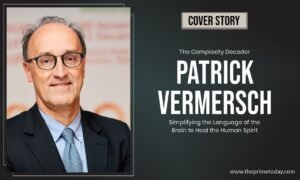
Neurology is one of the most complex fields of healthcare. So, more than anything else, the crucial role of Patrick Vermersch, regarded widely as the most inspiring educator in neurological sciences in 2026, is simplifying that complexity. In doing so, the Director of the Graduate School for Biology and Health at the University of Lille, Patrick Vermersch, is leading significant research which is critical in the organization’s neurology reach among those who actually need the care. These include people fighting neurodegenerative diseases like Multiple Sclerosis (MS), Alzheimer’s, and Parkinson’s, and demanding timely diagnosis and the best treatment. Using advanced technology, Patrick Vermersch is driving Multiple Sclerosis’ research, especially in biomarkers, disease-modifying treatments, and neuroinflammation. The Co-founder of PARCSeP network in northern France, he is amplifying the scope, scale, and quality of patient care in MS and Parkinson’s diseases. Particularly, when it comes to Bruton’s Tyrosine Kinase (BTK) inhibitors and masitinib, Patrick Vermersch’s work in clinical trials has uncovered novel possibilities when it comes to progressively treating MS. Thus, by taking the important role of leading research, driving innovation, developing personalized treatments, overseeing clinical trials, and collaborating globally, Patrick Vermersch’s contributions are enabling the University of Lille in reshaping the future of neurology, integrating artificial intelligence and precision medicine in improving patient care, and transforming disease understanding and treatment.
The Microscopic Origins of Memory and Decay
In the early 1990s, Patrick Vermersch began his journey deep within the microscopic structures of the human brain. Working alongside a dedicated team, he focused on the mystery of Tau proteins and how they contribute to Alzheimer’s disease. They looked closely at how these proteins change and cluster together, identifying specific patterns that separated one condition from another. His research helped map out how these proteins behave in the normal aging process compared to rare conditions like progressive supranuclear palsy. One of the most surprising moments in his early career was finding these same abnormal proteins in the brains of people with Parkinson’s disease. This discovery suggested different neurological conditions might share common roots. This early work in the lab eventually led him toward the world of clinical trials, where he began testing new drugs to see if they could slow down the progression of these silent diseases.
Building a Sanctuary for Specialized Care
By the late 1990s, the University of Lille recognized a growing need for a dedicated space where people with Multiple Sclerosis could find expert help. Patrick Vermersch was instrumental in reaching a consensus to establish a specialized MS care unit. This was a time of intense collaboration, bringing together experts in immunology and brain imaging to look at the disease from every possible angle. With the support of mentors who saw his potential for high-level research, he began to bridge the gap between the laboratory and the hospital bed. They started by studying the symptoms that often go unnoticed, such as changes in thinking and vision, while also learning how to tell the difference between MS and other rare disorders. This period was about more than just data; it was about creating a foundation where patients felt seen and understood by a team that was purely focused on their unique needs.
The Search for Biological Signposts
Between 2005 and 2012, the focus of Patrick Vermersch’s work moved toward the hunt for biomarkers. These are the biological signposts that tell a story about what is happening inside the body before symptoms even appear. By using advanced brain imaging and biological markers, his team uncovered vital clues about how the immune system changes during the earliest stages of MS. They discovered that the body’s defense mechanisms begin to shift much sooner than previously thought. These findings were critical because they allowed for earlier diagnosis, giving patients a head start in managing their condition. This era of research turned the invisible processes of neuroinflammation into something measurable, providing a clearer map for doctors to follow when deciding on the best course of action for each individual.
From Modifying the Disease to Empowering the Patient
In recent years, the mission has expanded into the development of a wide range of treatments. Patrick Vermersch has been at the forefront of testing disease-modifying drugs that aim to change the very course of Multiple Sclerosis rather than just treating the symptoms. His work has helped bring new hope to those with progressive forms of the disease, exploring how modern medicine can protect the nervous system from further damage. Recently, his focus has shifted even further toward the lived experience of the patient. He believes that success is not just measured by a scan, but by how a person feels in their daily life. By prioritizing patient-related outcomes, he is ensuring that the innovations of the future are designed to improve quality of life, mobility, and independence for every person navigating the complexities of a neurological diagnosis.
Addressing the Hidden Burdens of Daily Life
At the University of Lille, Patrick Vermersch and his team turn their attention toward the symptoms that often remain invisible but carry a heavy weight. They are working to fix treatments for urinary issues while searching for new ways to fight fatigue. For many people, fatigue is the most difficult part of their day, draining their energy and making simple tasks feel like mountains. While they work on these personal challenges, they are also busy developing new types of medicine called BTK inhibitors. These drugs are designed to be more precise, aiming to stop the disease in its tracks without disrupting the rest of the body. By looking at both the small daily struggles and the big picture of the disease, Patrick ensures that care is about more than just a medical chart.
A Network Built on Global Needs
One of the achievements Patrick Vermersch holds close to his heart is the creation of a specialized support network. Alongside his colleagues and dedicated partners, he helped start a group that eventually grew into the PARCSeP network. This community was built to improve how doctors and nurses care for people with Multiple Sclerosis and Parkinson’s disease. Instead of just looking at one symptom, the network addresses the global needs of the person. This means looking at how the disease affects their mind, their body, and their social life all at once. By putting the patient at the heart of the strategy, the network has seen much better results in how people respond to their treatments and how they feel about their future.
The Quest for Personalized Timing and Tools
Patrick Vermersch’s current research is focused on making medicine personal. He is investigating markers that can predict how a disease might behave in the future. By using strong treatments early on, he hopes to find the perfect balance between the benefits of a drug and its risks for each specific person. In the coming years, he expects that better ways of combining treatments will make diagnosis and care much more refined. Clinical trials involving new options like masitinib and tolebrutinib are already showing positive results, especially for forms of MS that were once very hard to treat. While there is still more to learn about who benefits the most, these ongoing studies are shining a light on long-term recovery.
Taming the Fire Within the Nervous System
A major part of the mystery lies in neuroinflammation, which acts like a hidden fire within the brain. Patrick Vermersch is exploring how this inflammation drives diseases like ALS, Parkinson’s, and Alzheimer’s. His research looks at tiny cells called microglia and astrocytes, which can sometimes become too active and cause damage to healthy brain tissue. By finding ways to calm these cells, he hopes to slow down the decay of the nervous system. To catch these changes early, his team uses advanced MRI techniques to look for subtle signs of risk. They are also using special blood tests to monitor proteins that leak out when the brain is under stress. By combining these high-tech images with biological clues, Patrick is finding new ways to follow a patient’s journey and adjust their care in real time.
Fueling Innovation Through Global Partnerships
The progress in neurology does not happen in a vacuum. It is supported by a strong network of funding and cooperation across borders. Patrick Vermersch works closely with organizations like the European Research Council to secure the resources needed for high-stakes research. These grants allow his team to take on ambitious projects that would otherwise be impossible. By connecting with scientific societies like the European Academy of Neurology, researchers can share their findings and learn from one another. Many countries are now working together to build large groups of patients whose data can be studied internationally. Initiatives like the MS Data Alliance use artificial intelligence to look through this massive amount of information, finding new ways to improve how treatments work for everyone.
The Balance of High Tech Tools and Human Ethics
In the world of neuroscience, two worlds must live in harmony. The first is the human world, which is built on clinical practice and the ethics of care. Patrick Vermersch believes that every student and doctor must be trained to put the patient first. The second world is the world of technology, filled with brain imaging, genetics, and artificial intelligence. These tools are changing the field by making medicine more precise. However, Patrick Vermersch is clear that technology should never replace the human touch. He looks forward to the day when we fully understand why nerve cells die. This knowledge will lead to neuroprotective drugs that can actually repair the damage caused by disease, combining the best of human care with the best of modern science.
A Collaborative Hub for Scientific Breakthroughs
The University of Lille provides a perfect home for this interdisciplinary work. Because the university is so closely linked to the hospital, researchers can move easily between the lab and the clinic. The addition of a powerful 7T MRI machine will soon give Patrick Vermersch and his team a much clearer view of the brain than ever before. This advanced imaging is vital for seeing the tiny changes that signal the start of a neurological condition. By bringing together teams with different skills, the university supports both basic science and its practical application. This environment ensures that a breakthrough in the lab can quickly become a new treatment for a person in need.
The Guiding Principles of a Neurological Pioneer
Patrick Vermersch follows a set of core beliefs that drive his work forward. He knows that innovation thrives when different fields work together and that the patient is always the true heart of progress. He uses cutting-edge technology to empower humanity rather than to replace it. For him, being able to adapt to new challenges is what leads to real breakthroughs. He combines a deep curiosity with a passion for helping others, believing that knowledge is the key to building a better future. Whether it is testing new monoclonal antibodies like frexalimab or exploring the potential of CAR-T cell technology to protect the central nervous system, his focus remains on the measurable impact his work has on real lives.