
A Future-Transforming Visionary – Suhas Athma: Bridging Technology and Humanity to Scale Future Ready Global Organizations
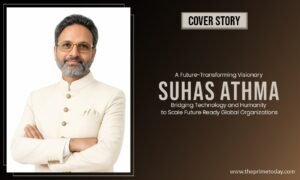
Picture these two different scenes. The first one of the late nineties. In it, there is a boardroom situated within a sprawling manufacturing plant. The second one is that of today. In it reside high-tech Global Capability Centers. Now, you know the contrast. Everything is different. Yet what remains similar, or rather identical, in these two scenarios decades apart is one core challenge: how to synchronize human potential with systemic efficiency? Suhas Athma started answering that question twenty-seven years ago. He did not learn the nuances of human behavior from textbooks. Instead, he learned them on the front lines of labor relations, navigating collective bargaining and compliance across sixteen years of intensive industrial relations.
That foundational experience shaped a unique perspective. The present world, or at least the majority of it, is increasingly awed by all the hype surrounding pure automation. Nonetheless, technology only succeeds when it respects the human element, recognizes Suhas. His career reads like an expedition through the modern corporate landscape. He has stepped into greenfield projects with nothing but a blank canvas, built startup technology companies from their earliest stages, and steered HR strategies within massive US and European multinationals. From pharmaceutical labs and chemical plants to telecom hubs, financial institutions, and educational technology platforms, Suhas has operated in almost every major sector. This breathtakingly diverse journey built a rare capability: the power to establish and scale six distinct Global Capability Centers from the ground up.
Operating across the US, European, and APAC markets requires more than just administrative skill. It demands a cultural agility that few possess. Suhas bridges these worlds daily. The vision of designing a long-term corporate roadmap is possessed by him. In addition, the practical grit of executing that vision on the ground is also retained by him. He understands that a global strategy is useless if it fails to account for local realities. The corporate world, moving through the currently chaotic times, faces a paradigm shift. GCCs are no longer mere back offices; they are the engines of global innovation. The choice before the leaders is compelling: Either choose tech transformation’s cold efficiency. Or go for human organizations’ messy realities. At that exact intersection stands Suhas. He solves the conundrum by proving that there is no need of sacrificing one for the other. The shifting lands of global businesses keep evolving. The emergence of new industries happens overnight. The very nature of workplaces keeps changing. What remains constant is his commitment to guide this transformation towards a holistic and sustainable progress.
Connecting People, Purpose, and Outcomes
Over the past 27 years, Suhas’s guiding philosophy has been that while industries may differ, people, purpose, and business outcomes remain fundamentally connected. Whether he has worked in manufacturing, telecom, IT, consulting, BFSI, Global Capability Centers, or emerging technology organizations, he has always viewed HR not as a support function but as a strategic business enabler. His approach has been rooted in understanding the business first—its operating model, growth aspirations, customer expectations, and competitive challenges. Once he understands the business context, he focuses on building people strategies that create agility, capability, and sustainable performance. This philosophy has enabled him to successfully navigate diverse sectors and lead large-scale transformations across organizations of varying sizes and maturity levels. Another key driver has been his belief in continuous learning and adaptability. Every industry has its own nuances, but the ability to learn quickly, ask the right questions, and collaborate with domain experts allows leaders to create meaningful impact. From establishing Global Capability Centers and driving digital HR transformation to managing industrial relations in manufacturing plants and leading workforce strategies for telecom and technology organizations, he has always embraced change as an opportunity to innovate.
Cultures Grounded in Trust
He also strongly believes that transformation succeeds only when people are engaged and aligned with the vision. Throughout his career, he has focused on creating cultures of trust, inclusion, accountability, and continuous improvement. Whether scaling organizations from startup stages, leading mergers and acquisitions, implementing global HR systems, or managing workforces of thousands of employees, his priority has been to ensure that people remain at the center of every business decision.
Driving Long-Term Value
Finally, Suhas has always believed that leadership is about creating long-term value rather than short-term success. Building future leaders, developing sustainable talent pipelines, leveraging technology for better decision-making, and fostering organizational resilience have been recurring themes throughout his career. This combination of business alignment, people-centricity, adaptability, and a relentless focus on transformation has been the foundation of his leadership journey across multiple industries and geographies. Having had the opportunity to establish and scale multiple Global Capability Centers (GCCs) and lead large-scale transformation programs across industries, he has learned that building a future-ready global organization is not primarily about infrastructure or technology—it is about creating an ecosystem where people, processes, and innovation come together seamlessly.
~Clarity of Shared Purpose: The first essential element is having a clear and compelling purpose. Employees today want to understand how their work contributes to the larger organizational vision. When people see meaning in what they do, they become more engaged, innovative, and committed to long-term success.
~Continuous Capability Building: Second, organizations must invest heavily in talent and capability building. Skills are evolving faster than ever before, and the workforce of tomorrow will require continuous learning, digital fluency, adaptability, and cross-functional thinking. Future-ready organizations create a culture where learning is not an event but a way of life.
~Inclusive and Agile Collaboration: The third element is building an agile and inclusive culture. Global organizations operate across geographies, generations, and diverse perspectives. Leaders must create an environment where employees feel valued, heard, and empowered to contribute ideas. Diversity of thought often becomes the biggest driver of innovation and problem-solving.
~Purposeful Technological Alignment: Technology is another critical pillar. However, technology should not be implemented for the sake of modernization alone. It must simplify processes, improve decision-making, enhance employee experience, and provide meaningful insights through analytics and artificial intelligence. The organizations that succeed will be those that effectively combine human intelligence with digital capabilities.
~Empathetic Business Leadership: Equally important is leadership. Future-ready organizations need leaders who can inspire trust, navigate uncertainty, and drive change while remaining deeply connected to their people. In his experience, the most successful leaders are those who balance business outcomes with empathy and authenticity.
~Resilience and Structural Flexibility: Another key factor is resilience and adaptability. Markets, technologies, and customer expectations are constantly changing. Organizations must be designed to respond quickly, learn from challenges, and continuously evolve rather than remain tied to traditional ways of working.
~Fostering Cross-Border Collaboration: Finally, collaboration must become a core organizational capability. GCCs and global enterprises thrive when teams work across functions, countries, and cultures with a shared purpose. Silos slow down progress, whereas collaboration accelerates innovation and business value.
The Future-Ready Ecosystem
If Suhas were to summarize it in one sentence, building a future-ready global organization is about creating a culture where talented people are empowered by technology, guided by strong leadership, united by a common purpose, and continuously encouraged to learn, innovate, and adapt to change. One of the most important lessons he has learned throughout his career is that transformation is not about changing processes alone—it is about helping people embrace and succeed through change. Organizations can invest in the best technologies, operating models, and strategies, but sustainable transformation only happens when people understand, believe in, and actively support the journey.
Outcome-Driven Methodology
Whenever he leads a transformation initiative, he starts by understanding the business objective. Whether it is improving productivity, scaling operations, driving digital transformation, optimizing costs, or building new capabilities, there must be a clear business case and measurable outcomes. However, he firmly believes that achieving those outcomes should never come at the expense of employee trust, engagement, or well-being.
Early Employee Involvement
Suhas’s approach has always been to involve people early in the transformation process. Employees are often closest to the challenges and opportunities within the business. By listening to their perspectives, addressing concerns transparently, and making them part of the solution, resistance to change is significantly reduced and ownership increases.
Transparent and Open Communication
Communication also plays a critical role. During periods of change, uncertainty can create anxiety. He makes it a priority to communicate openly about why the change is necessary, what it means for the organization, and how it will impact individuals. People may not always agree with every decision, but they appreciate honesty and clarity.
Empathy Paired with Accountability
Another principle he strongly follows is balancing empathy with accountability. As leaders, we must understand the human side of transformation while maintaining focus on business outcomes. This means investing in reskilling, providing support mechanisms, creating growth opportunities, and ensuring employees have the tools and capabilities needed to succeed in the new environment.
Holistic Matrix Measurement
Data and analytics are equally important. He believes in measuring both business metrics and people metrics simultaneously. While tracking productivity, efficiency, revenue growth, or operational improvements, he also monitors engagement levels, talent retention, capability development, leadership effectiveness, and employee experience. True transformation is successful only when both sets of indicators move in the right direction.
Transformation as an Opportunity
Over the years, whether he was building Global Capability Centers, managing large-scale workforce transformations, leading digital HR initiatives, or navigating mergers and organizational restructuring, he has found that the most successful outcomes occur when people see transformation as an opportunity rather than a disruption.
Interconnected Priorities
Ultimately, Suhas’ philosophy is simple: business transformation and people-centricity are not competing priorities. In fact, they strengthen each other. When employees feel valued, empowered, and connected to the organization’s vision, they become the biggest drivers of change, innovation, and sustainable business success. Having spent several decades working across industrial relations, labor relations, compliance, HR technology, and large-scale transformation programs, he believes we are witnessing one of the most significant shifts in the history of Human Resources. The rise of Artificial Intelligence and automation is not reducing the importance of HR; rather, it is elevating HR’s role from being primarily process-driven to becoming a strategic leader of the future workforce.
Shifting From Transactional to Strategic
For many years, HR teams spent considerable time on transactional activities such as administration, reporting, workforce management, and compliance monitoring. AI and automation are increasingly taking over these repetitive tasks, allowing HR professionals to focus on what truly creates value—people, culture, leadership, and organizational growth. However, technology alone cannot build successful organizations. As AI becomes more prevalent, the human aspect of business will become even more important. Employees will need guidance, reassurance, continuous learning opportunities, and support in adapting to new ways of working. HR will play a critical role in helping organizations navigate this transition while ensuring that technology enhances, rather than diminishes, the employee experience. He also sees HR becoming the custodian of workforce transformation. Organizations will need to continuously reskill and upskill employees as job roles evolve. The future workforce will require a blend of technical expertise, digital fluency, creativity, problem-solving, and emotional intelligence. HR leaders must proactively identify emerging skill requirements and create learning ecosystems that prepare employees for future opportunities.
Responsible Industrial Relations Evolution
From an industrial relations and labor relations perspective, the conversation will also evolve. Traditionally, discussions focused on wages, working conditions, and compliance. Going forward, organizations will need to address concerns around automation, workforce redeployment, digital skills, job redesign, and the ethical use of AI. HR will serve as the bridge between business transformation and workforce confidence, ensuring that change is managed responsibly and transparently.
Balanced Data Analytics Decisions
Another area where HR’s role will expand is the use of people analytics. AI will provide deeper insights into workforce trends, engagement, productivity, capability gaps, retention risks, and organizational effectiveness. While technology can generate insights, HR leaders must apply judgment, context, and empathy to make balanced decisions that benefit both employees and the business.
Enabling People Through Technology
He firmly believes that the most successful organizations will not be those that replace people with technology, but those that enable people through technology. AI can process data, identify patterns, and automate tasks, but qualities such as leadership, creativity, collaboration, ethics, trust, and human connection will continue to differentiate great organizations from average ones.
The Strategic Path Ahead
Looking ahead, the HR function will become a strategic advisor to the business, a champion of workforce transformation, a steward of organizational culture, and a guardian of ethical and responsible AI adoption. The future of HR lies at the intersection of technology and humanity, and the leaders who can successfully balance both will help create organizations that are not only more productive and innovative but also more resilient, inclusive, and people-centric. In essence, he sees the future of HR not as managing people processes but as shaping the future of work itself, ensuring that, as technology advances, human potential advances alongside it.
Leading Through Multi-Dimensional Change
Over the course of his career, Suhas has had the privilege of leading organizations through periods of rapid growth, mergers and acquisitions, business transformations, organizational restructuring, digital evolution, and workforce expansion. While every situation was unique, the experience taught him some invaluable leadership lessons that have shaped his approach over the years.
Core Lessons in Transformation
The first and perhaps most important lesson is that change is ultimately about people, not processes. Organizations often focus on structures, systems, and strategies, but the success of any transformation depends on how people experience and embrace the change. Employees need clarity, confidence, and a sense of purpose during uncertain times. When leaders invest time in listening, communicating, and building trust, transformation becomes significantly more effective.
Another lesson he learned is that transparency builds credibility. During periods of change, employees naturally have questions and concerns about their future. While leaders may not always have all the answers immediately, being honest about challenges, opportunities, and decisions creates trust. People can navigate uncertainty when they believe their leaders are being authentic and truthful.
He has also learned that speed and patience must coexist. Business realities often demand quick decisions and rapid execution, especially during mergers, restructuring, or growth phases. However, culture change and people alignment require time. Successful leaders understand when to move decisively and when to allow people the time needed to adapt and build confidence in the new direction.
One of the most powerful lessons has been the importance of building leadership alignment. No transformation can be sustained by one individual. During major change initiatives, he has seen that when leaders across functions share a common vision and speak with one voice, organizations move forward with greater confidence and less resistance. Leadership unity creates organizational stability.
He has also come to appreciate the importance of resilience. Not every decision produces immediate results, and not every transformation journey progresses exactly as planned. There are always setbacks, unexpected challenges, and moments of uncertainty. Effective leaders remain focused on the long-term objective, learn from mistakes, adapt quickly, and continue moving forward without losing sight of the broader vision.
Another significant lesson is that culture should never be underestimated. During mergers, acquisitions, and restructuring efforts, organizations often concentrate on integrating systems, processes, and financials. In his experience, the real success factor lies in integrating cultures, values, and people. A well-managed cultural integration can accelerate business success, while neglecting it can undermine even the best strategic plans.
He has also learned that leadership is not about having all the answers. It is about creating an environment where people feel empowered to contribute ideas, challenge assumptions, and participate in building solutions. Some of the most successful transformations he has led were driven by teams that felt ownership of the journey rather than simply executing instructions.
Perhaps the most enduring lesson is that every period of change presents an opportunity for growth—both for the organization and for individuals. Challenges often reveal hidden strengths, encourage innovation, and create future leaders. As a leader, his role has been to help people see possibilities where they may initially see uncertainty.
If he were to summarize his leadership philosophy in one statement, it would be this: successful transformation happens when leaders combine strategic clarity with genuine empathy. When people trust the direction, believe in the purpose, and feel supported throughout the journey, they become the driving force behind sustainable organizational success.
Navigating Global Dynamics
Having worked with organizations across India, the United States, Europe, and the Asia-Pacific region, one of the most valuable lessons Suhas has learned is that while cultures, business practices, and market dynamics may differ, people everywhere seek the same fundamental things—respect, trust, purpose, growth, and the opportunity to contribute meaningfully. This global exposure has significantly shaped his leadership style. It has taught him the importance of listening before leading. Early in his career, he realized that successful leadership is not about imposing a single approach across different geographies; it is about understanding local contexts while aligning everyone to a common organizational vision. Every region brings its own strengths, perspectives, and ways of working, and leaders must learn to appreciate and leverage those differences.
Working with multicultural teams has also reinforced the importance of humility and adaptability. He has had the opportunity to collaborate with professionals from diverse backgrounds, cultures, and generations. These experiences taught him that the best ideas often emerge when people with different viewpoints come together to solve a common challenge. As a result, he has always encouraged open dialogue, collaboration, and an environment where every voice is heard and valued. Another significant influence has been his understanding of inclusion. Inclusion is not simply about representation; it is about creating a workplace where people feel a genuine sense of belonging. Whether he was building Global Capability Centers, leading large transformation programs, or managing geographically dispersed teams, he focused on fostering cultures where employees could bring their authentic selves to work, contribute confidently, and grow without barriers.
Global exposure has also highlighted the strong connection between culture and performance. High-performing organizations are not built solely through processes and metrics; they are built through trust, accountability, and shared purpose. He has observed that when employees feel respected and included, they become more engaged, innovative, and committed to organizational success. This belief has guided many of the talent, leadership, and culture-building initiatives he has led throughout his career. Furthermore, working across international markets has strengthened his ability to balance global consistency with local relevance. While organizations need common values, governance, and strategic direction, they must also remain sensitive to local customs, regulations, workforce expectations, and cultural nuances. Finding that balance is essential for creating sustainable and scalable people practices.
Perhaps the most profound lesson has been recognizing that leadership in a global environment requires a growth mindset. Markets evolve, technologies change, and workforce expectations continue to shift. Leaders must remain curious, continuously learn from different cultures and experiences, and be willing to challenge their own assumptions. Ultimately, his global experience has made him a more inclusive, empathetic, and collaborative leader. It has reinforced his belief that diversity is a business strength, inclusion is a leadership responsibility, and high-performance cultures are created when people from different backgrounds unite around a shared purpose, mutual respect, and a commitment to excellence. When organizations successfully combine these elements, they create workplaces that not only achieve exceptional business results but also inspire people to do their very best work.
Foreseeing the Future of Workforce Strategy
Having been closely involved in HR technology transformation, shared services, analytics, automation, and digital operating models over the last two decades, Suhas believes the next five years will fundamentally redefine the role of Human Resources. “We are moving from an era where HR was primarily focused on managing people processes to one where HR will play a central role in shaping the future of work, workforce capabilities, and organizational resilience.”
One of the most significant trends will be the widespread integration of Artificial Intelligence into every aspect of the employee lifecycle. AI will move beyond automation of routine transactions and become a strategic partner in workforce planning, talent acquisition, skills forecasting, employee experience, learning personalization, and organizational decision-making. HR leaders will increasingly leverage predictive analytics to anticipate talent needs, identify retention risks, and make more informed workforce decisions. A second major trend will be the shift from job-based organizations to skills-based organizations. Traditional job descriptions are becoming less relevant as business needs evolve rapidly. Organizations will focus more on skills, capabilities, and potential rather than fixed roles. HR will play a critical role in identifying emerging skills, facilitating continuous learning, and creating internal talent marketplaces that enable employees to move across projects, functions, and geographies. The evolution of Global Capability Centers and Shared Services will also continue. These centers will no longer be viewed merely as cost optimization hubs. They will become centers of innovation, digital excellence, advanced analytics, and strategic business support. Future GCCs will house specialized talent capable of driving transformation, innovation, and enterprise-wide value creation. Another trend that will gain momentum is the consumerization of employee experience. Employees today expect workplace experiences that are as seamless and intuitive as the digital platforms they use in their personal lives. Organizations will invest heavily in creating personalized employee journeys supported by AI-powered virtual assistants, self-service platforms, intelligent workflows, and real-time feedback mechanisms. He also believes workforce analytics will become a boardroom agenda. Data-driven decision-making will extend far beyond headcount reporting and turnover analysis. Organizations will use advanced analytics to understand productivity patterns, leadership effectiveness, workforce agility, collaboration networks, and future talent requirements. HR leaders will increasingly be expected to translate data into strategic business insights.
The future will also place a stronger emphasis on workforce resilience and adaptability. As technological disruptions accelerate, organizations will need employees who can continuously learn, reinvent themselves, and thrive in changing environments. HR’s role will shift toward building organizational capability rather than simply managing organizational structure. Another area that will become increasingly important is ethical AI governance. As organizations rely more on algorithms for hiring, performance management, learning, and workforce decisions, HR will be responsible for ensuring fairness, transparency, privacy, and responsible use of technology. Balancing innovation with ethics will become a defining responsibility for future HR leaders. Leadership development will also undergo a significant transformation. Future leaders will need to manage hybrid teams, navigate uncertainty, leverage AI-driven insights, and foster human connection in increasingly digital workplaces. Developing these capabilities will be a strategic priority for organizations worldwide. The most important trend is that HR itself will become far more business-centric. The HR leaders of the future will not simply be people managers; they will be workforce strategists, transformation advisors, culture architects, and business partners who directly influence organizational competitiveness and growth. If he were to summarize the future of HR in one thought, it would be this: the next five years will not be about replacing people with technology; they will be about using technology to unlock human potential at an unprecedented scale. Organizations that successfully combine digital innovation with human-centered leadership will create the most resilient, productive, and future-ready workplaces.
Mentoring Next-Generation Leaders
If there is one piece of advice Suhas would offer to the next generation of HR and transformation leaders, it is this: never limit yourself to being an HR expert—strive to become a business leader who happens to have deep expertise in people and transformation.
Early in his career, he realized that the most impactful HR leaders are those who understand how businesses create value. Learn the language of business. Understand financials, operations, customer expectations, productivity drivers, technology trends, and market dynamics. The more you understand the business, the more effectively you can align people strategies with organizational success. Secondly, remain curious and never stop learning. The world of work is evolving at an unprecedented pace. Technologies such as AI, automation, analytics, and digital platforms are transforming how organizations operate. At the same time, employee expectations, leadership models, and workforce structures are changing. The leaders who will thrive are those who continuously learn, adapt, and remain open to new ideas. He would also encourage aspiring leaders to step outside their comfort zones. Some of his most valuable learnings came from taking on assignments beyond traditional HR—whether it was business operations, transformation programs, shared services, mergers and acquisitions, industrial relations, or technology implementation. Every new challenge broadens your perspective and strengthens your ability to lead complex organizations. Another important lesson is to build credibility through execution. Strategy is important, but people trust leaders who can translate vision into results. Deliver consistently, honor commitments, and focus on creating measurable business impact. Over time, your reputation will be built not by what you promise, but by what you deliver.
Equally important is the ability to build relationships. Leadership is fundamentally about people. Invest time in understanding colleagues, employees, customers, and stakeholders. Listen actively, respect different perspectives, and create trust-based relationships. In his experience, strong relationships often become the foundation for successful transformations. He would also remind young professionals that empathy and performance are not mutually exclusive. Great leaders care deeply about people while maintaining high standards of accountability. The ability to balance compassion with business discipline is what differentiates effective leaders from exceptional ones.
As you progress in your career, focus on developing future leaders, not just achieving personal success. The true measure of leadership is not the position you hold, but the number of people who grow, succeed, and lead because of your guidance and support. Most importantly, embrace change rather than fear it. Every major opportunity in his career came disguised as a challenge—whether it was building organizations from scratch, leading transformations, navigating mergers, managing workforce transitions, or driving digital innovation. Growth often happens when we are willing to step into uncertainty with confidence and conviction.
Looking back on his own journey across industries, geographies, and transformation initiatives, he has learned that titles and positions may change. Still, the essence of leadership remains the same: stay grounded in your values, stay focused on creating value for people and business, and never lose your passion for learning and making a positive difference. His message to the next generation is simple: be a student of business, a champion of people, an advocate of innovation, and a leader who inspires others to achieve more than they thought possible. If you can do that consistently, success will naturally follow.
Redefining Success Through Lasting Impact
When Suhas reflects on his professional journey, he does not measure success solely by the organizations he has worked for, the transformations he has led, or the awards and recognitions he has received. Instead, he measures it by the positive and lasting impact he has been able to create in people’s lives, the cultures he has helped shape, and the leaders he has had the privilege to mentor and develop.
Shaping a Strategic Professional Legacy
If there is a legacy he hopes to leave behind, it is that HR can be one of the most powerful drivers of business transformation and organizational excellence. Throughout his career, he has worked to demonstrate that people strategy and business strategy are not separate conversations—they are fundamentally interconnected. Whether it was building Global Capability Centers, driving digital HR transformation, leading large-scale workforce initiatives, managing industrial relations, or supporting organizations through growth and change, his objective has always been to create environments where businesses thrive because their people thrive. He also hopes to be remembered as someone who helped elevate the role of HR from a traditional support function to a true strategic partner in business success. He has always believed that HR professionals have the opportunity to influence not just policies and processes, but culture, leadership, innovation, and organizational sustainability. If future leaders see HR as a catalyst for transformation and value creation, he would consider that a meaningful contribution.
Another legacy he aspires to leave is developing leaders who continue to create positive impact long after his direct involvement. One of the most rewarding aspects of his career has been seeing individuals he mentored grow into successful business and HR leaders themselves. Knowing that he played a small role in their journey gives him immense satisfaction and reinforces his belief that leadership is ultimately about enabling others to succeed.
Driving Human-Centric Innovation Forward
Looking ahead, he remains as excited about the future as he was when he started his career. The world of work is undergoing unprecedented change, driven by Artificial Intelligence, digital transformation, evolving workforce expectations, and new business models. He sees tremendous opportunities to contribute to this evolution by helping organizations build future-ready workforces, leverage technology responsibly, and create workplaces that are both high-performing and deeply human-centric. One of his key aspirations is to continue contributing to the advancement of HR as a profession—through mentoring, thought leadership, consulting, and sharing practical insights from his experiences across industries and geographies. He is particularly passionate about helping organizations integrate technology, analytics, and innovation into their people strategies while preserving the values of empathy, inclusion, and trust. He is also excited about supporting emerging leaders and organizations that are shaping the future economy, whether through startups, Global Capability Centers, manufacturing transformation, or digital enterprises. The opportunity to guide businesses through growth, change, and transformation continues to energize him. Ultimately, his goal is not simply to leave behind successful projects or impressive metrics. It is to leave behind stronger organizations, empowered leaders, inspired teams, and a belief that when people are given the right opportunities, support, and purpose, they can achieve extraordinary things.
If he were to define his legacy in one sentence, it would be this: he hopes to be remembered as a leader who combined business excellence with human values, transformed organizations while empowering people, and helped shape workplaces where both individuals and businesses could realize their fullest potential.