
The Legacy Capitalist: Dr. Eng. Sameh El Sayed Ibrahim’s Future Framework for Creating Attractive, Accessible, and Sustainable Living Environments
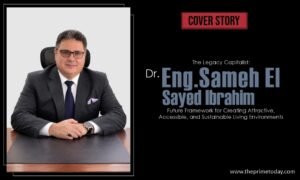
There is one of the most admired real estate leaders in Cairo, Egypt. Dr. Eng. Sameh El Sayed Ibrahim. He is transforming Egypt with his strategic approach of expanding horizons while preserving heritage in metropolitan growth. That way, he links historic urban preservation directly with large-scale master planning. Widely known as Misr El-Gadida, he is Heliopolis Housing and Development Company’s Managing Director (MD) and Chief Executive Officer (CEO). In his position, Sameh commands the third-oldest real estate institution in the world, an organization that carries over 120 years of urban development history. It goes back to the founding of Heliopolis in 1905. His executive decisions require balancing this unique cultural architecture with the aggressive demand for contemporary infrastructure across a rapidly growing nation. Rather than focusing solely on traditional residential construction, his strategy establishes highly integrated, mixed-use communities that protect spatial history while maximizing corporate asset value throughout the journey.
Sameh drives this expansion by moving company operations far beyond its traditional borders in Cairo. Under his leadership, Misr El-Gadida seeks to actively update major co-development partnerships aimed at developing premium mixed-use installations on vast plots across the East District of Mansoura City. He partners with eminent regional private developers in infusing fresh capital into the historical secondary market, thereby turning underutilized land banks into high-yielding retail, commercial, and residential spaces. This cross-regional execution model maximizes shareholder value and, simultaneously, funds urban design competitions to reinstate original heritage sites such as Basilica Square and Al-Ahram Street within historic Heliopolis, which manifests how ancient civic identity and modern commercial advancement can sustain each other in a natural way.
The Synthesis of Engineering and Management Science: Driving Competency-Grade TQM and Six Sigma Efficiencies
Sameh’s professional journey has been shaped by a dynamic intersection between hands-on engineering practice in the infrastructure, construction, and real estate development sectors and advanced academic research in management sciences aimed at strengthening competitive advantage. The most influential milestone was not a specific project, but rather the realization that managing large real estate organizations cannot rely solely on traditional supply-and-demand principles. Instead, it requires the adoption of agile management methodologies and quality-driven operational excellence. Throughout his leadership of numerous infrastructure and development projects, Sameh has developed a firm conviction that leadership is fundamentally the science of managing change and risk. His leadership philosophy has been profoundly influenced by his postgraduate studies, including both his Master’s and Doctoral research, which focused on the impact of Total Quality Management (TQM) and Six Sigma methodologies in driving organizational efficiency and sustainable performance. This philosophy is clearly reflected in his current leadership approach. He does not believe in temporary solutions; rather, he advocates for systematic structuring, minimizing investment waste, and transforming challenges into growth opportunities through the development of resilient business models capable of adapting to changing market conditions. By combining strategic vision with operational discipline, he strives to create sustainable value and long-term institutional success.
The Three Strategic Pillars: Transforming a Century-Old National Landowner into an Integrated Value Creator
Heliopolis Housing and Development Company is far more than a real estate developer; it is a distinguished national institution with a legacy spanning more than a century and a cornerstone of Cairo’s urban identity. When Sameh assumed executive leadership, the vision was clear: to transform the company from a traditional landowner and developer into an integrated value creator and strategic investor. This institutional transformation has been driven through three parallel strategic pillars:
- Organizational and Administrative Reform: “We have restructured the company’s internal organizational framework to enhance decision-making efficiency, accelerate execution, and eliminate administrative overlaps that could hinder growth and operational effectiveness.”
- Financial and Operational Development: Sameh adds that their focus has been on resolving financial complexities, strengthening debt management mechanisms, and optimizing the capital cycle to ensure sustainable cash flows and long-term financial resilience.
- Modernizing the Investment Identity: They have worked to cultivate a corporate culture centered on competitive efficiency and performance excellence. This has been achieved by linking both individual and organizational performance to clearly defined and measurable Key Performance Indicators (KPIs), ensuring higher productivity levels and improved quality of the company’s products and services.
A fundamental component of this transformation strategy has also been achieving a balanced equation between maximizing the value of existing assets, driving future expansion opportunities, and continuously enhancing the company’s land portfolio. This approach ensures sustainable growth, reinforces the company’s competitive position, and creates long-term value for shareholders and stakeholders alike.
The Complex Equation: Managing Multi-Billion-Pound Portfolios and the Principle of Mutual Investment
It is very crucial, says Sameh, that he must manage the delicate balance between preserving and enhancing the value of existing assets while simultaneously driving future growth and expansion. This is perhaps the most complex equation in managing a historic company with a multi-billion-pound asset portfolio. “We are entrusted with a unique urban legacy in the historic district of Heliopolis—an asset of immense cultural, architectural, and financial value.” At the same time, he adds that they possess vast development opportunities that require a bold and forward-looking expansion strategy. Their approach is built on what he calls the principle of ‘mutual investment between the past and the future.’ They do not view their historic assets as maintenance obligations; rather, they regard them as living brands and strategic investment resources. Through innovative revitalization and redevelopment initiatives, they are repositioning these assets to generate recurring revenues across commercial, administrative, and tourism-related activities. The value created through the optimization of these legacy assets, combined with carefully structured strategic partnerships, provides the financial engine that supports their expansion plans in emerging urban communities, particularly New Heliopolis. Sameh’s philosophy is straightforward: “We preserve and strengthen the identity at the core while driving innovation, growth, and expansion at the periphery.” By doing so, they ensure that their heritage remains a source of competitive strength while simultaneously creating new avenues for sustainable growth and long-term value creation.
The Quad-Pillar Blueprint: Unlocking the Real Estate Capital Cycle and Minimizing Investment Waste
Sameh furthers that their current development strategy is built upon four fundamental pillars that form the foundation of their long-term growth agenda:
*Maximizing the Investment Value of the Land Portfolio: They have adopted a firm strategy of moving away from the outright sale of undeveloped land without value creation. Instead, they focus on self-development and joint-development models that unlock greater value from their land assets, enhance returns, and create sustainable revenue streams.
*Expanding Strategic Partnerships with the Private Sector: They actively pursue partnership structures based on revenue-sharing models, enabling us to reduce financing risks, optimize capital allocation, and accelerate project execution while benefiting from the expertise of leading private-sector developers.
*Digital Transformation and Operational Innovation Technology is being integrated across all stages of the value chain—from project design and construction to customer service and post-sales operations. This digital transformation enhances efficiency, improves decision-making, and elevates the overall customer experience.
*Sustainability and Balanced Financial Growth: Their approach balances short-term financial returns with long-term capital appreciation. “By aligning immediate profitability with sustainable value creation, we strengthen the company’s financial resilience and safeguard its position against economic fluctuations,” he adds.
At the heart of these pillars lies a clear objective: maximizing the investment value of the company’s land portfolio while ensuring sustainable growth, operational excellence, and long-term value creation for shareholders and stakeholders alike.
The Placemaking Shift: Mitigating Market Risks via Rigorous Mixed-Use Land Asset Diversification
The land portfolio of Heliopolis Housing and Development Company represents its most significant competitive advantage. To maximize its value, they have moved away from the traditional approach of land banking or selling land as undeveloped plots and instead adopted a comprehensive placemaking strategy. “Every square meter within our portfolio is subject to rigorous feasibility studies and sophisticated master planning processes based on mixed-use development concepts.” His objective is not merely to develop land, but to create integrated and sustainable communities that generate enduring economic value.
Accordingly, they strategically allocate our land portfolio across a diverse range of uses, including residential, commercial, administrative, healthcare, and recreational developments. This diversification ensures that the company does not rely on a single revenue generation model or financing mechanism. Residential projects typically generate substantial cash inflows during the early stages of development, providing strong liquidity and supporting ongoing investment activities. Meanwhile, commercial, administrative, and service-oriented assets create stable recurring income streams that strengthen the company’s balance sheet, enhance resilience during periods of economic slowdown, and provide a sustainable foundation for long-term growth. Through this balanced portfolio approach, they are able to optimize asset value, mitigate market risks, and secure sustainable returns that support the company’s strategic objectives for decades to come.
Private-Sector Co-Development: Accelerating Capital Flow and Market Capitalization on the EGX
Strategic partnerships are not merely an alternative financing mechanism; they are a powerful catalyst for growth, value creation, and execution efficiency. In modern management practice, collaborating with highly reputable developers possessing strong operational, technical, and marketing capabilities enables Sameh to share risks, optimize resource allocation, and significantly reduce the time required to develop the vast land portfolio under our ownership. The partnership agreements that the company has entered into—and continues to pursue—particularly within major projects in New Heliopolis, represent a successful model for combining the strength of a historic national institution with the agility, innovation, and execution capabilities of the private sector.
Under this model, the company contributes strategically located land assets with substantial historical and investment value, while development partners provide financing, specialized expertise, and efficient execution mechanisms. The result is a mutually beneficial framework that maximizes returns for all stakeholders while accelerating the delivery of high-quality real estate products to the market. Beyond their direct financial impact, these partnerships enhance the overall value of the company’s asset base, strengthen its competitive positioning, and contribute to sustainable long-term growth. They also support the enhancement of shareholder value by reinforcing investor confidence and improving the company’s market profile. As a company listed on the Egyptian Exchange (EGX) since 1995, they remain committed to creating sustainable value through strategic partnerships that align with their long-term vision and contribute to strengthening their market capitalization and overall shareholder returns.
Civic Extension: Building Next-Generation Smart Utilities and Carbon-Reduction Infrastructure
The future of urban development in Egypt can no longer be defined solely by the construction of gated residential communities. The next phase of growth belongs to integrated, sustainable, and smart cities that are designed to enhance the quality of life while supporting long-term economic and environmental resilience. The New Heliopolis project represents a practical embodiment of this vision. Sameh’s objective is not simply to build residential units; rather, they are creating vibrant, integrated communities where people can live, work, and enjoy recreational opportunities within a well-planned and sustainable urban environment.
“Our vision for smart and sustainable cities is founded on several key principles.” These include intelligent utility management systems, such as smart water and electricity networks that enhance efficiency and minimize waste; the integration of extensive green spaces that improve quality of life while contributing to carbon emission reduction; and the adoption of smart and environmentally friendly mobility solutions that support sustainable urban growth. Egypt is making significant progress in advancing this urban transformation, and Heliopolis Housing and Development Company is committed to being at the forefront of this evolution. Through projects such as New Heliopolis, he aims to deliver developments that serve as both a geographical and cultural extension of the historic Heliopolis legacy, while incorporating the digital, environmental, and technological innovations of the twenty-first century. “Sustainability remains a core consideration across all our current developments.” In projects such as Gardenia, they are committed to implementing environmentally responsible, green, and smart development standards that promote energy efficiency, environmental stewardship, and enhanced quality of life for residents, while supporting the broader goals of sustainable urban development.
The Digital Value Chain: Embedding BIM, Real-Time CRM Tracking, and Six Sigma Systems
Within their organization, Sameh says that technology has evolved from being merely a supporting tool to becoming a core operational driver and a key enabler of sustainable growth and efficiency. At the planning and execution stages, they are increasingly integrating Building Information Modeling (BIM) technologies, which allow them to create comprehensive virtual models and simulate projects before physical construction begins. This approach enhances project coordination, reduces engineering errors, lowers costs, and supports the achievement of stringent quality standards aligned with internationally recognized operational excellence methodologies, including Six Sigma principles.
From a customer experience perspective, they have fundamentally transformed our communication and service delivery ecosystem through advanced digital platforms and sophisticated Customer Relationship Management (CRM) solutions. These systems enable our clients, both within Egypt and internationally, to track project progress in real time, access services seamlessly, and interact with the company through a more transparent and efficient digital experience. Internally, his digital transformation journey extends to the implementation and continuous enhancement of Enterprise Resource Planning (ERP) systems. These platforms ensure greater data transparency, facilitate the rapid flow of information across departments, and strengthen coordination between business functions. As a result, management gains access to accurate, timely, and reliable information, which significantly improves the quality and precision of strategic and investment decision-making. Ultimately, Sameh views digital transformation not simply as a technological upgrade, but as a comprehensive business transformation that enhances operational efficiency, strengthens governance, improves customer satisfaction, and reinforces the company’s long-term competitiveness in an increasingly dynamic real estate market.
Value Engineering: Maximizing Spatial Utility and Reducing Lifecycle Costs Under Inflationary Pressures
Achieving a balance between providing reasonably priced housing and delivering a distinguished urban living experience represents one of the most significant challenges facing the real estate sector today, particularly in an environment characterized by inflationary pressures and rising construction costs, says Sameh. The solution, however, does not lie in compromising the quality of materials, finishes, or urban design standards. Instead, it lies in the effective application of Value Engineering principles and the continuous enhancement of operational efficiency. By adopting quality management methodologies, Sameh and his team carefully evaluate the entire project lifecycle to identify and eliminate costs that do not create tangible value for the end user. This approach allows them to optimize resources while maintaining the highest standards of quality and performance. Large-scale strategic partnerships also play a critical role by enabling economies of scale in the procurement of construction materials and the engagement of contractors, thereby reducing costs without compromising quality. Equally important is the intelligent planning and design of residential spaces. Through efficient space utilization and thoughtful architectural layouts, they maximize the functional value of every square meter, providing residents with a sense of comfort, convenience, and urban sophistication without imposing the cost burden of underutilized space. His philosophy is simple: they do not seek to offer the lowest-priced product; rather, he strives to deliver the highest possible value for the price paid. By combining operational excellence, smart design, and disciplined cost management, they are able to provide quality living environments that remain both attractive and accessible to a broad range of customers.
The Dual-Matrix Governance Model: Combining Private Sector Agility with Public Accountability
According to Sameh, governance is not a bureaucratic constraint that slows down operations; rather, it is a protective framework that safeguards shareholder rights, preserves state assets, and ensures the long-term sustainability of the organization. At Heliopolis Housing and Development Company, they have succeeded in developing a governance model that combines robustness with dynamic flexibility. “We have strengthened the role of board-established committees, including audit, investment, and risk committees, and implemented a comprehensive and clearly defined Delegation of Authority (DoA) matrix.” This framework precisely defines decision-making pathways across the organization. Routine and operational decisions are delegated to the executive level, ensuring full agility and speed in day-to-day operations and preventing unnecessary delays in project execution. At the same time, major strategic and investment decisions are subject to rigorous institutional review, oversight, and approval processes to ensure accuracy, transparency, and alignment with the company’s long-term strategic objectives. This balanced governance structure enables them to combine the agility and responsiveness of a private-sector organization with the discipline, accountability, and reliability expected from a state-affiliated enterprise, thereby ensuring both operational efficiency and institutional integrity.
The Environmental, Social, and Governance (ESG) Infrastructure Benchmark: Anchoring Foreign Capital to Sustainable Development Principles
According to Sameh, ESG standards are no longer a marketing luxury; they have become a fundamental benchmark for evaluating companies globally and a key driver for attracting foreign investment. “Accordingly, we have embedded ESG principles at the core of our operational and strategic vision.”
~Environmental (E): “We are committed to adopting green building practices, recycling construction waste, and integrating energy-efficient lighting systems as well as solar energy solutions in the public and communal areas of our new developments. These initiatives aim to significantly reduce the environmental footprint of our projects while promoting sustainable resource utilization.”
*Social (S): “We recognize our responsibility toward the communities in which we operate. This is reflected in our contribution to the development of surrounding areas, the enhancement of local quality of life, and the provision of safe, fair, and inclusive working environments for employees, contractors, and all stakeholders involved in our project sites.”
Through this integrated ESG approach, Sameh says they aim to ensure that their developments are not only economically viable but also environmentally responsible and socially impactful, thereby creating long-term sustainable value for all stakeholders.
Read Also: The Champion of Supply Chain Movement: How Shamjad Shamsudeen Syncs Global Trade