
The Architect of Transformation: How Dr. Anup Dayanand Sadhu Is Redefining Healthcare, Infrastructure, Logistics, and Public Leadership
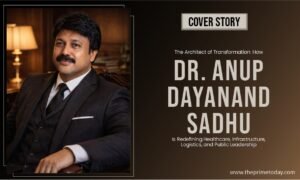
Behind the humongous scale of national movements, there are always visionary leaders who understand how small components affect massive networks. And thus, they manage large public systems effectively, efficiently, and progressively. Bringing this exact scale of modern thought-provoking and awe-inspiring institutionally transformational leadership is Dr. Anup Dayananda Sadhu, who is a former Civil Servant belonging to Indian Railway Traffic Service, who served the Government of India in the capacity of Principal Secretary. He is presently the Chief Executive Officer (CEO) and Administrator of Acharya Healthcare and Acharya Institute in Bengaluru.
The Transformational Architect
A profound passion for nation-building, operational excellence, innovation, and public service has driven Dr. Anup’s career. He brings this deep commitment to every project he encounters, ensuring that public resources directly benefit the communities they are built to serve. His leadership pioneered large-scale initiatives across railway operations, multimodal logistics, passenger services, infrastructure development, cybersecurity governance, digital transformation, and healthcare administration, delivering measurable impact across some of India’s most complex public systems. His ability to master these different corporate and public domains allows him to build bridges between government policies and real-world execution.
What drove a trained medical specialist to transition from clinical medicine to the civil services? The defining moment came from a deep-seated desire to affect structural change at a macro level. While medicine allowed him to heal individuals, the civil services offered a platform to heal and build entire public systems. Today, what motivates him is the enduring challenge of large-scale social impact—the knowledge that a single policy shift or structural reform can uplift millions of lives simultaneously. Throughout his journey, his leadership transformed organizational cultures, though not without facing its share of obstacles. His biggest challenge has always been navigating the massive inertia of deeply entrenched bureaucratic frameworks to instill agile, tech-driven cultures. Conversely, his biggest failure—an early, ambitious intermodal project that stalled due to multi-stakeholder misalignment—became his greatest teacher, underscoring the absolute necessity of intensive stakeholder engagement before execution. This grounded experience directly shaped his leadership philosophy: a blend of empathetic governance, data-driven accountability, and decentralized empowerment.
From Medicine to Nation Building
The blueprint of multi-disciplinary knowledge and the capacity to manage public utility frameworks and complex corporate organizations stems from a rare combination of scientific discipline and advanced administrative training. Dr. Anup built his foundational knowledge by earning an MBBS from Bangalore Medical College under Bangalore University. He then advanced into deep analytical training by completing an MD in Psychiatry at the prestigious National Institute of Mental Health and Neurosciences, known as NIMHANS, in Bangalore. This background in medical science and human behavior gave him an early edge in understanding complex team environments and high-pressure organizational settings.
To prepare for large-scale corporate governance, he expanded his administrative skills through the Postgraduate Advanced Management Program at the ICLIF Leadership and Governance Center in Malaysia. He further refined his corporate strategy by completing another Postgraduate Advanced Management Program at the INSEAD Business School in Singapore. Recognizing that modern infrastructure requires specialized technical tools, he also earned a Postgraduate Diploma in Urban Transportation and Sustainability, along with a Postgraduate Diploma in Cybersecurity.
His specialized professional training bridges the gap between theoretical policy and ground-level execution on an international scale. He traveled to Nantong, China, in June 2016 as a technical team member specializing in Tank Container Procurement, which helped modernize industrial liquid transport systems back home. In May 2017, he completed advanced training in Port Management in Antwerp, Belgium, allowing him to integrate European maritime logistics standards directly into regional inland container terminals.
Managing India’s Largest Public Systems
Throughout his journey, Dr. Anup has successfully led transformational projects that generated over ₹150 crores in savings and revenue enhancement, proving that public infrastructure can be both highly efficient and financially self-sustaining. He combined this financial discipline with deep structural improvements that reduced train accidents by more than 50%, making regional transit safe for millions of daily commuters. By focusing on modern tech applications, he strengthened logistics networks and accelerated digital adoption through initiatives such as QR ticketing, Electronic Treasury Remittance, and UTS on Mobile. These systematic upgrades change how millions of individuals access daily services, keeping his teams focused on pushing the boundaries of what modern public systems can achieve.
Dr. Anup spent decades, before entering the healthcare and academic spaces, in fine-tuning some of the most complex railway transport and security networks in India. Between 2022 and 2025, he served as the Chief Commercial Manager for Passenger Services and Catering in Hubballi, Karnataka, within the South Western Railways under the Ministry of Railways. In this role, he directed passenger services, catering, and broad commercial operations across the state of Karnataka. He oversaw day-to-day train operations, architected comprehensive workforce planning, and formulated new policies to drive non-fare revenue and upgrade customer amenities. During this same era, from February 2025 to October 2025, he accepted the additional charge of Chief Claims Officer in Bangalore, where he managed claims settlement, legal compliance, and official representation to protect the operational and financial integrity of the railway system.
His deep expertise rests on a long history of departmental leadership within the South Western Railways. He served as Head of the Commercial Department for the Bangalore Division from 2014 to 2015, following his time as Head of the Operations Department for the same division from 2013 to 2014. Earlier, he guided the Commercial Department for the Mysore Division from 2009 to 2013, managed Train Operations for the Hubli Division from 2006 to 2009, and led the Operations Department for the Mysore Division from 2001 to 2006. He established his foundational management style even earlier, serving as Head of the Safety Department for the Bangalore Division from 1999 to 2001.
Transforming Passenger Experience
How a leader can guide thousands of moving parts across multiple sectors without losing operational focus or clarity has been illustrated by this long career full of significant operational excellence milestones and signature achievements. Dr. Anup turned his attention to systemic improvements early on, achieving a true rail safety revolution. Under his stewardship, the design and implementation of Rail Safety Management Systems reduced train accidents by over 50% in the Bangalore Division, an effort that was commended by the Khanna Committee in 2000.
Dr. Anup redefined how the public interacts with transit. Under his stewardship, the launch of India’s first onboard infotainment system on five trains enhanced the passenger experience. His leadership transformed stations by establishing India’s first Wi-Fi facility at Mysore Railway Station. Through a public-private partnership, the initiative became India’s first 3-star retiring room under PPP at Mysore Railway Station, and the project redefined local heritage by developing India’s first museum-inspired model railroad system at the same location. His work in urban transit planning advanced rapidly as he contributed to the survey for Bangalore’s airport rail station, advancing urban transport across the growing city.
Under his stewardship, the application of deep analytical skills to zero-based timetabling re-engineered the timetable of over 100 passenger trains, optimizing freight capacity and improving operational efficiency. The initiative became a benchmark with the introduction of crack train specials between Vasco and Hospet to enhance regional connectivity. As the designated nodal officer for developing around 40 railway stations on SWR, under his stewardship, the utilization of around 900 Cr. in the ABSS (Amrit Bharat Station Scheme station) redevelopment project was managed and spearheaded. The initiative became a model for public responsiveness through his role as the coordinator for the mitigation of passenger complaints and their prompt redressal for SWR through the Rail Madad system. Concurrently, the reform positioned the zone at the forefront of hospitality by introducing catering innovation that brought unique catering solutions for Rajdhani and Vande Bharat Express travelers through the inclusion of regional cuisines and a dynamic, cyclical menu.
The Digital Railway
As the technology landscape changed, Dr. Anup shifted his focus toward protecting public data assets. From April 2025 to October 2025, he stepped into the role of Chief Information Security Officer in Hubballi, leading cybersecurity strategy to achieve total compliance with national regulations and safeguard critical railway IT infrastructure. Under his stewardship, digital transformation was spearheaded across the region, achieving a massive 96% adoption rate of Electronic Treasury Remittance and introducing 20% QR code-based ticketing, which set a new benchmark for Indian Railways.
In the digital space, Dr. Anup accelerated the adoption of automated transaction systems. Under his stewardship, the Electronic Treasury Remittance system achieved 96% adoption across South Western Railways, ranking among the highest in Indian Railways since January 2025. Under his stewardship, the QR code ticketing implementation resulted in 20% of tickets booked via QR codes, achieving the highest QR-code ticketing adoption among all Indian Railway zones. Under his stewardship, targeted marketing and public campaigns drove the utilization of the UTSonMobile app, resulting in 8% unreserved ticketing via the platform and ranking first among non-suburban railways.
The initiative became highly successful when the much-desired Mobile UTS scheme, known as the M-UTS scheme, was launched at Bangalore under his leadership in OCT 2025, benefitting rail passengers across the Bengaluru region. Under his stewardship, the widespread implementation and proliferation of ATVMs, or Automatic Ticket Vending Machines, across SWR resulted in ATVMs accounting for over 25% of total ticket sales. To secure these digital steps, under his stewardship, the establishment of the UTS & PRS Data Center @ SWR at the SWR Headquarters in OCT 2025 effectively decentralized this crucial activity from Chennai and anchored the digital future of regional infrastructure.
Building India’s Logistics Future
This technical focus grew naturally from his earlier work with the Container Corporation of India Ltd., where he served as Group General Manager for the Bangalore Depot at ICD Whitefield from 2015 to 2021, and later managed the Ahmedabad and Mumbai Clusters from 2021 to 2022. Under his stewardship, a massive freight operations milestone was marked by launching India’s first broad-gauge freight train on the Hassan-Mangalore section post-gauge conversion in 2006. His eye for revenue optimization led him to pioneer single-train coal operations between Birur and Bhadravathi, saving over ₹50 crores in 2003.
To achieve continuous throughput enhancement, under his stewardship, the introduction of GM locomotive operations in the Castlerock-Kulem Braganza Ghat section in 2008 eliminated the need for rake splitting and significantly increased Line capacity. Notably, the reform positioned the division at a historic peak, as the Hubli Division’s record freight loading of 40 million tonnes in 2007-2008 remains unmatched to this day. In addition to these tracking updates, under his stewardship, infrastructure development included designing and developing multiple railway sidings in the Bellary–Hospet region, significantly boosting iron ore transportation and trade across the industrial belt.
His strategic work created major logistics and trade advancements across the maritime and inland corridors. Under his stewardship, the establishment of the Mangalore Port depot through successful negotiations with the Kudremukh Iron Ore Company and the Mangalore Port Trust boosted EXIM trade. Under his stewardship, the initiative and design of a ₹100 crore multimodal logistics park at Kadakola, Mysore, became fully operational since 2023. Under his stewardship, the network achieved a massive container train expansion, launching new services to Krishnapatnam, Kamarajar, Katupalli, and JNPT ports.
The initiative became a breakthrough for trade by directly expanding agricultural supply chains through facilitating India’s first imported fruit reefer train from JNPT to Bangalore. The reform positioned his expertise at the state-level of importance as he played a key role in the formulation of the Karnataka Logistics Action Plan 2022 as a member of the State Logistics Coordination Committee, Government of Karnataka. The project redefined his global reputation, leading to an international invitation to Saudi International Rail 2025, where he was honored to be invited by Saudi Arabia Railways to participate in the two-day Conference & Exhibition as a key speaker on the 19th & 20th of October 2025. He addressed the esteemed international gathering on “Intermodal Logistics & Positioning rail at the core” and “Effective ticketing processes for streamlined passenger experience.”
The Oxygen Express Leadership During COVID-19 Crisis
Dr. Anup used his platform to create deep social impact and handle community crises. Under his stewardship, the One Station One Product scheme led to establishing 92 OSOP stalls across South Western Railways in 2022, empowering local farmers and artisans under a national initiative. Under his stewardship, a Joint Parcel Product was designed by coordinating with India Post for a unique Bangalore-Visakhapatnam parcel service in August 2023. To protect vulnerable youth, under his stewardship, the establishment of Child Assistance Centers at Bengaluru City and Yesvantpur Railway Stations was achieved in collaboration with BOSCO and SAATHI. This initiative became nationally recognized and led to an invitation from NCPCR to present the Bengaluru Child Protection Model at Vigyan Bhavan, New Delhi.
In his leadership, collaboration with the Government of Karnataka and IRCTC to launch the Karnataka Bharat Gaurav Train Initiative created one of India’s most successful pilgrimage train services that connected devotees to Kashi, Gaya, Ayodhya, and Rameswaram. Since November 2022, the initiative became highly impactful, serving over 35,000 pilgrims and generating revenue exceeding ₹30 crores.
During the pandemic, his COVID-19 response was critical. Under his stewardship, the coordination of 45 oxygen trains to Bangalore during the second wave alleviated oxygen scarcity, and his leadership transformed interventions through his service on Karnataka’s oxygen distribution committee. Under his stewardship, CSR leadership included leading large-scale relief efforts by distributing food packets, ration kits, and safety equipment to vulnerable communities during the pandemic. The initiative became widely celebrated, earning national recognition, including a mention in the Prime Minister’s ‘Mann Ki Baat’ address and coverage in major national media outlets for impactful community service and crisis management.
From Railways to Healthcare
These diverse experiences helped him build a massive portfolio of core skills that keep his operations running efficiently across multiple borders. He applies deep technical expertise in railway operations, multimodal logistics, cybersecurity, digital transformation, infrastructure development, strategic planning, public policy, and project management to his everyday leadership roles. His mother tongue is Kannada, and he communicates fluently in English and Hindi, which allows him to coordinate smoothly with local workforces, union representatives, and federal ministries alike.
Transitioning from the complex web of transport infrastructure back to the domain of healthcare and academia represents a full-circle evolution for Dr. Anup. His deep understanding of administrative scaling, financial optimization, and medical sciences allows him to seamlessly integrate clinical priorities with strict operational governance. Under his stewardship, massive, intricate public networks are simplified, bringing the same rigorous safety, efficiency, and tech-driven standards developed in the railway sector directly into the management of large-scale healthcare delivery systems.
Leadership Philosophy
Today, his core leadership competencies focus entirely on high-level strategic planning, stakeholder engagement, crisis management, and digital transformation. He uses these practical tools to connect public healthcare objectives, corporate logistics initiatives, and academic programs under a single unified approach. By applying international supply chain models to domestic institutional needs, he continues to build strong operational systems that remain highly competitive and fully capable of handling sudden shifts in the global economic landscape.
His leadership philosophy centers on structural empathy and systematic accountability. He believes that true leadership does not merely command; it builds self-sustaining ecosystems. By combining his background in psychiatry with advanced management frameworks from INSEAD and ICLIF, he prioritizes psychological safety and clear, metric-driven targets within his teams. For Dr. Anup, leadership is about de-risking innovation for his subordinates, ensuring that the fear of failure never stymies public welfare advancements.
The Mirror of National Honors
The exceptional caliber of a cross-sector leader is reflected clearly in the historical accolades bestowed upon him by state and national institutions. Dr. Anup received the National Award for Outstanding Service in Administration from the Ministry of Railways in 2005, celebrating his exemplary leadership as Operations Head of the Mysore Division. His unique ability to merge public utility with regional heritage earned him the prestigious National Tourism Award, presented by the Honorable President of India, Shri Pranab Mukherjee, in 2013, for pioneering innovations at the Mysore Division. As his work moved into larger Logistics sectors, he secured the ICON 2020 India Business Award for Outstanding Humanitarian and Administrator, presented by Brand Voltz in 2020, for providing strategic leadership in CONCOR.
His deep devotion to public well-being earned him the Pride of India Award in Public Service from the International Cultural Council of India. Entering the modern digital landscape, his forward-looking techniques gained major industrial visibility as he was featured on the cover of CIO Prime Magazine in January 2026 for his massive contributions to digital transformation and innovation in Indian Railways. Beyond his daily administrative schedules, he also established his voice as a cultural documentarian, serving as the author of Journey of a Thousand Shrines, which was officially released by the Honorable Minister of State for Railways, Shri V. Somanna, on 23 February 2026.
The Standard of Industrial Excellence
His structural approach to organizational efficiency created a long history of corporate milestones and internal milestones within the transport sector. He received the General Manager’s Award for Excellence three separate times, in 2000, 2004, and 2015, for his clear leadership in safety within the Bangalore Division, operations in the Mysore Division, and commercial management back in the Bangalore Division. Local communities celebrated his civic dedication by presenting him with the Karnataka Vibhushana Prashasthi Award for Public Service through SLV Chitralaya. In the broader corporate arena, his initiatives won the Golden Star Awards in 2016 for Best Container Service Company and Most Trusted Logistics Service Provider, backed by the Asian Confederation of Business and the World Quality Congress.
He consistently targeted operational bottlenecks by introducing creative technology tools, which brought him the Disruptive Technology and Innovation Award from Kamikaze in Mumbai across 2016-2017, along with the Smart Logistics Service Provider Award from Maritime Gateway in 2016. His adherence to regulatory standards and cross-border trade guidelines was recognized with the Samman Patra Award from Indian Customs in 2017. Under his management, the Whitefield depot achieved elite industry benchmarks, securing both the Best ICD of India Award from Maritime Gateway in Mumbai and the Smart ICD Award from the same institution in 2018.
A Bequest of Measured Performance
The financial and operational success of these regional projects drew high-level political praise, including the Logistics Excellence Award, presented directly by the Honorable Chief Minister of Karnataka in 2019. His teams swept top category honors at the CII Scale Awards across 2019-2020, taking home the Best Logistics Service Provider and Best Presentation Awards. He also secured the Export Excellence Award from FKCCI in 2020 for strengthening state trade corridors. Over a highly decorated career spanning 30 years, Dr. Anup held 14 annual efficiency shields as head of divisional Operations, Commercial, and Safety departments, setting a classic corporate benchmark that continues to guide the new growth plans of modern multi-sector enterprises across the country.
The Intersect of Science and Governance
A physician by education, administrator by profession, and leader by experience, Dr. Anup remains committed to building institutions, modernizing systems, empowering teams, and creating sustainable impact. He views his early medical background not just as a clinical asset, but as a deep lesson in diagnosing institutional inefficiencies and treating operational bottlenecks with scientific precision. By bringing this structured mindset to large corporate entities, he establishes a culture where teams feel trusted, and systems run with predictable accuracy.
He welcomes opportunities to engage in healthcare leadership, transportation strategy, logistics modernization, infrastructure development, digital governance, and public-sector transformation. He frequently participates in national panels and corporate roundtables to share how legacy networks can transition smoothly into the digital age. This active exchange of strategic ideas allows him to help global organizations design smarter, cleaner workflows that keep pace with rapid economic changes.
The Horizon of Lasting Systems
Leadership is about creating systems that outlast individuals and continue to serve society with excellence, believes Dr. Anup, as he focuses his everyday management energy on setting up clear, repeatable protocols that maintain high service standards long after the initial rollout phase. By anchoring his current work at Acharya Healthcare and Acharya Institute within this philosophy of long-term durability, he ensures that the next generation of professionals has a solid platform to build upon. His ongoing efforts continue to provide a clear blueprint for how modern public systems and corporate ventures can merge profitability with a deep sense of social responsibility.
The Legacy Builder
The legacy of Dr. Anup is defined by a rare cross-industry versatility that bridges the human scale of medicine with the vast scale of national infrastructure. From reducing critical transit accidents by half and implementing pioneering digital transaction platforms to delivering vital medical oxygen during a national crisis, his journey demonstrates how administrative discipline can turn public resources into direct social equity. He remains a builder of resilient systems, persistently focused on aligning modern technology with the evolving needs of the communities he serves.