
A Global Business Transformational Visionary – Janet Pillai: Shaping Corporate Evolution Through Human Connection and Purpose
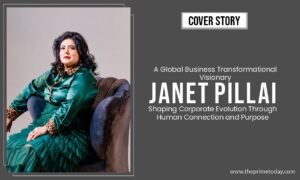
The evolution of modern corporate logistics requires strategic minds capable of moving beyond standard corporate initiatives to build enduring institutional legacies. Janet Pillai drives this comprehensive industry shift as the Founder and Chief Executive Officer of MLT Corporation, Articulate Management and Content Creator Jetsetting with Janet, which includes MLT Car Hire and Tours, A visionary, she is recognized widely as a business transformation leader. Bridging the gap between structured administrative policy and real-world execution is a distinct multi-disciplinary perspective that she applies. Hers is a unique career path. In it, she has successfully transitioned from high-level academia and government advisory roles into the fast-paced transportation and tourism sectors. As such, she brought a deep personal commitment to transport, culture, heritage, and professional development.
Connecting Strategic Vision with Human Legacy
Throughout a distinguished career spanning the past twenty-five years, she has earned numerous international accolades and academic awards in recognition of her expertise and industry contributions. Her notable achievements include receiving the King Chavez Sparks Visiting Professorship and the prestigious French Embassy Scholarship. She has also served as a Visiting Fellow at the University of Fort Hare, a Visiting Fellow at the world-renowned Smithsonian Institution in Washington DC, and a Visiting Professor at North Carolina Agricultural and Technical State University. These diverse international experiences allow her to infuse global management standards into localized operational frameworks, reshaping how medium-sized enterprises approach service delivery and scalable growth.
Directing Strategic Operations Across Borders
Janet applies her comprehensive management expertise across multiple premium business sectors, splitting her operational focus between the dynamic corporate hubs of Cape Town. Serving as the Chief Executive Officer and Founder of Articulate Management since August 2025, she oversees high-level business transformations from her base in the Western Cape. Her strategic reach also extends into digital media marketing through her freelance role as the primary content creator for Jetsetting with Janet, a platform she has utilized since August 2021 to market tourism, culture, and regional heritage across South Africa.
Her core operational foundation rests on her twenty-four-year tenure as the Founder and Chief Executive Officer of MLT Car Hire and Tours, which she has steered continuously since March 2002. In this major executive role, she takes absolute responsibility for general strategic management, key account development, and marketing implementation. She manages the company’s fiscal health by preparing precise annual budgets, generating monthly forecasts, and performing rigorous statistical analysis on weekly figures. She reviews monthly management accounts alongside her financial manager, analyzing detailed profit trends and regional costs per branch to implement advanced performance standards and robust business planning strategies across the entire automotive rental ecosystem.
Translating Public Policy into Corporate Strategy
Her exceptional command of business strategy and compliance stems from a rich history of public service and institutional governance roles throughout the Western Cape. She contributed her leadership skills to community development as a board member for the Sando Bursary Trust from 2023 to 2025, handling complex board administration and policy governance. Prior to her corporate ventures, she served from 1999 to 2002 as the Director of the Department of Arts, Culture, and Heritage for the Western Cape government. In this senior public role, she took charge of overall personnel management, policy development, legislative writing, and strict fiscal management for multiple vital statutory bodies across the region.
This deep understanding of administrative structure reflects her earlier academic management path at the University of Fort Hare, where she worked for over six years. She served as the Director of Development and Public Affairs from 1997 to 2000, managing international relations, donor engagement, and institutional public relations. Before that, from 1994 to 1997, she worked as a curator and visiting fellow for contemporary and indigenous collections in the Eastern Cape. In this role, she managed liberation archives, partnered with the CSIR for the National Cultureware project, and facilitated historic international archiving partnerships with both the University of Michigan and the University of Connecticut.
Advancing Boardroom Governance and Educational Excellence
Janet anchors her diverse executive portfolio with advanced certifications in institutional compliance, boardroom management, and modern corporate law. She completed the Level 5 Senior Management Service Program in Compliance and Governance through the Institute of Directors South Africa, mastering the principles of the King Code and company law. She also holds a postgraduate diploma in public relations, alongside a Master-grade certification in public administration from the Cape Administrative Academy, which emphasizes strict adherence to the Public Finance Management Act.
Her academic journey began at the University of KwaZulu-Natal, where she earned her Bachelor of Arts Honors degree in business cum laude, receiving the prestigious Vice Chancellor’s Award for Academic Excellence following her schooling at Woodhurst Secondary.
Pursuing Meaningful Impact Over Corporate Titles
Janet views her extensive executive career not as a quest for specific corporate titles, but as a continuous effort to create meaningful impact across diverse industries. Whether navigating high-level government policy, managing strategic corporate communications, promoting regional tourism, supporting vital healthcare initiatives, or building her own independent brands, she naturally gravitates toward complex organizational challenges. She realized early in her professional life that true business transformation requires much more than simply tweaking existing systems or introducing new digital tools. For her, real progress involves unlocking human potential, challenging outdated institutional habits, and helping global organizations evolve in ways that secure long-term value. What drives her current operations is the regular experience of seeing individuals and corporate teams achieve far more than they originally believed possible.
Listening and Challenging Conventional Thinking
She approaches business transformation by actively challenging conventional thinking, believing that meaningful corporate change always begins with deep, intentional listening. Before designing or proposing any operational solutions, she completely immerses herself in the target organization to understand its unique workforce, day-to-day culture, customer expectations, and long-term commercial aspirations. She relies on simple yet powerful questions to evaluate business health, asking teams what specific problems they are truly trying to solve, what foundational assumptions are currently limiting their market growth, and what strategic opportunities they might be overlooking.
She notes that the greatest transformation opportunities remain hidden within internal processes that have remained completely unchanged for years, simply because that is how the company has always done it. By combining cold performance data with genuine, open conversations across all levels of the workforce, she pinpoints the exact areas where operational innovation will deliver the greatest commercial impact. For her, successful transformation requires a delicate balance of challenging outdated management assumptions while maintaining deep respect for the structural strengths that already exist within the corporate ecosystem.
Cultivating Niche Markets Through Tailored Operations
She founded MLT Corporation in 2002 with the specific ambition to grow a national vehicle rental network grounded in deep corporate responsibility, mutual respect, and absolute operational integrity. Under her leadership, the organization achieved robust growth by rejecting transactional corporate methods in favor of personal contact, taking the time to know customers by name and intimately understand their specific operational needs. She expanded the company’s market share by developing highly specialized niche sectors, including MLT Shuttle Services and MLT Chauffeur Services. This focused approach provided corporate clients with custom-tailored transit solutions that standard fleet operations failed to deliver.
In 2015, she accelerated the corporate expansion strategy by launching MLT Tours to meet the evolving demands of corporate conference delegates and international tourists. This new venture expanded the brand’s footprint across Cape Town and the wider South African region, offering exciting and unconventional travel experiences driven by passion, high service standards, and a spirit of adventure.
Balancing Innovation with Operational Stability
Janet manages large-scale transformation initiatives by ensuring that innovation actively enhances operational excellence rather than disrupting it. She operates on the firm belief that corporate transformation works best when it remains completely intentional, structured, and perfectly aligned with the organization’s primary strategic objectives. She focuses intensely on establishing a highly stable operational foundation before introducing any new technical initiatives to the workforce.
Her teams systematically test new ideas through localized pilot programs, measure the concrete outcomes carefully, and scale up only the specific methods that deliver clear commercial value. At the same time, she maintains transparent communication across all departments so that every employee understands both the underlying purpose of the change and the practical benefits it will create. For her, transformation remains a continuous journey rather than a single corporate event, making the maintenance of institutional trust throughout that journey absolutely essential.
Essential Qualities for Leading Through Evolution
To navigate today’s rapidly evolving business environment, she highlights three essential qualities that every successful transformation leader must possess. The first quality is vision, which she defines as the distinct ability to see strategic opportunities that others cannot yet see and to inspire long-term confidence in that future. The second quality is adaptability, as the current pace of global market change demands corporate leaders who remain deeply curious, embrace continuous learning, and respond to disruption with operational agility rather than fear.
The third and most vital quality is empathy, because she recognizes that successful transformation is ultimately about people. She observes that leaders who genuinely listen to their workforce, communicate openly with stakeholders, and build daily trust create corporate cultures where innovation thrives naturally, and structural change becomes a shared opportunity rather than an internal threat.
Cultivating a Purpose-Driven Workplace Culture
She actively builds resilient organizational cultures through everyday leadership behaviors rather than relying on empty slogans on an office wall. She believes that people embrace structural change willingly when they feel deeply respected, included in the decision-making process, and personally empowered. To achieve this environment, she encourages open collaboration across diverse teams, creates structured opportunities for employees to contribute fresh ideas, celebrates small innovations, and ensures that continuous learning is recognized even when every specific experiment does not succeed.
Most importantly, she connects every operational change directly to a larger corporate purpose. When the workforce understands exactly why a transformation matters and how their individual contribution makes a difference, they transform into active participants rather than passive observers.
Building Bridges Across Diverse Global Industries
Rather than pointing to one single project as her crowning achievement, Janet believes her greatest professional milestone has been building strong bridges across entirely different industries and bringing diverse stakeholders together around shared commercial goals. Throughout her twenty-five years of leadership, she has helped develop vital strategic partnerships, strengthen deep organizational capability, expand regional market visibility, and create resilient platforms that support long-term economic growth, tourism, healthcare innovation, and entrepreneurship.
The measurable outcomes of her work include significantly stronger industry collaborations, increased international business opportunities, improved stakeholder engagement, and sustainable organizational growth. For her, the most meaningful measure of success remains the creation of stable management systems that continue delivering real value long after the initial project itself is complete.
Separating Strategic Value from Market Hype
Janet approaches the digital landscape with a firm conviction that technology should always serve corporate strategy rather than replace it. When evaluating the rapid influx of new software tools, she applies a strict commercial filter to determine which emerging technologies genuinely create business value versus those driven entirely by market hype. Before adopting any new digital system, she asks whether it directly improves the customer experience, increases overall operational efficiency, enables better executive decision-making, or creates measurable economic value. If a tool fails to meet these specific criteria, she classifies it as an attractive trend rather than a sound strategic investment. She acknowledges that artificial intelligence, automation, predictive analytics, and digital health technologies possess enormous potential, but stresses that they only deliver results when companies implement them with clear business objectives and strong internal governance.
Overcoming Resistance Through Early Participation
She manages the human side of corporate restructuring by recognizing that workforce resistance is often rooted in personal uncertainty rather than direct opposition to progress. To gain stakeholder trust and drive employee engagement during major transitions, she begins by engaging people early in the process, listening carefully to their concerns, and actively involving them in designing the final operational solutions. She operates on the principle that complete transparency builds long-term trust, while direct participation builds a deep sense of personal ownership over the new workflows. She observes that employees are far more likely to support large-scale transformation when they understand the underlying purpose behind the shift, see visible leadership commitment from executives, and experience early successes that demonstrate clear forward progress.
Redefining Capabilities in Times of Uncertainty
Leading organizations through periods of significant organizational change taught her one of her greatest professional lessons and fundamentally changed her approach to managing human capital. She realized that effective leadership is not about always having all the answers ready. Instead, true leadership requires creating clear direction when circumstances are highly uncertain, remaining calm under intense market pressure, and giving people the collective confidence to move forward together. This pivotal experience reinforced her belief that personal resilience, deep empathy, and transparent communication are not soft skills but are essential leadership capabilities that directly determine whether organizations emerge stronger from periods of systemic change.
Integrating Customer Outcomes with Internal Performance
She ensures that all transformation efforts remain intensely customer-centric while simultaneously improving operational efficiency and broader business performance. She insists that customers should never become an afterthought during intense corporate restructurings, asserting that every single strategic decision should ultimately improve the daily experience of the people the company serves. At the same time, she maintains that operational excellence enables organizations to deliver that high-quality experience consistently and sustainably over time. The most successful corporate transformations improve both customer outcomes and internal performance because these twin objectives function as interconnected priorities rather than competing interests.
Universal Principles for Sustained Success
Janet reflects on her extensive work across diverse industries and leadership environments, noting that three specific lessons consistently prove valuable regardless of the sector. First, she maintains that professional relationships matter far more than temporary business transactions. Second, she firmly believes that deep trust functions as every organization’s greatest competitive advantage in a shifting marketplace. Third, she emphasizes that real people, rather than mechanical processes, drive lasting corporate transformation. While technology continuously evolves, markets fluctuate, and industries face rapid disruption, she observes that organizations investing heavily in human talent, clear organizational purpose, cross-functional collaboration, and absolute integrity consistently create stronger long-term results.
Navigating Global Priorities and Purpose
Looking closely at global business trends that will shape organizational transformation over the next five years, she emphasizes that artificial intelligence will continue transforming daily operations. However, she argues that human-centered leadership will remain equally important to secure institutional balance. She identifies sustainability, digital healthcare, data-driven decision-making, cybersecurity, workforce wellbeing, and cross-sector collaboration as defining priorities for modern enterprises. For her, the specific organizations that succeed will gracefully combine technological innovation with active empathy, ethics, and clear organizational purpose. She notes that purpose gives a business clear direction beyond immediate financial performance, helping companies make better choices, build stronger internal cultures, attract exceptional corporate talent, and earn deeper customer loyalty. Furthermore, she argues that profitability and positive societal impact are not opposing objectives, as organizations that create genuine value for society often create greater long-term value for shareholders, with purpose providing the strategic compass that keeps transformation focused on sustainable success.
Mentoring the Executives of Tomorrow
To prepare the next generation of corporate executives for transformational change, she advises rising leaders to develop specific mental habits and emotional capabilities early in their careers. She urges them to stay curious and develop strong emotional intelligence alongside their technical expertise. She encourages them to learn to communicate clearly, think strategically, build meaningful relationships, and remain comfortable with market uncertainty. Most importantly, she reminds them that true leadership is never measured by how many people follow you, but by how many leaders you actively help develop, ensuring the future belongs to professionals who combine innovation with basic humanity.
Receiving the professional title of The Visionary Business Transformation Leader of 2026 reflects both her significant achievements and broad industry influence, says Janet. While she deeply appreciates awards because they acknowledge the collective hard work and the people who shared her professional journey, they do not represent the true legacy she seeks to leave behind. She hopes the business community remembers her as someone who helped complex organizations see possibilities where others saw obstacles, who successfully connected people across different industries to create new economic opportunities, and who proved that business can be both commercially successful and socially meaningful. If her daily work inspires future managers to lead with courage, integrity, curiosity, and compassion, while measuring success by the positive impact they create, she will consider that the greatest legacy possible. For her, transformation remains entirely about people. When companies empower their workforce to grow, innovate, and lead with purpose, they create organizations that thrive and communities that flourish over time.
Read Also: Connecting Continents of Care: How Deena Moustafa Translates Behavioral Science Into Global Hope