
Greg Fuller and the Blueprint of Precision: Merging Modern Construction with Real-Time Sustainability
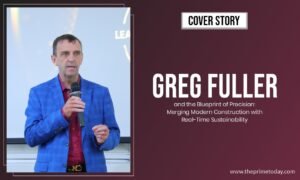
An exceptional understanding of both physical materials and economic realities is a prerequisite for the inspiring leadership that is transforming the real estate industries worldwide. Yet, these true visionaries in commercial development are rare. A rarer gem is Greg Fuller, the Founder and Chief Executive Officer (CEO) of Sure Growth Management Services. A LEED AP BD+C, PMP, PBA, and Expert Witness in Cost and Project Management are his credentials. That way, he brings to the global stage over forty years of hands-on construction expertise. He changes the fundamental concepts of the way developers view risk, quality, and progress. In his long career, he created a strong bridge where there had been a divide in between traditional engineering and forward-thinking sustainability. It is a discipline he has championed actively since 1992.
Today, at the cutting edge of global infrastructure, he operates. He does it by pursuing a Doctor of Business Administration in Construction Management. His current doctoral thesis focuses directly on the sustainability impacts on cost and program in construction within the United Arab Emirates. He openly invites global professionals and researchers to collaborate or assist in his current field studies in order to expand the reach of this vital field. By matching rigorous academic study with decades of hard-site experience, he transforms the way major networks forecast and build.
The Mechanics of Live Operations
Great projects often face delays because financial tracking remains slow and disconnected from everyday labor. To fix this, Greg developed proprietary management systems that track financial performance on residential towers down to a single per-unit basis. This granular approach provides development teams with true live visibility and accurate project forecasting. Alongside this setup, his specialized mobile application tracks actual current site progress on a live basis, which automatically feeds directly into the master program forecasting, monthly reporting, and the creation of accurate monthly applications.
He is currently adapting this robust cost model to track green credits inside the same multi-unit developments. This expansion allows corporate stakeholders to view proof of compliance and obtain distinct Green certifications with minimal administrative delay. Beyond the construction sector, he is tailoring this logic for the commercial retail market. This retail model gives large conglomerates live trend analysis and the ability to manage stocking requirements for every single storefront from a centralized head office. By viewing region and store-by-store detail of consumer trends, companies eliminate overstocking and understocking, reduce material waste, lower transport emissions, and introduce highly sustainable ordering practices across the supply chain.
The Educational Sandbox
Greg’s journey began very early. He had always been around building sites, and interested by them, and his parents forced him to go to university whereas he desired to get an apprenticeship, so he went to the University of NSW and did the Bachelor of Building, a degree that covered everything within construction, from all aspects of design (including of services for high rise structures), Solar Passive Design, surveying, Property valuation and management, Commercial management, Accounting, Structural engineering (first full two years of the degree in fact), Computing, Law, Acoustics, Thermal dynamics, various areas of physics and math, Town planning and even bricklaying. He wanted to be a Project Manager of the biggest projects. He managed to obtain the one cadetship on offer from Graeme Evans Construction – part of the largest Civil company in the Southern hemisphere at the time. He started as a purchasing officer and quickly managed to be given small projects to manage, with his first real project being a multistory carpark. In Australia, you work through from Contract Administration (QS) through to Project Management, where only a few countries in the world have you gain experience in both areas.
The Path of Quality and Adaptation
He became very good at the details side of things and was able to quickly spot inaccuracies within documentation and resolve the related situations in a quick manner. He achieved his status as a major project manager with achievements at Sydney International Airport Terminal expansion in 1990, and established the first construction project in the world to actively run a QA system and a functioning Safety Management System (both of which he developed and got running). From here, he ventured through other PM roles and moved to Canberra, where he established his own company and started actively working in the design of true Solar Passive House design – true sustainability in action. His number skills grew, and then, due to personal reasons took his kids to Country Tasmania in 2002 to raise them, further developing his commercial acumen. He met and married a Scot, and moved to the UK, where he worked for 10 years as a Commercial Manager, where he refined a unique development for preparing Bills of Quantities for Villas, and trying to push his input into Green strategies with companies that he worked for, although with little success. He was moved to Dubai by his company four years ago (although he managed their operations remotely from London for the year prior), and left two years ago to develop his own cost management system and start his own company, Sure Growth Management Services. During these two years, he has worked hard to obtain the relevant qualifications to formally pursue Green Consulting and build his network to enable credibility in the industry, to be able to approach the UAE government in ways to assist in their desire for net zero in 2050 in construction. The rest, as they say, is History. With his cost system and his App, he can manage green creds and emissions on a live scale through construction.
The System of Empowered Leadership
Greg believes that effective leadership is where you have educated and enabled others to instruct and manage work by a system of listening, understanding, showing, and educating them to give them the tools and the faith in themselves to achieve. If they can’t go do things without you, then you have been ineffective in leading the way. The idea of leading is to show the way, give the tools to achieve the goals, and enable those you show to have the chance to achieve it. He teaches others that if you don’t change, then you don’t grow, and if you don’t grow, you, in effect, go backward in the world, so he inspires them to think outside the box, so that growth becomes natural. He gives staff the chance to attempt things and make mistakes, so that they learn, and encourages them to think for themselves. He often gives tasks without all the information to force them to think for themselves, and give him the benefit of understanding how they think, and how they then attack the tasks. He encourages them to be the person who can interpolate results without all the information, rather than the person who requires everything in it’s box before they will even attempt it. If that means that you have to make assumptions, then you state exactly what they were, and often to give alternatives based on other possible assumptions – it forces active thought, which will bring about alternative ideas, which brings, in turn, innovation and change.
The Rigor of Data Analysis
As a business leader, he keeps up close with news and economic activity and trigger points, and use actual information to create his own forecasts (to which he forecast for Q4 last year to Q2 this year, that a major economic adjustment was going to occur that seriously would affect the UAE – this he forecast three years ago and never moved his dates or reasoning – only thing he got wrong was Iran invading the GCC countries, which has made things much more dire for the world at large and the GCC areas hit from the outfall of it all. Using various data, which includes advertised job vacancies (trend for needs for workers), project launches, payment deals, bank deals, car deals, sales of major goods, and of course, monitoring pricing of resale and off-plan for units and villas. He puts all this information in his data analysis set to come up with trends and reasoning. Then he analyzes possible changes of the target audience that he then needs to approach, and how he then approaches them. Data is his thing, and analyzing reasoning behind trends, not just believing what is printed or spouted by the real estate community as fact. His rules are
- Check everything,
- Be consistent in everything,
- Don’tbelieve anyone or anything; check it for yourself.
This puts him in front of the competition, as he doesn’t follow like a sheep; he sets his own path.
The Execution of Balanced Sustenance
Growing a successful organization requires resilience and adaptability. Scaling became difficult, as Greg quickly found that he needed to offer a high-end ERP and software solution to attract business, and to keep the security of his systems that he had developed over 40+ years. To do this, he needed to invest hugely in himself, as he found that raising capital for this was nigh on impossible, as investors think differently and did not and do not understand his business model, and how his system is not just different, but necessary. His strategy, therefore, changed to targeting smaller companies that are relying on antiquated systems based on Excel only, and no real strategy, rather than big business, which would actually have a greater benefit than the small businesses. This was achievable for him, and later, big business would follow. His values have never changed, and he won’t let them. His vision though, has had to have a few adjustments and turns in the road to go where he wants, but his target remains, just a different journey. Business leaders not only can influence, but do influence and have a responsibility to create positive influence to create sustainable value for customers, but that is not just environmentally sustainability, but social and economic also – if they don’t focus on a balance of all 3, then the system fails. They can influence by educating the Clients/stakeholders on the needs of the world and others, not just the Clients/stakeholders’ own perceived needs at the time – show them the effects of what they want on the future, and how their decisions will affect things long in the future (for themselves and affecting others). This is the best and greatest influence they can have on all stakeholders.
The Struggle for Local Credibility
There were many significant challenges Greg encountered throughout his entrepreneurial journey. Gaining recognition and credibility in the local industry has been huge for him to gain traction in his business, and these have taken many years to overcome (even prior to starting his own business), and a plan and dedication to build his brand and following. Education has been the biggest as here in the GCC, it is of utmost importance to have given pieces of paper to say what you can do, and his old pieces of paper of 40 years ago, they don’t recognise as relevant – this has been a long and structured journey to gain relevant accreditations that exceed local requirements to show the expertise he really have, such as expert witness status in commercial and project management fields. Completing his various green accreditations started in university in his early days, with looking at sun/shade issues in design, acoustics, thermal dynamics and solar passive design, to his now completing a doctorate in business administration in Construction Management – with his thesis highly tuned to his target of sustainability – ‘How sustainability affects cost and programme in construction in the UAE, and how to mitigate and manage it’ The second has been having the correct connections, which has taken five years of hard local work to build, and gateways are finally at a very good level where he has a recognized position in the industry at a level where others think of him as a leader in the field – very hard to achieve. These have taught him resilience, as has the financial constraints of developing this type of business.
The Principles of Open-Minded Leadership
Leadership, he has learned along the years by always keeping his mind open, looking at other ways to do things. Most of all, understanding that his way is not the only way and not necessarily correct, so look at other perspectives as much as possible, and understand that everyone has valuable input regardless of their background or position.
- Empathize with others
- Respect others
- Listen to others
- Look for as many perspectives as possible
- Analyze the data and come to logical and reasoned decisions.
To foster a culture of collaboration is to first ensure you are consistent in all you do, says Greg. Secondly, you need to listen to your staff, as they have valuable things to say, and should never feel scared to speak up or to disagree. Thirdly, he teaches others to look outside the box, as there is always another way to do things and different ways to look at it. Fourthly, he gives staff the tools to achieve their tasks in education and principles of logic and reasoning. Still, he also gives them the opportunity to try it for themselves without him giving them every step of the way. He gives them partial information to see how they deal with it, and forces them to think of solutions without everything spelled out in front of them. They need to make appropriate assumptions and spell them out in their approach, and come to fully reasoned results. Fifthly, he tries to understand how his team thinks so he can direct them in ways that they can excel. You follow this, then innovation will always follow.
The Foundations of Decision-Making
In an increasingly competitive market, there are certain principles that guide Greg’s decision-making when navigating complex business opportunities and challenges. Honesty and integrity come first. Open communication that is clear and understood by those you deal with. Ensure in your communication that you stand by the 5 W’s in communication: What, Where, When, How, and Why. You need a minimum of three on each side of communication for the correct discernment to be achieved. Be logical. Look at all aspects and perspectives, as one only limits the outcome to only suit that perspective, and there are always many.
The Truth in Data and AI
Over the next decade, Greg believes that business transformation will become driven by data and AI. Only when the data is correct will the AI be able to work properly, so there will be many misguided decisions being made. Garbage in gives garbage out. It will be a big learning curve for people to understand this ideology, as they fully believe output from the likes of ChatGPT, which unfortunately is only made from the inputted information and queries in the first place – if the questions are incomplete, or wrongly worded, then so will the output, not knowing what the output should be (hence why most use ChatGPT and similar) then they will see the results as factual all the time. Once this issue is overcome and failures remedied, then its use will become the norm and fully helpful. Still, it is the data that will be the driving force of business and the basis of decisions with accurately generated reporting. This is where his business thrives.
The Legacy of Change and Empathy
As a Founder and CEO, Greg hopes to leave behind a legacy of understanding that there are other ways to do things, and that systems develop as do methodologies and processes. He wishes people to be able to grow with these changes and keep innovating. Don’t just do what you always have. To grow, you need to change. To change means to understand. To understand, you have to listen. To listen means to have empathy.
Read Also : The AI Scaler of the Main Street – Shadman Zafar: Bringing Artificial Intelligence to the Real Economy