
A Techno-People Thought Leader – Ratnakumar Gorthi: Enhancing Human Experience and Guiding Business to Achieve Holistic Success
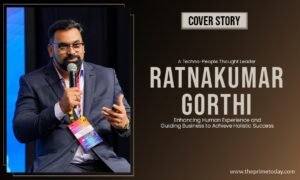
When it comes to the technology sector, some exceptional leaders’ journeys are so dynamic that they alter the course of the present to shape the way of the future. Ratnakumar Gorthi’s journey in technology is one of them. It began nearly three decades ago, driven by a deep fascination with technology’s ability to solve complex business problems. Throughout his career, he has had the privilege of working with global organizations to modernize engineering practices, accelerate digital transformation, and leverage emerging technologies such as Generative AI and intelligent automation to deliver measurable business value. Every organization, every client, and every engagement has reinforced one enduring belief: technology is truly meaningful only when it enhances human experiences and enables businesses to achieve their strategic objectives.
Early in his career, Ratnakumar recognized that technology projects rarely fail because of programming errors alone. More often, they fall short when business expectations, customer needs, quality, and execution are not aligned. This realization fundamentally reshaped his perspective and inspired him to view Quality Engineering as a strategic business discipline rather than merely a technical function. Over time, this evolved into a lifelong passion for transforming Quality Engineering (QE) into a powerful business enabler.
Coming from a modest background, he also experienced firsthand the transformative power of education and continuous learning. Every stage of his professional journey has been defined by a willingness to embrace emerging technologies, challenge conventional thinking, and continuously reinvent himself. From traditional software testing to automation, cloud engineering, DevSecOps, AI-driven Quality Engineering, and now Agentic AI, he has witnessed multiple waves of technological disruption, consistently choosing to view each as an opportunity to create greater impact rather than a challenge to overcome.
Today, Ratnakumar is motivated by far more than delivering successful projects. His passion lies in mentoring future leaders, building innovative engineering ecosystems, and helping organizations develop products and platforms that customers can trust. To him, quality is not simply a milestone before production; it is the very foundation upon which digital trust is built.
The Pivotal Moments of an Evolution
According to Ratnakumar Gorthi, the evolution of Quality Engineering closely mirrors the evolution of the software industry itself. When he began his career over three decades ago, testing was widely regarded as the final checkpoint before software release. Success was measured by the number of defects identified, and quality was largely reactive, isolated, and often perceived as a cost center.
Today, he believes the definition of Quality Engineering has fundamentally transformed. Modern Quality Engineering is no longer about validating software after it is built; it is about engineering quality into every business decision from the very beginning.
A pivotal phase early in Ratnakumar’s leadership journey had a profound impact on his philosophy. Although several large transformation programs were delivered on schedule and within budget, he observed that software meeting every documented requirement did not always meet the true expectations of its users. That experience reinforced a defining lesson: quality cannot be measured merely by the absence of defects, but by the confidence it creates among users, the business value it delivers, the operational resilience it enables, and the meaningful experiences it generates.
This realization transformed his leadership approach. He encouraged teams to think beyond test cases and automation scripts, shifting the focus from asking, “Did we build the software correctly?” to “Did we build the right solution for the customer?” At the outset of every engagement, he encouraged teams to understand the impact of the initiative on IT, business, and operations teams, as well as the intended business outcomes. This broader perspective consistently helped uncover innovative solutions that addressed critical business needs.
Another enduring lesson has been that technology alone rarely determines project success. Ratnakumar firmly believes that people, culture, communication, collaboration, and leadership are equally important. Throughout his career, he has observed that the highest-performing teams are not necessarily those with the most talented individuals, but those united by a shared purpose, committed to continuous learning, built on trust, and focused on solving customer problems rather than operating within organizational silos.
This philosophy continues to influence every leadership role he undertakes. Whether building global Quality Engineering practices, leading large-scale managed services, mentoring future leaders, or driving AI-led transformation, he consistently emphasizes curiosity, accountability, empathy, innovation, and customer centricity. Looking ahead, Ratnakumar believes that in the era of autonomous enterprises and Agentic AI, Quality Engineering will play an even more strategic role, serving as the bridge between technology innovation and digital trust while ensuring intelligent systems remain reliable, ethical, secure, transparent, and aligned with human values.
The Equilibrium of Innovation and Operational Discipline
Ratnakumar Gorthi believes that innovation without execution creates ideas that never scale, while operational discipline without innovation ultimately limits long-term growth. His leadership philosophy is built on successfully balancing these two complementary forces, ensuring that organizations achieve both operational excellence and continuous innovation.
According to Ratnakumar, every successful transformation begins with establishing strong governance, clearly measurable outcomes, and standardized delivery practices. Once this foundation is firmly in place, teams gain the confidence to explore emerging technologies such as Generative AI, intelligent automation, predictive analytics, and autonomous testing without compromising execution quality or business objectives.
A key principle that guides his approach is the “pilot, prove, and scale” model. He believes every innovative idea should first demonstrate measurable business value before being adopted on a broader scale. This approach minimizes implementation risk while fostering a culture of creativity and experimentation. Equally important is the development of reusable accelerators, knowledge repositories, and AI-powered assets that create value across multiple engagements rather than addressing isolated challenges.
Ratnakumar also emphasizes that innovation should never be confined to a dedicated innovation team. Instead, it should become a shared responsibility across the organization. He firmly believes that some of the most impactful ideas originate from engineers working directly with clients, as they possess the deepest understanding of real-world operational challenges. As a leader, his role is to create an environment where such ideas are encouraged, objectively evaluated, and transformed into scalable business solutions.
He views Generative AI not as a replacement for engineering talent, but as an intelligent collaborator that enhances human creativity, accelerates decision-making, automates repetitive tasks, and enables engineers to focus on solving higher-order business problems. This evolution empowers Quality Engineering professionals to transition from execution specialists to strategic business advisors.
Ultimately, Ratnakumar believes that balancing innovation with operational discipline requires a long-term perspective. While technology will continue to evolve at an unprecedented pace, organizations that consistently combine disciplined execution with continuous innovation will remain resilient in the face of disruption. His enduring objective has been to build organizations where operational excellence creates the confidence to innovate, and innovation, in turn, continuously strengthens operational excellence.
Building Trusted Digital Enterprises
Ratnakumar Gorthi has long believed that every major technological shift creates two kinds of organizations, those that react to change and those that shape it. When Generative AI began demonstrating its ability to understand natural language, generate code, analyze vast volumes of information, and automate knowledge-intensive activities, he immediately recognized that it represented far more than another automation technology. In his view, it marked the beginning of a fundamental transformation in the way software would be designed, tested, deployed, and continuously improved.
He observed that Quality Engineering has traditionally involved several activities requiring deep analytical thinking while consuming significant manual effort. Requirement analysis, test case design, traceability, documentation, defect triaging, automation script generation, impact analysis, and release readiness assessments are intellectually demanding yet often repetitive. His vision was never to replace engineers with AI, but to position AI as an intelligent engineering partner that eliminates repetitive work while enabling professionals to focus on creativity, business problem-solving, innovation, and customer-centric thinking.
This conviction inspired Ratnakumar to champion AI-powered Quality Engineering solutions well before widespread enterprise adoption. Working with multidisciplinary teams, he explored how Large Language Models could analyze business requirements, understand user stories, generate comprehensive test scenarios, recommend automation strategies, improve requirement traceability, and accelerate Quality Engineering activities across the software development lifecycle. More recently, that vision has evolved into Agentic AI, where intelligent agents collaborate autonomously, execute specialized engineering tasks, learn from outcomes, and continuously refine their recommendations.
The journey, however, was not without challenges. Organizations initially questioned the reliability of AI-generated outputs, governance mechanisms, security controls, and intellectual property protection. Another equally significant challenge was helping engineering teams transition from traditional testing approaches to AI-assisted engineering.
These concerns were addressed through responsible AI practices, human validation checkpoints, robust governance frameworks, and continuous learning programs. Rather than replacing engineers, AI became a productivity multiplier that enhanced engineering capability. For Ratnakumar, the most important lesson has been that successful AI adoption depends as much on organizational change management as it does on technology.
Looking ahead, he believes Generative AI represents only the first chapter of a much larger transformation. The future, he envisions, belongs to autonomous, context-aware engineering ecosystems where intelligent agents collaborate seamlessly with human experts. In this evolving landscape, Quality Engineering professionals will increasingly become orchestrators of intelligent systems, ensuring AI delivers outcomes that are accurate, secure, ethical, and aligned with business objectives. Ultimately, Ratnakumar believes the organizations that will lead the future are not those that simply adopt AI tools, but those that successfully combine human judgment, domain expertise, engineering excellence, and responsible AI governance to build trusted digital enterprises.
A Success Built on Responsible Innovation
Ratnakumar Gorthi believes that quality and sustainability naturally complement one another because both are fundamentally focused on creating long-term value. As organizations increasingly prioritize Environmental, Social, and Governance (ESG) objectives, he believes that Quality Engineering must evolve beyond ensuring software reliability to become a strategic contributor to responsible business transformation.
His approach integrates sustainable engineering practices by optimizing test execution, reducing redundant environments, improving infrastructure utilization, promoting automation-first strategies, and validating digital accessibility. In addition, responsible AI governance and ethical testing practices have become integral components of modern Quality Engineering.
Historically, software quality was measured primarily through reliability, performance, functionality, and security. While these dimensions remain essential, Ratnakumar believes that modern digital products must also demonstrate responsible resource utilization, accessibility, ethical AI behavior, transparency, regulatory compliance, and operational sustainability. In his view, quality should contribute not only to business success but also to broader societal progress. This philosophy inspired him to champion ESG-centric Quality Engineering frameworks that embed sustainability considerations throughout the software development lifecycle.
From an environmental perspective, he sees significant opportunities for Quality Engineering to optimize test execution strategies, eliminate redundant environments, improve infrastructure efficiency, encourage cloud optimization, and leverage intelligent automation to reduce unnecessary computational workloads. Collectively, these initiatives contribute to lower energy consumption and improved digital sustainability.
The social dimension focuses on creating technology that is inclusive, accessible, and trustworthy. Ratnakumar advocates for validating accessibility standards, minimizing algorithmic bias, enhancing digital experiences for diverse user groups, and ensuring AI-driven systems operate fairly across different demographics. Equally important is governance. As AI becomes increasingly embedded within enterprise ecosystems, he emphasizes the need for robust frameworks covering explainability, accountability, privacy protection, regulatory compliance, cybersecurity, and ethical decision-making, with Quality Engineering serving as the independent assurance function before intelligent systems are deployed at scale.
Looking ahead, Ratnakumar believes ESG will become inseparable from Quality Engineering. Organizations will increasingly evaluate digital products not only by how efficiently they perform but also by how responsibly they operate. He believes Quality Engineering professionals will play a defining role in ensuring technology remains both innovative and sustainable. Ultimately, he sees sustainable engineering not as a balance between business objectives and societal responsibility, but as the recognition that long-term business success is built on responsible innovation.
An Efficiency-Centered Strategic Mindset
As he delivered cost optimization results of up to 50%, Ratnakumar Gorthi believes that cost optimization should never be viewed simply as cost reduction. Instead, it is about maximizing business value by eliminating inefficiencies rather than reducing organizational capability. Throughout his career, he has consistently approached cost optimization as a value creation exercise rather than a budget exercise. While location strategies and delivery pyramid optimization can certainly reduce costs, he believes sustainable value is created through Lean initiatives, automation of repetitive and time-bound activities, risk-based testing, parallel execution of independent tasks, and the standardization of tools and engineering processes.
According to Ratnakumar, every successful transformation begins with understanding where an organization truly creates value. His approach starts with a comprehensive assessment of delivery processes, operating models, governance frameworks, engineering practices, workforce utilization, automation maturity, and technology landscapes. Rather than asking where costs can be reduced, he focuses on identifying unnecessary complexity, an approach that often uncovers improvement opportunities beyond the reach of traditional financial analysis.
Lean thinking has remained central to his philosophy. Activities that do not directly contribute to customer outcomes should be eliminated, simplified, standardized, or automated, enabling engineering teams to devote more time to innovation, customer engagement, and strategic problem-solving. He also believes automation delivers its greatest value only after processes have been simplified; otherwise, organizations merely automate existing inefficiencies.
Risk-based Quality Engineering has been another key enabler of sustainable efficiency. By aligning testing intensity with business criticality, operational risk, customer impact, and regulatory requirements, organizations can optimize resources while maintaining confidence in release quality.
Ratnakumar believes Generative AI has further accelerated this transformation. AI-powered requirement analysis, intelligent test generation, predictive impact assessment, autonomous documentation, defect clustering, and engineering copilots significantly improve productivity while enabling experienced engineers to focus on architecture, innovation, business consulting, and customer engagement. He also emphasizes that cost optimization should never come at the expense of talent. Continuous upskilling ensures higher-skilled teams deliver greater business value with increased efficiency.
For Ratnakumar, quality and efficiency are not competing priorities but complementary outcomes. Organizations with mature Quality Engineering capabilities consistently reduce operational costs by preventing production failures, minimizing rework, accelerating releases, enhancing customer satisfaction, and strengthening business resilience. In today’s digital economy, he believes operational excellence is measured not by how little organizations spend, but by how intelligently they invest to build sustainable competitive advantage, a philosophy that has guided every transformation initiative throughout his career.
Insights on Workforce Mobility and Organizational Resilience
Ratnakumar Gorthi considers leading large-scale workforce transitions across global organizations to be one of the most rewarding aspects of his professional journey. While such initiatives are often defined by processes, governance models, knowledge transfer plans, and technology enablement, he believes that successful transitions are fundamentally about people. In his experience, technology may enable transformation, but it is people who ultimately determine whether that transformation succeeds.
According to Ratnakumar, every transition brings a degree of uncertainty. Employees naturally question how their roles will evolve, clients seek assurance that service quality will remain uninterrupted, and leadership teams focus on maintaining business continuity. Successfully balancing these expectations requires far more than effective project management. It demands empathy, transparency, and trust.
One principle that has consistently guided his leadership is the belief that communication is the strongest catalyst for organizational resilience. When people understand not only what is changing, but also why the change is necessary and how they can contribute to future success, resistance gradually gives way to engagement. Throughout numerous transitions, Ratnakumar has invested significant time in open dialogue, structured onboarding, leadership connects sessions, mentoring, and continuous feedback. These initiatives have helped transform uncertainty into confidence and change into opportunity.
He strongly encourages professionals to become continuous learners rather than specialists limited to a single technology or methodology. In his view, engineers who combine expertise in business processes, customer expectations, industry domains, data, AI, and emerging technologies are better equipped to solve complex business challenges from multiple perspectives.
Ratnakumar also believes that effective leadership during periods of transition requires balancing performance with compassion. Leaders who demonstrate empathy without compromising accountability foster stronger engagement and build higher-performing teams.
Looking ahead, he believes organizational resilience will increasingly be defined by adaptability rather than size. Enterprises that cultivate continuous learning, encourage cross-functional collaboration, embrace AI responsibly, and empower their people to innovate will be best positioned to navigate future disruptions and achieve sustainable success.
Cultivating Innovation-Driven Collective Culture
Ratnakumar Gorthi considers working with talented professionals across India, the United States, Europe, Japan, New Zealand, and Australia to be one of the greatest privileges of his career. These global experiences have strengthened his conviction that diversity is one of the most powerful drivers of innovation. At the same time, he believes that diversity alone does not automatically lead to better outcomes. It requires inclusive leadership that transforms varied perspectives, experiences, and ideas into collective intelligence.
His leadership approach begins by establishing a common purpose. Regardless of geography or cultural background, every team member should have a clear understanding of the business problem being solved, the value being created for customers, and the outcomes expected by the organization. According to Ratnakumar, when people unite around shared objectives, cultural differences naturally become strengths rather than barriers.
While technology has significantly enhanced global collaboration, he believes that human relationships remain equally important. He consciously invests in building trust beyond project discussions by understanding local perspectives, respecting cultural traditions, celebrating team achievements, and recognizing individual contributions. In his experience, these thoughtful yet simple practices foster stronger relationships and enable more effective collaboration across geographically distributed teams.
Looking ahead, Ratnakumar believes cultural intelligence will become just as valuable as technical expertise in an increasingly connected world. Future leaders must be capable of bringing together diverse teams around common goals while respecting the individuality each person contributes. He views inclusive leadership not merely as a leadership competency, but as a strategic business advantage. For him, true success is measured not by how effectively people adapt to one culture, but by how successfully leaders create an environment where every culture contributes to innovation and collective success.
Creating Lasting Business Value
During a complex enterprise transformation, Ratnakumar Gorthi and his team developed a proactive delivery risk management model designed to predict project risks well before they impacted delivery timelines. The model consolidated multiple delivery parameters, including the testing team’s historical productivity, resource availability, test case failure rates, scope changes, target completion dates, known issues, prerequisites, project dependencies, and daily execution progress. Using these inputs, it generated dynamic burn-down charts and predictive analytics that highlighted potential risks, anticipated delays, and the likely completion date if identified issues remained unresolved.
Rather than relying solely on conventional testing reports, the model provided stakeholders with proactive, data-driven insights that enabled more informed business decisions. Its predictive capabilities challenged several assumptions that traditional status dashboards had failed to identify, allowing project teams to address high-impact risks well before production deployment. As a result, potential business disruptions were avoided, release stability improved significantly, and delivery confidence increased across the program.
More importantly, the initiative strengthened the client’s trust in the team’s ability to provide strategic guidance rather than simply reporting testing progress. For Ratnakumar, the experience reinforced one of his strongest professional convictions: the future of Quality Engineering lies not merely in identifying defects, but in predicting risks before they become business issues.
He believes that as Artificial Intelligence, predictive analytics, and advanced engineering intelligence continue to evolve, Quality Engineering professionals will increasingly transition from execution-focused specialists to trusted business advisors. By combining predictive insights with engineering expertise, they will enable organizations to make better-informed decisions, improve delivery confidence, and proactively mitigate risks—moving from retrospective reporting to intelligent, forward-looking decision support that creates lasting business value.
Constant Innovation at a Strategic Level
Ratnakumar Gorthi believes that the evolution of managed services has fundamentally transformed client expectations. Organizations today no longer seek partners who simply execute predefined tasks. Instead, they expect strategic advisors who can simultaneously deliver operational excellence, accelerate innovation, and prepare them for future business challenges. In his view, meeting these expectations requires striking the right balance between disciplined execution and continuous transformation.
His approach begins with operational discipline. According to Ratnakumar, clients must have complete confidence that delivery commitments will be consistently met through strong governance, well-defined KPIs, proactive risk management, intelligent automation, and transparent reporting. Establishing this stable operational foundation creates the credibility required to introduce innovation without disrupting ongoing business operations.
However, he firmly believes that innovation cannot be treated as a separate initiative that starts only after delivery stabilizes. Instead, it must be embedded into the operating model itself. Across client engagements, he advocates dedicated innovation forums, continuous improvement programs, reusable engineering assets, AI-powered accelerators, and periodic technology assessments. These practices enable delivery teams to identify modernization opportunities while consistently meeting short-term business commitments and service expectations.
Ratnakumar also believes that innovation should become a continuous journey rather than an occasional intervention. By integrating emerging technologies, standardized engineering practices, and a culture of continuous improvement into everyday delivery, organizations can simultaneously enhance operational efficiency and create long-term strategic value.
Ultimately, he believes the future of managed services lies in building self-improving delivery ecosystems where operational excellence and innovation continuously reinforce one another. The most valuable transformation partners, in his view, will be those who help clients successfully achieve today’s business objectives while proactively preparing them for tomorrow’s opportunities and sustaining competitive advantage in an increasingly dynamic digital landscape.
An Environment of Design Thinking and Constant Improvements
Ratnakumar Gorthi believes that innovation rarely encounters resistance because people dislike new ideas. More often, resistance stems from uncertainty, competing priorities, or the fear of disrupting established ways of working. In his view, successful innovation begins with leadership rather than technology, creating an environment where people feel confident to embrace change and challenge conventional thinking.
He encourages teams to adopt a structured design thinking approach by placing customer needs at the center of every discussion. Instead of asking, “What technology should we implement?” the conversation begins with a more fundamental question: “What problem are we trying to solve?” According to Ratnakumar, this subtle but powerful shift ensures that innovation remains firmly focused on business outcomes rather than technological novelty.
Another principle that has consistently shaped his leadership is encouraging teams to develop an unconstrained view of opportunities. He believes that the number and quality of innovative ideas increase significantly when people are empowered to think beyond existing limitations and conventional approaches. Equally important is fostering a culture where curiosity is celebrated, intelligent risk-taking is encouraged, and individuals feel comfortable challenging assumptions, proposing unconventional ideas, and learning from unsuccessful experiments. In his experience, continuous improvement becomes sustainable only when learning itself is recognized as an achievement.
Ratnakumar also advocates starting small and scaling intelligently. Pilot initiatives provide teams with the opportunity to experiment, measure outcomes, learn from experience, and demonstrate tangible business value before broader implementation. These early successes build organizational confidence and encourage wider participation in innovation.
Looking ahead, he believes that as Artificial Intelligence continues to reshape software engineering, organizations that combine design thinking, collaborative leadership, and continuous learning will consistently outperform those that rely solely on technology adoption. For Ratnakumar, innovation is ultimately a cultural capability, not merely a technical one, and it is this culture that enables organizations to continuously adapt, improve, and thrive.
Positive and Lasting Difference of the True Success
Reflecting on more than three decades of professional experience, Ratnakumar Gorthi considers himself fortunate to have worked alongside exceptional colleagues, inspiring leaders, and visionary clients across organizations. While each organization has contributed uniquely to his professional growth, he believes the principles that have guided his journey have remained remarkably consistent.
The first is integrity. In Ratnakumar’s view, technology may evolve continuously, but trust remains the foundation of every enduring relationship. Whether working with clients, colleagues, or business partners, credibility is earned through transparency, accountability, and consistently delivering on commitments.
The second is continuous learning. He believes that remaining relevant in a rapidly evolving technology landscape requires embracing change with curiosity rather than hesitation. Consequently, he encourages young professionals to become lifelong learners, emphasizing that future careers will be shaped not by what individuals know today, but by their ability to continuously learn, adapt, and grow.
The third guiding principle is customer-centric thinking. Every engineering decision, according to Ratnakumar, should ultimately enhance customer outcomes, strengthen business resilience, or create measurable value. Technical excellence is indispensable, but it delivers its greatest impact only when aligned with broader business strategy.
Finally, he firmly believes in purposeful leadership. Leadership, in his philosophy, is not defined by titles, organizational hierarchy, or individual accomplishments. Instead, it is measured by the number of people a leader inspires, mentors, and empowers to surpass their own achievements. Watching talented professionals evolve into confident leaders has been one of the most fulfilling aspects of his career.
Looking toward the next decade, Ratnakumar believes Quality Engineering is entering one of the most transformative periods in its history. As Artificial Intelligence automates routine activities and autonomous engineering systems become mainstream, the role of Quality Engineering leaders will extend well beyond technology delivery. They will become custodians of digital trust, responsible AI adoption, sustainable engineering, and customer confidence.
For Ratnakumar, true success has never been defined by the systems built, but by the positive and lasting difference those systems make in the lives of businesses, customers, and society.