
Sifiso Gasa Stanley: The HR Leader Putting People at the Centre of Business Performance
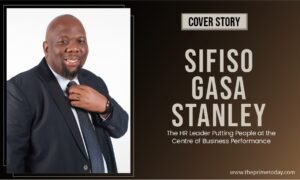
From talent development and workforce planning to culture and leadership, his career reflects a belief that people strategy belongs at the heart of business strategy
Human Resources is often asked to solve problems that begin with people. Finding the right talent, developing leaders, managing employee relationships and helping a workforce adjust to change all require an understanding of how people think, work and respond. For Sifiso Gasa Stanley, that understanding was formed early in life, when his natural ability to connect with people sparked his interest in Human Resources.
Born in KwaZulu-Natal, South Africa, Sifiso took that natural interest into formal study, completing a National Diploma in Human Resources Management at the University of Johannesburg. In 2001, he began his HR career, taking his first steps into a profession that would become the foundation of his working life.
The years that followed took him through the Engineering, Private Security and Logistics sectors. Each industry brought different workplaces, people and challenges, giving Sifiso the opportunity to learn how people shape organisations in very different settings. Over time, these experiences helped him build a strong track record in strategic people leadership.
His learning continued alongside his professional growth. Sifiso went on to earn a BCom Honours degree from the University of Johannesburg and later completed an MBA at Wits University. He also became a registered Chartered Human Resource Professional (CHRP) with the South African Board for People Practices (SABPP).
His career led him to Röhlig-Grindrod, where he has spent the past 11 years and now serves as Chief Human Resources Officer: Africa and Middle East, leading the strategic human capital agenda. His responsibilities span talent management, leadership development, employee relations, culture transformation and workforce strategy, with a clear focus on strengthening organisational performance.
Alongside his career, Sifiso is a husband and proud father of one. More than two decades after entering HR, the quality that first attracted him to the profession remains at the heart of his work: the ability to connect with people.
Where the Journey Began
A career in Human Resources can take determine long before someone fully understands what the profession involves. For Sifiso, those early experiences came through situations that placed him between people, where listening, understanding different perspectives, and helping others find common ground gradually formed his interest in working with people.
That interest began to take clearer form at school, where he was elected to serve on various committees, many of which required him to act as a bridge between students, parents, and teachers. These experiences strengthened his interest in understanding people, supporting their growth, and helping them achieve their potential, ultimately drawing him towards a career in Human Resources.
At the time, he was not particularly familiar with Human Resources as a career. However, he knew he wanted a profession that centred on human interaction and development, and Human Resources provided the ideal platform. His aspiration was to contribute to the transformation and growth of individuals by unlocking their innate abilities and strengths, with the belief that empowered people enable organisations to achieve their purpose and deliver on their mission.
This interest was honed as he undertook more research while at school on what the HR profession was all about.
That early interest in people led him into sectors such as shipping and heavy engineering, where he gained firsthand insight into how the relationship between people and business outcomes forms organisations under real workplace demands.
Lessons from Demanding Industries
Shipping and heavy engineering taught Sifiso how closely safety, productivity, people strategy, and business performance are connected when operational decisions carry immediate consequences. These environments also showed him how strong relationships build trust, improve decision-making, and help organisations respond more effectively to challenges.
One of the most valuable lessons he has gained from working across different industries is the importance of building strong relationships. Effective relationships provide access to diverse perspectives, enabling better problem-solving and more informed decision-making when addressing business challenges.
Strong relationships improve organisational agility by creating opportunities to engage stakeholders beyond formal structures and respond more quickly to changing business needs. They build the trust and buy-in needed to introduce new ideas, drive change, and execute strategy effectively. Ultimately, effective relationship management becomes a key enabler of sustainable business performance and organisational success.
To him, safety and productivity are fundamental enablers of overall business performance. A safe work environment provides the foundation for employees to execute the organisation’s strategy effectively, while productivity ensures that business objectives are achieved sustainably.
Throughout his career, Sifiso has seen people as central to organisational success and believes HR must go beyond people management to actively drive business performance. This means developing performance frameworks that align individual and team outcomes with the metrics most critical to the organisation’s strategic goals.
By aligning individual and team performance with business objectives, HR can create that high-performance culture that is so ever desirable. That understanding of performance also deepened Sifiso’s view of culture, particularly how accountability shapes employees’ experience of an organisation in high-pressure environments.
Building Accountability Through Culture
When pressure becomes part of everyday work, culture becomes visible through the way an organisation responds to people. Expectations have to be clear, performance has to be addressed, and employees also need to understand what behaviours the organisation values. For Sifiso, accountability begins with those everyday choices.
Culture plays a critical role in driving accountability through the consistent application of performance standards and the management of substandard performance. An organisation’s culture is reflected in how it responds to both high and low performance, as well as how consistently it addresses behaviours that are misaligned with its values.
Where the prevailing culture does not support accountability, performance, and values-based conduct, a deliberate cultural transformation may be required, including the redefinition and reinforcement of organisational values. Ultimately, culture should reward behaviours that advance organisational success and decisively address conduct that undermines its standards and expectations.
The same relationship between culture, expectations, and behaviour also influences how HR frameworks are experienced within an organisation. Policies may establish the structure, but their value depends greatly on how they are applied in everyday situations.
Taking HR Beyond Policy
Every organisation needs policies to create a degree of structure and consistency. The challenge comes when those policies have to work within changing business conditions, where employees and leaders still need room to think, experiment, and respond to circumstances as they arise.
Policies are essential in providing structure, governance, and consistency within an organisation. However, they should not create an environment of rigidity where innovation, experimentation, and free thinking are discouraged. To remain effective, policies must be continually reviewed and recalibrated to ensure they remain relevant in an evolving business and societal landscape.
Ultimately, culture serves as the safeguard that brings policies to life, ensuring they are not merely documents on paper, but practical frameworks that guide behaviour, discourage undesirable conduct, and promote consistency in decision-making and execution across the organisation.
For Sifiso, this practical relationship between policy and culture is also part of a larger question about how organisations build capability. Once HR becomes closely connected to how an organisation performs, the quality of the people it attracts, develops, and retains becomes central to the strength of the business.
Making Talent a Competitive Advantage
For African organisations, the talent question carries particular significance. Building a strong workforce requires attention at several stages, from attracting capable people to developing their skills and creating reasons for them to continue growing within the organisation.
Sifiso believes African organisations must place a deliberate focus on nurturing talent. This requires implementing targeted interventions to attract high-calibre individuals, investing in their development, and recognising and rewarding exceptional performance. Equally important is the continuous development and recalibration of skills to ensure employees remain relevant and can sustainably monetise their capabilities, both within and beyond the organisation.
Such investments demonstrate a genuine commitment to people and position organisations as employers of choice in increasingly competitive talent markets. When executed effectively, a strong talent strategy creates a level of organisational capability and institutional knowledge that is difficult for competitors to replicate.
This inimitability becomes a distinct and sustainable source of competitive advantage, enabling long-term business success while contributing meaningfully to the broader growth and development of Africa’s workforce.
For that kind of talent strategy to work effectively, HR also has to understand the business closely enough to participate in decisions at the highest level. This makes the relationship between the Chief Human Resources Officer and the executive leadership team particularly important when the organisation is moving through growth, change, or uncertainty.
When HR Sits at the Leadership Table
Executive leadership teams often have to make difficult decisions with incomplete information, competing priorities, and considerable pressure around them. In those moments, the relationship between the CHRO and the rest of the leadership team can influence how effectively people, risk, governance, and business priorities are brought together.
For Sifiso, a strong partnership is built on a foundation of collaboration, trust, psychological safety, and mutual vulnerability. It requires HR leaders to develop a deep understanding of the challenges, frustrations, and business realities facing the executive leadership team and to proactively seek solutions that enable their success.
Effective partnership goes beyond the application of policies and procedures; it involves balancing governance with pragmatism and exercising sound judgement in support of business objectives. HR should be viewed as a trusted advisor that helps leaders navigate complexity, mitigate risk, and achieve sustainable organisational outcomes.
The most impactful HR partnerships are those that challenge constructively, support authentically, and create an environment where leaders feel empowered to address difficult issues while remaining aligned with organisational values and strategic priorities. That close connection with business realities becomes especially important when organisations have to plan for skills that take years to develop. In sectors where technical expertise is scarce, workforce planning becomes a question of building capability well before the need becomes urgent.
Growing the Talent Pipeline
When technical expertise is difficult to find, organisations have to think carefully about where their future capability will come from. Hiring from the outside can address an immediate requirement, but building people internally can create continuity and a deeper understanding of the organisation’s needs.
Sifiso believes organisations should place a deliberate emphasis on developing home-grown talent by strengthening their talent pipeline through entry-level programmes such as graduate development initiatives, internships, and structured early-career pathways.
A robust and practical succession planning process is equally critical. Succession plans should be supported by clear, actionable development interventions that translate into personalised development plans for employees identified as top and high-potential talent.
Retaining high-potential talent is just as important as developing it. As employees become increasingly skilled, experienced, and accomplished, they inevitably become more attractive to competitors. Organisations must therefore invest not only in their professional growth but also in their overall wellbeing, engagement, and career fulfilment.
Creating an environment where talented individuals feel valued, challenged, and supported significantly enhances retention.
Organisations that successfully attract, develop, and retain home-grown talent create a sustainable competitive advantage. Such talent pools are difficult for competitors to replicate and provide the organisational capability, continuity, and leadership depth required to drive long-term business performance and growth.
Developing that leadership depth also requires a certain approach to performance. For Sifiso, the ability to lead people effectively comes from holding high standards while remembering the human beings behind those standards.
Leading with Performance and Empathy
Managing performance becomes more complex when teams bring different generations, cultures, experiences, and expectations into the same workplace. Leaders have to understand those differences while still creating a shared standard for performance and conduct.
In Good to Great, Jim Collins defines Level 5 Leadership as a combination of personal humility and professional will. This philosophy resonates deeply with Sifiso. While he is passionate about driving performance and accountability, he equally believes that success is best achieved when people are treated with dignity, compassion, and respect.
Being performance-driven should never make a leader less human.
That belief becomes particularly relevant as employees’ expectations of work continue to change. Flexibility, wellbeing, purpose, and career growth have become increasingly important considerations, creating another challenge for organisations trying to respond to their people while remaining commercially disciplined.
Responding to a Changing Workforce
The expectations employees bring into the workplace continue to evolve, and organisations have to keep pace with those changes while remaining focused on the realities of running a business. For Sifiso, this requires leaders to understand the pace of change and create an environment that can respond to it thoughtfully.
He believes organisations need to recognise that change is happening at the speed of thought. The true differentiator is how quickly and effectively an organisation responds to it.
This requires creating an environment that supports the needs of the modern workforce, where employees increasingly value flexibility, meaningful work, and clear opportunities for both personal and professional growth. A well-designed change management approach that addresses these evolving expectations becomes a critical enabler of organisational agility.
The workplace is also being reshaped by another force that is changing how people work: digital technology and artificial intelligence. As those tools become increasingly present in everyday work, Sifiso believes HR leaders have an important responsibility in protecting the qualities that make human contribution distinctive.
Protecting the Human Element
As technology changes the way organisations operate, some capabilities become even more valuable because they depend on how people relate to one another. For Sifiso, these human qualities remain central to the way organisations function, regardless of how advanced their digital tools become.
The enduring value that people bring to organisations lies in their uniquely human capabilities, the ability to build meaningful relationships, collaborate effectively, innovate, and solve complex problems. While technology continues to transform the workplace, these social and interpersonal skills remain critical differentiators.
Those capabilities also provide a useful way of thinking about how organisations measure the contribution of their people. For Sifiso, some of the most valuable indicators are closely connected to whether employees are growing, staying, and remaining engaged with the organisation.
The Metrics Which Matter
People metrics can help business leaders understand what is happening within the workforce and how that connects with organisational results. Sifiso places particular value on indicators that show whether an organisation is developing its people and retaining the capability it has built.
For him, talent development and growth, particularly through mentoring and coaching, are important measures. Talent retention is another key indicator, alongside positive levels of employee engagement.
These areas reflect the health of an organisation’s people capability and provide leaders with a clearer view of whether employees are developing, remaining with the business, and staying engaged in their work.
The focus on development brings his journey back to where it began, with the belief that people can grow when their abilities are recognised and given the right opportunity. For the emerging HR professionals who will eventually lead organisations across Africa, that belief comes with a set of qualities he considers essential.
What the Next Generation Needs
The future of HR will require professionals who can work with changing expectations, understand business realities, and continue learning as workplaces evolve. For emerging HR professionals across Africa who aspire to become strategic CHROs, Sifiso believes the foundation has to begin with how they approach learning, people, and problems.
He believes preparedness to learn, agility, collaboration, the right attitude, and being solutions-driven rather than rule-oriented will be important.
For him, humility and integrity will distinguish good leaders from the rest if they genuinely live these two values.
His journey through Human Resources has therefore remained closely tied to a simple understanding of people and their potential. From representing students and acting as a bridge between parents and teachers at school, to working across demanding industries and advising leaders on performance, talent, culture, and organisational change, his perspective has continued to develop through experience.
The settings have changed, the challenges have changed, and the tools available to organisations have changed. The importance of understanding people has remained at the centre of his work.