
Yehia Zakaria: Advancing the Future of Insurance Sales
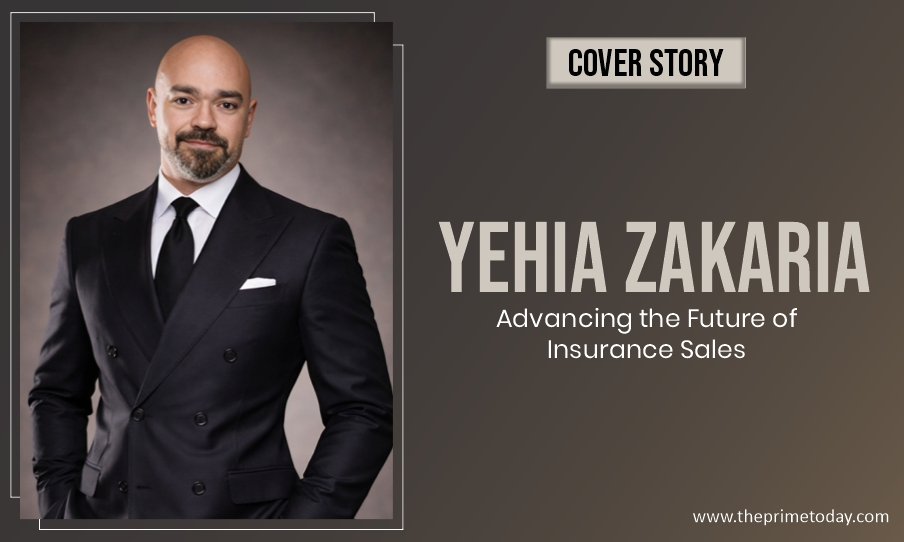
A long career built on performance discipline, client understanding, and the mission to turn sales into a force that supports economic stability!
Insurance grows from a simple human need. People look for safety, clarity, and someone who will guide them through moments that form their lives. This idea sits at the heart of the industry, and it forms a natural bridge to the journey of Yehia Zakaria, a leader who built his path on learning, steady change, and value creation across the region.
Yehia carries more than 24 years of experience across insurance, banking, and financial services in Egypt, Saudi Arabia, and Kuwait. His story began at Allianz, where he learned the discipline of performance and gained a sharp sense of structured sales management. He also absorbed the importance of client focus and risk practices that place people at the centre.
His time in Barclays Bank and retail financial services added a deeper view of consumer behaviour. He spent years understanding how people make choices, how rules shape financial activity, and how credit risk influences decisions in daily life.
A move into insurance came from a clear belief that the industry serves as the backbone of economic stability. It needs leaders who hold growth and risk quality together while protecting operational excellence. Today, as Head of Sales and Distribution Channels at Enaya Insurance, he works with a strong aim. He seeks to shift sales from a simple transactional step into a strategic engine that supports risk-aligned growth and long partnerships with clients.
Across Egypt, KSA, and Kuwait, Yehia shaped distribution strategies for multinational organizations such as Allianz Egypt, Allianz Saudia, Barclays Bank, and now Enaya Insurance. He takes pride in building strong teams, driving sustainable growth, and designing sales channels that deliver real value in a trust-driven sector.
His journey shows a steady belief in progress that lasts and in leadership that lifts everyone forward.
Below are the interview highlights:
Reflecting on your 24 years in sales, what key experiences shaped your ability to build high-performance teams?
“Leadership is not about authority; it’s about creating impact that outlives you.”
My leadership philosophy was shaped by working in multinational environments that enforced discipline through KPIs, structured sales processes, and execution excellence. Leading teams in Egypt, Saudi Arabia, and Kuwait exposed me to markets with completely different customer behaviours, regulatory expectations, and competitive pressures. Turning around underperforming teams in highly competitive markets taught me that high performance is not created by talent alone but by clarity of expectations, accountability, empowerment, and a unified culture. These experiences formed my conviction that a winning team is not built by authority but by creating an environment where everyone understands the mission, owns the outcome, and moves with consistency and rhythm under a shared purpose.
How did you navigate cultural, regulatory, or market-specific challenges across Egypt and KSA?
Each market offered me a distinct leadership lesson that shaped the way I build teams and drive strategy:
- Egypt: A fragmented market with a heavy SME, and retail where the primary challenge was creating awareness around insurance value. This required an advisory-led sales approach and consistent customer training.
- Saudi Arabia: A market governed by SAMA’s strict regulatory framework at that time, where success depended on strong bank alliances, disciplined compliance, and multilayered governance.
These experiences reinforced my core principle:
“You must understand the true nature of each market before you design the strategy, not the other way around.”
My leadership philosophy has been shaped by several pivotal experiences throughout my career:
- Early development within structured multinational organizations such as Allianz and Vodafone, where I learned the foundations of performance discipline, KPI-driven management, and execution excellence.
- Leading and transforming teams in three distinct markets. Egypt, Saudi Arabia, and Kuwait. each with its own customer behaviour, regulatory expectations, and competitive pressures.
- Managing and turning around underperforming teams taught me that sustained performance is built on clarity, accountability, empowerment, and a strong culture.
Collectively, these experiences shaped my belief that high-performance teams are not built on talent alone, they thrive when leaders create the right environment, rhythm, and culture for success.
Can you describe an instance where your distribution strategy transformed business performance?
At Enaya Insurance, transforming the Direct Sales Force (DSF) channel was a major turning point. When I assumed leadership, we built the channel from the ground up, as the team lacked structure, rhythm, and performance consistency. Within just 12 months, we delivered a full transformation through:
- Hiring strong talent and rebuilding the team with high-calibre profiles.
- Implementing intensive training programs and increasing field coaching support.
- Launching a comprehensive Daily Performance Dashboard.
- Improving individual productivity by over 35%
- Achieving 120% YTD of the annual sales budget.
- Redesigning the commission and incentive structure to drive performance and quality.
- Embedding cross-sell and upsell behaviours across Motor, Medical, and Life products.
This transformation elevated the DSF from a struggling unit into a core growth pillar, significantly contributing to Enaya’s annual GWP and strengthening the company’s overall distribution strategy. Today, the DSF has evolved into one of the strongest and most effective direct sales teams in the Kuwaiti insurance market, recognized for its productivity, discipline, and consistent performance excellence.
In managing bancassurance, what partnership decisions were most pivotal for profitability?
The most important decision is always choosing the right partner rather than the biggest one. Profitable bancassurance thrives on partners with strong customer insights, operational readiness, digital enablement, and mutual accountability. Success is never driven by a signature on a contract but by shared responsibility and joint ownership of results. Partners who understand customer journeys and risk appetites turn bancassurance from a revenue activity into a sustainable profit engine. This approach taught me that value partners benefit the portfolio while volume partners overload it with risk
What surprising lessons did you learn about consumer risk management and its link to operations and customer service?
The biggest lesson is that risk management is not the enemy of sales; it is its strongest ally. Understanding consumer risk behaviour helps refine product design, underwriting, pricing, and collection strategies. It also reduces disputes and increases customer satisfaction. Another key lesson is the deep connection between operations and risk.
Weak operational processes create unnecessary risk exposure, while strong customer service reduces churn and enhances portfolio stability. What surprised me most is how simple service failures, delayed claims, unclear communication, and slow onboarding can directly lead to higher loss ratios or increased cancellations. This insight shaped my belief that sustainable sales success depends on integrating risk, operations, and customer service under one aligned vision.
Describe a difficult leadership decision you faced that challenged your values.
This experience occurred in two different organizations during my career and represented one of the most challenging leadership tests I faced balancing human considerations with long-term business sustainability. In both instances, the evolving business environment demanded capabilities that were no longer fully aligned with organizational needs, making decisive structural change unavoidable despite its human impact.
I ultimately chose to redesign the structure, introduce stricter KPIs, and replace or reassign individuals who could not meet the required performance standards. It was a difficult process, as it directly affected people, families, and livelihoods.
Despite the challenge, the transformation was essential to protecting and strengthening overall business performance. I managed the transition with full transparency, respect, and fairness, providing coaching, support, and alternative career paths whenever possible. The outcome was a revitalized team culture, renewed energy, and a markedly improved performance trajectory.
How do you identify and cultivate new sales channels? What is your evaluation framework?
I start by identifying real market gaps that are either underserved or overlooked. Then I assess whether we have the capacity, product strength, and reinsurance support to serve those needs without exposing the company to unnecessary risk. A pilot phase follows to validate customer appetite, operational readiness, and financial viability. Only after these pillars are confirmed do we scale the channel into full deployment. I evaluate channels through customer acquisition cost, persistency, renewal behaviour, integration with other channels, and contribution to profit and loss, which ensures growth that is strategic rather than opportunistic
Share a time when you turned around an underperforming sales organization.
I once inherited a team with declining morale, weak production, and no rhythm of performance monitoring. When productivity is low, you must manage the sales activities. When productivity is high, you must manage relationships and focus on team building .The turnaround began with reinstating discipline through daily targets, activity reviews, and structured pipeline management. As results started rising, I shifted focus from managing activities to managing relationships and coaching leaders.
Intensive upskilling programs improved product knowledge and compliance. Incentives were redesigned to reward productivity, retention, and quality. Within six months, performance stabilized, and after one year, the team exceeded the annual budget. This experience confirmed that organizations do not fail due to talent shortage but due to lack of rhythm, clarity, and leadership consistency
How have you fostered cross-sell excellence, especially in high-competition markets?
“One customer – many solutions.”
To build cross-selling excellence:
- We positioned each customer as a multi-product opportunity.
- Defined KPIs specifically for cross-sell, not just new sales
- Connected DSF, Broker Channel, and Corporate Sales to share leads
- Designed joint incentive schemes for integrated product bundles
- Built data analytics to identify customer needs and product adjacency.
This lifted conversion rates significantly and built stronger, more profitable relationships.
How has your approach to business development evolved to drive sustained growth?
Earlier in my career, business development relied heavily on human relationships. Today it relies on a balance of data analytics, customer insights, reinsurance alignment, and digital enablement. Growth now comes through ecosystems where banks, service providers, brokers, and digital platforms share the same vision and jointly create value. Sustainable growth is achieved when all parties share risk and reward and not when one party pushes for numbers at the expense of quality.
What ethical dilemmas have you faced in balancing revenue with P&L discipline?
One of the most common dilemmas in leadership arises when short-term revenue pressure conflicts with long-term portfolio quality. I have often faced situations where I was urged to accept large accounts that would significantly boost GWP, yet carried an extremely high loss ratio that would ultimately weaken the company’s financial health. Accepting such business would artificially inflate revenue while eroding profitability.
I follow a simple principle:
“Revenue is vanity, profit is sanity.”
On multiple occasions, I refused sizable accounts, despite considerable pressure, because they were not technically sound in terms of pricing, risk appetite, or expected losses. For me, leadership is about safeguarding the company’s long-term viability, not chasing short-term numbers that create future problems.
My stance has always been consistent: prioritizing sustainability over immediacy. Leaders must protect the company’s capital, brand, and employees rather than pursue volume that harms the organization later. This disciplined approach has strengthened trust with the Board, reinsurers, partners, and the broader market.
What skills must senior leaders prioritize to navigate the future of sales & distribution in financial services?
“Great leaders don’t build followers. They build leaders who elevate the entire organization.”
The leaders of the future must combine agility with data fluency. They need to understand customers deeply and integrate risk discipline without harming experience. Digital channels, automation, and artificial intelligence are no longer options but mandatory assets. Partnerships with banks, brokers, aggregators, and platforms must serve shared outcomes, not isolated goals. Most importantly, leaders must develop talent and create leaders who elevate the organization rather than followers who wait for instructions. The winners will be those who balance transformation with stability, growth with risk, and performance with people
Read the full magazine edition: Click Here