
Adapting to Automation, Digitalization, and Global Demand
Manufacturing in the Age of Transformation
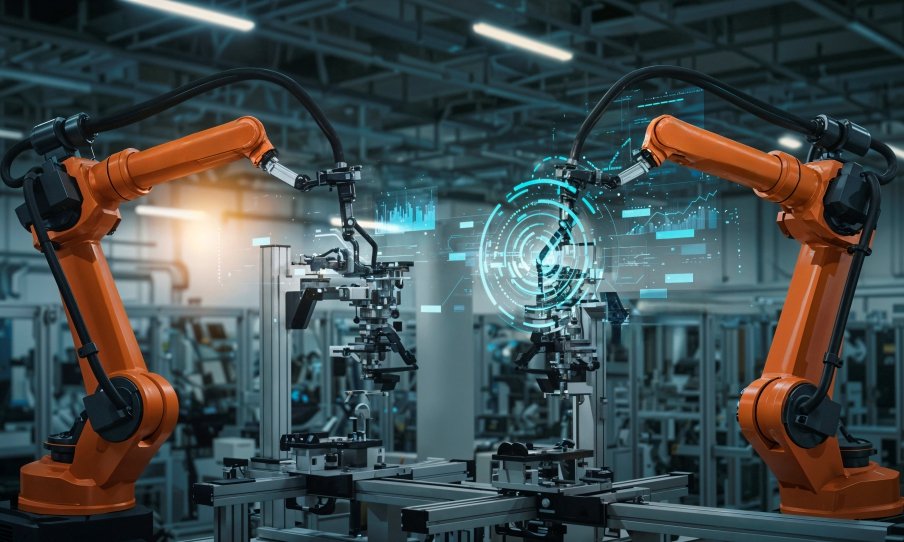
The manufacturing industry is experiencing a fundamental change because of automated systems and digital technology, and changing international market needs. The traditional work process, which required manual labor has transformed into a modern system that enables simultaneous data exchange between machines and humans and their corresponding operations.
The transformation related to Industry 4.0 now establishes new standards for product development, manufacturing processes, and product distribution methods.
The primary problem for manufacturers today goes beyond production volume increases because the industry now requires organizations to establish flexible and strong production systems that use advanced technology to meet customer demands while sustaining business productivity and product standards.
The Rise of Automation in Manufacturing
Automation has become the essential foundation that supports contemporary manufacturing operations. The combination of robotics with modern machinery enables the execution of difficult operations with precise results and stable performance.
Automated systems decrease human mistakes while they boost manufacturing speed and product excellence. The systems enable manufacturers to maintain their production processes, which results in improved operational efficiency throughout their facilities.
The main purpose of automation exists beyond substituting human work because it serves to boost human abilities while establishing advanced manufacturing systems.
Digitalization and the Connected Factory
Digitalization converts manufacturing operations into a data-driven industrial sector. Production lines use sensors and industrial Internet of Things (IoT) devices and connected systems to gather real-time data.
The data enables manufacturers to track their operational performance while predicting when maintenance will be necessary and achieving process improvements.
Digital twins, which exist as virtual replicas of physical systems, provide companies with the ability to test their operations before implementing actual organizational changes. Connected factories provide their operators with enhanced operational awareness capabilities, better system management tools and improved operational performance.
Data-Driven Decision-Making
Data analytics integration into manufacturing processes enables leaders to reach better decision-making results. The system provides actual production data which shows how well resources are used and how products meet quality standards.
Predictive analytics identifies potential problems before they happen, which leads to reduced operational downtime and increased system reliability. Decision-making based on data analysis improves both current business operations and future strategic development. Manufacturers that use data analytics gain a major advantage over their competitors.
Responding to Global Demand
Global markets are experiencing increased dynamism and enhanced international connections. Manufacturers face the challenge of adjusting to three different factors, which include customer demand changes and new trade regulations.
Flexible production systems enable companies to adjust their production capacity through quick and efficient operational changes. Customers now demand personalized products, which drives the increasing significance of customization. Companies require operational flexibility, together with strategic planning ability, to meet their international business requirements.
Supply Chain Transformation
Digital technologies, together with global disruptions have created new supply chain processes that businesses now implement. Manufacturers are developing supply networks that operate with greater protection and complete visibility.
Supply chain operations benefit from advanced analytics and real-time tracking because these tools enable organizations to achieve better visibility, which helps them manage risks and coordinate their activities.
Businesses today recognize the need to develop supplier networks that operate together with their local production facilities. All businesses need a strong supply chain, which enables them to operate during unpredictable conditions.
Workforce Evolution and Skill Development
As manufacturing processes adopt advanced technological systems, the workforce needs new skills which evolve according to these changes. The employees need both technical skills and problem-solving abilities. Training programs now emphasize digital literacy and robotics skills and data analysis capabilities.
Modern manufacturing operations use human-machine collaboration as their central operational method. Organizations need to invest in workforce development because it enables them to use new technologies to their fullest potential.
Sustainability in Manufacturing
Sustainability has developed into a primary focus for manufacturing operations. Businesses implement methods that decrease their environmental footprint while preserving their operational efficiency.
Modern manufacturing methods require energy-saving production methods, waste minimization techniques and environmentally friendly materials procurement methods.
Technology functions as the essential element that enables companies to achieve optimal resource usage while they work to decrease their emission levels. Sustainable manufacturing establishes a connection between environmental responsibility and business operational objectives.
Innovation and Product Development
The transformation of manufacturing practices leads to changes in product development. Advanced technologies enable faster prototyping, improved design processes, and more efficient production cycles.
Manufacturers can bring new products to market more quickly and respond to customer feedback in real time.
The ability to adapt quickly enables organizations to maintain their innovative capacity and compete successfully. Organizations initiate ongoing development of their products through permanent innovation activities.
Balancing Efficiency with Flexibility
The manufacturing sector needs to prioritize its operational performance while maintaining its capacity to adapt to emerging market requirements. The organization needs flexible operational systems to support its expansion goals and swift reaction to market changes.
The balance between organizational efficiency and operational flexibility needs to be established through operational designs which enable fast response times without sacrificing product quality. The organization needs to achieve market equilibrium because it serves as the essential component for its sustained success in dynamic market environments.
Conclusion
The present manufacturing environment requires businesses to implement three essential elements: automated systems, digital technologies, and worldwide operational capabilities.
Manufacturers can achieve successful growth through two methods: they should utilize advanced technologies and develop strong supply chain connections while providing training opportunities to their employees. Organizations that adopt agile methods and use data for their decision-making processes while implementing sustainable practices will achieve success in the evolving business landscape. The future of manufacturing requires businesses to establish intelligent systems which can adapt and provide value within their dynamic operational environment.