
The Power of Geoeconomics: How Global Commerce Shapes Modern World Politics
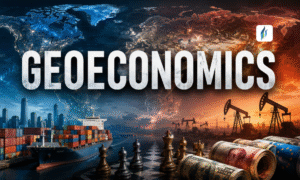
Out here, where money moves like weather across borders, old lines blur fast. Power once came from tanks rolling or ambassadors talking in quiet rooms. Now it shows up in shipping routes blocked, chips made nowhere else, cables under oceans. Countries pull strings through trade rules, investment flows, control of raw stuff needed everywhere. Call it what you want – state power dressed as market play – it changes who wins without firing shots. Nowadays, countries choose tariffs over soldiers. Because markets twist and turn, people everywhere must grasp how trade moves shape daily life. One shift here pulls strings there – watch closely.
The Move from Ads to Financial Records
Understanding geoeconomics means watching how worldwide struggles have shifted shape. After the Cold War, many believed free markets would tie nations together, preventing war. True, riches grew like never before. Yet those same links opened deep risks. Leaders soon saw that reliance on others can turn into pressure points. Hold back a rare metal or block a key sea passage, and influence follows – not through bombs, but through delay, denial, scarcity. Power now hides in delays, shortages, blocked routes.
Nowadays, power moves happen through deals on trade, money for buildings, or rules companies must follow. Take global aid – it isn’t only for helping people in crises anymore; instead, it opens doors to key transport hubs, rail lines, or internet links down the road. Tying struggling countries into strong economies lets powerful states grow their reach without ever launching an attack. These days, someone planning strategy studies financial records like old commanders studied hills and rivers on paper maps.
Weapons of Mass Disruption in the Global Market
In the theater of geoeconomics, the weapons are financial instruments and regulatory frameworks. Sanctions have become the primary tool for punishing adversarial behavior, capable of freezing a nation’s foreign reserves or cutting its banks off from international payment networks overnight. Similarly, export controls are used to choke off an opponent’s access to dual-use technologies, which are essential for both commercial innovation and military modernization.
Another potent instrument is the strategic manipulation of supply chains. The global manufacturing ecosystem relies heavily on just-in-time logistics and highly concentrated production hubs. When a nation holds a monopoly over the processing of rare earth elements or the fabrication of advanced semiconductors, it can quietly slow down industrial output across the globe. This form of economic coercion forces compliance by threatening the economic stability of target nations, proving that market dominance can yield immense political compliance.
The Technology Race and the New Iron Curtains
Nowhere is the impact of geoeconomics more visible than in the race for technological supremacy. Artificial intelligence, quantum computing, and next-generation telecommunications are the new frontiers of national security. As a result, the world is witnessing the fragmentation of the global technology stack. Nations are increasingly restricting foreign investments in their tech sectors, auditing software for national security risks, and banning foreign hardware from critical infrastructure.
This trend is creating a bifurcated digital world, where countries must choose between competing technological ecosystems. The danger of this fragmentation is the unwinding of decades of global integration. As digital borders go up, the efficiency of global commerce decreases, replaced by a system where trust and political alignment matter more than price and capability. This tech-driven economic statecraft ensures that future geopolitical supremacy will belong to those who command the digital architecture.
Navigating the Fractured Landscape of Future Trade
As geoeconomics continues to dictate the terms of international engagement, businesses and policymakers must adapt to a much more volatile environment. The era of pure economic efficiency is giving way to an era of resilience and security. Concepts like friend-shoring and near-shoring are replacing traditional outsourcing, as companies prioritize supply chain safety over the lowest possible production cost.
For smaller nations and multinational corporations, navigating this landscape requires a delicate balancing act. Being too reliant on a single superpower exposes an entity to immense risk, while attempting to remain completely neutral becomes increasingly difficult as global powers demand alignment. Ultimately, the future belongs to those who can anticipate how political friction will disrupt economic flows, transforming global statecraft into a game of economic chess where every move resonates across the global marketplace.
Read Also : Discovering Porto-Novo: The Vibrant Heritage and History of Benin Capital