
A Community Builder with the Civic Soul – Keith Downey: Building Foundations of Equity, History, and Truth
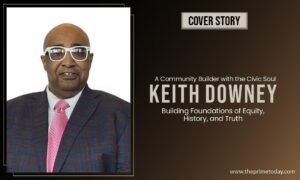
The salty breeze from the ocean that washes over Texas leaves behind a residue of past memories and has a promise for future improvements in Houston, Texas. Here, Keith Downey is a Founding Director — along with two other founding and one non-founding directors — at Northeast Houston Redevelopment Council. His path to this present moment was forged in the concrete jungles of New York City and in wide-open spaces around Dallas and Fort Worth. He holds a bachelor’s degree from the University of Texas at Arlington and a Certificate in Servant Leadership from Cornell University. Keith Downey spent many hours managing the development and construction of large-scale city projects for the City of New York. He learned early on that building a structure is about more than just steel and glass; it is about the stories those walls are meant to hold.
As a former senior construction project manager and resident engineer, Keith Downey understands the technical side of development as well as anyone in the industry. Yet, thanks to his perspective of considering built environments as tools for engaging citizens, he is now recognized by people internationally for his community engagement.
Furthermore, Keith Downey also served as the Community Council Chairman for ProUnitas Inc., since 2015-2019. In this role, he was instrumental in organizing the Kashmere Feeder Pattern Community Council, which connected school students and families with local social services.
Keith Downey shares his insights and wisdom with young people throughout the Houston area through discussions about what he has learned during his time working within the highly competitive fields of urban design and construction. Keith Downey strongly believes that for a person of color who lives in today’s world, they must keep their eyes open to how rapidly the world changes and be willing to adapt along with it. Keith Downey is also a contributing author to the book, ‘100 Acts of Male Goodness,’ in which he expresses his belief that it is a man’s job to set an example for others to follow. Through mentorship, Keith Downey has helped many young men transition from their current life circumstances to where they would like to be in their future. Keith Downey has used his skills in technology, coupled with a desire to improve others’ lives by way of community development (building better communities), to change the way communities are built and maintained.
Before giving speeches or attending board meetings, Keith Downey takes time to reflect on the challenges faced by youth of color throughout history. Keith Downey chooses to go beyond these old perceptions and inspire and encourage other people to develop new ideas about their community and how they view the importance of their own wellbeing compared with the collective. Each project that Keith Downey is involved with includes notes that recommend ways to create welcoming environments for those entering the locations he is redeveloping. His focus on the long-term health of the community continues whether he is reviewing the construction schedule, leading a mentoring program, or managing a meeting.
Listening as the Foundation of Urban Development
With a career spanning architecture, public sector construction, and community leadership, these disciplines collectively shaped Keith Downey’s vision for impactful urban development. When he is dealing with the human element, he believes one must listen to the people. Many times, individuals in leadership bring people what they want them to have, but do not address their true needs. Keith Downey asserts that we must ask ourselves: are we truly listening, or are we listening to respond? He believes we must not have the answer before the question is asked.
Inclusivity Lessons from Public Infrastructure
Having served as a Senior Construction Project Manager for New York City, there were some key lessons from large-scale public infrastructure projects that continue to influence how Keith Downey works today. First and foremost is the ability to be inclusive. He maintains that we must always be cognizant that everyone does not look like him, doesn’t think like him, nor look like him. Many do not have the blessings that he has received.
Designing for Equity: The Playground for All Children
Rebuilding the Playground for All Children—the first playground in the United States specifically designed to accommodate both disabled and able-bodied children—helped him to realize that all children should be afforded the ability to experience equity and help take away the thought of being less than at an early age. Keith Downey also redesigned 19 other parks in New York City.
Architecture as a Vessel for Cultural Storytelling
Today, helping to promote the Galveston International Juneteenth Museum, Keith Downey sees architecture playing a role in preserving cultural heritage and storytelling. He believes it is important to tell the true history that includes factual information. This involves listening to those who have years of wisdom, knowledge, and educational expertise when sharing information.
Preserving the Truth for Future Generations
Keith Downey believes everyone should know the background of their culture and the background of their family. There had to be a yesterday to arrive at today. He insists that future generations should know about yesterday, whether yesterday was good, bad, or whether it was ugly.
Redefining Architecture for Evolving Societal Needs
In Keith Downey’s view, current times are redefining community-centric architecture in 2026. So, he believes architects must adapt to meet evolving societal needs. “We must develop our inner cities to be affordable while also purposefully bringing residents a better quality of life.” He asserts that we must face reality in the future, prioritizing the need for more housing and addressing infrastructure. While providing more potable drinking water and more green space, helping to address the basic needs of humankind, he advocates that as a society, it should be people above profit and not profit over people.
Fostering Inclusion Through Built Environments
One might feel that Keith Downey’s past work reflects a strong commitment to civic engagement. It is because he firmly believes that built environments must foster stronger, more inclusive communities. He maintains that we must get involved in our communities because we have a responsibility to one another. “We are not on this earth alone; we are here to help build a better society.” When he walks out of his door, he wants to feel good about where he lives. For him, it’s important to have a strong community, and it’s important that we share information.
Civic Engagement and Information Sharing
That is one reason that Keith Downey has his live radio broadcast in Houston or his monthly meetings in the community. He believes people must know what’s going on around them and how they can participate in the process. It is his responsibility to share knowledge with others. When it pertains to economic growth, he questions why a resident should have to leave their community for gainful employment in another community. He asks why he should have to go across town for a quality park when there is green space in his own community, or travel ten miles away for a quality grocery store.
Equity, Investment, and Economic Mobility
For Keith Downey, this is about equity and investment so that all have proud institutions, parks, and retail spaces that help strengthen the core of communities. He believes we must address economic mobility. He asks if residents can afford to live where they are over the long haul and if they are making enough in disposable income while attending to their basic needs.
Regional Dynamics and Architectural Priorities
With his experience across cities like New York, Dallas/Fort Worth, and Houston, Keith Downey believes regional dynamics influenced his architectural priorities and design philosophies. Having lived in these three metropolitan areas, he has learned that people address life differently, with different priorities and different methodologies for tackling issues. There is a commonality between the three areas; they share various mixed historical styles of Architecture while designing churches in Dallas/Ft. Worth, Keith Downey also designed housingin four of the five boroughs within New York City. While Houston and Dallas/Fort Worth are sprawling areas and New York City has high-density architecture highlighting a richer historical element of design, Keith notes their Architecture has perfect pitch for their location in many instances.
Mentorship and the Pursuit of Excellence
As a mentor to youth and an advocate for community development, Keith Downey would say inspiring the next generation to pursue careers in architecture and public service is very, very important, and it is the need of the hour. Only one can do it by being the best at whatever they want to be. He believes the first person who should purchase what you’re selling is you. He encourages others to become a 100%er, noting that most people you run into in life will give you 70% effort at best. They are average, but he wants the next generation to be above average.
The Power of Giving Your Best
When Keith Downey went for the job interview in New York City as a Construction Project Manager for the City of New York, he was asked, “What can you bring us here at the city that the other twenty-five applicants in the next room cannot?” He stated, “My Best.” He was hired on the spot and gave his best every day on the job. He was taught as a young child that if you give your best, the world can’t ask anything else of you.
The Evolution of Public-Private Partnerships
Now, Keith Downey sees a major role of public-private partnerships evolving in shaping resilient and future-ready cities. To him, the future of advancing communities is public-private partnerships. He believes government must be truthful unto itself: does it believe in self-sufficiency and independence for communities, be it urban or rural, or does it believe in dependency? The future to strengthen communities is in corporate investments and help from the philosophic world.
Strategic Investment for Sustainable Growth
Many municipalities do not have enough revenue to sustain their many growing needs. That is why Keith Downey believes many governments must form these partnerships for sustainable growth. He observes that you can actually outtax residents, and you will begin to lose population, making these collaborative investment models essential for long-term stability.
Listening as the Architect’s Essential Leadership Quality
In Keith Downey’s opinion, there are some leadership qualities that are essential for architects and project managers aiming to create meaningful societal impact. Architects must listen to the client. While an Architect is a visionary and a salesperson, Keith Downey believes we must understand that one size does not fit all. When designing a structure, he notes that architects are taught to ask themselves: Does it fit the environment where it will be located? Is it aesthetically pleasing? Has the front door of the structure been defined? Will it be a place that he or she would want to work? What is the best use for this design?
Digital Transformation and the Evolution of Design
With the increasing use of technology in design and construction, Keith Downey sees digital transformation further influencing the future of architecture. In his opinion, we are currently in the digital age, where it has transformed design, taking it off the table and onto the computer. He started design with a t-square, a right triangle, and a table, but that is no longer the way many architectural teams work. He observes that larger firms are specialists in certain aspects of the structure, passing it along in layers to the next team member who specializes in another element of the building, eventually putting it all together to have the entire structure.
Landscape Integration and Personal Milestones
When dealing with landscape architecture, in which he has experience, Keith Downey maintains that we must incorporate the design of the structure with green space on the property. Looking back at his journey, there have been some milestones that have been most defining in shaping his professional and personal philosophy. He reminds himself daily of the values that he was taught and does not forget where he comes from. He lived in New York City for twenty-seven years, but he kept his ear to the ground of what was happening back in Houston. He donated his time, talent, and money to help his community whenever he was afforded a chance to do so.
Today, he cherishes a recognition that is very close to his heart: ‘Texas Senate Resolution No. 287 honours Keith Downey for receiving the 2025 Outstanding Texan Award from the Texas Legislative Black Caucus.’
The Foundation of Support and Guidance
Keith Downey is blessed to have a supporting wife, Roshida, whom he has been with for thirty years. They support one another, bounce ideas off each other, and communicate. From those who raised him to the woman who married him, he has welcomed the help and guidance through his life experiences. For Keith Downey, these relationships are central to his ability to serve and lead within his professional and civic roles.
A Vision for Global Community Impact in 2026
As we move further into 2026 and beyond, Keith Downey’s long-term vision for architecture’s role in driving global community impact is simple: shaping sustainable, resilient, and equitable environments that improve occupant wellbeing and foster social connection. To him, architecture drives economic growth. It drives the future of who we are and where we are going, while telling the story of where we come from for future generations yet to be born.