
The People Catalyst: Prasad Narayan’s Global Blueprint for Culture and Educational Empowerment 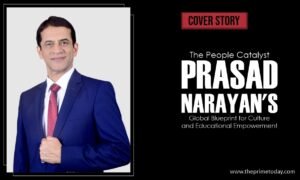
A journey over the last three decades across the United States and India at global organizations like AT&T, Pacific Bell, Scientific Games, Excite@Home, Neova Solutions, and now Leapfrog Technology has reinforced one of Prasad Narayan’s core beliefs, “Organizations grow when people grow.” The true strength of a company lives in its people, he insists. As the Vice President of India Operations at Leapfrog Technology, he uses his vast global experience to build teams that do more than just complete tasks. In his words, working with global organizations exposed him to different leadership styles, business environments, cultural dynamics, and diverse teams across geographies.
Early failures in his career taught him the importance of discipline, adaptability, and both hard and smart work. He strongly believes that mindset can often make the difference between success and failure, “because our growth is deeply influenced by how we view our abilities and potential.”
Prasad Narayan brings a distinct cross-cultural insight to every project as he has succeeded in scaling organizations while keeping their core values intact in both Southeast Asian and American industries. Having worked extensively across the U.S. and India, he learned that while processes may differ, people everywhere value respect, transparency, growth, and purpose.
A Career Built on Growth and Discipline
Throughout his career at major firms, Prasad Narayan has mastered the art of talent acquisition and workforce strategy. He does not just hire employees; he develops leaders. He focuses on employer branding and leadership development to ensure that every team member has a clear path toward success. His work across different industries has taught him that execution discipline is the secret to sustainable growth.
Over time, his leadership philosophy evolved through both successes and mistakes. “I strongly believe leadership is not about hierarchy; it is about influence, accountability, and creating environments where individuals can thrive.” At Leapfrog Technology, he continues to refine how the organization attracts and keeps the best talent in a competitive market. He nurtures environments wherein leaders create a culture infusing values that unite people, and they work together to grow along with the company.
A Vision for Trust and Workplace Culture
When Prasad Narayan accepted the opportunity to lead the India Operations for Leapfrog Technology, he was clear about one thing: he wanted to build a workplace culture rooted in trust, ownership, transparency, and employee belonging. In the fast-paced world of IT, success is often measured through product releases, delivery milestones, and innovation. Throughout his career, he has consistently tried to bridge technical excellence with a strong organizational culture. During his fireside conversations with his CEO, Chris Sprague, last year, they spoke extensively about culture, communication, and organizational purpose. One principle stood out clearly for him: culture cannot be built through policies alone. Employees must genuinely feel connected to the organization’s mission and values.
The Mechanics of Engagement and Performance
At the Leapfrog Pune center, Prasad Narayan focuses heavily on engagement through initiatives such as Knowledge Sharing Sessions, Monthly Business Review meetings, India All-Hands meetings, and flexible hybrid work models. Equally important is his effort in encouraging teams to resolve differences through communication rather than escalation. The famous Peter Drucker quote, “Culture eats strategy for breakfast,” resonates deeply with him. Prasad believes high-performance organizations are not built through pressure alone; they are built through trust, accountability, consistency, and shared purpose. His career reflects a strong specialization in talent acquisition, workforce scaling, and people operations.
Redefining the Talent Ecosystem
Prasad Narayan understands that organizations that successfully attract and retain talent realize that employees today seek much more than compensation. People want meaningful work, career growth, flexibility, and strong leadership. and a culture where they feel respected and valued. Throughout his career, especially while transforming the talent acquisition function, he has realized that employees stay because of culture, learning, transparency, and trust. Organizations that struggle often underestimate the importance of employee experience, communication, and career development. On the other hand, Prasad Narayan sees that organizations that prioritize mentorship, inclusion, continuous learning, and leadership accessibility naturally build stronger talent ecosystems. For him, sustainable talent retention happens when organizations consistently “walk the talk.”
His growth as a leader has also been influenced by Lawrence Bossidy’s quote: “I am convinced that nothing we do is more important than hiring and developing people. At the end of the day, you bet on people, not on strategies.”
The Power of One: Impact Beyond the Office
Prasad Narayan carries his belief in discipline and accountability into the world of social impact. ‘The Power of One’ Educational Trust, founded in 2016 by Prasad Narayan’s wife, Rekha Krishnan, and Prasad Narayan, was inspired by a simple but powerful belief – one individual can make a meaningful difference.
This grassroots initiative helps bright students who face financial struggles gain access to quality education. “At various stages in life, we came across academically talented students who were forced to discontinue their education because of financial constraints. With the support of friends, family, and well-wishers, we have supported over 340 students while mobilizing more than ₹33 lakhs in tuition assistance.”
What makes the initiative meaningful is not just the numbers, but the transformation and hope it brings to students and their families. “None of this would have been possible without our donors. In many ways, it has been a win-win journey. Donors thank us for creating a credible platform, and we remain deeply grateful to them for trusting and supporting the cause,” says Prasad Narayan, and insists on a model of strict transparency. The trust makes direct payments to institutions to ensure every rupee reaches the student. This focus on governance and measurable outcomes caught the attention of The Better India in 2025. Personally, he says that the journey has kept him grounded and has constantly reminded me that leadership should extend beyond corporate success. The initiative also inspired his book, ‘Educational Dreams and Lack of Funds?, ‘which reflects his belief that education remains one of the most powerful tools for social transformation.
The Integration of Leadership and Social Impact
Many leaders speak about balancing business growth with social responsibility, but few actively build both. The question of how he successfully integrated corporate leadership with meaningful societal impact is something that Prasad Narayan has often reflected on. In many ways, his sabbatical in 2016 became a turning point. Without it, he may not have started ‘The Power of One’ Educational Trust, or it may have taken much longer to take shape. Prasad Narayan does not see business growth and social responsibility as separate pursuits. In his view, they are two sides of the same coin. He strongly believes leadership becomes more meaningful when it creates value beyond business outcomes. Social responsibility is not always about large-scale funding. It is also about mentoring, guiding, enabling access, and creating opportunities for others in a structured and consistent way.
Discipline, Mentorship, and the Power of Consistency
What has helped him balance both is discipline, clarity of purpose, and a belief that impact must be measurable, sustainable, and transparent. As someone who has mentored MBA students, served as visiting faculty, and worked as a corporate trainer, mentorship is central to his leadership philosophy because leadership is ultimately about helping others grow. Prasad Narayan often draws from his own early career experience, where he learned some lessons the hard way. In the beginning, consistency and commitment were not always his strengths. Over time, he realized that commitment gets you started, consistency gets you somewhere, and persistence is what keeps you going. As a visiting faculty member and corporate trainer, he has mentored MBA students, software professionals, and young leaders. One of the most rewarding aspects for him is seeing them apply classroom and mentoring insights in real-world situations. Many have shared that sessions on business communication, leadership development, project management, and case studies helped them build confidence and bring greater clarity and purpose to their careers.
Navigating the Future with Human-Centered Thinking
Mentorship also teaches humility, as it is a two-way learning process. Every interaction offers Prasad Narayan fresh perspectives and reinforces empathy, adaptability, and continuous learning. In today’s rapidly evolving world, he believes qualities such as emotional intelligence, self-awareness, and resilience are as important as technical expertise. A combination of technology, adaptability, and human-centered thinking will shape leadership in the coming years. Artificial Intelligence and automation will continue transforming industries. However, emotional intelligence, ethical judgment, and collaboration will become even more critical to him, as technology cannot replace human connection. Those who can unlearn, relearn, and adapt quickly will be better positioned to navigate constant change. He often reinforces this with teams, especially engineers, to continuously upskill and step out of their comfort zones. Ultimately, it is not just about how skilled you are today, but how committed you are to becoming better tomorrow. For Prasad Narayan, it is not just how good you are, but how good you want to be that truly matters.
The Challenge of Scaling Culture and Connection
One of the biggest challenges in scaling organizations is maintaining cultural consistency across teams, functions, and geographies. As organizations grow, communication gaps, process complexity, and a sense of employee disconnect can naturally emerge. Another key challenge for Prasad Narayan is preserving employee belonging during rapid growth. As teams expand, individuals still want to feel heard, valued, and connected to the organization’s purpose, regardless of size or structure. From his experience, this is where leadership visibility, clear communication, and reinforcing core values consistently play a decisive role. He believes culture cannot be assumed to scale on its own. It must be actively nurtured through intent, behavior, and everyday leadership actions.
Leading by Example and Continuous Growth
As a leader who has successfully built teams and transformed talent ecosystems, Prasad Narayan’s advice to aspiring leaders has always been simple: Lead by example. Do what you say, and say what you do. Lasting impact is built through discipline, accountability, and trust, not shortcuts. Real growth takes time, and it is often shaped by challenges that push you outside your comfort zone. He strongly believes that one of the most important roles of a leader is to create more leaders, not just followers. This requires focusing on hiring the right people, building strong teams, and creating processes that enable collaboration and shared ownership toward a common goal.
Learning, in Prasad Narayan’s view, should never stop. The moment a leader believes they have ‘seen it all,’ growth begins to stagnate. He has personally experienced this through his own journey of continuous learning, from earning a Master’s in Computer Applications to completing certification in Project Management after a long hiatus, pursuing an MBA in Project Management and a Diploma in Human Resource and Administration to deepen his understanding of the field.
Even today, in his role as Vice President – India Operations, he has consciously chosen not to build large layers around him, as staying close to execution helps maintain clarity, accountability, and connection to the ground reality.
The Evolution of Success and Social Impact
His journey reflects both strategic leadership and social entrepreneurship. Success means different things to different people. For some, it is about reaching the top of the corporate ladder quickly. For others, it may be financial growth through career progression and opportunities. Over time, however, that definition evolved significantly for him. While financial stability and career growth are important, Prasad Narayan has never personally measured success by money alone. In his experience, when you focus on doing the right things consistently, outcomes tend to follow naturally.
A decade ago, when he took a sabbatical from the IT industry, his perspective on success expanded further. It began to include creating meaningful impact beyond the workplace: giving back to society, mentoring others, and enabling people to grow. That phase of reflection and purpose eventually led to the creation of ‘The Power of One’ Educational Trust. What continues to inspire him is the belief that “Your best is yet to come.” He has never felt the need to slow down or step away from meaningful work. As the late Steve Jobs famously said, “Stay hungry, stay foolish,” that mindset continues to resonate deeply with him.
A Lifelong Journey of Character and Responsibility
One of the most consistent sources of learning for Prasad Narayan has been everyday interactions, whether with employees, students, peers, friends, or family. He strongly believes that life lessons are everywhere if we choose to observe them. Some of the most powerful lessons come not from well-known figures but from ordinary individuals who demonstrate resilience, humility, and courage in their daily lives. At a deeper level, he is driven by the idea that growth is a lifelong journey. That idea keeps him engaged, curious, and motivated to pursue excellence across corporate leadership, education, mentorship, and social impact initiatives.
Being recognized as one of the Most Inspirational Business Leaders to Watch Out for in 2026, his message to emerging leaders is simple: “Walk the talk.” You have worked hard to reach where you are, and it is important to value that journey by staying true to your principles and consistently doing what is right. Leadership is not just about achievement; it is about responsibility. Prasad Narayan encourages others to take pride in what they have built and also extend support to those who are still finding their way. True leadership is reflected in how you help others grow while continuing to grow yourself.
Leadership is built over time through experiences, setbacks, resilience, and consistency. Prasad Narayan believes it is important to develop your own identity rather than constantly comparing your journey with others. Respect should not be demanded; it should be earned through actions, integrity, and authenticity. His message to emerging leaders is to never underestimate the power of empathy and integrity. Technical skills may open doors, but character is what sustains leadership in the long run. Most importantly, he remembers that success is not defined only by what we achieve professionally, but also by what we learn and the positive impact we create along the way. He stays grounded, remains authentic, and lets his actions consistently reflect his values.