
A Leader Possessing the Power of Precision – Greg Fuller: Revolutionizing Global Supply Chains and Building Methods by Simplifying Green Metrics
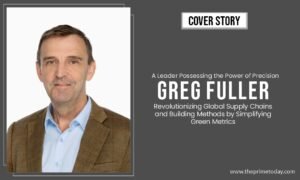
It is Dubai’s midday sun. Its golden rays illuminate the glass facades on the horizon. Here, luxury skyscrapers stand tall like the pillars of the future, transforming the desert landscape. A major challenge of balancing rapid urban expansion with environmental responsibility persists inside these massive structures. Greg Fuller, the Founder and Chief Executive Officer (CEO) of Sure Growth Management Services FZE, looks out at this changing skyline with a perspective built on more than forty years of deep construction expertise. As a seasoned expert witness in cost and project management, a commercial consultant, and a specialist in risk and quality systems, Greg brings a unique combination of technical credentials to the sustainability movement. He holds certifications as a LEED AP BD+C, a Project Management Professional, and a Professional in Business Analysis, alongside advanced diplomas in work health and safety and quality auditing. Currently, he is completing a Doctorate in Business Administration in Construction Management, focusing his doctoral thesis directly on how sustainability impacts construction costs and schedules within the United Arab Emirates.
Greg’s involvement with sustainable building methods began long before green initiatives became a global corporate standard, stretching all the way back to 1992. Today, he drives the sector forward by inventing advanced proprietary technology that solves the oldest problem in project management: visibility. He developed a highly accurate cost management system that tracks expenditures on massive residential towers down to a single, per-unit basis, giving developers true live visibility and precise financial forecasting. Alongside this, his custom progress app manages the actual, current status of projects on a live basis, feeding directly into schedule forecasting and automated monthly applications.
To bridge the gap between financial efficiency and environmental goals, Greg is now expanding his cost management system to enable live tracking of green credits within these same major developments. This advancement allows developers to prove compliance and obtain various international green certifications with ease.
Furthermore, Greg is adapting this live system for the retail market, giving large retail conglomerates the power to analyze purchasing trends in real time from a central head office. Corporate executives, relying rather than on individual stores to manage inventory, can view regional and store-by-store details as trends occur. Preventing companies from overstocking or understocking items is this centralized control. It directly saves on transport energy, eliminates product waste, and reduces operational costs significantly. Introducing these data-driven ordering practices is Greg. Thus, he is transforming traditional corporate management into a more sustainable, resource-efficient operation. He opens his research database to log fresh feedback from a local concrete supplier, ready to test the credit tracking system on a new low-carbon development site.
From Sydney Waters to Global Innovation
Greg was born in Sydney, Australia, where he grew up on the water, fully immersed in nature during his younger years. This early closeness to the natural world fostered his deep love for the environment. Later, during his university studies for his Bachelor of Building, he took additional specialized courses that developed his understanding of how people can preserve nature through smart design. Throughout his early career, he worked his way through various positions within the construction sector, constantly refining his cost and project management techniques. His initial academic exposure ignited a lifelong desire to push for true environmental responsibility, making sustainability his primary professional aim.
Claiming the Power to Drive Real Change
In the nineties, Greg began designing truly solar passive housing and environmentally friendly construction methods for residential homes. However, he quickly discovered that working as an employee limited his ability to implement these sustainable methods and designs. Because the final corporate decisions always belonged to others who did not share his deep desire for a sustainable world, he felt unable to make a significant impact. Starting his own company, Sure Growth Management Services FZE, finally gave him the independent power to drive actual change. As Founder and CEO, he now fully develops and implements truly sustainable innovations on his own terms.
Automating the Fight Against Carbon Emissions
Under Greg’s leadership, his organization contributes to a more sustainable future by using precise data to manage construction projects in an extremely detailed fashion. The company introduces design management processes at a very early stage of development, allowing team members to use their green accreditation to guide buildings toward eco-friendly solutions. Furthermore, Greg has successfully modified his highly detailed cost management system to report and monitor carbon dioxide emissions for entire developments. This automated feature tracks environmental impact in a way that no other current system can replicate. Greg monitors the live carbon readout on his screen, watching the emissions forecast drop as the system calculates the benefits of a newly proposed sustainable insulation material.
Integrating True Solar Innovation
Greg takes great pride in his specific initiatives regarding the selection and use of advanced materials designed for the natural heating and cooling of building environments. Instead of merely installing standard solar panels on a rooftop, his company focuses heavily on utilizing building-integrated photovoltaics. This advanced technology embeds solar cells directly into the building materials themselves, such as the windows, roofs, or facades, turning the entire structure into a clean energy generator. By combining natural climate control materials with integrated power generation, he changes how developers view energy self-sufficiency in modern commercial construction.
Overcoming the Education Gap
Greg identifies the lack of real understanding and education as the single greatest challenge facing the sustainability industry today. He observes that many people possess little genuine knowledge of what sustainability actually means, or why the concept should carry personal meaning for them. He firmly believes that if individuals do not understand environmental responsibility, they cannot truly believe in it, and if they do not believe in it, they will only pay lip service to corporate green initiatives. For him, shifting the industry away from superficial greenwashing requires deep, accessible education that connects environmental metrics to daily operational reality.
Simplifying Data to Combat Emissions
To support global sustainability goals, Greg applies his innovative methods directly to the education of others while simultaneously simplifying how companies capture critical data. His progress tracking systems gather the required data sets on project construction in a very simple, intuitive format. This approach ensures that the task of monitoring actual carbon emissions is no longer a tedious or intimidating process for project managers. He knows that if carrying out environmental reporting feels simple and straightforward, there will be far less corporate resistance against adopting these green practices in the first place, leading to much more accurate and honest results on the ground. Greg reviews a simplified data dashboard for an upcoming seminar, ensuring the emissions metrics are perfectly clear for a group of local subcontractors.
Leading by Example Indoors
Greg recognizes that as a consulting firm, Sure Growth Management Services FZE has structural limits on its direct environmental footprint. Therefore, he understands that his organization’s greatest impact lies in how his team guides and directs others on massive building projects. However, he still implements careful internal changes to reduce his firm’s daily waste. He has changed how his employees travel for client meetings and altered daily work commutes to utilize more sustainable transit methods. The office now relies entirely on electronic filing rather than traditional paper printouts, while management strictly monitors electricity and cooling consumption in their office spaces.
Inspiring Belief Through Small Steps
To encourage employees and external stakeholders to embrace sustainable practices, Greg focuses on clear, practical education. He shows his team that protecting the environment does not require a massive, disruptive shift, because small daily steps ultimately create big, lasting changes. He clearly demonstrates the heavy costs of failing to act sustainably. By painting a clear picture of what the future looks like if the industry does nothing versus what it looks like if they take positive action, he inspires a true belief that naturally leads to real corporate practice.
The Power of United Collaboration
Greg firmly believes that no single person or group can individually make a large impact on global sustainability. True success requires a massive network of collaborations and controlling groups working in unison. He notes that the world needs governments to pass strong legislation, big industry to drive large-scale change, small businesses to alter daily practices, and individuals to implement those methods on the ground. When these different sectors unite to collaborate, they achieve momentous results. Greg reviews his schedule for an upcoming afternoon roundtable, preparing to bring together a local regulator and a prominent developer to discuss a shared green building initiative.
Measuring Success One Choice at a Time
Greg measures the true success of his sustainability efforts by looking directly at the accepted adoption of his ideas by his clients. Because environmental impact can be difficult to calculate through traditional metrics alone, he views every single green building practice that a developer officially accepts as a vital victory. Every time a client agrees to use building-integrated solar cells or a more energy-efficient climate control system, he chalks up a meaningful win for the environment. This practical approach allows him to track progress through real, physical changes in regional construction projects.
Shifting Focus Beyond Energy Use
Looking at the trends shaping the future of sustainability in 2026 and beyond, Greg believes that deep understanding will become the most dominant force in the industry. He anticipates a growing global realization regarding the exact emissions that people and businesses produce every single day. This awareness will bring a much larger desire to reduce waste. Furthermore, he emphasizes that the future of environmental responsibility requires a clear understanding that sustainable practices involve much more than simply reducing energy consumption, stretching instead into material lifecycles, transport reduction, and smarter daily operations.
Practical Advice for New Journeys
For organizations just beginning their sustainability journey, Greg offers clear and direct advice: communicate with and educate your staff first. He believes this initial step is absolutely required so everyone understands exactly where the company currently stands, where it desires to head, and the deeper reasoning behind the green transition. By prioritizing internal education, a company helps its employees take these environmental values to heart, ensuring that the new policies become a core part of the corporate culture rather than just a set of mandatory rules.
A Vision of Universal Environmental Care
Over the next decade, Greg envisions a more sustainable world where the global population is highly educated and truly concerned about its daily impact on the surrounding environment. He knows that only a true understanding of sustainable practices will bring actual, lasting change to the planet. He wishes to see much greater innovation in material manufacturing and industrial equipment design. Most importantly, he hopes for major advancements in how people use equipment in daily life, believing that how individuals operate their tools makes a far greater environmental impact than just what specific tools they are using. Greg organizes his new research notes on concrete emissions, preparing to share the data with his next corporate workshop group.