
A People Empowering Hotel Revenue Strategist – Radka Telyckova: Ensuring the True Innovation of Hospitality—Humanity—Anchored in a Sound Profit Logic
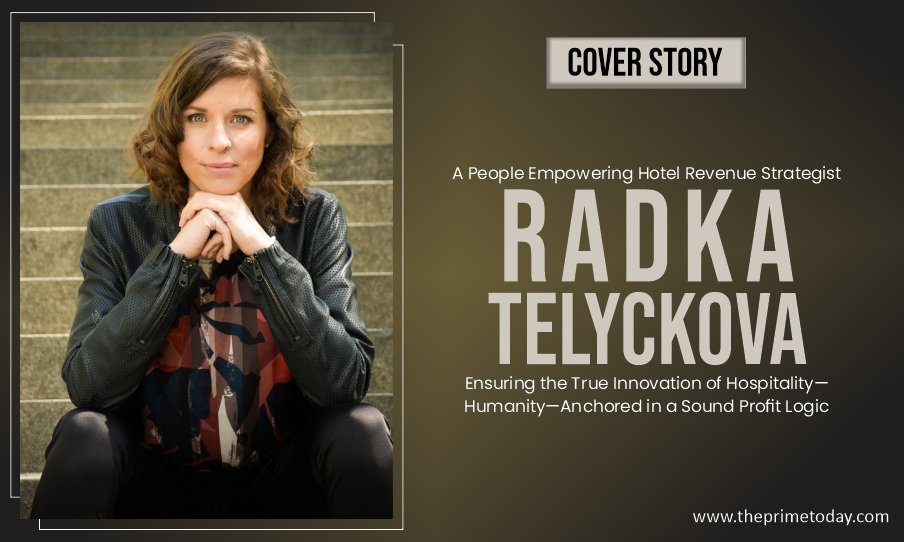
In hospitality, numbers are everywhere. But numbers alone never built a great hotel. Although her career spans over 15+ years in hospitality revenue strategy, to Radka Telyckova, hospitality has always been about people and people serving systems. She explains that revenue was never just about money flowing into a hotel. It’s about what that money becomes: a better guest experience, a breakfast people remember, and a strong team you can actually keep. “And you can’t build any of that by undermining profitability.”
Profitability has to be clearly defined. There’s no overnight fix in hotel revenue. Sustainable results, even strong ROI, come from fixing the system behind the numbers. For Radka, revenue usually stops making sense when pricing, demand, distribution, and financial reality start pulling in different directions. “Suddenly, there are reports everywhere, tools everywhere, and still no clear answers. At that point, everything feels overwhelming.” That’s where she comes in to make all the difference.
Fixing the System Behind the Numbers
Growing up in hospitality since she was nine, Radka has seen what low season really means: negative cash flows, pressure, and tough decisions. She reflects, “My parents faced it all when the numbers didn’t support the operation.” And she has seen it every day since then. That’s why she dedicated her work to fixing the system behind the numbers, so pricing, demand, and financial reality stay aligned, and the hotel can run with stability and intentional work.
“Today, I work with hoteliers who want to be proud of their hotel’s name and what is left behind. They want to build something with meaning.” She doesn’t work with people who treat a hotel like a ‘money-throughput machine.’ She works with the ones who want to create value, reputation, and a legacy, and who understand that strong profitability is what protects that mission.
Deleting the Disconnect
Further, sharing the most common disconnect, Radka says it is that hotels treat pricing as the main lever, as if price is the whole strategy. But a healthy hotel never ignores the chain reaction behind the number. “I most often see three patterns:”
~Pricing trapped in a fixed comp set mindset. Prices change daily, sometimes multiple times a day. And every change silently reshapes who you’re competing for. Your ‘price tag’ doesn’t just reflect value; it attracts a different type of guest with different expectations, behaviors, and seeks other value for money. If you compete only on a fixed competitive set, you wake up every day fighting someone else’s game. For independent hotels, vision and positioning are more valuable than chasing the market down or up. Price is a signal, not a standalone strategy.
~Revenue decisions disconnected from cost and true profitability. In many hotels, revenue management still operates as if costs are ‘someone else’s topic.’ But acquisition cost matters. Total hotel revenue matters. Department profitability matters. Team stability matters. And yet many revenue managers can’t clearly answer two basic questions: “What is our minimum selling price? What is the real contribution margin of this booking by channel and segment? Without that, you can grow revenue and still weaken the business,” explains Radka further.
~Strategy anchored in history instead of forward reality. “Every year teaches us that demand shifts and what worked last year may fail this year.” When revenue teams become operationally ‘blind,’ creativity dies. Too many revenue leaders stay inside the hotel, inside reports, without regularly experiencing the market, visiting other properties, collecting inspiration, and understanding what guests are valuing right now, this year, at this time. History is useful, but it’s not the truth of what TODAY’S reality is. “For me, revenue management is a game that changes every single day. So the question I ask is simple: What can I do today that will shape a better tomorrow?” she states.
Eliminating the Weakest Links
As someone working closely with independent and boutique hotels across Europe, according to Radka, their challenges differ from those of larger hotel groups when it comes to revenue and profitability. She shares that independent and boutique hotels have a lot of ambition and creativity, yet their weakest link is often the lack of leverage.
Unlike groups, they rarely have layered tech, shared services, or analysts to handle repetitive work, so the owner, GM, or Revenue Manager ends up doing everything. They feel ROI much more directly than groups. Every monthly tech fee competes with a real ‘person cost’ in payroll—so the question isn’t “Do we want another tool?”, but “Does this tool replace repetitive manpower or create measurable profit?”
Real Hotel Revenue AI Agent
Currently, Radka is building a next-generation revenue AI Agent grounded in real hotel revenue work. Sharing the problems she is determined to solve, Radka says that she has a very specific goal: to get core revenue tasks under 60 minutes a day. “After all these years, I want to stop doing what so many revenue people still do—copying and retyping data from one system into another. That’s not a strategy. That’s friction.”
Her goal with the AI layer is to remove that daily manual workload—so she (and her clients) have more time for what actually moves the needle: creativity, demand generation, and building value, not maintaining spreadsheets. “Well, I do not even want to need spreadsheets anymore. Why? I just need a better strategy to fulfill my hotel vision.”
Negating the Noise
Many organizations believe more tools mean better decisions. Yet, in Radka’s personal opinion, more tools often create more noise, not more clarity. Hotels drown in dashboards, paperwork, and micromanagement, so teams stay busy, but they don’t get more strategic. “Sure, finding the right tool is the key, and it happens only if we know what we want and can clearly describe our business intentions. Less is more would be appropriate and still relevant.”
She often uses one simple filter: If it won’t matter in five years, she won’t spend more than five minutes on it. That alone helps her cut unnecessary reporting, pointless meetings, and busy work, and it brings the focus back to decisions that truly move the hotel forward.
The Biggest Mindset Shift
Through Inevitable Hotel Success, Radka mentors owners, GMs, and revenue leaders. In her view, the biggest mindset shift that leaders struggle with the most when moving from chaos to clarity is moving from running the hotel based on the past to designing the hotel for the future. She works with owners, GMs, and revenue leaders who’ve been in the industry or in the same property for years. Over time, many stop truly seeing their product. They forget to look at what guests want now, how the market is evolving, and where their hotel could go next. They get stuck in “this is how we’ve always done it.”
Clarity starts when they draw a clean line: “What was versus what we’re choosing to build. It’s about dreaming bigger, releasing old stories, and intentionally designing future success—rather than endlessly reacting to history.”
Anchoring Decisions in the Ever-Changing Reality
Radka further helps leadership teams transition from being reactive—staring at reports—to becoming strategic thinkers focused on sustainable growth. She achieves it by bringing them back to basics, but in the bigger picture. “We stop worshipping occupancy and shift the conversation to outcomes.”
“We anchor decisions in finance, not heavy accounting, just practical clarity: What’s the profit logic behind this move? What are we protecting? What are we buying with this revenue: service quality, team stability, guest experience? And who are we making happy while doing so: the right guests, the team, the owners?”
“And then we name the real driver behind most ‘reactive revenue: fear. Fear of empty rooms. Fear of being ‘too expensive.’ Fear of selling too cheaply too early and regretting it later.
Changing the Way Teams Respond
In many hotels, low demand still triggers the same reaction: prices go down, stress goes up, and reports take over. But reactive pricing is not strategy. Many teams have simply learned the same pattern over time: demand drops → lower the price → check more reports → repeat.
But that pattern can change. Stronger teams pause, read the situation clearly, and make deliberate decisions instead of reacting in panic.
Before a hotel can sell at the right price, the people behind it must believe that what the hotel offers truly deserves that price. When the team itself doubts the value of the product, pricing quickly becomes defensive and fear starts driving decisions.
And once fear stops running pricing, the hotel stops swinging between chaos and regret.
That’s when the numbers finally start making sense.
Yet in Radka’s experience, revenue is still too often treated as a separate function instead of a core business discipline. The reason is rarely technology. It is mindset.
Revenue stays “a separate function” when people believe: “I can’t change this… the system won’t allow it… that’s just how it is.” When that happens, teams start hiding behind processes instead of making decisions.
The shift happens when owners, GMs, and revenue leaders treat revenue as a leadership discipline, not a rate task. Very often what helps most is an outside perspective — someone who challenges assumptions, brings clarity, and helps move the team from knowing what to do to actually doing it.
Simplicity Outperforming Complexity
Radka emphasizes improving profit without adding more people or technology. Sharing an example of how simplicity can outperform complexity in revenue management, Radka says, “Just cut the noise: simplify room categories, clean up pricing logic, define a clear minimum price and base price, and run one simple daily rhythm: pace → pressure → action. No endless dashboards. No micromanagement. Just five decisions a day.”
And one more thing: a controlling GM can destroy even the best system. Give the team full competence and let them do the job. That’s when simplicity works—because it creates execution.
Conquering the Challenges
As a woman leading innovation in a traditionally data-heavy and male-dominated space, Radka faced challenges that shaped her leadership style. She cites them: “I used to feel the pressure to ‘prove’ myself, to be louder, tougher, more aggressive, or to overexplain everything with numbers just to be taken seriously. I lived there for years. Honestly, it was exhausting. I was too hard on myself, believing that if I became perfect, that would be the recipe.”
What shaped her leadership style is expertise and consistency. Showing up again and again, doing the work, delivering results, and letting outcomes speak. Her superpower is clarity. She is not trapped inside the problem. She sees the bigger picture and what will serve the hotel long term.
It’s like standing on a mountain summit. From the top, you see other peaks, the full landscape, and suddenly the ‘big problem’ looks much smaller. You realize what truly matters, what’s just noise, and what the next step really is.
“And I stay true to myself, even when someone doesn’t like it.” She doesn’t lead to be liked. She leads to be honest, and steps away if the room demands performance over truth.
That’s why Radka’s message is simple. No fear. Fear is rarely true. It is usually imagination, something you are consciously avoiding, a mental movie running in your head. Protect your energy. Stay calm and clear. Keep your standards, because when you are calm, you can see what you want coming my way.
“I treat my intuition with the highest respect.” Leading and creating from her feminine strength and intuition has helped Radka over the last decade. Sometimes she still feels there isn’t enough time, or that she will miss something. But the truth about time is this: forget time. It will happen when you are ready. “I help myself by asking one question: What do I need to be ready? Once I know it, I do it.”
Humanity, the True Innovation
When asked about how she defines true innovation in hospitality today: technology, thinking, leadership, or culture, Radka replies, “Interesting question, I believe, and I believe it more and more every single day that a true innovation in hospitality today is humanity.”
Technology can speed things up, but it can’t replace care, taste, intuition, and the feeling of being truly welcomed. Thinking and leadership matter—but only if they protect what hospitality is really about: people.
Sharing the Secret of Success
Finally, in her advice to emerging women leaders who want to shape systems, influence strategy, and build long-term value rather than quick wins, Radka says: “Don’t aim to be the person who ‘saves the day’ every week. That’s not leadership, that’s a trap.”
Bring the team into the decisions. Not because it sounds nice, but because if they’re not part of the thinking, they’ll never own the doing. Let them be seen. Let them matter. Give them space to contribute, to grow, to be proud. A strong hotel is never one brilliant person; it’s a team that knows what matters and why.
And yes — learn the profit logic. Know what you’re protecting. But don’t forget the point: profit is not the goal. Profit is the fuel, your tool that allows you to keep standards, keep great people, and build a hotel you’re proud to put your name on.