
Africa’s Rising Hope – Adong Margaret: Cultivating a Continent of Job Creators and Community Guardians with the Seeds of Asinatha Foundation
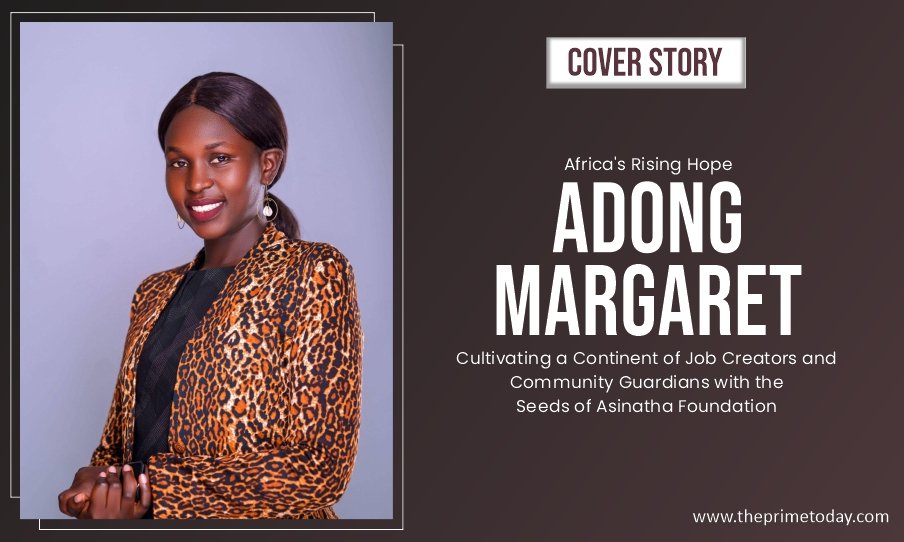
System problems need systematic solutions. The silent crisis of the jobless graduates in Uganda is the system’s problem, says Adong Margaret, the Founder and CEO of Asinatha Foundation. She observes it perfectly. In Uganda today, there is a bittersweet reality: nearly every family has celebrated a university graduate. Nine out of ten homes have seen a child in a graduation gown, holding a degree with immense pride. Yet, the celebration often ends at the front door. Adong Margaret points out that eight out of those nine graduates are still at home. They have walked the streets with envelopes, sent countless emails, and called every contact they know, only to find no path forward.
Adong Margaret constantly asks herself why these young people are only looking for jobs after they finish school. She wonders why they cannot create change within their own communities instead of waiting for it. The truth, she notes, is painful. She believes the current system is designed to train job seekers rather than job creators. From primary school to university, students are taught to pass exams and qualify for employment, but they are rarely taught how to identify a local problem and turn it into a solution. They are not taught how to build, how to risk, or how to rise after a failure.
A Culture of Misunderstood Ambition
Adong Margaret notices that the collective mindset often reinforces this struggle. When someone resigns from a stable job, the immediate assumption in many minds is failure. People whisper and assume the worst, rather than asking if that person is choosing courage or building something new. To her, this is not just an individual struggle; it is a deep-seated systems issue.
While she acknowledges that the country is slowly moving toward vocational training, innovation, and entrepreneurship, she remains deeply concerned for those already stuck at home. She thinks of the graduates battling silent depression as months turn into years and dreams begin to fade. Adong Margaret sees the young man in Kampala who still dresses well every morning just to keep hope alive, and the graduate in the village who once believed she would change her family’s story. These are the stories of quiet suffering that no graduation photo ever captures.
Redefining Success through Value Creation
Adong Margaret advocates for more than just degrees; she calls for a total mindset shift. She believes families should celebrate courage just as much as they celebrate employment. In her view, institutions must focus on teaching value creation rather than just qualification. She envisions communities that support small, humble beginnings and stop shaming those who choose a different professional path. “Our young people are not lazy, and they are not failures. They are the products of a system that must evolve. We need to build a world where we celebrate the person building a solution in their village just as much as the one sitting in a corporate office.”
Adong Margaret maintains that the youth are ready and capable, but they are trapped in a cycle that was not built for their success. Through her work and the efforts of the Asinatha Foundation, she continues to ask the vital question: how do we help these young people rise again before their dreams disappear completely?
Innovation as a Tool for Dignity and Survival
In the pursuit of solving social challenges across the continent, Adong Margaret views innovation and community-led solutions as far more than mere strategies. To her, they are essential tools for survival, dignity, and ownership. She has observed the recurring pattern of imported solutions that fail to listen to the people they intend to serve. She notes that while funding cycles end and reports are written, the underlying problems often return because the community was never truly part of the change.
Adong Margaret believes that for change to be lasting, it must begin at the community level through real ownership rather than token consultation. She argues that when a community identifies its own problems and designs its own responses, the solution stops belonging to an outside organization and starts belonging to the people. “Innovation in Africa is not always about technology. Sometimes it means reimagining how elders mentor the youth, or turning an abandoned space into a training hub. It is creative, contextual, and deeply human. When we invest in local leadership, we do more than solve a problem. We rebuild trust.”
The Transformation of Bakuli: A Case Study in Agency
Adong Margaret points to the Bakuli area in Kampala, Uganda, as a powerful example of this philosophy in action. There was a time when the streets were governed by fear, and small businesses closed early to avoid crime. However, through an intentional partnership with Victorious Schools and deep community engagement, the residents took charge of their own safety.
The results were profound. By fundraising together to establish a local police station and engaging at-risk youth through mentorship and skills pathways, the community reduced the crime rate by 75%. Adong Margaret highlights that 98% of high-risk hotspots were addressed through this structured involvement. Today, the roads that once carried fear now carry traders and children, and the most beautiful part of this shift is that it is not dependent on outsiders. The transformation lives within the people who once felt powerless.
Restoring Agency and Generational Impact
For Adong Margaret, community-driven innovation is the key to restoring agency. It serves as a reminder to young people that they are not just statistics and to women that they are not invisible. She maintains that across Africa, the greatest asset is not found in natural resources, but in the people themselves. “Real change does not trickle down; it rises from within. When a community drives its own implementation, they stop waiting to be rescued and starts transforming the systems around it. That is the only way to create a generational impact that lasts long after the implementers have left.”
She adds that when people take collective responsibility for their neighborhoods, safety and prosperity stop being luxuries and become a shared reality. By investing in local ideas and leadership, Adong Margaret believes Africa can strengthen its social cohesion and ensure that the progress made today continues to protect and serve the next generation.
Advice for the Aspiring Leader
For every young woman who dreams of becoming a founder or a CEO in the social impact sector, Adong Margaret has a simple message: start before you feel ready. She believes that no one ever feels one hundred percent prepared, and that is perfectly fine. In her view, leadership is not born from a state of perfection but from a deep sense of conviction. She encourages aspiring leaders to pay attention to the things in their communities that break their hearts, as that discomfort is often a sign of their true assignment.
Adong Margaret emphasizes that real impact is not built in boardrooms alone. It is found in classrooms, small villages, informal settlements, and through honest conversations with mothers and local youth. She advises young leaders to listen more than they speak and to always ask why a problem exists instead of just focusing on how to run a single activity. By understanding the underlying systems of policy, culture, and economics, a leader can design solutions that last far beyond a simple funding cycle.
Building Trust through Consistency
In the development sector, Adong Margaret views trust as the most valuable currency. She tells young women to show up consistently and to keep their word, even when no one is applauding their efforts. Communities never forget those who stayed when things were difficult. She also stresses the importance of learning the business side of social impact. Passion needs a solid structure to survive, which means understanding budgets, governance, and how to build a strong team. “Do not shrink in rooms of power, even if you are the youngest or the only woman there. Your perspective is necessary for change. Protect your mental and emotional health as well, because a burned-out leader cannot build a lasting future. You must redefine failure as feedback and rejection as a sign that you are being redirected toward a better path.”
Choosing Collaboration Over Competition
Adong Margaret believes that the continent needs strong ecosystems rather than isolated heroes. She encourages young founders to collaborate more than they compete, as working together creates a much larger impact. For her, leadership is about character rather than titles. A title may come and go, but the way a leader treats people remains permanent. She reminds young women that they do not need permission to lead; they already carry the courage and empathy needed to begin their journey. “True leadership is something that the people follow because they believe in the vision and the person behind it. You already have the vision within you. Start where you are, use what you have, and remember that your greatest asset is your connection to the people you serve. When you lead from a place of service, your influence will naturally grow.”
A Legacy of Proximity and Connection
When finally asked about how she would like her leadership legacy to be remembered as she continues shaping futures through Asinatha Foundation, Adong Margaret exclaims, “Wow! That is such a beautiful and weighty question. I never want my leadership legacy to be remembered for titles, stages, or how many conferences I spoke at. I want it to be remembered for proximity. For choosing to sit in classrooms, in communities, in conversations that were uncomfortable but necessary. Through Asinatha Foundation, I hope my leadership is remembered as leadership that listened first, built with people, and never lost sight of the human being behind every statistic.” Her goal is to ensure that the foundation is viewed as a partner that built solutions alongside the people, rather than for them.
Adong Margaret is driven by the desire to shift mindsets and challenge the narrative that young people are problems to be managed. She wants them to be seen as potential to be nurtured. If thousands of young people can eventually say they see themselves differently because of an opportunity created by the foundation, she believes that will matter more than any award. For her, the work is not just about running programs; it is about restoring belief and creating spaces where people can discover their own voices and their power to create change.
Building Systems for Lasting Ownership
A major part of her vision is focused on building systems that create independence rather than dependency. Adong Margaret hopes to be remembered for strengthening schools and partnering with communities in a way that outlives any single leader. She envisions a legacy where crime is lower because the youth are empowered and where unemployment drops because young people have the skills and confidence to create their own paths. She wants to see teachers become mentors and communities become the true owners of their own transformation. “I want the work to continue even if my name is no longer mentioned. Real impact is not about being loud; it is about being lasting. If we can shape character as much as we shape careers, then we have built something truly worthwhile. It is about creating a leadership that makes room for other young men and women to rise.”
Leading with Grounded Humility
On a personal level, Adong Margaret strives to be a leader who remains grounded and chooses courage over comfort. She believes in leading with humility and ensuring that there is always space for others to step into their own leadership roles. To her, the most meaningful legacy is one where skills are matched by belief and opportunities are matched by a sense of true ownership. She continues to work toward a future where the impact is felt in the strengthened fabric of the communities she serves. “If the future can say that Asinatha Foundation helped shape not just careers but character, not just skills but belief, not just opportunities but ownership, then that is the kind of legacy worth leaving.”
As she continues to expand the reach of the foundation, “We are here to ensure that the youth do not just find jobs, but find their power to change their own stories.” When a person realizes they are the solution they have been waiting for, the change becomes permanent. Adong Margaret remains focused on the quiet, steady work of building trust and fostering local leadership. She watches as the seeds of initiative begin to sprout in the neighborhoods she once walked through, knowing that the real story is just beginning. Her journey is defined by the belief that when you invest in the character of a community, you secure the future for generations to come.