
An Active Value Architect of Finance – Sevginar Joebges: Steering Every Business Through Storms onto the Shore of Success
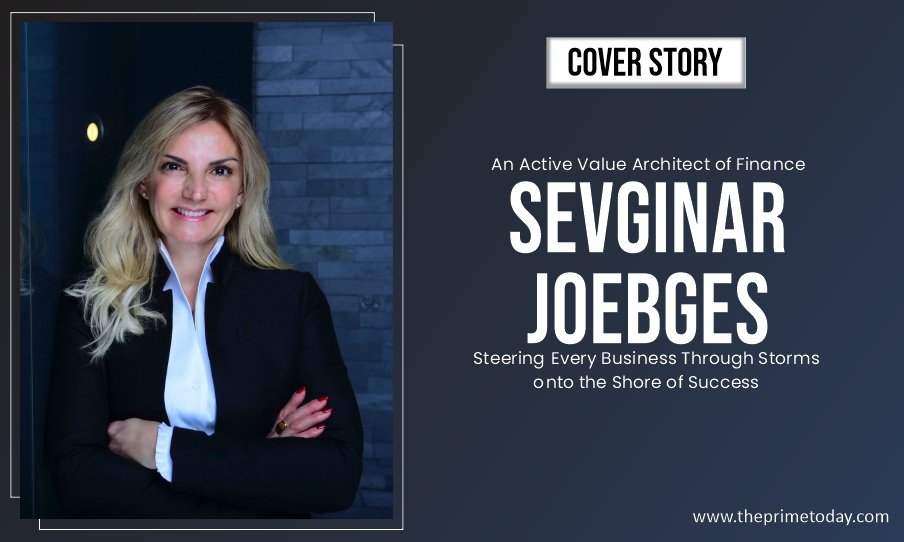
Human ingenuity has always been universally infinite. Sevginar Joebges, too, believes that the sky is not the limit. She brings this high perspective to the grounded world of finance, where she works as a Founder and Owner at JSJ Solution GmbH. Having over 15 years of international experience, Sevginar Joebges is frequently called to provide consulting services to corporate clients when they need to act quickly and/or shift in a new direction. Sevginar Joebges provides expert consulting services, whether a new company is seeking its first major investment or a large corporation is undergoing a complicated merger or acquisition, by creating financial transparency (clarity). Her area of expertise includes cash management and deep dives into international accounting principles (for example, IFRS, US-GAAP) applicable to their business dealings.
Additionally, Sevginar Joebges excels in guiding clients through financial turmoil. As one of the premier consultants in the opportunity management area, she is also recognized for her composure in times of turmoil. She specializes in acceleration and restructuring, helping companies get back on track when they have expanded too rapidly or are in crisis mode. In this regard, she is adept at liquidity planning and dealing directly with investors and shareholders to keep everyone focused on a common goal. Her work often involves executing share and asset deals or performing due diligence during a merger. She does not just look at the numbers; she looks at the health of the entire business to ensure it can survive and thrive in the long run.
Savignar Joebges’s vision goes beyond the balance sheet. More than just a finance expert, she is a mentor and a coach who believes in the power of people. She leads interdisciplinary teams with a focus on independent and conceptual thinking. Her background is as diverse as her professional skills. She is an author and a PhD candidate at Vienna International Studies, constantly searching for new ways to improve the world of management. Outside of the office, she finds freedom in the air as an aviation pilot and on the water with her sailing license. These experiences give her a unique sense of discipline and a wide view of what is possible.
In an exclusive interview with The Prime Today, Sevignar Joebges gave us a deep dive into her extremely fascinating realm of international finance and interim management. Let’s hear her story out.
Welcome Ma’am. First question: With over 15 years of international experience across finance, restructuring, and transformation, what initially inspired you to pursue a career in corporate finance and interim management?
What inspired me from the beginning was the realization that finance is never just about numbers. Behind every balance sheet, every cash flow, and every valuation, there is a business model, a leadership culture, and ultimately a future that can either be shaped or missed. I was always fascinated by the fact that finance, when used correctly, becomes one of the most powerful instruments for decision-making, growth, and value creation.
Over the years, I developed a particular passion for situations where companies are under pressure, undergoing change, or entering a decisive phase. These are the moments when finance matters most. In such environments, clarity, discipline, and speed are essential. I found that interim management allows me to create impact exactly where it is most needed: in transformation, restructuring, liquidity stabilization, post-merger integration, or leadership transition.
For me, interim management is not just a function. It is a mindset. It means stepping into complexity, quickly understanding the mechanics of a business, and creating structure, transparency, and momentum. I have always been drawn to that responsibility.
My motivation has never been to maintain the status quo. It has been to create measurable improvement and help organizations move from uncertainty to stability, and from stability to sustainable value creation.
Wow! Great! Now, your work spans company acceleration, restructuring, and special situations—what core philosophy guides your approach when stepping into complex business environments?
My core philosophy is simple: transparency creates control, and control creates value.
Whenever I step into a complex environment, I focus first on understanding reality without filters. In many organizations, especially during growth phases or difficult situations, the biggest issue is not a lack of effort. It is a lack of clear visibility. Numbers may exist, but they are often fragmented, delayed, or disconnected from operational reality. My first priority is therefore to establish a fact-based view of the business.
From there, I work with three principles. First, cash is strategic. Profitability matters, but liquidity determines whether a company has room to act. Second, value creation must be sustainable. I do not believe in cosmetic performance. Adjusted figures can be useful, but only if they help management understand the real economics of the business. Third, finance must be operationally connected. The finance function should not sit beside the business; it must actively shape decisions across pricing, margins, working capital, investments, and organizational priorities.
In special situations, leadership tone also matters enormously. People need clarity, calmness, and direction. My role is therefore not only analytical, but also managerial. I bring structure into uncertainty and create a path forward that is credible for stakeholders, teams, investors, and lenders alike.
As an Interim Finance Manager and Transformation Partner, how do you quickly assess an organization’s financial health and identify priority areas for impact?
I begin with a rapid diagnostic focused on the few areas that reveal the true financial condition of a company. These typically include liquidity, working capital dynamics, margin quality, debt and covenant position, reporting quality, and the reliability of the financial information itself.
In the first phase, I want to understand four things: Where is cash being generated or consumed? What is driving profitability versus what is merely being reported? Which risks are immediate and which are structural? And how reliable is management information for decision-making? I usually combine financial statement analysis with operational interviews, process reviews, and a close examination of the company’s reporting routines.
A healthy business is not defined by revenue growth alone. It is defined by the quality of earnings, conversion of profit into cash, and the company’s ability to steer itself with discipline. I pay particular attention to the cash conversion cycle, inventory discipline, receivables management, gross margin development, and whether leadership has a realistic view of performance.
Once that picture is clear, I prioritize actions that create both short-term stability and medium-term value. This may mean improving cash visibility, cleaning up reporting, challenging assumptions in budgets, restructuring specific processes, or aligning finance more closely with commercial decision-making. I always look for the intersection between urgency and value impact. That is where transformation starts.
You have deep expertise in IFRS, US-GAAP, and HGB—how do you leverage this multi-framework knowledge to create strategic advantages for global organizations?
Working across IFRS, US-GAAP, and HGB gives me more than technical flexibility. It gives me a broader perspective on how businesses communicate performance, manage compliance, and build trust with stakeholders across jurisdictions.
Each framework carries different implications for reporting, risk assessment, documentation, and strategic interpretation. If you understand these deeply, you can anticipate issues earlier, communicate them better, and avoid unnecessary friction in audits, transactions, and investor discussions. This is especially valuable in international organizations where local compliance requirements and group reporting expectations must work together.
I see accounting frameworks not merely as rulebooks, but as strategic architecture. Good finance leadership means translating technical accounting into business consequences. For example, a recognition issue, an impairment trigger, or a principal-versus-agent assessment is never only an accounting matter. It can affect investor perception, financing discussions, management credibility, and internal decision-making.
My strength lies in connecting the technical and the strategic. I ensure robust compliance, but I also help leadership understand what the numbers actually mean and how they will be perceived by auditors, investors, lenders, and boards. In international environments, that capability creates real value because it reduces uncertainty, improves preparedness, and supports better decisions at the highest level.
Having led M&A due diligence and post-merger integration (PMI), what are the most critical success factors for ensuring seamless integration and value realization?
The biggest mistake in M&A is to think that value is created at signing. In reality, value is only created when integration is executed successfully, and the strategic logic of the transaction becomes operationally real.
In my experience, the most critical success factors are clarity of value drivers, speed in integration governance, and discipline in execution. Before closing, management must be very honest about where the value is supposed to come from. Is it revenue synergy, margin improvement, operational leverage, geographic access, capability expansion, or restructuring potential? If that is not clearly defined, the integration will lose focus very quickly.
The second factor is governance. PMI needs ownership, decision rights, milestones, and transparent tracking. Integration cannot remain a side project. It must be managed with rigor, cross-functional alignment, and financial accountability. Finance plays a central role here because it connects synergy assumptions with budgets, reporting, and actual delivery.
The third factor is cultural and organizational realism. Systems can be integrated relatively fast; people cannot. A transaction often fails not because the strategy was wrong, but because the organization lacked alignment, trust, or execution discipline. That is why I believe strong integration requires both financial precision and leadership sensitivity.
Ultimately, successful M&A is about turning ambition into measurable value. That only happens when the business case is operationalized and monitored with consistency.
Your experience includes working closely with investors and participating in investment forums. What do you believe investors look for most in today’s evolving business landscape?
Investors today are more selective, more analytical, and more sensitive to execution quality than ever before. They no longer look only at growth stories. They look at whether management can convert strategy into resilient value creation.
In my view, investors focus above all on credibility, cash generation, and leadership quality. They want to understand whether management truly knows the business drivers, whether reported performance reflects economic reality, and whether the company has the discipline to manage volatility. Growth can be attractive, but only if it is supported by margins, cash flow quality, operational control, and a realistic capital allocation mindset.
Another important factor is transparency. Investors accept challenges; what they do not accept is inconsistency, weak communication, or a lack of preparedness. In times of uncertainty, companies that communicate clearly, explain trade-offs honestly, and demonstrate command over their numbers stand out.
I also believe that sustainable enterprise value is becoming more important than short-term headline performance. Investors increasingly differentiate between companies that grow fast and companies that create durable value. That difference often lies in pricing quality, working capital discipline, governance, reporting integrity, and strategic execution. Those are exactly the areas where strong finance leadership becomes a decisive advantage.
In high-stakes environments such as liquidity planning and turnaround situations, how do you balance analytical rigor with decisive leadership?
In high-stakes environments, leadership must be both calm and precise. Analytical rigor without decisiveness creates delay. Decisiveness without rigor creates risk. The balance comes from having a structured framework for action.
My approach begins with facts: daily cash visibility, clear assumptions, scenario-based planning, and transparent risk mapping. When liquidity is under pressure, ambiguity is dangerous. The organization needs to understand what is known, what is uncertain, and what actions are available. That level of structure reduces emotional noise and allows better decisions.
At the same time, turnaround situations require speed. You cannot wait for perfect information. A strong leader must take decisions based on the best available evidence, communicate them clearly, and adapt quickly when new facts emerge. I believe this is where experience matters. Over time, you learn how to distinguish signal from noise and where intervention creates the highest impact.
I also see leadership in these situations as a responsibility toward all stakeholders. Teams need direction, lenders need confidence, investors need transparency, and management needs a credible path forward. My role is to create that path with honesty, discipline, and execution focus.
As a leader operating across Switzerland and Germany, how do cultural and regulatory differences influence your approach to financial strategy and execution?
Operating across Switzerland and Germany has taught me the importance of adapting style without compromising standards. Both markets value quality and professionalism, but the regulatory expectations, decision-making dynamics, and communication styles can differ in meaningful ways.
Switzerland often combines precision with a strong emphasis on efficiency, trust, and discreet professionalism. Germany, particularly in larger corporate structures, tends to require very robust documentation, process clarity, and structured stakeholder coordination. Understanding these nuances is important because finance leadership is never only technical. It is also relational and cultural.
From a regulatory standpoint, cross-border work requires a high degree of discipline. Reporting standards, tax implications, governance expectations, and legal documentation must be aligned carefully. I approach this with a strong respect for detail, but also with the intention to simplify complexity for decision-makers.
What I bring into both environments is consistency in quality, clarity in communication, and a value-oriented mindset. I adapt the execution, but not the principle: finance must support trust, enable decisions, and strengthen the long-term position of the business.
You are also involved in mentoring and coaching—how important is leadership development in driving sustainable organizational success?
Leadership development is essential. A company can improve systems, processes, and reporting, but if leadership capability does not evolve, those improvements rarely last.
I believe sustainable success depends on whether leaders can create ownership, accountability, and clarity within their teams. In finance, especially, technical expertise alone is no longer enough. Today’s leaders must be able to translate complexity, challenge assumptions, communicate with confidence, and guide organizations through change.
Mentoring and coaching are important to me because they multiply impact. When you develop people, you do not just improve one decision; you improve the quality of many future decisions across the organization. That is why I always invest in strengthening not only financial structures, but also the people who operate within them.
Strong leadership cultures create resilient businesses. They support better execution, healthier decision-making, and stronger succession capability. In the long run, that is one of the most underestimated drivers of enterprise value.
What role do innovation and digital transformation play in modern financial management, especially in areas like fast-closing processes and reporting?
Innovation and digital transformation are no longer optional in finance. They are central to speed, quality, and strategic relevance. A finance function that still relies heavily on fragmented manual work will always struggle to deliver timely insights and consistent control.
Modern finance must move from retrospective reporting to forward-looking steering. That requires better systems, cleaner data flows, more integrated processes, and a strong focus on information quality. Fast-closing, reliable forecasting, and management reporting all depend on whether the underlying data architecture supports decision-making in real time.
For me, digital transformation in finance is valuable when it improves transparency, reduces unnecessary complexity, and frees capacity for higher-value work. Automation should not simply accelerate old inefficiencies. It should redesign the finance function toward insight generation, scenario planning, and strategic business partnerships.
This is especially important in transformation environments. When companies move fast, leadership needs numbers that are timely, comparable, and decision-ready. Digital finance is therefore not just about efficiency. It is about making better decisions faster.
Looking ahead, what major trends do you foresee shaping the future of corporate finance, restructuring, and interim management?
I see three major trends. First, finance will become even more strategic. The role of the finance leader is moving beyond stewardship toward active value architecture. Companies need leaders who understand capital, performance, risk, and transformation as an integrated agenda.
Second, resilience will become a core valuation factor. In recent years, businesses have learned that growth without control is fragile. Future winners will be those that combine ambition with liquidity discipline, operational flexibility, and high-quality management information.
Third, interim management will continue to gain importance. Businesses increasingly need experienced leaders who can step in quickly, stabilize complex situations, and deliver results without long ramp-up times. In a world of constant change, this model is not temporary support; it is a strategic capability.
I also believe that the debate around performance will shift. Revenue growth alone will no longer be enough. Companies will be judged more rigorously on cash conversion, governance quality, execution discipline, and their ability to create sustainable enterprise value.
As one of “The Most Iconic Business Women Making a Difference in 2026,” what legacy do you aspire to build, and what advice would you give to aspiring women leaders entering this field?
The legacy I want to build is one of substance. I want to be known as someone who helped organizations create real value in difficult moments, built trust through clarity and performance, and showed that finance can be both highly analytical and deeply transformational.
I also want to contribute to a broader shift in how leadership is perceived. Women in finance, restructuring, and transformation should not be seen as exceptions. They should be visible, credible, and influential at the highest levels of decision-making. I hope my work encourages more women to enter complex business environments with confidence and ambition.
My advice to aspiring women leaders is this: build depth, not only visibility. Know your craft. Develop resilience. Learn how value is created, how risks are managed, and how leadership works under pressure. Do not reduce yourself to titles or optics. Focus on competence, credibility, and consistency. At the same time, do not wait for perfect conditions. Growth happens when you step into responsibility before you feel fully ready.
Leadership is not about being the loudest person in the room. It is about bringing clarity, courage, and direction when it matters most. That is where real influence begins.