
Apple Declines as Supply Hinders the Cloud Outlook, Highlighting the Need for Iphones
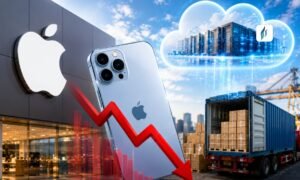
Before the bell on Friday, Apple shares fell 7.3% as the tech giant warned that growth would be hampered by supply restrictions, leading investors to look beyond short-term shortages to assess the impact of an anticipated increase in iPhone prices.
If the losses continue, Apple (AAPL.O) is expected to lose almost $361.6 billion in market value.
The company’s forecast brought to light a larger industry issue: supply of cutting-edge chips and memory is becoming more scarce due to AI-driven demand, which raises prices and prolongs supply-chain bottlenecks in the technology sector.
On Thursday, Apple announced that its supply of iPhones, Macs, and some iPads was limited due to a lack of sophisticated chipmaking capability. Tim Cook, the company’s CEO, stated that the dimmer forecast was caused by supply bottlenecks rather than insufficient demand.
At the beginning of September, Cook will relinquish his top position at the tech company to John Ternus, ending a period of leadership that made Apple the most valuable corporation in the world and a top-performing “Magnificent Seven” member.
J.P. Morgan analysts lead by Samik Chatterjee states, “demand robustness is running into a wall of supply and cost challenges.” They added that revenue is anticipated to be realized in future quarters and that supply restrictions are likely to delay rather than eliminate sales.
For the current quarter, Apple predicted sales growth of 9% to 11%, which was lower than Wall Street’s estimate of roughly 12%. The company also projected mid-teens percentage growth in iPhone revenue, which also fell short of analyst projections.
The June quarter saw the highest-ever iPhone sales for the third quarter, rising 21.7% to $54.25 billion, above forecasts of $53.86 billion.
Investors are growing concerned about whether Apple can raise iPhone prices without hurting demand, even though it is widely anticipated that it will do so later this year.
According to TD Cowen analysts, Apple’s upgrade program, AI-powered Siri capabilities, and the impending iPhone cycle may enable the company to raise pricing “without significant demand destruction.”