
Damon Lester: Leading with Purpose, Humanity, and the Courage to Take the Cape Off
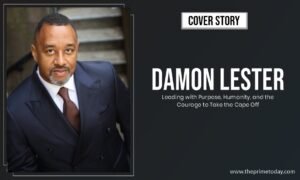
Redefining What It Means to Be a Leader!
Leadership is often associated with titles, accomplishments, influence, and the ability to make difficult decisions. Yet behind every leadership title is a person carrying responsibilities, expectations, challenges, and pressures that are rarely visible to others.
For Damon Lester, leadership has always been about much more than holding a position of authority. With more than 25 years of experience leading organizations, representing business owners, building and owning businesses, serving on boards, working with corporate executives and policymakers, and now speaking and writing about leadership, Lester has experienced leadership from many different perspectives.
His professional journey has included 16 years as President of a national trade association, where he worked with business owners, corporate executives, policymakers, and communities across the country, helping navigate issues that affected businesses, employees, consumers, and the broader industry. His career has also included congressional testimony on issues affecting businesses and consumers, national media appearances, board service, and recognition for his leadership across business and industry.
Becoming a business owner and ultimately leading a multimillion-dollar enterprise changed his understanding of leadership once again. When your name is attached to the business, when employees depend on you for their livelihoods, and when every major decision carries consequences, leadership becomes deeply personal.
Then came another defining moment.
Selling his business in 2025 forced Lester to confront a question that many leaders may avoid:
Who are you when the title changes?
That question became an important part of his leadership philosophy and the foundation of his message through Taking the Cape Off.
Today, Lester’s work focuses on a more human understanding of leadership, one that combines discipline, empathy, service, and respect with the recognition that leaders do not have to pretend they are invulnerable. His message is simple but powerful: leaders do not need to have everything figured out. They need the courage to lead even when they do not have all the answers.
A Career Built on Experience, Responsibility, and Service
Damon Lester’s professional journey has evolved through different levels of leadership and responsibility. Over more than two decades, he has held leadership roles that have allowed him to understand organizations from multiple perspectives. He has led a national association, represented business owners, built and owned a business, served on boards, and worked with corporate executives and policymakers. Each chapter added another dimension to his understanding of leadership.
During his 16 years as President of a national trade association, Lester worked with people whose interests, priorities, and expectations were often very different. Leading in that environment required more than making decisions. It required listening, building relationships, understanding competing priorities, and finding ways to move people forward. That experience reinforced an important principle: leadership carries responsibility beyond the leader.
The decisions made by executives and policymakers can affect employees, businesses, families, communities, and customers. Lester experienced this firsthand while representing business owners whose livelihoods could be influenced by the economic environment, access to capital, and decisions made in corporate offices. His transition into business ownership made that responsibility even more tangible.
When a leader owns the business, there is nowhere to hide from the consequences of a decision. Employees depend on the organization. Customers depend on its products or services. Families depend on the livelihoods created by the business.
Leadership becomes personal.
It becomes about more than strategy and performance. It becomes about people.
The sale of his business in 2025 became another important chapter in Lester’s journey. It challenged him to rethink a leadership culture that often tells people to simply work harder, push through obstacles, and never quit.
Sometimes perseverance is necessary.
But sometimes, he realized, leaders must ask whether they are continuing because the mission demands it, or because their ego will not allow them to let go.
That distinction changed him.
Selling the business taught Lester that letting go is not necessarily failure. Sometimes, letting go is leadership.
The Values That Have Remained Constant
Although Lester’s professional roles have changed throughout his career, certain values have remained consistent.
Discipline.
Empathy
Service.
Respect.
These principles have served as the foundation of his approach to leadership.
For Lester, leadership begins with responsibility. A leader’s word should mean something. People should know where they stand with their leader, even when they disagree with a decision. That does not mean everyone will always agree.
Leadership is not about achieving universal approval.
It’s about communicating clearly enough that people understand why a decision was made and being willing to accept responsibility for the outcome. Lester believes the higher someone rises in an organization, the more people are affected by that person’s decisions.
That reality makes leadership something that should never be taken lightly.
His approach is therefore grounded in service. Leadership is not simply about what the leader can achieve. It is also about what the leader contributes to the people, organization, and communities around them. This philosophy has also shaped the way Lester views influence.
A leader’s impact should not end with their own accomplishments.
A greater measure of leadership is what happens to the people they lead.Are they growing?
Are they becoming more confident?
Are they developing their own leadership abilities?
Are they better because they spent time working with that leader?
For Lester, those questions are as important as any title, award, or business result in measuring meaningful leadership.
Inspirational Leadership is Revealed When Things Get Difficult
Lester does not define inspirational leadership by the ability to deliver a powerful speech.
He defines it through behavior.
Anyone can appear to lead well when the numbers are good and everything is going according to plan. Leadership becomes visible when the plan stops working.
It becomes visible when a business experiences difficulty, when employees are uncertain, when expectations collide, or when a leader has to make a decision without having all the information.
Those are the moments when people truly observe their leaders.
Lester believes that one of the greatest responsibilities of a leader is to develop other leaders.
A leader should not create dependence.
A leader should create capability.
That means giving people opportunities to grow, make decisions, take responsibility, learn from mistakes, and eventually lead others themselves.
He also believes leaders must be willing to examine themselves.
Leaders will not always have the answer.
They will sometimes make mistakes.
They will sometimes misunderstand a situation.
They will sometimes need to admit that a different direction is necessary. Admitting those realities does not make a leader weak.
It makes the leader honest.
Lester’s approach therefore rejects the traditional image of the perfect leader.
Leadership is not perfection.
It is responsibility combined with humility.
Empathy: Seeing the Decision from Every Side
Empathy is one of the most important principles in Lester’s leadership philosophy.
For him, empathy does not mean agreeing with everyone.
It means making the effort to understand how a decision looks from another person’s perspective.
A leader may sit at the head of the table and see one set of circumstances. An employee may see another. A customer may see something completely different.
A strong leader has to be willing to consider all of those perspectives before making a decision. Lester describes this as looking at a situation from a 360-degree standpoint.
Before making a decision, leaders should consider how that decision affects:
- The people involved
- The organization
- The business and its stakeholders
- The customer or end user
- The long-term mission
This approach does not guarantee that every decision will be popular.
It does, however, increase the likelihood of making a more informed decision. Empathy also helps leaders understand the human consequences of business decisions.
Numbers are important.
Performance matters.
Results matter.
But behind those numbers are people affected by the decisions leaders make. That understanding has remained central to Lester’s approach throughout his career.
Trust Is Built Through Consistency
Trust does not come from a single speech or one successful decision.
It is built through consistency.
Lester believes people watch what leaders do far more closely than what leaders say.
If a leader says people matter, their decisions should demonstrate it.
If leaders expect accountability from others, they must be willing to hold themselves accountable as well. If a commitment is made, people should be able to trust that commitment.
Consistency creates credibility.
Accessibility is equally important.
Some of the most meaningful conversations Lester has experienced throughout his career did not happen in scheduled meetings. They happened because someone felt comfortable enough to walk into his office, pick up the phone, or tell him something he might not have wanted to hear.
That last point is particularly important.
Leaders need people who are willing to tell them the truth.
If people are afraid to challenge a leader, eventually that leader may begin making decisions without access to the information they need. A strong leader therefore creates an environment where respectful disagreement is possible. Lester does not want a room filled with people who simply agree with him.
He wants people who can identify what he might be missing.
That is what creates stronger decisions.
People-First Leadership Does Not Mean Lower Standards
One of the most important distinctions in Lester’s leadership philosophy is his understanding of people-first leadership.
He doesn’t believe that caring about people means avoiding difficult decisions.
Businesses must perform.
Revenue matters.
Profitability matters.
Results matter.
Organizations need strong performance to fulfill their missions, invest in growth, create opportunities, and remain sustainable over time. But results are produced by people.
Therefore, performance and people should not be viewed as opposing priorities.
Lester believes leaders can care deeply about people while still expecting excellence. A supportive leader can also hold people accountable.
They deserve to know what success looks like.
They deserve to understand what is expected of them.
And they deserve honest feedback about whether they are meeting those expectations.
It means remembering that there is a human being on the other side of the decision.It means remembering that there is a human being on the other side of the decision.
That distinction allows leaders to maintain standards without losing humanity.
The Business Lesson That Changed His Perspective
One of the most difficult lessons Lester learned came through business ownership.
After years of building and operating a successful multimillion-dollar business, there came a point when the economic and business environment began moving in the wrong direction. Losses were increasing, expenses were high, and the natural response was to work harder and search for another solution. That is what many leaders are taught.
Do not quit.
Push harder.
Find another way.
But eventually, Lester had to ask himself a difficult question:
Was I demonstrating perseverance, or was I protecting my ego?
The question changed his perspective.
Leadership requires resilience, but resilience does not mean ignoring reality.
There is a difference between refusing to quit and refusing to accept what the numbers are telling you.
The decision to sell the business reinforced a difficult lesson: letting go can sometimes be an act of leadership. It also gave him a deeper understanding of the private side of leadership.
People see the title.
They see the accomplishments.
They see the awards.
They see the public success.
They don’t always see the sleepless nights, financial pressures, uncertainty, difficult conversations, or moments when a leader questions whether they made the right decision. Those experiences changed the way Lester thought about leadership and eventually became an important part of the message behind Taking the Cape Off.
Taking the Cape Off
Damon Lester didn’t arrive at this message from theory. He arrived at it from experience: from carrying the weight, from being the one everyone depended on, and from finally asking who he was underneath it all.
His message to leaders is simple.
It’s okay to take a break.
It’s okay to say no.
It’s okay to not have every answer.
That doesn’t make you weak. It makes you honest — and honest leadership is what people actually trust.
That’s the message behind Taking the Cape Off: How I Stopped Saving Everyone to Finally Save Myself, and it’s the message Lester now brings to audiences across industries.
Take the cape off. Lead differently.
Learn more about Damon Lester’s speaking and consulting work at takecapeoff.com.
Innovation Requires Judgment, Not Just Technology
As organizations look toward the future, Lester believes artificial intelligence will continue transforming business.
AI is already changing the way organizations operate, communicate, analyze information, and make decisions.
But Lester believes leaders should approach AI with discipline.
Technology shouldn’t be adopted simply because it is available or because everyone else is adopting it. Instead, leaders need to ask better questions.
One question Lester emphasizes is particularly relevant:
Don’t just ask, “Can AI do it?” Ask, “Should AI do it?”
Those are two very different questions.
The first is technological.
The second is a leadership question.
AI may be capable of performing a task, but that does not automatically mean it should perform that task or make that decision without appropriate human oversight. Leaders must continue asking:
Who is accountable?
Where did the information come from?
Where should human judgment remain?
What happens if the technology gets it wrong?
Who is affected when it does?
These questions become increasingly important as organizations integrate AI into operations, customer interactions, and decision-making. Lester believes the organizations that succeed will not necessarily be the ones using the most AI.
They will be the organizations using it with the greatest discipline.
Technology will change.
Leadership responsibility will remain.
Developing High-Performing Teams
Lester’s approach to team development is based on responsibility and trust.
His philosophy is straightforward:
Give people responsibility and allow them to own it.
Leaders cannot ask people to become leaders while constantly taking control away from them.
Leaders must know when to step back and give people the opportunity to demonstrate what they can do. At the same time, empowerment must be accompanied by accountability.
Expectations should be established clearly.
Performance should be measured.
Conversations about results should happen regularly.
When people perform well, leaders should recognize them.
When people struggle, leaders should address the issue directly and give them an opportunity to improve. Accountability should never come as a surprise.
This approach also creates space for honest feedback.
Lester believes leaders should surround themselves with people who challenge their thinking.
If everyone in the room always agrees with the leader, the leader may not have built a strong enough team.
Different perspectives strengthen decision-making.
Disagreement can be productive.
And the willingness to listen can be one of the most powerful forms of leadership.
Measuring Success Through People and Performance
For Lester, success as a leader has two dimensions.
The first is performance.
Leaders need to understand their numbers.
They need to know how their organizations are performing and whether they are achieving their objectives. But the second measurement is more personal.
What happened to the people you led?
Did they grow?
Did they become leaders?
Did they receive opportunities?
Did they become better because they spent time in your organization?
Those questions reveal another measure of leadership.
A revenue number may be remembered for a quarter.
A business achievement may be remembered for a few years.
But the impact a leader has on people can remain with them much longer. People remember whether someone believed in them.
They remember whether they were treated with respect.
They remember whether a leader helped them recognize potential they had not yet seen in themselves.
That is why Lester wants both:
Strong results and stronger people.
Preparing Leaders for 2026 and Beyond
Lester believes the future of leadership will be shaped by the rapid transformation of technology and the changing expectations placed on organizations.
Artificial intelligence will continue to influence organizations and the people they serve.
But the bigger question is whether leadership will evolve quickly enough to manage that transformation responsibly.
Organizations may implement new technologies faster than they update their policies, cultures, and leadership structures.
That creates opportunity.
It also creates risk.
Leaders do not necessarily need to become technology experts. But they do need to understand enough about AI to ask better questions. They need to establish who is accountable.
They need to understand how information is being used.
They need to determine where human judgment remains essential.
And they need to prepare their organizations for what happens when technology fails. For Lester, these are not simply technology questions.
They are leadership questions.
The organizations that succeed will be those capable of combining innovation with judgment.
Technology can accelerate progress.
Leadership determines how that progress is used.
Advice for the Next Generation of Leaders
Lester’s advice to aspiring leaders is direct:
Stop trying to look like a leader and start doing the work of leadership.
Learn the job.
Learn the craft.
Understand the business.
Understand the end user.
Understand how decisions affect the people being served.
Leadership does not require a title.
People can lead from anywhere within an organization.
Taking challenging assignments, learning from mistakes, asking questions, keeping commitments, and treating people with respect are all forms of leadership. Lester also encourages aspiring leaders to admit when they are wrong.
There is strength in acknowledging what you do not know.
There is strength in asking for help.
There is strength in listening.
And there is strength in recognizing that professional success should not become your entire identity.
For years, leaders can become focused on the next title, the next accomplishment, or the next opportunity.
Ambition is not wrong.
But leaders eventually need to know who they are without the title.
The goal is not to become someone people admire from a distance.
The goal is to become someone people trust when they are standing beside you.
A Legacy Built on Humanity
Lester’s definition of legacy has evolved.
Earlier in his career, he might have defined legacy through accomplishments, awards, positions, or organizations he helped build.
Today, his perspective is different.
He wants people to say that he made it easier for leaders to be human.
That idea is at the heart of Taking the Cape Off.
Modern leadership can create an expectation that leaders must always be strong. They must know the answer.
They must fix the problem.
They must remain composed.
And when someone asks whether they are okay, they are expected to say they are fine.
But leaders are human.
Sometimes they are not fine.
Recognizing that reality does not make leadership weaker.
It makes leadership more honest.
Taking the cape off does not mean abandoning responsibility.
It means understanding that a leader does not have to pretend to be a superhero to fulfill that responsibility.
Lester hopes his journey encourages another leader to ask for help sooner, have a conversation they have been avoiding, make a difficult decision they know needs to be made, check on someone who may be struggling, or recognize that their value is greater than their professional title. That, for him, is a legacy worth leaving.
Looking Ahead
Damon Lester’s career demonstrates that leadership is not defined by one position or one chapter.
It is shaped by experiences.
By difficult decisions.
By successes and setbacks.
By responsibility.
By the people who depend on you.
And, perhaps most importantly, by the lessons learned when the title changes.
From leading a national organization to building and owning a business, from making difficult decisions to learning the importance of letting go, Lester’s journey has continually challenged the traditional image of leadership. His message for today’s leaders is not to become less ambitious.
It is to become more disciplined about how they lead. Lead with discipline.
Lead with empathy.
Lead with service.
Lead with respect
Listen.
Make the decision.
Own the outcome.
Develop other leaders.
Use technology responsibly.
And remember the people behind the numbers.
Most importantly, remember the person behind the title.
Because inspirational leadership is not about appearing perfect.
It is about being trusted.
It is about helping others grow.
It is about having the courage to acknowledge uncertainty.
And sometimes, it is about having the courage to take the cape off.
Damon Lester’s story is ultimately a reminder that leadership is not measured by who can carry the greatest weight for the longest time.
It is also measured by knowing what is truly yours to carry and having the wisdom to put down what is not.
That is what makes his leadership journey not only inspiring, but deeply relevant to the leaders of 2026 and beyond.
Damon Lester is not simply redefining what it means to lead. He is reminding leaders that they do not have to stop being human in order to lead well.