
Dr. Suhaila Mohieldin: Building Better Healthcare Through Biomedical Engineering and Education
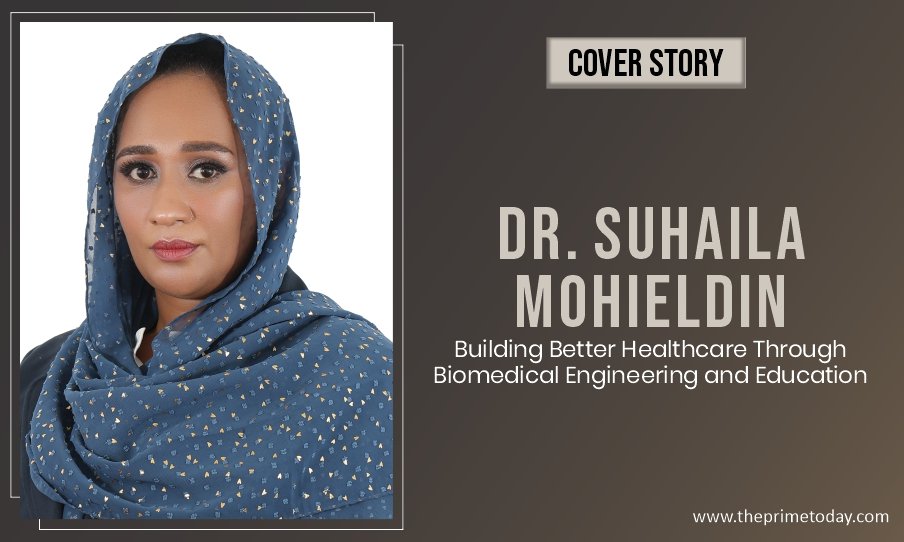
Strengthens Biomedical Education through Curriculum Development, Supervision, and Collaboration that Supports Healthcare Progress.
In healthcare, even a small technical failure can change outcomes, because patient care depends on devices, systems, and tools working with accuracy and consistency every single day. That is why biomedical engineering matters so deeply, since it connects human health with smart design, responsible testing, and practical solutions that support doctors and protect patients. This is the space where Dr. Suhaila Mohieldin builds her impact, using her knowledge to strengthen education and research so future innovations serve real medical needs.
With twenty years of experience in higher education, scientific research, and applied innovation, Dr. Suhaila has shaped a career that sits at the intersection of engineering and health. She currently serves as an Assistant Professor at the University of Gezira in Sudan, where her work includes teaching, curriculum development, research supervision, and international academic collaboration, all with a clear focus on developing capable students and meaningful outcomes.
Her academic journey began in electronic engineering, where she learnt how systems work, how design decisions affect performance, and how precision shapes results. Over time, her path moved towards biomedical engineering, a field where technical knowledge becomes personal, because it directly influences human wellbeing and supports the everyday realities of healthcare settings. This shift gave her a stronger purpose, because she could connect engineering principles with the urgent needs of health, creating a direction that feels both challenging and deeply rewarding.
In the classroom, she focuses on building confidence through clarity, guiding students to understand concepts deeply while also pushing them to think critically and solve problems with care. Through curriculum development and research supervision, she helps shape learning that stays relevant to society, where academic work can lead to practical progress and improved lives.
For Dr. Suhaila, education remains one of the most sustainable tools for change because every student carries forward skills that can serve communities for years, and that is why her work continues to demonstrate a single belief: engineering should improve lives, and that education is one of the most sustainable tools for societal transformation.
Let us learn more:
Where Leadership Took Shape
Some leadership stories begin with ambition. Dr. Suhaila began with real-world pressure and people depending on her judgement early on.
Dr. Suhaila’s leadership journey did not begin with a title, but with responsibility. Early in her academic career, she was entrusted with roles requiring coordination, accountability, and decision-making, often in environments marked by limited resources and diverse challenges. These experiences taught her that leadership is not about authority, but about service, resilience, and guiding others through uncertainty.
Her upbringing and professional experiences across academia, administration, research, and industry shaped her values. She witnessed how crises reveal character and test integrity. Her role as a teacher and mentor also deeply influenced her, reinforcing her belief that when a woman steps into leadership with confidence and purpose, she inspires others to believe in their own potential.
Winning Trust Across Tough Rooms
Building credibility across different sectors can be unforgiving, especially when perceptions work against you. Dr. Suhaila learned to lean on results, standards, and emotional intelligence.
One of the greatest challenges Dr. Suhaila faced was earning trust and credibility across different sectors while adhering to standards and leading with empathy, particularly in environments where female leaders were often underestimated.
She overcame this through perseverance and results. She focused on building strong academic programs, guiding departments through transitions, supporting students, and delivering effective training initiatives. Over time, she learned that credibility is not built on position, but on consistency, competence, and integrity.
Continuous learning was also essential. She committed to staying current in her field and developing emotional intelligence, recognizing that listening, fairness, and ethical decision-making are as important as technical expertise. These principles helped her transform challenges into opportunities for growth.
Moving Forward Even With Doubt
Every leader faces uncertainty. Dr. Suhaila stays grounded by returning to purpose and measuring progress through the impact she creates.
In moments of self-doubt or uncertainty, Dr. Suhaila returns to her purpose. She reminds herself why she began, what she stands for, and the impact she aims to leave behind. Knowing that her work contributes to educating future engineers and expanding opportunities for women gives her the strength to continue, even when the path is unclear.
Experience has also taught her that doubt often accompanies growth. Each challenge she overcomes reinforces her confidence, grounded not in assumption but in lived experience. Most importantly, seeing the impact on others, students succeeding, colleagues growing, and young women finding confidence, reaffirms her conviction and keeps her moving forward.
Excellence as a Standard, Every Day
For Dr. Suhaila, excellence does not live in theory. It shows up in how she leads, how she mentors, and how she stays solution-oriented during crises.
Excellence in leadership is the balance between competence, ethics, vision, and genuine care for people. Dr. Suhaila practices this by translating complex knowledge into practical impact, mentoring students and teams, leading academic and innovation initiatives with accountability, and remaining solution-oriented, especially during times of crisis.
For her, excellence is not a destination, but an ongoing process of learning, reflection, and service.
Mentorship and Female Solidarity
Progress becomes easier to sustain when guidance and community exist. Dr. Suhaila’s journey was shaped by mentors and strengthened by solidarity with other women.
Mentorship and female solidarity played a deeply meaningful role in Dr. Suhaila’s journey. Mentors, both women and men, offered guidance and perspective during critical moments, helping her view challenges as opportunities for growth rather than barriers.
Female solidarity, in particular, provided strength in environments where women leaders were few. Shared experiences, honest conversations, and mutual encouragement created a sense of belonging and resilience. As her career progressed, mentorship evolved from something she received into a responsibility she practiced, supporting students, young academics, and professional women.
These experiences taught her that leadership is not only about personal achievement but about lifting others and creating pathways for collective progress.
Empathy With Firm Decisions
Dr. Suhaila leads with emotional intelligence, but she also protects clarity and accountability. She treats empathy and assertiveness as two parts of the same leadership muscle.
Dr. Suhaila sees empathy and assertiveness as complementary, not contradictory, qualities in effective leadership. Empathy enables her to truly understand people, their motivations, challenges, and perspectives, before making decisions.
By actively listening and encouraging open dialogue, she builds trust and ensures that team members feel respected and valued. This people-centered approach promotes collaboration and makes it easier to handle complex or stressful situations together.
At the same time, assertiveness is essential for clarity and accountability. Once a direction is established, she communicates decisions clearly, explains the rationale behind them, and sets clear expectations.
She believes that leadership requires the courage to make tough decisions when necessary, while maintaining fairness and respect in their execution. Balancing empathy and assertiveness allows her to lead with emotional intelligence, guiding teams with confidence, integrity, and a shared sense of purpose.
Impact That Showed Up in Crisis
Some leadership becomes visible during smooth seasons. Dr. Suhaila’s defining impact surfaced during national and institutional crises, when people needed stability and support.
One defining moment for Dr. Suhaila came during periods of national and institutional crisis, when education and healthcare systems were under extreme pressure. Alongside her academic leadership roles, she was involved in volunteering, student support, and humanitarian efforts at the University of Gezira, while also leading health awareness initiatives such as long-term cancer awareness campaigns.
In those moments, leadership was not about strategy alone, it was about presence. Supporting students to continue their studies, guiding young researchers to complete their work, and maintaining academic continuity despite uncertainty made her realize how deeply leadership can affect people’s sense of stability, hope, and direction.
Another powerful realization came through her work in women’s initiatives and capacity-building programs. Mentoring young women in STEM, organizing workshops to bridge gender gaps, and supporting both academic and non-academic development paths showed her the ripple effect of leadership rooted in empathy and consistency.
When women and early-career professionals later shared that her guidance helped them stay in engineering, pursue postgraduate studies, or step into leadership themselves, she understood that meaningful impact is often quiet and long-term.
It was then she truly realized that leadership is not measured by position, but by the confidence, resilience, and continuity it helps others build, especially during the most challenging times.
Helping Young Women Claim Leadership
Dr. Suhaila empowers young women by making leadership feel reachable through honesty, mentoring, and real responsibility, rather than distant ideals.
Dr. Suhaila encourages young women to believe in their potential by first helping them see themselves clearly, their skills, strengths, and capacity to grow. Through mentoring, teaching, and women-focused initiatives, she creates spaces where they can speak openly about their fears and ambitions without judgment.
She is honest about her own journey, including the challenges, self-doubt, and setbacks, because she believes authenticity builds trust. When young women realize that leadership is not about perfection but about learning, resilience, and values, their confidence begins to take root.
Empowerment also comes through practical exposure and responsibility. She actively involves young women in academic projects, research, training programs, and community initiatives, encouraging them to lead discussions, make decisions, and take ownership. By combining guidance with real opportunities, they begin to experience leadership rather than just aspire to it.
Most importantly, she reminds them that leadership is not granted; it is claimed. When women see consistent support, representation, and belief in their abilities, they are far more likely to step forward with courage and pursue leadership roles with confidence and purpose.
What Defines Influential Women Leaders Today
In a fast-evolving world, Dr. Suhaila believes influential women leaders stand out through adaptability, emotional intelligence, authenticity, and purpose.
Influential women leaders in today’s fast-evolving world are distinguished first by adaptability and lifelong learning. The pace of technological, social, and economic change requires leaders who are not only knowledgeable but curious and agile, willing to upskill, rethink assumptions, and lead through uncertainty.
These women combine strategic vision with the courage to evolve, making informed decisions while navigating complexity with confidence and clarity.
Equally important are emotional intelligence, authenticity, and purpose-driven leadership. Influential women lead with empathy without compromising firmness, and they build trust through transparency and integrity. They are deeply aware of their impact on others and use their influence to create inclusive environments, empower teams, and open doors for future generations.
In a world that demands both speed and sensitivity, the most impactful women leaders are those who balance resilience with compassion, and ambition with meaningful social impact.
The Legacy She Wants to Leave
Dr. Suhaila’s legacy is centered on people and systems becoming stronger because of her work, long after her direct involvement ends.
Projecting forward, the legacy Dr. Suhaila hopes her professional journey leaves behind is one of empowerment, continuity, and meaningful impact. She wants to be remembered not only for roles held or projects completed, but for the people she helped grow, students who found confidence in their abilities, professionals who discovered purpose in their work, and young women who realized that leadership is within their reach.
If her journey encourages others to believe in themselves and persist despite challenges, then that legacy is deeply fulfilling.
She also aspires to leave a lasting contribution to education, healthcare innovation, and ethical leadership, particularly in contexts facing crisis or limited resources. Through academic programs, training initiatives, research, and community engagement, she hopes to have strengthened systems, not just individuals.
Ultimately, her goal is to leave behind pathways of knowledge, opportunity, and resilience that continue to serve others long after her direct involvement, shaping a future where leadership is inclusive, purposeful, and impactful.
Words of Wisdom
For 2026 and beyond, Dr. Suhaila advises women to invest in themselves, lead with competence and purpose, and build support systems rooted in collaboration.
Dr. Suhaila’s advice to women who aspire to lead with courage and purpose in 2026 and beyond is to be confident, believe in yourself, and invest deeply in yourself, both professionally and personally. Build strong foundations of knowledge and skills, stay curious, and never stop learning, especially as technology and leadership models continue to evolve.
Confidence grows from competence, and when you trust your abilities, courage follows naturally. Do not wait for permission to lead; begin by taking responsibility where you are and allowing your values to guide your decisions.
Equally important is to lead with humanity and law. There will be moments of doubt, resistance, or imbalance, but purpose is what sustains you through uncertainty. Surround yourself with mentors, support other women, and create networks rooted in collaboration rather than competition.
Leadership with purpose is not about being fearless; it is about acting despite fear, staying grounded in integrity, and using your influence to uplift others. When women lead with courage and intention, they do not just change organizations, they shape the future.
Read the full magazine edition: Click Here