
How is Agribusiness Transforming Uganda’s Food Export Industry?
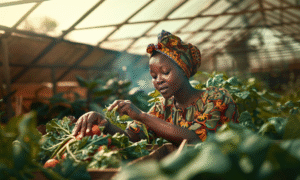
From Farms to Global Markets
Uganda’s food export industry is changing as agriculture moves beyond the sale of raw produce and toward a more connected agribusiness economy. Farmers, processors and exporters are increasingly part of the same value chain.
Uganda’s agriculture sector contributed 26.2% of GDP in FY2024/25, according to the Ministry of Agriculture, Animal Industry and Fisheries. During the same period, coffee exports were valued at $2.21 billion, cocoa at $620.76 million, fruits and vegetables at $102.56 million, maize at $123.79 million and tea at $54.68 million.
Between September 2024 and August 2025, Uganda exported 7.9 million 60-kilogram bags of coffee worth about $2.2 billion, up from 6.7 million bags worth $1.4 billion in the previous 12-month period.
How is Agribusiness Changing Uganda’s Food Export Industry?
Agribusiness is bringing more commercial thinking into farming. Instead of treating agriculture simply as production, businesses are looking at what happens before and after a crop leaves the farm.
That includes supplying inputs, organising farmers, financing production, collecting produce, processing it, packaging it and finding overseas buyers.
Uganda’s Fourth National Development Plan places agro-industrialisation at the centre of efforts to increase value addition, employment, household incomes and export diversification. More processing inside Uganda can therefore increase the value retained locally.
Why is Value Addition Important for Uganda’s Exports?
Selling raw commodities exposes exporters to international price movements and limits the amount of value retained locally. Processing can change that equation.
Coffee can be roasted and packaged. Cocoa can move into processed products. Fruits and vegetables can be sorted, packed, dried, frozen or otherwise prepared for specific markets. Maize can become flour, animal feed and other processed products.
The shift also creates work beyond farming. Processing plants need technicians and managers, while export businesses need quality-control staff, warehouse workers and logistics teams. Packaging, transport and cold-chain services become part of the agricultural economy.
The World Bank identifies agro-industrialisation as a route toward higher-value economic activity and jobs.
Which Ugandan Food Products are Reaching Global Markets?
Coffee remains Uganda’s strongest agricultural export story, but the export basket is broader.
Government statistics show significant export activity in cocoa, maize, fruits and vegetables and tea. Uganda also exports agricultural products to regional and international markets.
The United Kingdom is among the markets buying Ugandan agricultural products. Uganda’s agriculture ministry has identified coffee, tea, spices, edible vegetables, fish, dairy products and flowers among its exports to the UK.
Regional trade matters as well. Fresh Ugandan beans, for example, were exported in 2024 to Tanzania, Rwanda, the Democratic Republic of the Congo, the UK and Canada, according to World Bank trade data.
This gives Ugandan agribusinesses more than one route to market.
How are Farmers Becoming Part of Export Value Chains?
Export growth depends on more than finding overseas buyers. Farmers need reliable access to inputs, finance, information, storage and markets.
Agribusinesses can help connect smallholders to these services. Farmer groups and contract-based arrangements can also make it easier to collect consistent volumes and meet buyer requirements.
Technology is becoming part of this process. Digital tools can help businesses manage inventories, payments, logistics and farm-level records. Better records also make it easier to understand where products came from and how they moved through the supply chain.
This matters because international buyers increasingly expect traceability, consistent quality and reliable documentation.
What Challenges Does Uganda Face in Food Exports?
The move from farm production to international markets comes with practical challenges.
Transport remains important, particularly for perishable products. Cold rooms, refrigerated transport, reliable roads, electricity and efficient border processes can determine whether fresh produce reaches a buyer in good condition. The World Bank has specifically identified logistics infrastructure, including cold rooms and refrigerated transport, as part of the investment needed across Uganda’s agricultural value chains.
Climate is another concern. Much of Uganda’s agriculture remains exposed to rainfall patterns, while pests, diseases and changing weather can affect production.
Food safety and export standards are equally important. International markets require documentation, quality controls and traceability. EU rules, for example, require imported food and agricultural products to meet applicable safety and marketing requirements. Uganda has also faced specific EU controls on certain products, including sesame seeds.
Meeting these requirements can be expensive for small businesses, which makes shared facilities, producer organisations and public-private investment particularly important.
What is the Future of Uganda’s Food Export Industry?
Uganda’s next stage of agricultural growth will depend on how well it connects farms with processing, finance, technology and international markets.
The bigger change is happening in the structure of the industry. More businesses are looking at agriculture as a complete value chain rather than a farm-level activity.
For Uganda, that means the route from farms to global markets is becoming more sophisticated. If investment in infrastructure, quality systems, processing and climate resilience keeps pace with production, agribusiness can help the country retain more value from its agricultural output while opening new markets for Ugandan food products.