
Nitin Deshpande: Empowering People, Strengthening Organizations
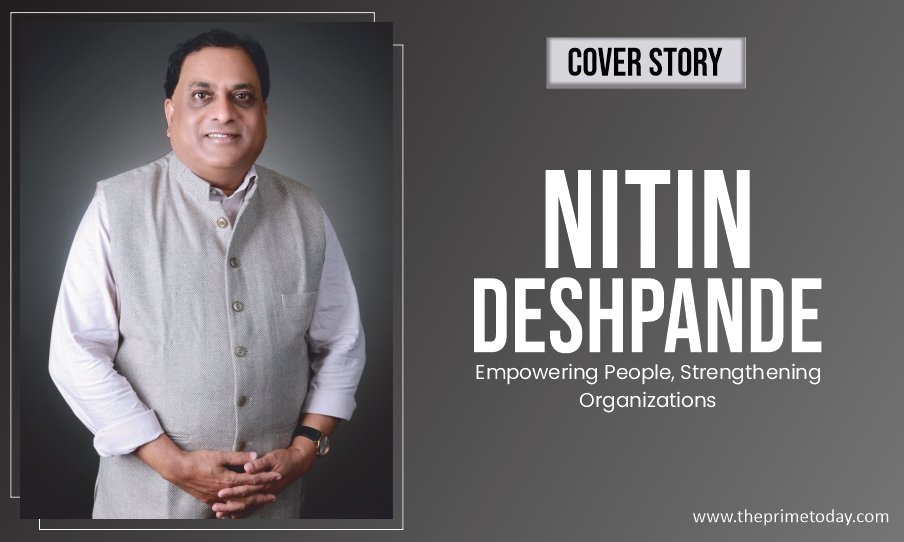
Aligning strategy and human resource excellence to create workplaces that inspire!
Every successful workplace has an invisible force guiding it. Systems, policies, and processes matter, yet the heartbeat of an organization comes from the people who make it work. Nitin Deshpande has spent more than 3 decades creating that heartbeat. He believes that every individual carries potential, and every organization thrives when that potential is nurtured with care, clarity, and purpose.
Today, as Chief Human Resources Officer at Cooper Corporation Pvt Ltd, Nitin focuses on designing environments where people can grow, contribute, and feel valued. “Work becomes meaningful when people understand their impact,” he says. “When employees are supported and trusted, they bring their best to every challenge.” According to him, Business of HR is Business!
Bridging Experience and Human Potential
Nitin began his undergraduate studies at SGGS College of Engineering & Technology and graduated with distinction, earning a Bachelor of Engineering in Instrumentation and Controls from Swami Ramanand Teerth Marathwada University.
Nitin has consistently demonstrated a commitment to serving others, actively participating in student unions throughout his academic career. He was later influenced by one of the world’s largest student organizations, where he contributed to initiatives promoting knowledge, character, and unity under the guiding principle that student empowerment is integral to national progress. Through his involvement, Nitin developed valuable leadership qualities and organizational skills, laying a strong foundation for his future leadership roles.
Although his technical background helped him sharpen his analytical capabilities, he shaped his competencies from his interest in working with people and organizations to a career in human resources.
He commenced his career at Garware Polyester Limited in 1987 and advanced to the position of Senior General Manager of Human Resource Development. For more than 2 decades, Nitin’s work focused on better understanding individuals, harnessing their abilities and aspirations, and creating trust with others within teams. Nitin saw that organizations could flourish by focusing on authentic employee experiences through the core of the organization to see and support people while creating opportunities for personal growth. His work in industrial relations and organizational development enabled him to introduce systems that established a renewed culture of ownership underpinned by the ability to contribute meaningfully and confidently.
After more than twenty years of service at Garware, Nitin assumed the role of Corporate Head of Human Resources and Administration at Cooper Corporation in 2010, where he was responsible for establishing and developing the human resources function from the ground up.
As an alumnus of the prestigious Indian Institute of Management, Ahmedabad, he participated in the Management Development Program, which allowed him to view HR as a strategic function—a perspective he later applied to secure a strategic HR role in his career.
Nitin introduced systems and frameworks that enabled the establishment of alignment between individual learning and career development paths to the company’s goals. Over the years, Nitin helped design programs that encouraged employee engagement, clarified individual learning and career development plans, and supported collaboration across teams. Nitin’s work exemplifies that organizational outcomes achieve greater success when growth develops with the growth of the human being.
Nitin is passionate about reading and has a wide array of interests, including human psychology, philosophy, management, human resources, and history.
He authored and published the book “Management of Industrial Engineering” in 2013. In the early stages of his career in engineering project management, he authored an internal manual entitled “Technical Integrity, Safety & Engineering Reliability Assessment.” This manual is designed to ensure the design and operational reliability of plant hardware, improve and assess the technical abilities of operating and maintenance staff, and establish systems and procedures for identifying hazards, evaluating risks, and controlling those risks.
To strengthen managerial competency and boost productivity, he created a workbook called “Personal & Managerial Effectiveness Enhancement (PAMEE).” This resource is designed to help implement the lessons learned from LMI’s EPP program.
He has also written a manual titled “Standard Instrumentation Installation Practices,” which covers essential safety and technical considerations for installing instruments during the execution of control system projects.
A Philosophy Rooted in Learning
Continuous learning has played a pivotal role in Nitin’s professional growth. Between 2000 and 2006, he earned a Diploma in Business Administration, an Advanced Diploma in Fire Safety and Environmental Engineering, and a Diploma in Training & Development from the Indian Society for Training & Development, Delhi. In 2008, he completed an MBA with a specialisation in Human Resources Development from IGNOU, New Delhi, further equipping him with a strategic perspective in HR management.
He is currently enrolled in the Doctor of Business Administration programme specialising in Human Resource Management at SWISS International Management Academy (Gotthardstrasse), aiming to integrate his practical experience with research-based insights. Nitin upholds that learning constitutes ongoing development, supporting HR practices in aligning with evolving business requirements. He asserts, “Research in Human Psychology and Human Resources will empower organisations to realise the full potential of each individual, as businesses can achieve a competitive advantage primarily through their Human Capital, given the abundance of material resources. In today’s world, ideas and innovation are the drivers of wealth creation.”
Skill Development and Social Impact
Beyond corporate leadership, Nitin served as Director at the Cooper DMCFS Skill Development Foundation, guiding initiatives to train young professionals. He believes that supporting skill development strengthens both communities and organizations. “Opportunities for growth transform careers and organizations,” he says. “Investing in people creates impact that lasts far beyond the workplace.”
He currently serves as the nominated Director at Karmaveer Bhaurao Patil Research Foundation, a nonprofit focused on innovation and incubation.
He serves as Chairman of the Institute Management Committee at Satara, Medha, and Mahabaleshwar Government ITIs, under the Maharashtra Government’s Public-Private Partnership initiative. His primary responsibilities involve strengthening industry-institute collaboration, enhancing the quality of skill-based education to align with current industry requirements, and fostering increased employment opportunities for youth.
Leadership Through Empathy
Colleagues describe Nitin as a leader who listens closely and acts thoughtfully. He approaches challenges with patience, empathy, and clarity. Whether mentoring leaders, resolving conflicts, or designing talent programs, his decisions reflect a commitment to human potential. “Leadership is a responsibility to enable others,” he explains. “Every interaction can guide growth and inspire confidence.”
As custodian of human capital, he emphasizes the importance of employee involvement, transparency, and commitment to quality in every endeavor. He strongly believes that organizations are built on trust, a principle that must be reinforced through all programs and practices. “Employees must be considered part of the larger family,” Nitin insists, “and progress is only possible when we take everyone along.”
Adapting to Change
Over 36 years, Nitin has guided teams through major transformations in the manufacturing sector. Technology, globalization, and workforce evolution have shaped the landscape, and he has led organizations to embrace change while keeping people at the center. His approach balances strategy with humanity, ensuring that employees can thrive while organizations achieve goals.
Mentoring and Developing Leaders
Being an active mentor for developing leaders, imparting lessons learned from decades in the field, and nurturing independent thinking, Nitin views leadership as a platform for others to take action. “When leaders focus on growth and potential in their team, the organisation is enhanced. The role of a leader is to create a leader “, he says. “We measure leadership by the opportunities we create for others to be successful.”
Creating Cultures That Last
Nitin, at Cooper Corporation, has built cultures that foster collaboration, engagement, and purpose. Employees feel valued, empowered, and motivated to join in the effort.
Learning, recognition, and development programs strengthen belongingness. Nitin sees that when individuals feel respected and supported, performance and innovation will naturally follow.
Digitalization and technological advancements play a pivotal role in shaping the contemporary HR ecosystem. Nitin reports that the majority of their people processes have been digitalized, enhancing both HR operational efficiency and employee satisfaction in daily activities. The adoption of emerging technologies has also resulted in notable cost and time savings. Eklavya, the e-LMS platform conceptualized by Nitin and developed internally, addresses the PDCA training process and ensures measurable returns on learning and development initiatives. Additionally, the HR Vendor Management and visitor management applications enable seamless integration with established procedures and provide real-time data and MIS availability. The ongoing digitization of processes and incorporation of technological innovations such as AI and Industry 4.0 are seen as the way forward. As part of this progression, inhouse AI applications have been developed to verify employees’ educational credentials and work experience documentation.
Impact That Matters
For Nitin, impact is measured in human terms. It appears in careers launched, teams strengthened, and workplaces where people feel inspired. He emphasizes that systems and policies matter only when they serve people effectively. “Every person carries unique strengths,” he reflects. “When we nurture them thoughtfully, organizations grow, and people flourish.”
A Legacy of Leadership
Nitin’s career is proof that HR is the beating heart of an organization. For decades, he has built systems, coached leaders, and created environments for people to work to their capacity. His career illustrates that investing in human capacity lays the foundation for sustainable growth, commitment, and resiliency.
He persists in impacting teams and organizations by aligning strategy with people, creating meaningful workplaces, and showing that leadership is about unlocking the greatness of others. Nitin’s journey shows that any career can be purposeful, any organization can be inspirational, and any type of leader can contribute to a better world by being focused on people.
Through his work, Nitin demonstrates that the real strength of any organization lies in its people. Every program, every decision, every moment of mentorship can have the power to build careers, create trust, and strengthen organizations. His contribution to society is not measured in jobs and numbers, but in potential developed and lives changed.
“Business of HR is Business!”
Nitin’s Seven Pillars of Core Work Values
Nitin expresses his core belief: “Organisations are founded on solid values and principles. As someone guided by these principles, I think that with fast-changing markets and increasing competition, our Company must adapt to be more responsive to both the market and our customers, fulfilling expectations for quality, cost, and delivery. To enhance our business’s competitive advantage, it’s essential for employees to adopt and commit to shared workplace values.”
At Cooper Corporation, these values are widely upheld and form the foundation for cooperative development and constructive workplace relationships.
He asserts that the Seven Pillars of core work values are essential for establishing robust organisations, and that any organisation seeking sustainable growth must adopt these values.
Self-discipline is a paramount prerequisite:
According to Nitin, discipline involves not only proper conduct and behaviour, but also a thorough understanding of one’s role, responsibilities, and how to respond appropriately in various circumstances. Organisational rules and regulations specifically outline acceptable and unacceptable behaviours, which must be adhered to both in principle and practice. Employees are expected to demonstrate dignified and respectful conduct towards others at all times.
He states, “Given the contractual nature of employment, it is imperative that employee conduct aligns with established contractual obligations. Consistently upholding these core work values in daily practices allows the organisation to deliver quality service to its customers and strengthen its competitive advantage. Accordingly, it is crucial to institutionalise these values, with all stakeholders dedicated to sustained and appropriate efforts to maintain them through a range of initiatives.”
The customer is king:
Nitin maintains that the customer should remain at the forefront of all organisational activities. Satisfied customers not only promote repeat business but also drive overall growth.
Recognising internal customers, accurately assessing their requirements, and meeting their expectations are critical components in delivering effective service to the end customer.
He asserts that fostering robust customer-supplier relationships, where every employee understands the needs of their internal customers, articulates their own expectations as a customer, and reliably fulfils those expectations, empowers the organisation to more effectively serve its external customers.
Collaboration within teams is essential:
In the current landscape that values knowledge and innovation, Nitin maintains that individual contributions within an organisation are inherently connected and mutually dependent, with each person’s work influencing and supporting others. Therefore, it is essential for employees to collaborate effectively and strive toward common goals. The effectiveness of any individual is ultimately measured by their ability to make meaningful contributions to the overall performance of the team.
Nitin adheres to the principle of collaboration, recognising that management and employees are integral elements of an organisation whose interests are both complementary and interdependent. He advocates for coordinated efforts towards shared objectives as a means to promote the collective interests of all stakeholders.
According to his perspective, employee involvement encompasses the active and conscientious participation in work-related activities. This includes clear and effective communication, engagement in collaborative meetings, and meaningful contributions to initiatives aimed at organisational development and ongoing improvement.
Business excellence in all actions:
Nitin maintains that the quality of products and services should consistently align with customer expectations in terms of performance, reliability, and value for money.
He believes that quality affects every part of a company’s operations and touches both professional and personal aspects of employees’ lives. It covers standards for products and services, the workplace atmosphere, cleanliness, health and safety routines, relationships among people and teams, family and social welfare, and the overall attitude and behaviour of each individual.
He asserts that quality is pertinent to all employees, regardless of their roles in shops or offices. It represents an ongoing and progressive process founded on the conviction that every task presents opportunities for improvement. A dedication to continuous enhancement is essential for attaining elevated standards throughout each phase.
Being productive means getting rid of unnecessary waste:
Nitin believes that boosting productivity involves pinpointing and eliminating activities or processes that don’t add value in several domains, such as machine operation, maintenance, material handling, both direct and indirect material usage, workflows, workforce, time management, finances, and potential opportunities.
“Productivity is relevant to every employee, whether working in production or office environments. Similar to quality, it represents a continuous process based on the belief that improvements can always be made. A dedication to ongoing enhancement is vital for maintaining long-term productivity growth,” he states.
Improving is a constant part of life:
Opportunities for improving work processes are always present, and implementing workplace improvements benefits both personal growth and the quality of work life as a whole. Nitin embraces this method because it adds interest and satisfaction to the job while giving employees a chance to discover abilities they haven’t yet explored.
Nitin asserts that the most effective strategy for employee engagement is to actively involve employees in continuous improvement initiatives. This approach not only enhances quality and productivity but also bolsters the organisation’s competitive standing.
Making Training & Development Regular, Continuous Practice:
Nitin asserts that a demographic dividend alone is insufficient for achieving superpower status. Developing a highly skilled workforce with stringent quality standards is crucial for building a robust economy. Well-structured training and development initiatives enable employees to become an organization’s most valuable assets.
From his perspective, succession planning and the development of talent pipelines are becoming increasingly complex within the Indian landscape. With the workforce evolving from the Baby Boomers—individuals born during the post-independence period—to a contemporary mix comprising Generation Z and Generation Alpha, who emphasise work-life balance, value autonomy, and have high aspirations, employer loyalty is anticipated to decline, creating ongoing challenges in employee retention. By enhancing knowledge, skills, and attitudes, these programmes enable employees to achieve their full potential and contribute to organisational success. Given that most organisations are comprised of adults, training initiatives should be specifically designed to facilitate adult, self-directed learning. Beyond traditional approaches such as instruction, mentoring, and coaching, it is also crucial to implement continuous learning processes that promote sustained professional development.
Nitin’s Perspective on Corporate Social Responsibility
Nitin asserts that Corporate Social Responsibility serves as a valuable tool for organisations to foster relationships with stakeholders. He maintains that sustainability should be a fundamental component of all corporate social responsibility initiatives. Furthermore, he contends that any program, including those mandated by government CSR regulations, will not achieve meaningful outcomes and may result in inefficient use of capital if it is not structured with self-sustainability as its primary objective.
Nitin recognises society as a key stakeholder. The vision for Corporate Social Responsibility is to ensure that, through sustainable initiatives, the company actively contributes to the social, economic, and environmental development of the communities in which it operates. This approach encourages community participation and aims to create lasting value for the nation.
According to Nitin, the mission of Corporate Social Responsibility (CSR) should centre on promoting socio-economic development within the community by facilitating participatory and need-based initiatives that serve the best interests of both the local area and society as a whole. Particular attention should be given to supporting disadvantaged groups and children, with the ultimate goal of empowering them to become self-reliant and enabling them to build a better future.
According to his perspective, the CSR approach should prioritise development over welfare. The central idea is that if you give a hungry person a fish, they will eat for a day; but if you teach them how to fish, they can feed themselves for a lifetime.
Nitin leverages Corporate Social Responsibility (CSR) initiatives to strengthen relationships with over 2,000 blue-collar employees who reside within a 50-kilometre radius. By incorporating suggestions from employees into CSR activities, he fosters a greater sense of belonging to the organisation. He ensures that employees actively participate in CSR events at designated locations. Through various programmes focused on enhancing school smart classrooms, meeting basic needs, and developing libraries, he has opportunities to build rapport with local villagers, thereby creating goodwill within the surrounding community.
Read the full magazine edition: Click Here