
Pete Bartkowiak: A New Leaf on Life
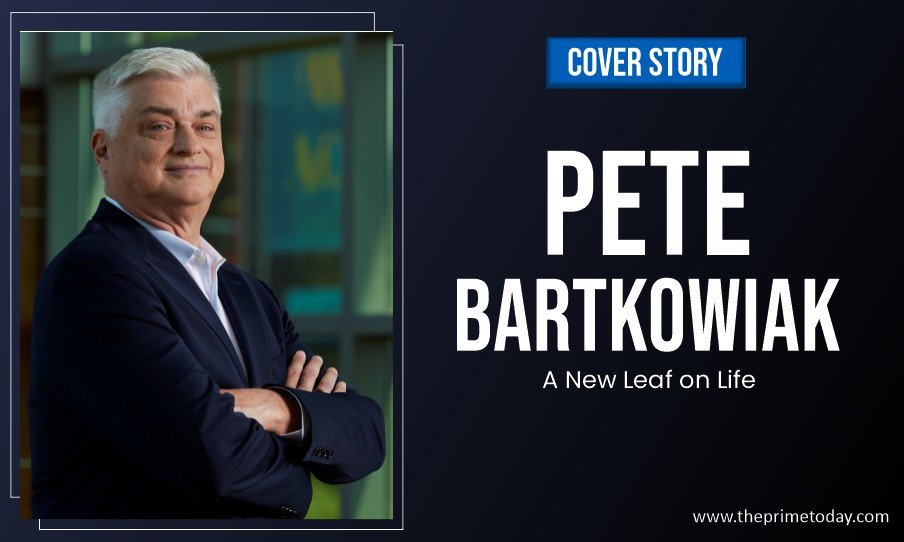
Turning Life Lessons into a Lifeline for Students Who Need a Second Chance!
Every life reaches a point where starting again feels necessary. For some, it happens after loss. For others, after realizing that the path they are on no longer feels like home. For Pete Bartkowiak, that moment came as a natural unfolding of everything he had learned about perseverance and compassion.
Growing up in New York and Ohio, Pete was surrounded by lessons in endurance. His father, a Polish immigrant and World War II survivor, showed him the strength of staying steady through struggle. When Pete lost his father as a teenager, the world around him shifted. It was his teachers and coaches who filled the gap, offering support when he needed it the most. Their kindness left a mark so deep that he knew he wanted to one day do the same for others.
Before stepping into education, Pete spent nearly twenty years in the funeral industry. Those years taught him about care in its purest form, standing beside people through grief, listening when words fell short, and helping them find their footing again.
Today, as Chief Operations Officer and Co-Founder of New Leaf Organization, Pete leads with the same understanding that once guided him. The network of schools he helps oversee exists for students who have fallen behind or stepped away from education. Through dropout prevention and credit recovery programs, New Leaf gives young people the courage and tools to begin again.
Each student who walks through New Leaf’s doors carries a story that deserves a second chapter. Pete believes education should offer that chance, a chance to rewrite, to rise, and to grow. His own journey mirrors the spirit of the organization: that even after life’s hardest moments, a new beginning is always waiting to take root.
Finding Purpose Through Loss
The loss of his father during high school shaped Pete more than he could have imagined at the time. He was only fifteen when his father passed away unexpectedly, and it felt as if the ground disappeared beneath him. In that difficult season, the adults in his school community did not let him drift away. They showed up consistently, whether it was a coach pushing him to stay focused, a local businessperson giving him a job to help cover tuition, or mentors who simply listened when he needed to be supported and heard.
Because of their presence, he stayed connected to school and to his future. They modeled something he tries to carry forward every single day: young people do not need perfection from adults, but they do need to be seen and supported.
When students arrive at the schools he leads carrying grief, instability, or trauma, he recognizes that weight. It is why he believes in building schools that address both the academic and human needs of students. A diploma is important, but feeling valued and believed in is what changes everything.
How Early Experiences Form Leadership
Those early years were the best kind of education for Pete as a leader. When he was enrolling students and tutoring them, it gave him the opportunity to listen to students and families talk about the real barriers keeping them from school. Many were working jobs to support their households, some were caring for younger siblings or their own children, and others were navigating trauma that most adults would struggle to carry.
Those encounters made one thing very clear to him: these students were never “unmotivated.” They were fighting battles that required flexible, compassionate systems instead of rigid rules. That insight became the lens he still uses as COO.
Every policy he, alongside Mary Snell, CEO and Co-Founder, designs have to answer a simple question. Does this remove a barrier for a student, or create one? If it fails to help remove obstacles, it has no place in the model. That mindset, formed in those early years, continues to guide how he leads and how the organization grows.
Ensuring “Student-First” Is a Living Principle
At New Leaf Organization, the commitment to “student-first” was made early to ensure it could be seen in action rather than just read on a wall. Several core practices keep that promise alive:
- Mastery over seat time: Students earn credits based on learning, not on how many hours they sit in a classroom. This approach gives them flexibility to balance school with work, family, or personal responsibilities.
- Strong relational structure: Each student is paired with a teacher who works with them from the moment they enroll to the day they graduate. That consistent relationship builds trust, which often serves as the key to re-engagement.
- Comprehensive intake process: Every student’s journey begins with a real conversation rather than a stack of forms. Understanding their story, goals, and barriers helps the team build a personalized plan from day one.
- Wraparound services: Mental health and social services are embedded into the school environment because students cannot focus on academics if their basic emotional and social needs are unmet.
- Ongoing advocacy: The organization continues its mission beyond running schools by advocating at the state level to ensure policy reflects the realities of its students.
These systems ensure that the mission is more than words; it guides the way the organization operates every single day.
Resilience and Human Connection in Leadership
Working in the funeral industry for nineteen years provided Pete with a rare perspective on people. During that time, he accompanied families through loss, learning that presence often holds greater importance than perfect answers. He discovered the value of deep listening, honest communication, and guiding people through difficult moments without judgment.
Upon transitioning to education, Pete found that the same qualities of listening and presence were exactly what many students required. These students had experienced instability, loss, and hardship, sometimes over extended periods. His background shaped a leadership style that emphasizes understanding before reacting and focuses on steady support rather than quick fixes.
For Pete, resilience represents more than a concept; it is a practice to model. In leadership, this entails remaining grounded during crises, building trust, and showing up even when the path ahead presents challenges.
Creating Opportunities for Students to Thrive
When New Leaf Organization was founded, the driving belief was that students who had been overlooked deserved the chance to succeed. The aim was to establish a place that offered more than a second opportunity; they sought to provide a genuine fresh start where a student’s past did not determine their future.
The organization began during the pandemic, supported by a small but dedicated team, guided by a mission in which they strongly believed. On the first day, 273 students enrolled, revealing a clear and urgent need for this type of school.
Over time, the vision has expanded beyond a single campus. Today, with seven schools across the states of Ohio, the organization focuses not only on serving students directly but also on transforming the broader perception of alternative education. It aims to encourage policymakers, communities, and families to recognize the value of this work as an essential approach to education. While the network has grown, the core mission and purpose remain unchanged.
Transforming Lives Through Education
There is one story Pete often carries with him. A student came to the program after trying one district after another. Chloe arrived tired, guarded, and convinced that school was not for her. She kept her distance and did not trust easily. The model allows space for students to build relationships at their own pace. She had a teacher who showed up for her day after day, whether she was ready to engage or not.
Slowly, she began to participate more, showing up consistently. By the time graduation arrived, she had earned her diploma and spoke in front of over 1,200 people about her journey.
That moment reminded Pete why this work matters. Education, when flexible and human-centered, does more than open doors. It restores hope, and for many students, hope becomes the turning point.
Balancing Operational and Emotional Demands in Education
That balance forms the core of his role. As COO, he is responsible for making sure operational and financial decision aligns with the climate and culture established by CEO Mary Snell, as they work together to keep the organization strong and sustainable. At the same time, he remains mindful that the mission is about people rather than spreadsheets.
He approaches this by ensuring systems work in service of students and staff, rather than the other way around. If an operational structure does not make it easier for teachers to support students, it is reconsidered. Every dollar is tied back to student outcomes, staff capacity, or long-term sustainability.
He also prioritizes staying connected to the campuses. With seven campuses across Ohio, he maintains connection by working with and staying in touch with executive leadership and principals at each location to understand the pulse of the work. This direct engagement helps keep the “why” in focus when the “how” becomes complicated.
Overcoming Barriers in Second-Chance Education
One of the most significant challenges in scaling an organization devoted to second-chance education has been addressing widespread skepticism. People often underestimate students who attend dropout prevention and credit recovery schools, assuming they will struggle or that flexible learning models are less rigorous. The organization has consistently demonstrated that students can thrive when provided with the right support.
Policy has presented another major hurdle. Traditional funding and accountability systems were designed for conventional schools, rather than earned-credit models. Advocating at the state level has been essential to ensure recognition and support for the organization’s work.
Leadership through these challenges has focused on clarity and conviction. Pete has consistently reminded the team that resistance serves as a signal of challenging outdated assumptions rather than a reflection of failure. By maintaining steadiness and unity, the team has transformed early doubt into tangible evidence of success.
Transformative Educators and Their Lasting Impact
The most impactful educators possess three qualities that consistently shape a student’s life. First, they look beyond the surface. Such educators do not define students solely by attendance, grades, or behavior. Instead, they strive to understand the story behind what they observe.
Second, they show up consistently. For many students, trust grows not through grand gestures, but through daily reliability and steady presence.
Third, they choose to believe in students when others may not. When a young person has faced a lifetime of “no,” a single adult’s unwavering “yes” can become a turning point.
These traits hold greater significance than credentials or titles. They create an environment where students begin to rediscover belief in themselves.
Building a Culture of Purpose and Accountability
Culture develops through deliberate effort. From the beginning, the organization has focused on creating a team united by a shared purpose. Recruitment prioritizes individuals who deeply believe in the mission, beyond possessing the right résumé.
Once team members join, leadership follows a model rooted in coaching. High expectations are established, support is provided to help employees meet those expectations, and accountability is maintained with respect.
Staff members also gain a clear understanding of how their daily contributions impact student success. When employees witness how their efforts help students achieve milestones, such as graduating, purpose transforms from a concept into the lived culture of the organization.
Measuring Transformative Impact
The numbers convey an impressive story, over 5,500 diplomas reflect lives transformed, families strengthened, and futures reclaimed. Yet, the full significance extends beyond statistics.
The true impact appears in the moments behind the data. It is evident in the parents who express gratitude for the stability restored in their homes. It is seen in the students who once doubted their potential, now walking proudly across the stage. It manifests in the quiet confidence that replaces past shame when a young person understands they were never broken, only in need of a different path.
While academic performance, attendance, and credit completion are carefully tracked, the most meaningful measure lies in the number of students who leave the schools with a belief in their future. That belief becomes the ultimate reflection of the organization’s impact.
Redefining Second-Chance Education
New Leaf Organization has achieved significant milestones, yet there remains vast potential to expand its impact. The next phase of the organization emphasizes 3 key areas.
- First, responsible growth. The organization aims to establish additional campuses in communities where students require these opportunities, maintaining the highest standards of quality.
- Second, policy advocacy. By collaborating with legislators, New Leaf Organization seeks to influence systems to better serve alternative education students across the state.
- Third, comprehensive support. The plan includes expanding wraparound services, encompassing career pathways and health and wellness resources, so students graduate prepared and confident to embrace the next chapter of their lives.
The vision extends beyond organizational growth. The ultimate aim is to transform public perception of second-chance education, presenting it as a legitimate and powerful pathway to success rather than a fallback option.
Leadership Through Belief and Support
Every chapter of Pete’s life, from the loss of his father, to decades spent in a different field, to his transition into education, has shaped him to lead in this space. At New Leaf, he has witnessed the transformation that occurs when young people encounter belief instead of judgment, and flexibility instead of barriers.
Pete reflects on the mentorship he received and strives to provide the same. He reflects on the mentorship he received and strives to provide the same guidance and support to every student and team member within the network. The work continues, yet the impact achieved so far serves as a daily reminder of its profound value.
Read the full magazine edition: Click Here