
Redefining Africa’s Fintech Frontiers: The Visionary Behind SAYELE’s Digital Growth Story
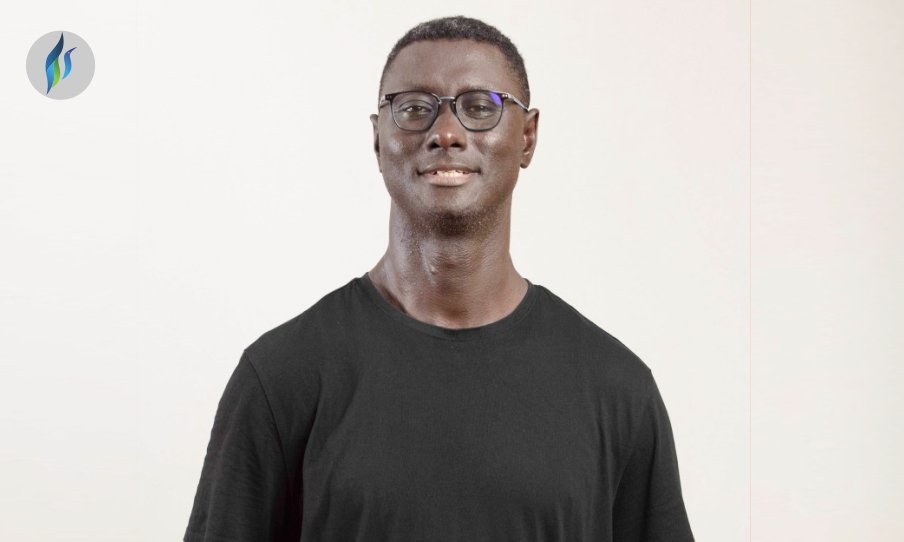
Interview with Kandas Camara | Founder & CEO, SAYELE
SAYELE was born from your deep expertise in payments and financial services — what pivotal insight led to its founding, and how does it redefine digital accessibility for underserved communities?
The pivotal insight behind SAYELE was recognizing that the next phase of financial inclusion would not be driven by standalone payment tools, but by intelligent, integrated financial infrastructure. Access alone is no longer sufficient; businesses need systems that learn, adapt, and evolve with them.
SAYELE was designed from day one as a future-ready platform. We combine digital payments, wallets, merchant acceptance, soft POS, service aggregation, and neobanking capabilities into a single ecosystem, while embedding AI-driven intelligence across our products.
For underserved communities and SMEs, this means more than digital transactions. It means smart onboarding, predictive insights, automated reconciliation, and personalized financial pathways, delivered through affordable, accessible technology that works even in low-infrastructure environments.
You’ve scaled merchant acceptance by tenfold in previous roles, what were the key enablers behind achieving such exponential growth, and how did data and technology shape those results?
Beyond distribution and partnerships, the real growth accelerator was data intelligence. We moved from reactive reporting to predictive analytics, understanding merchant behavior before friction appeared.
Today, at SAYELE, we take this further by embedding AI-assisted decision engines that help optimize pricing, identify high-potential merchants, and automate risk scoring. Technology no longer just supports growth; it actively drives and anticipates it.
This shift, from transactional systems to intelligent platforms, is what enables sustainable, exponential scale.
What role does your foundation in statistics and computer science play today in shaping business intelligence and decision-making within SAYELE’s operations?
My foundation in statistics and computer science allows me to approach fintech as a living system, not a static product. At SAYELE, we operate with a strong belief that data is only valuable when it becomes actionable intelligence.
We apply machine learning models to transaction data to detect patterns, predict demand, and personalize services. From fraud detection and credit scoring to merchant segmentation and operational forecasting, AI is embedded across our stack.
This technical grounding also influences how we build, prioritizing modularity, API-first architecture, and scalability, ensuring our platforms can evolve rapidly as markets and technologies change.
In your experience, how can fintech companies balance innovation, compliance, and trust, especially when expanding across multiple regulatory landscapes in Africa?
The future of compliant innovation lies in regtech and AI-enabled governance. At SAYELE, we design systems that automate compliance monitoring, audit trails, and risk flagging, reducing human error while increasing transparency.
AI allows us to adapt quickly to regulatory changes across markets without compromising speed or security. This is critical in Africa, where regulatory frameworks evolve rapidly alongside innovation.
Trust is reinforced when users know that platforms are not only secure, but intelligently monitored and resilient by design.
Having influenced major digital transitions at institutions like Visa and Western Union, what have been the most transformative lessons you’ve carried into your entrepreneurial leadership at SAYELE?
One key lesson is that speed is now a competitive advantage equal to scale. Traditional development cycles are too slow for today’s market realities.
At SAYELE, we leverage best-in-class development practices, including AI-assisted software engineering, automated testing, continuous deployment, and rapid prototyping. This allows us to shorten go-to-market timelines while maintaining enterprise-grade quality.
We combine institutional discipline with startup agility, building fast, securely, and intelligently.
How do you envision the future of financial inclusion evolving in Africa over the next decade, and what strategic role will SAYELE play in that transformation?
Over the next decade, financial inclusion in Africa will evolve into embedded, intelligent finance. Payments will become invisible, credit will be predictive, and financial services will be deeply integrated into business and daily life.
SAYELE’s strategic role is to provide the AI-powered backbone for this evolution. We aim to enable institutions, governments, and enterprises to deploy intelligent financial services faster, at lower cost, and at massive scale.
By embedding AI across payments, identity, risk, and analytics, we are helping move Africa from financial access to financial autonomy.
Many fintechs focus on technology; you focus on impact. How do you measure success beyond transaction volumes or revenue figures?
Impact, for us, is measurable when intelligence translates into empowerment. We assess success through indicators such as improved merchant decision-making, reduced operational friction, increased formalization, and better access to tailored financial products.
When AI insights help a merchant optimize cash flow, prevent fraud, or qualify for financing, that is real impact, not just activity.
With your extensive experience in digital banking revenue growth, what trends are you observing in customer behavior that will define the next phase of digital payments?
The next phase of digital payments will be defined by:
- Embedded payments within platforms and workflows
- AI-driven personalization rather than one-size-fits-all products
- Real-time, cross-border capabilities
- Invisible finance, where payments and financial services operate seamlessly in the background.
Customers will choose platforms that are not only fast, but intelligent, anticipatory, and trustworthy.
As a founder and strategist, what personal legacy do you hope to leave in Africa’s fintech landscape?
My goal is to help shift Africa’s fintech narrative from adoption to innovation leadership. I want SAYELE to demonstrate that world-class, AI-native financial infrastructure can be designed, built, and scaled from Africa, for Africa and beyond.
If future builders can launch faster, scale smarter, and create deeper impact because SAYELE helped set that standard, then the legacy will be meaningful.